You’ve got the espresso machine pulling perfect shots. Then you steam milk, and suddenly your counter looks like a dairy crime scene. Milk splatters on the machine, the cup, the wall, and somehow your shirt. The culprit isn’t your technique with the wand—it’s usually the pitcher.
Most home baristas use the pitcher wrong. They fill it too high, hold it at the wrong angle, or skip the crucial step of purging the steam wand after use. This piece covers the exact methods I use daily to froth milk without redecorating the kitchen. You’ll learn the correct fill levels, the right angles for the wand tip, and the simple habits that keep things dry.

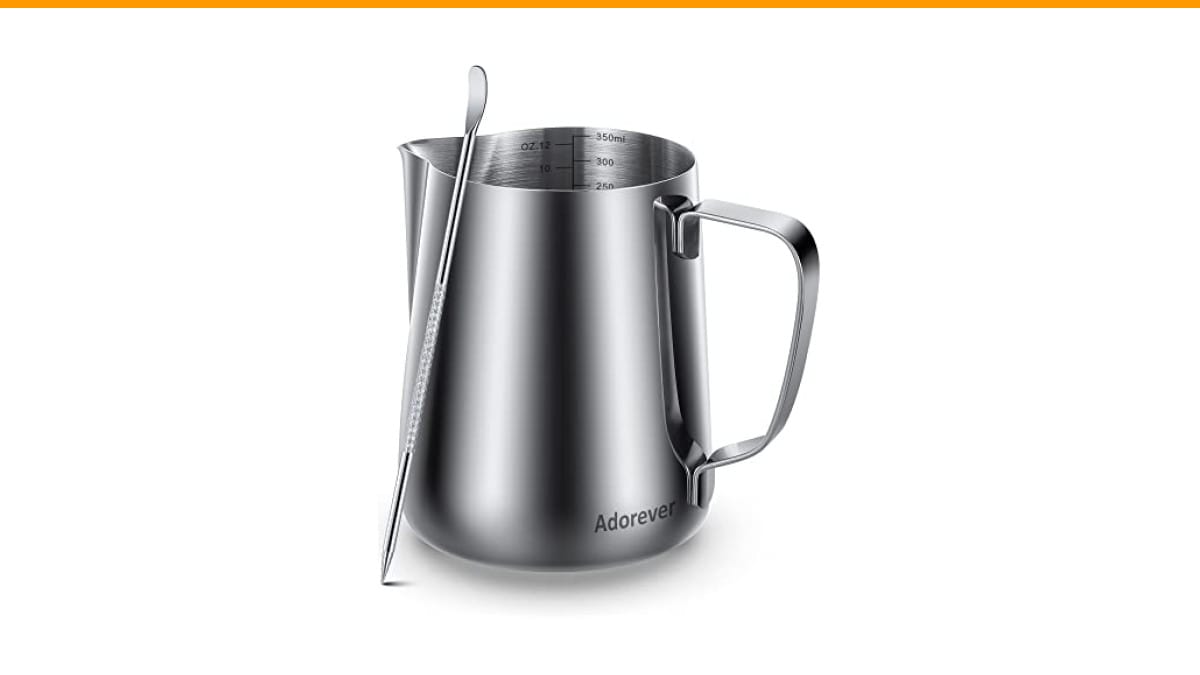
Adorever
Milk Frothing Pitcher, 8.5oz/12oz/20oz/32oz/50oz/66oz Milk Frother Cup…
- Perfect Combination Of Milk Frothing Pitcher And Latte Art Pen: The milk frother jug can be used in different ways: froth or steam…
- Premium Quality: The milk steaming pitchers and coffee art pen are made of chrome finished #304 stainless steel. Rust-proof, stain…
- Point-Mouth Design: Can prevent liquid leaking from the jug and make the coffee pattern pretty. Offer 12oz/20oz/32oz/50oz milk jug…
As an Amazon Associate I earn from qualifying purchases.
A quality pitcher helps. I’ve been testing the Adorever milk frothing pitcher for a few weeks. The pointed spout makes a real difference when you’re pouring latte art, and the 12oz size is perfect for a single drink. You can check its current price on Amazon if you’re in the market.
Start With the Right Fill Level
Most messes happen before the wand even touches the milk. You fill the pitcher to the top because you think you need a lot of milk. That’s wrong.
Fill the pitcher only to the bottom of the spout’s V-shape. For a 12oz pitcher, that’s roughly 6 to 7 ounces of milk. For a 20oz pitcher, you’re looking at 10 to 12 ounces. The milk needs room to expand as it aerates. If it’s too full, it bubbles over the top the second you introduce air.
Cold milk is non-negotiable. Use milk straight from the fridge at about 39°F (4°C). Warmer milk won’t stretch properly, and it can curdle if it sits out too long. You want the pitcher to feel cold to the touch when you pick it up.
Position the Wand Correctly
The angle of the steam wand tip in the milk determines whether you get microfoam or a geyser. Start with the tip just below the surface, about half an inch down. Tilt the pitcher so the wand tip sits slightly off-center, not dead in the middle.
Turn the steam on full blast. You should hear a gentle hissing sound, like paper tearing. That’s the air being incorporated. If you hear a loud, aggressive sputtering, the tip is too high. If you hear nothing, the tip is too deep and you’re just heating milk, not frothing it.
Keep the tip in that sweet spot for the first few seconds. As the milk stretches and expands, lower the pitcher so the tip stays below the surface. This is where people lose control. They jerk the pitcher up, and the wand sprays milk everywhere. Keep your movements slow and deliberate.
For a cappuccino, stretch the milk for about 5 seconds. For a latte, keep it to 3 seconds. The rest of the time is just heating the milk to around 150°F (65°C). Any hotter and the milk proteins break down, producing thin, watery foam and a burnt taste.
Purge the Wand Immediately
This is the single most important habit for a clean workspace. After you finish steaming, wipe the wand with a damp cloth and then purge it. Turn the steam on for 2 seconds to blast out any milk residue that got sucked up into the tip.
Milk left in the wand dries and hardens. That’s not just a mess—it’s a health hazard and a performance killer. A clogged wand steams slower and produces uneven foam. If you need a deeper clean, check out our guide on cleaning a steam wand for the full routine.
Don’t skip the purge even if you’re in a hurry. It takes 2 seconds and saves you a 20-minute descaling session later.
Pour Without the Splatter
Pouring is where the final mess happens. You tilt the pitcher too fast, and the milk sloshes over the side. The key is to pour from a low height, about 1 to 2 inches above the cup. This minimizes splashing and lets you control the flow.
Hold the pitcher with your thumb on top of the handle and your fingers wrapped around it. This gives you better control than a loose grip. Start pouring slowly in the center of the cup, then bring the pitcher closer to the surface as you begin to pour the art.
If you see bubbles on the surface of your milk, tap the pitcher on the counter a few times to pop them. Swirl the milk gently to integrate the foam and the liquid. This also helps prevent the last bit of milk from pouring out in a lump.
Compare Pitcher Sizes and Their Mess Potential
| Pitcher Size | Best For | Fill Volume | Mess Risk |
|---|---|---|---|
| 8.5oz | Single espresso drinks | 4-5 oz | Low—easy to control |
| 12oz | Standard latte or cappuccino | 6-7 oz | Low—sweet spot for home |
| 20oz | Two drinks or larger mugs | 10-12 oz | Medium—heavier, harder to tilt |
| 32oz+ | Multiple drinks or commercial use | 16-20 oz | High—heavy and prone to sloshing |
The 12oz size is the best starting point for most home users. It’s light enough to control but big enough for a standard 12oz drink. The Adorever pitcher comes in this size, and the pointed spout gives you precise control during the pour.
Frequently Asked Questions
Why does my milk splatter out of the pitcher?
Usually it’s because the pitcher is overfilled or the wand tip is too close to the surface. Drop the fill level to the spout’s base and submerge the tip half an inch. Make sure you’re angling the pitcher so the wand tip is near the side wall, not the center.
How do I keep the steam wand from spraying milk everywhere?
Purge the wand before you start, not just after. Condensation from the previous session can spray water into your milk. Run the steam for 2 seconds into a rag or drip tray before you put the wand into the milk. This clears out the water and gives you a clean start.
What’s the best way to clean the pitcher after use?
Rinse it with cold water immediately. Hot water sets the milk proteins and makes them stick. If you’re using a stainless steel pitcher like the Adorever, it’s dishwasher safe, but hand washing with cold water and a drop of soap is faster and keeps the finish nicer.
Can I steam milk for a flat white in the same pitcher?
Yes, the same pitcher works. Just reduce the stretching time to about 2 seconds. A flat white needs less foam and more silky texture. The shorter stretch time keeps the foam wetter and more integrated into the milk.
Why does my milk foam have large bubbles?
You introduced air too quickly or at the wrong angle. The tip was probably too close to the surface, causing big gulps of air. Start with the tip just below the surface and listen for a subtle hiss, not a gurgle. If you already have large bubbles, tap the pitcher on the counter and swirl it to break them down.
Habits That Keep the Counter Clean
- Fill the pitcher to the spout’s base, never higher.
- Use cold milk straight from the fridge—warm milk foams unpredictably.
- Purge the wand before and after each use. It takes seconds and prevents dried milk buildup.
- Keep the wand tip half an inch below the surface during stretching.
- Tap and swirl the pitcher after steaming to pop bubbles before pouring.
- Pour from a low height and use a firm grip on the handle.
- Rinse the pitcher with cold water immediately after use.
These habits take a day to get used to, but they become automatic. Once they do, you’ll spend less time wiping counters and more time drinking coffee. If you’re dealing with a wand that won’t froth at all, it might be a separate issue—see our troubleshooting guide for a frother that isn’t working. And if you’re cleaning up after a messy session, our vinegar cleaning guide will get your machine back to peak condition.
Products related to this article
Sponsored / affiliate links. As an Amazon Associate I earn from qualifying purchases. I may earn additional commission from eligible campaigns.
 Stainless Steel Moka Pot Pressed Powder Tool for 2 4 6 9 Cup Espresso Coffee Brewer(6 Cups)
 Coffee Espresso Machine Handle Replacement Parts, Cafe Bracket Handle for Lidl Silvercrest CM4621 CM4218 KF5002 KF500S Barista (for 51mm Portafilter Basket - Not included)
 Quick Heating Cup Warmer, Three Temperature Settings, Splashproof and Portable, for Coffee, Milk, Lightweight ABS Material