The Filter Showdown: Why Your Choice Matters More Than You Think
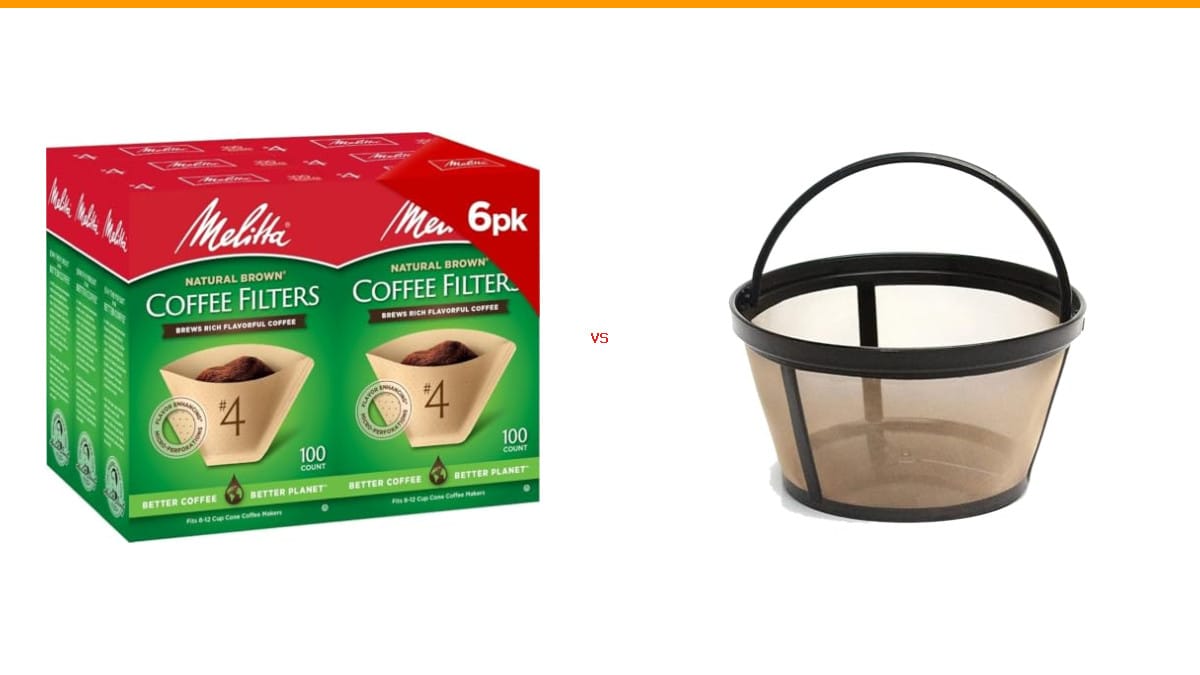
The debate between a coffee paper filter vs reusable coffee filter usually starts with money. You look at the box of Melitta #4 cones, then at the Delibru gold-toned basket, and you start doing math in your head. But the real difference isn’t just cost. It’s the flavor in your cup.
| Our Pick | Runner Up |

|

|
| Melitta Melitta #4 Unbleached Coffee Filters, Natural Brown… | Delibru Delibru Gold Toned Reusable 8-12 Cup Basket… |
| See on Amazon | See on Amazon |
As an Amazon Associate I earn from qualifying purchases.
I ran both of these through my daily brew routine for two weeks. Same beans, same grind setting, same water temperature. The only variable was the filter. The results surprised me, and they’ll likely change how you shop.
If you want a clean, bright cup with zero sludge, paper wins. If you crave heavy body and visible oils, the reusable metal mesh is your tool. Neither is objectively better. They serve different coffee personalities.
How Filters Actually Work: The Science of Extraction and Flow
Filters do more than catch grounds. They control flow rate, which dictates extraction. Paper is dense. Water sits on the coffee longer, pulling out more solubles, often leading to a balanced, less acidic brew. Metal mesh is open. Water rushes through faster, so you need a finer grind to get the same extraction.
The Melitta #4 uses microfine perforations. That’s their term for a tighter weave that still lets water pass. The Delibru uses a stainless steel gold mesh that’s visibly porous. You can see light through it. That porosity changes everything about your grind size and brew strength.
This is where most people fail when switching to reusable. They keep the same grind and wonder why the coffee tastes weak or sour. You have to recalibrate, which I’ll cover later.
| Feature | Melitta #4 Paper Cone | Delibru Gold Reusable Basket |
|---|---|---|
| Filter Type | Disposable paper cone | Permanent stainless steel mesh |
| Compatibility | 8-12 cup cone makers | Mr. Coffee and other basket-style brewers |
| Cleanup | Throw away | Rinse or dishwasher safe |
| Flavor Profile | Clean, smooth, no sediment | Richer, oily, some fine grounds pass |
| Environmental Impact | Compostable, FSC certified | Reusable, zero daily waste |
| Material | Unbleached, chlorine-free paper | BPA-free plastic frame, gold mesh |
| Cost Per Cup | Recurring purchase | One-time fee, pays back over time |
Paper Filters: The Pros, Cons, and the “Clean Cup” Myth
The Melitta #4 unbleached cone is a workhorse. It’s thick, doesn’t burst thanks to the double crimped edges, and fits my standard 8-12 cup cone brewer without a fight. I’ve had cheap filters collapse under the weight of wet grounds. Not this one.
What you get in the cup is clarity. Paper traps the oils and micro-grounds. The result is a crisp, tea-like body that highlights acidity and floral notes. If you’re drinking a light roast from Ethiopia, this is the filter you want. It doesn’t mute the flavor; it just cleans it up.
The “clean cup” isn’t a myth, but it’s not a universal good. Paper removes cafestol and kahweol, compounds linked to raising LDL cholesterol. That’s a health benefit for daily heavy drinkers. But it also strips the mouthfeel that some people associate with a proper cup.
Downsides? You buy boxes forever. Even a six-pack of Melitta runs out. And while these are FSC certified and compostable, you’re still generating trash every single morning. The unbleached color is a nice touch, though. No bleach taste, no chlorine smell.
Metal Filters: Bold Body and Oils
The Delibru basket is a different beast. It drops into my Mr. Coffee style brewer and fits snugly. The gold tone isn’t just for looks; it’s a fine mesh that lets natural oils pass straight into the carafe. Your coffee will look different. Cloudier. More like a French press.
That translates to a heavier body and a deeper, almost syrupy sweetness. I tested it with a dark Sumatra blend, and the difference was night and day. The paper filter gave me a clean, slightly dry finish. The Delibru gave me a bold, buttery cup with a lingering aftertaste.
The trade-off is sediment. You will get fine grounds in your last sip. It’s not gritty like Turkish coffee, but it’s present. If that bothers you, this filter isn’t your friend.
Cleanup is easy. Rinse it under the tap and it’s done. I also tossed it in the dishwasher a few times, and it held up fine, no warping. The BPA-free plastic frame feels solid, not flimsy like some cheap knockoffs.
Cloth Filters: The Middle Ground
I didn’t test a cloth filter here, but you should know they exist. They sit between paper and metal. They let some oils through but catch more sediment than metal. The catch is maintenance. You have to boil them to keep them clean, and they wear out after a few months. Neither product in this comparison is cloth, so if you want that middle ground, you’ll need to shop separately.
Head-to-Head Comparison: Taste, Cost, and Environmental Impact
I did a blind side-by-side test with my wife. I brewed one pot with the Melitta and one with the Delibru, using the same beans but adjusting the grind for each. The Melitta cup was bright, clean, and acidic. The Delibru cup was heavy, earthy, and sweet. She picked the Delibru as her favorite, but she also admitted it left a film on her tongue.
That’s the core difference. Paper gives you a precise, analytical cup. Metal gives you a visceral, comforting cup. Neither is wrong, but you have to know what you want before you buy.
The 30-Day Cost Break-Even Calculation
Let’s do the math. A box of Melitta filters costs a few dollars and lasts about 30-40 brews. The Delibru costs more upfront but lasts for years. If you brew one pot a day, the reusable filter pays for itself in about two to three months. After that, you’re saving money every single day.
But that math ignores the cost of wasted coffee. If you don’t recalibrate your grind for the metal filter, you’ll pour out bitter or weak pots. That’s wasted beans, which are more expensive than filters. Factor that in.
The Environmental Truth: Manufacturing vs. Landfill
Paper filters are compostable. You can throw them in your backyard bin, and they’ll break down. Melitta even certifies theirs as BPI compostable. That’s genuinely green.
Reusable filters have a higher manufacturing footprint. Making stainless steel mesh and plastic frames uses more energy than pressing paper. But over a year of daily use, the metal filter saves hundreds of paper cones from the trash. For most eco-conscious drinkers, the reusable wins on long-term waste reduction.
How to Adjust Your Brew Recipe for a Reusable Filter
Switching from paper to metal without changing anything else is a mistake. The grind size needs to be finer. With paper, I used a medium-coarse setting on my grinder. With the Delibru, I went two clicks finer to slow the flow and get proper extraction.
If your coffee tastes sour, you’re under-extracting. Go finer. If it tastes bitter and harsh, you’re over-extracting. Go coarser. This is the same principle as a coffee burr grinder versus a blade grinder; consistent particle size matters more when you have no paper to catch the fines.
You also might need to use slightly more coffee. Metal filters don’t hold water like paper does, so the slurry is thinner. I added an extra half scoop to get the strength I liked. This is all trial and error, but it takes less than a week to dial in.
The Verdict: Which Filter Wins Based on Your Coffee Personality
Here’s how to decide. If you’re a Purist who drinks black coffee and cares about the origin notes of a single-origin bean, buy the Melitta paper filters. The clean cup lets the terroir shine through without interference.
If you’re an Adventurer who likes bold, heavy brews and doesn’t mind a little sediment, get the Delibru reusable filter. It delivers a French press-like body from your automatic drip machine.
If you’re a Pragmatist who just wants the cheapest cup over the next five years, the Delibru wins on cost per brew. It also saves you from running out of filters on a Sunday morning.
If you’re an Eco-Warrior, it’s a tie. Paper composts, but it’s daily waste. Metal lasts forever but has a manufacturing cost. Choose based on which waste stream bothers you more.
My honest recommendation? Most home users should own both. Keep the Melitta for light roasts and guests. Keep the Delibru for your daily dark roast. They’re both under twenty bucks, and they serve different purposes. That’s not a cop-out; it’s the truth.
If you only buy one, start with the paper. It’s more forgiving, requires no recipe changes, and brews a consistently good cup. The reusable filter is a skill, not a shortcut. And if your Mr. Coffee stops pumping water, neither filter will save you.
Frequently Asked Questions (Including the Health and Cholesterol Question)
Does a metal filter raise cholesterol?
Yes, potentially. Paper filters trap diterpenes like cafestol, which are linked to higher LDL cholesterol. Metal filters let those oils through. If you drink more than three cups a day and have high cholesterol, stick with paper or use a cloth filter that catches some oils. This is a real health consideration, not a marketing gimmick.
How do I clean a reusable coffee filter properly?
Rinse it immediately after brewing under hot water. That removes 90% of the residue. Once a week, soak it in a solution of water and white vinegar for ten minutes, then scrub gently with a soft brush. The Delibru is dishwasher safe, but hand washing preserves the mesh’s integrity longer.
Will a reusable filter fit my Mr. Coffee machine?
The Delibru is specifically designed for Mr. Coffee 10-12 cup basket-style brewers. It’s a universal basket shape. But not all basket brewers are identical. Measure your current basket’s dimensions before ordering. If you have a cone brewer, this won’t fit, and you need a cone-style reusable filter instead.
Do paper filters make coffee less bitter?
Not inherently, but they can. Paper absorbs some of the oils that carry bitter compounds. More importantly, the slower flow rate with paper can lead to over-extraction if your grind is too fine. The filter doesn’t fix bitterness; it just changes the extraction dynamics. If your coffee is bitter, adjust the grind first. If it’s still bitter after switching to paper, check your water temperature. And if you’re dealing with a machine issue, see our guide on why coffee tastes bitter after cleaning.
One last note on the Chemex filter folding technique; it’s a different shape, but the principle of pre-wetting the paper to remove paper taste applies to the Melitta too. Give the cone a quick rinse before adding grounds. It takes two seconds and makes the first cup taste cleaner.