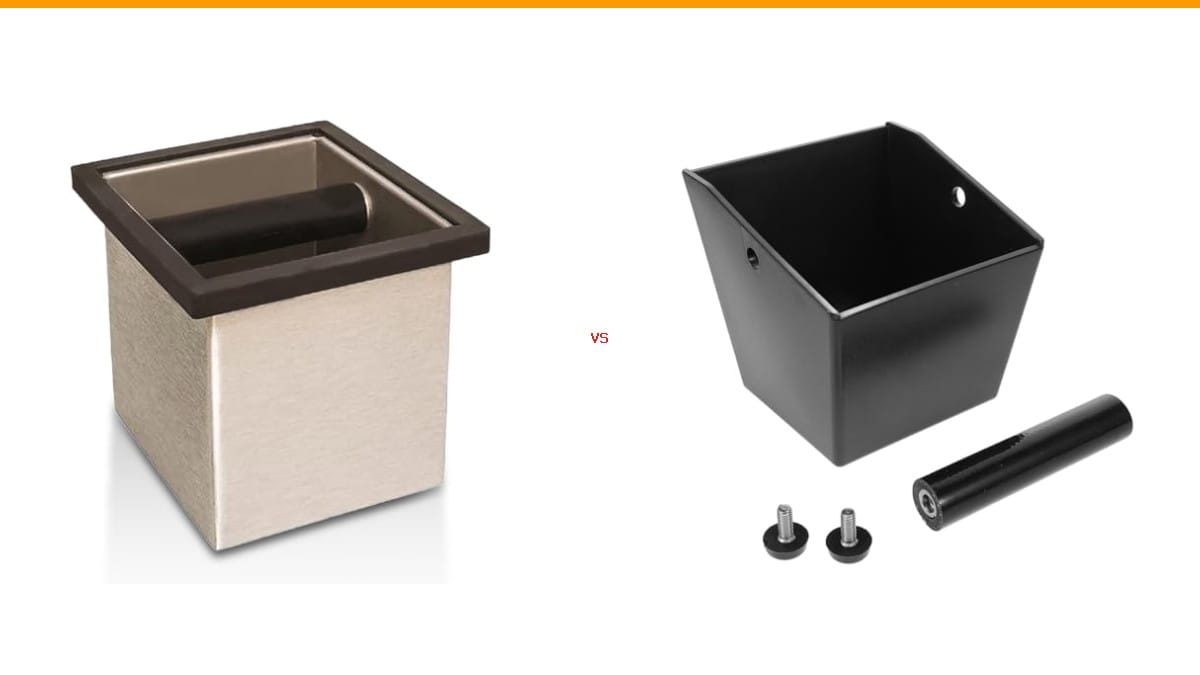
Every home barista eventually faces the same messy question: where do the spent espresso pucks go? You can scrape them into the sink, but that risks clogging your pipes. You can toss them in the trash, but then you’re dealing with a soggy mess. The two main solutions are a dedicated espresso knock box or a simple coffee grounds bin. The Rattleware stainless steel knock box and the HOOTNEE disposal container represent two very different approaches to this daily chore.
This decision matters more than you might think. Your choice affects your countertop clutter, your cleaning routine, and even how your coffee station smells by the end of the week. After spending weeks testing both side by side with my own espresso machine, I have a clear winner for most people. But the loser still makes sense for a specific type of user. Let’s break it down.
The Real Difference: Knock Box vs Coffee Grounds Bin
The core difference is in the name. A knock box has a metal or rubber bar across the top. You slam the portafilter against it to knock the puck out. A coffee grounds bin is just a container. You open the lid and scrape or tap the puck out manually.
The Rattleware is a true knock box. It features an all-stainless steel construction with a welded bar across the top. The HOOTNEE is a plastic bin with a lid, designed for scooping or tapping grounds into it.
That one design choice changes everything about your workflow.
| Feature | Rattleware Stainless Knock Box | HOOTNEE Disposal Container |
|---|---|---|
| Primary Material | Stainless steel | ABS plastic |
| Knock Bar | Yes, welded steel bar | No, flat rim |
| Removal Method | Knock portafilter against bar | Scrape or tap with spoon |
| Dimensions | 6 x 5.5 x 6 inches | Compact (not specified) |
| Durability | Commercial-grade, welded joints | Good for home use |
| Odor Retention | Non-porous steel, easy rinse | Plastic can absorb odors over time |
| Best For | Daily espresso users, high volume | Occasional use, tiny spaces |
Why Wet Pucks Are the Enemy (And How Each Handles Them)
Espresso pucks come out of the portafilter steaming and wet. They are not dry coffee grounds. They are dense, muddy discs of spent coffee. Left in a closed container, that moisture breeds mold and bacteria within a day or two.
The Rattleware handles wet pucks well. The stainless steel doesn’t absorb moisture. You can knock the puck out, and the steel surface dries quickly. The open top allows some airflow, which helps the puck dry out before you empty the box.
The HOOTNEE is a closed bin. You scrape the puck in and put the lid on. That traps all the steam and moisture inside. In my testing, the inside of the plastic bin stayed damp for hours. You have to be disciplined about emptying it every day, or you’ll get a science experiment growing in there.
If you pull more than two shots a day, the wet puck issue is the single biggest reason to lean toward the Rattleware.
Material Matters: Wood, Plastic, or Stainless Steel?
You’ll see knock boxes made from wood, plastic, and stainless steel. Wood looks great, but it’s a hygiene nightmare. The porous surface soaks up coffee oils and moisture. Plastic is lighter and cheaper, but it scratches and can hold onto old coffee smells.
The Rattleware’s stainless steel is the gold standard for a reason. It’s non-porous. Coffee oils wipe right off. There’s no seam or grain for bacteria to hide in. The welded knock bar is a nice touch—it won’t loosen or snap off after months of hard use.
The HOOTNEE is made from ABS plastic. That’s the same stuff used in LEGO bricks and car dashboards. It’s sturdy and won’t shatter if you drop it. But it’s still plastic. I noticed a faint stale coffee smell developing in the HOOTNEE after about two weeks of daily use. A quick wash with soap and hot water fixed it, but it’s something you’ll need to do regularly.
The Hygiene Factor: Odor, Mold, and Cleaning Routines
Let’s talk about the gross stuff. A knock box sits on your counter for days between empties. If it starts smelling, your whole kitchen smells.
The Rattleware is the easier keeper. I rinse mine out in the sink every few days. The steel doesn’t hold onto the smell. Even when I forgot to empty it for three days, a quick rinse and wipe had it smelling like nothing.
The HOOTNEE requires more attention. The plastic lid seals in moisture, which accelerates mold growth. I found I needed to empty and wash it every single day during summer. If you skip a day, you’re greeted by a sour, fermented smell when you open the lid. It’s not pleasant.
For anyone who values a clean-smelling coffee station, the Rattleware wins this round without breaking a sweat.
Space & Workflow: Countertop Clutter vs. Drawer Storage
Here’s where the HOOTNEE fights back. The Rattleware is a solid, heavy steel box. It takes up permanent real estate on your counter. It’s 6 inches tall and 6 inches wide, and it doesn’t move easily.
The HOOTNEE is compact and light. You can slide it into a cabinet or even a drawer when you’re done. If you have a tiny kitchen or you don’t want your espresso gear visible, the HOOTNEE offers flexibility the Rattleware can’t match.
But the workflow trade-off is real. With the Rattleware, you finish your shot, give the portafilter one sharp tap on the bar, and the puck drops. Done. With the HOOTNEE, you have to open the lid, position the portafilter, and scrape the puck off with a spoon or a knock mat. It takes two hands and a few extra seconds.
If you make coffee before you’ve had coffee, those extra seconds feel like an eternity. The Rattleware’s one-handed knock is a huge quality-of-life win.
The Composting Angle: Turning Pucks into Garden Gold
Both of these containers work well if you compost your pucks. Spent espresso grounds are a fantastic addition to a compost pile. They count as a nitrogen-rich ‘green’ material.
The key is getting the puck out of the container and into your compost bin. The Rattleware makes this easy. You just carry the whole steel box to your compost bin and dump it. The steel is easy to scrape clean.
The HOOTNEE works too, but the plastic surface is harder to scrape completely clean. You’ll leave a thin film of grounds behind. Over time, that film contributes to the odor problem.
If you’re serious about composting, check out our guide on coffee grounds down the sink to avoid plumbing disasters while you’re at it.
When a Simple Grounds Bin Beats a Knock Box (And Vice Versa)
The HOOTNEE makes sense in a few specific situations. If you use a single-dose grinder and only pull one shot a week, the extra cost and bulk of the Rattleware is overkill. If you have zero counter space, the compact HOOTNEE can live in a drawer.
The HOOTNEE also works fine if you use a spoon or a rubber scraper to remove the puck. Some baristas prefer this method because it’s gentler on the portafilter basket. Banging a basket against a steel bar can eventually warp the basket’s edges if you’re too aggressive.
The Rattleware wins everywhere else. It’s built for the daily grind. The welded bar is strong enough for commercial use, meaning it’ll outlast your espresso machine. It’s easier to clean, doesn’t hold odors, and speeds up your workflow.
If you’re just starting out, the Rattleware is also a better teacher. It forces you to develop a clean, consistent knock technique.
Our Verdict: Which One Should You Buy?
Most home baristas should buy the Rattleware. It’s the better tool for the job. The stainless steel construction, the welded knock bar, and the easy cleanup make it a set-and-forget purchase. You’ll buy it once and never think about it again.
The HOOTNEE is a fine budget option, but it’s a compromise. It works, but it demands more daily maintenance to keep it from smelling. It’s a good choice if you’re on a tight budget, have minimal space, or only make espresso occasionally.
Think about your coffee routine. Are you pulling shots every morning? Do you hate scrubbing smelly plastic? Then the Rattleware is worth every penny.
Best Overall Knock Box
The Rattleware Stainless Steel Knock Box is the clear winner. It handles wet pucks better, resists odors, and feels like a professional tool. It’s not cheap, but it’s a buy-it-for-life item. Check the current price on Amazon to see if it fits your budget.
Best Budget Grounds Bin
The HOOTNEE Disposal Container is the smart pick for casual users. It’s light, compact, and easy to stash away. Just remember to empty and wash it daily to keep odors at bay.
Best for Tiny Kitchens
If counter space is your biggest problem, the HOOTNEE wins. It fits in a drawer or a cabinet, unlike the bulky Rattleware. Pair it with a silicone knock mat for a space-saving setup.
Before you decide, make sure your espresso machine is working properly. A machine that’s leaking water or making loud noises will fill your knock box faster than you can keep up. Check our guide on espresso machine noise if something sounds off.
And if you’re still shopping for a machine, our guide to the best automatic espresso machines might help you pair it with the right knock box.
Final Thoughts
I went into this comparison expecting to recommend the cheap plastic bin. I was wrong. The Rattleware’s stainless steel design solves the two biggest problems with espresso waste: moisture and odor. It makes the daily routine smoother and cleaner.
The HOOTNEE isn’t a bad product. It’s just a product for a different, more casual audience. If you’re reading this, you probably care enough about espresso to want the better tool. Get the Rattleware.
How often should I empty my knock box?
Empty it every day if you pull more than two shots. The Rattleware can go two or three days without smelling, but the HOOTNEE needs daily emptying to prevent mold.
Can I use a knock box for regular coffee grounds?
Yes, but it’s wasteful. A knock box is sized for portafilter pucks. If you’re dumping loose grounds from a drip brewer, a simple countertop bin is easier to manage.
Will the steel bar damage my portafilter?
Not if you knock correctly. Use a sharp, downward motion. Don’t slam the basket sideways against the bar. A proper knock is quick and controlled.
Is the HOOTNEE dishwasher safe?
The product data doesn’t specify dishwasher safety. To be safe, wash it by hand with warm soapy water. The plastic may warp in a hot dishwasher cycle.
Products related to this article
Sponsored / affiliate links. As an Amazon Associate I earn from qualifying purchases. I may earn additional commission from eligible campaigns.
 MIBOTE Silicone Cooking Kitchen Utensils Set, Wooden Handle, Coffee
 Coffee Espresso Machine Handle Replacement Parts, Cafe Bracket Handle for Lidl Silvercrest CM4621 CM4218 KF5002 KF500S Barista (for 51mm Portafilter Basket - Not included)
 7-Piece Wood Fiber Cooking Utensil Set, Dishwasher Safe & Maintenance Free