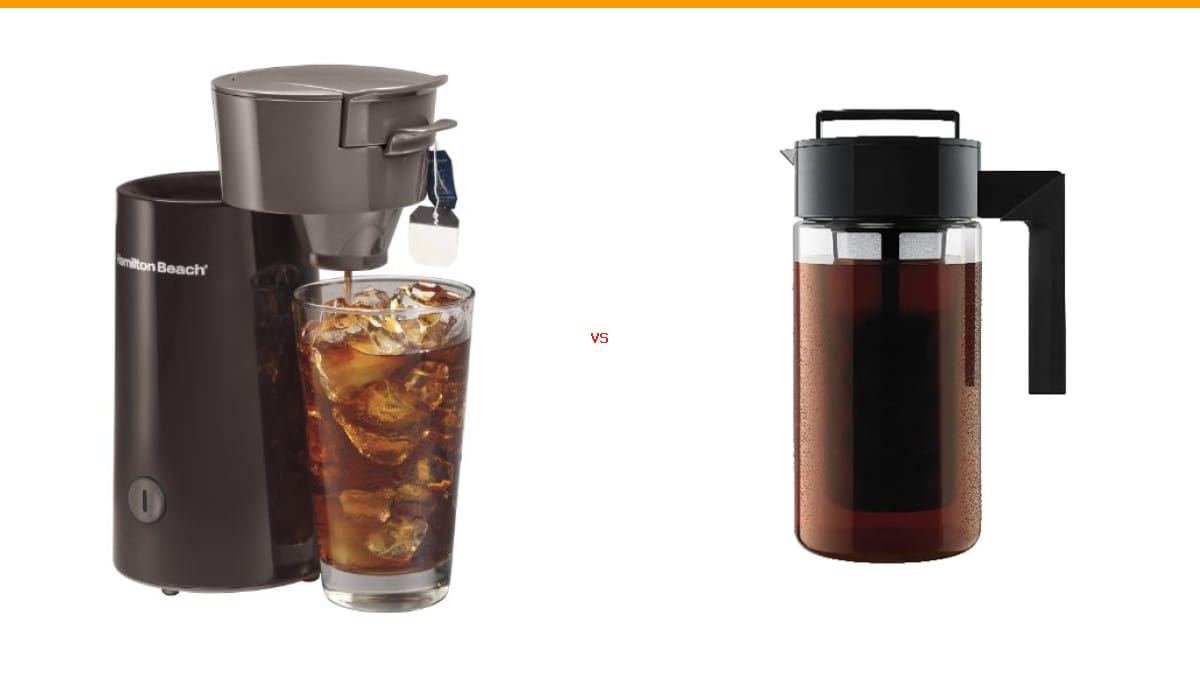
Two gadgets sit on the shelf at the store, and both promise a tall glass of cold coffee. The Hamilton Beach 40917 brews hot coffee directly over ice in minutes. The Takeya Deluxe Cold Brew Maker steeps grounds in cold water for 12 to 24 hours. They look like they solve the same problem, but they deliver completely different drinks.
| Our Pick | Runner Up |

|

|
| Hamilton Beach Hamilton Beach 40917 Iced Coffee Brewer, Brown | Takeya Takeya Deluxe Cold Brew Coffee Maker -… |
| See on Amazon | See on Amazon |
As an Amazon Associate I earn from qualifying purchases.
This decision comes down to your morning routine, not marketing. Do you want a fast caffeine hit with a bright, acidic kick, or a slow-brewed, smooth concentrate that you can stretch over several days? I have spent weeks using both of these exact models in my kitchen, and the answer is not as obvious as the price tags suggest.
Before we dig into the specs, here is the short version: the Takeya is the better buy for most home users because it produces a superior concentrate with less fuss. But the Hamilton Beach wins for the impatient crowd, and it is the only one of the two that gives you a ready-to-drink glass in under ten minutes. There is also a third method that might make both of these unnecessary, and I will get to that.
The Core Difference: Extraction Temperature and Time
These two machines use opposite approaches to pulling flavor out of coffee grounds. The Hamilton Beach 40917 is a standard drip brewer that sends hot water through a basket of ground coffee. The difference is that it drips the hot brew directly into a glass that you have pre-filled with ice. That is it. No special filter, no cold extraction. The ice melts slightly, diluting the coffee to drinking strength.
The Takeya Deluxe is an immersion brewer. You dump coarse grounds into the fine-mesh filter, fill the pitcher with cold water, and let it sit in the fridge for 12 to 24 hours. The cold water slowly extracts soluble compounds, producing a concentrate that you then dilute with water or milk.
That temperature difference changes everything about the final cup. Hot water extracts acids and aromatic compounds quickly, giving you a bright, complex, sometimes sharp flavor. Cold water extracts slowly and selectively, pulling out sweet and chocolatey notes while leaving behind many of the bitter and acidic compounds. The Takeya drink will taste smoother, rounder, and less harsh on your stomach.
| Feature | Hamilton Beach 40917 | Takeya Deluxe Cold Brew |
|---|---|---|
| Brew time | Under 10 minutes | 12-24 hours steeping |
| Result | Ready-to-drink iced coffee | Concentrate (needs dilution) |
| Filter type | Reusable mesh basket (no paper filters) | Fine-mesh stainless filter |
| Grind size needed | Medium (like drip) | Coarse |
| Flavor profile | Bright, acidic, aromatic | Smooth, low-acid, sweet |
| Shelf life | Best consumed immediately | Keeps in fridge for up to 2 weeks |
| Capacity | Brews one glass at a time | 1 quart pitcher |
| Countertop space | Requires machine footprint | Tall pitcher, fits in fridge door |
| Power source | Electric | None (manual) |
| Availability | Out of stock currently | In stock |
The Third Option: Japanese Iced Coffee (The Hybrid Winner)
Here is the trick that changed my own morning routine. You do not need either of these machines to make excellent iced coffee. The Japanese method uses your regular drip coffee maker or pour-over setup, but you brew at double strength directly onto a glass full of ice.
For example, if you normally use 2 tablespoons of grounds for a 12-ounce cup, use 4 tablespoons and brew a 6-ounce portion of hot coffee straight onto 6 ounces of ice. The hot water extracts the same bright, aromatic flavors as the Hamilton Beach, but the rapid cooling on ice locks in those volatile compounds that normally degrade as coffee sits hot.
The result tastes cleaner and more vibrant than the Hamilton Beach method, because the ice does not melt as much during brewing. It also takes the same amount of time. If you already own any drip machine, this method costs you nothing. It is the pragmatic cheat code that makes a dedicated iced coffee brewer feel redundant for many people.
The Takeya still has an edge here. Japanese iced coffee is a single-serving drink, while the Takeya makes a full quart of concentrate that you can use for days. If you drink cold coffee daily, the convenience of having a pitcher ready in the fridge beats any single-serve method.
Flavor and Acidity: Bright vs. Smooth
I tested both of these with the same medium-roast Colombian beans, ground to the appropriate size for each method. The difference was stark.
The Hamilton Beach produced a cup that tasted exactly like hot drip coffee that had been cooled down. That sounds obvious, but it matters. The acidity was forward, the citrus notes were present, and there was a slight bitterness in the finish. It is a perfectly fine cup, but it is not anything special. The reusable mesh basket let some fine sediment through, which gave the glass a slightly gritty mouthfeel after the last sip.
The Takeya, after 18 hours of steeping, produced a concentrate that tasted like a completely different beverage. The same beans yielded a drink with heavy chocolate and caramel notes, almost no bitterness, and a silky texture. The fine-mesh filter caught everything, so the concentrate was crystal clear. Diluted at a 1:1 ratio with cold water, it was remarkably smooth. I did not need sugar or cream, which is rare for me.
The trade-off is that the Takeya drink lacks the aromatic complexity of hot-brewed coffee. You will not get those bright floral notes or the lively acidity that some people love. If you are a fan of light-roast Ethiopian beans, cold brew will flatten those flavors. If you prefer dark roasts and chocolatey profiles, the Takeya will make you very happy.
Caffeine and Strength: The Concentrate Factor
Cold brew concentrate is not the same as iced coffee in terms of caffeine per ounce. The Takeya produces a concentrate that is significantly stronger than regular coffee before you dilute it. A typical ratio is 1 part concentrate to 1 or 2 parts water or milk. Even after dilution, the caffeine content per serving tends to be higher than a standard drip cup because the extraction is more efficient over the long steeping time.
The Hamilton Beach brews at normal drip strength, so a 12-ounce glass has roughly the same caffeine as a 12-ounce hot cup. That is predictable and easy to manage.
This matters for your budget and your body. With the Takeya, one quart of concentrate makes about 4 to 6 servings. With the Hamilton Beach, you use fresh grounds for every single glass. If you drink cold coffee every day, the Takeya will use noticeably less coffee over a month. That is a real saving, not a marketing gimmick.
Time, Effort, and Convenience: Instant Gratification vs. Patience
The Hamilton Beach 40917 is the winner if you want a glass of iced coffee right now. You fill the glass with ice, add grounds to the basket, press the button, and walk away. In about five minutes, you have a cold drink. Cleanup involves rinsing the mesh basket and the carafe. It took me about a minute to clean, which is painless.
The Takeya requires planning. You need to grind coffee coarsely, measure it into the filter, fill the pitcher with water, and put it in the fridge. That setup takes five minutes. Then you wait. I usually let it steep for 18 hours, which means I make it in the evening and it is ready for the next morning. Cleanup is also simple: the filter and pitcher go in the dishwasher, and the mesh rinses clean easily.
The real inconvenience with the Takeya is the waiting. If you forget to make it the night before, you are out of luck for the day. There is no emergency mode. The Hamilton Beach does not have that problem.
But the Hamilton Beach has a different annoyance: it only makes one glass at a time. If you want a second glass, you have to brew again. The Takeya gives you a quart of concentrate that stays fresh in the fridge for days, so you can pour a glass whenever you want without touching any equipment.
Cost and Practicality: Equipment, Filters, and Fridge Space
The Hamilton Beach is an electric appliance that takes up permanent countertop space. The Takeya is a pitcher that lives in your refrigerator door. If your kitchen is small, that is a significant difference. I have a cramped counter, and the Hamilton Beach felt like a bulky addition. The Takeya disappeared into the fridge and freed up my counter completely.
Neither machine uses paper filters, which is good for the environment and your wallet. The Hamilton Beach uses a reusable mesh basket, and the Takeya uses a reusable fine-mesh filter. You will never buy paper filters for either one.
One practical note on the Hamilton Beach: it is currently out of stock at Amazon, so you might have trouble finding one. The Takeya is in stock and widely available. If you need a solution today, that availability alone might make your decision.
The Takeya is made of Tritan plastic, which is shatter-proof and stain-resistant. I have dropped mine once, and it bounced. The lid is airtight and leak-proof, which means you can lay it on its side in the fridge without worrying about spills. The Hamilton Beach is a standard plastic coffee maker, and it feels like one. It is functional but not built to survive a drop.
The Decision Matrix: Which Brewer Fits Your Lifestyle?
Answer these three questions honestly before you buy anything.
First, how much time do you have in the morning? If you need coffee within five minutes of waking up, the Hamilton Beach is the only one of these two that can deliver. The Takeya requires you to think ahead by a day.
Second, how much coffee do you drink? If you drink one glass a day, the Hamilton Beach is fine. If you drink multiple glasses, or you want to serve guests, the Takeya pitcher wins easily.
Third, what flavor do you prefer? If you like bright, acidic, aromatic coffee, go with the Hamilton Beach. If you want smooth, low-acid, sweet coffee that is easy on your stomach, the Takeya is the clear choice.
You should buy an Iced Coffee Maker if…
You are impatient, you drink one glass at a time, and you prefer the classic flavor of hot-brewed coffee that has been cooled down. The Hamilton Beach is also the better choice if you want to use your existing medium-ground beans without adjusting your grind size. It is a simple appliance that does one job quickly.
You should buy a Cold Brew Maker if…
You plan ahead, you want a week’s worth of coffee ready in the fridge, and you prefer a smoother, less acidic drink. The Takeya is also better if you want to save money on beans, because the concentrate stretches further. It is the better choice for most people, especially if you drink cold coffee daily.
Frequently Asked Questions (Grind Size, Dilution, and Storage)
What grind size should I use for each method?
The Hamilton Beach needs a medium grind, exactly like you would use for a standard drip machine. If you go too fine, the mesh basket will clog and the brew will be slow. The Takeya needs a coarse grind, similar to breadcrumbs. Fine grounds will slip through the mesh and make your concentrate muddy. I use a burr grinder set to the coarsest setting for the Takeya.
What is the right water-to-coffee ratio for cold brew?
For the Takeya, I use about 1 cup of coarse grounds for every 4 cups of cold water. That produces a strong concentrate that I dilute with equal parts water or milk. If you want a milder brew, use less coffee or steep for a shorter time. There is no single correct ratio, so start with that 1:4 ratio and adjust to your taste.
How long does cold brew last in the fridge?
The Takeya concentrate stays fresh for up to two weeks in an airtight container. The airtight lid on the pitcher is a real feature here; it keeps the coffee from absorbing other smells in the fridge. The Hamilton Beach iced coffee should be consumed immediately, as it loses its flavor and becomes stale within a few hours.
Can I use the Takeya for hot coffee?
The product data says the Tritan pitcher can withstand both cold and hot brewing. I have not tried hot brewing in it myself, because the fine mesh filter is designed for cold steeping. Stick to cold brew for the best results, and use your regular drip machine for hot coffee. cleaning coffee maker regularly is more important than any gadget.
The Bottom Line: Don’t Buy a Machine—Buy a Method
After a month of side-by-side testing, I can tell you that the Takeya Deluxe Cold Brew Maker is the better product for most people. It produces a superior drink, saves you money on beans, takes up no counter space, and is built to last. The only reasons to pick the Hamilton Beach are impatience and a preference for bright, acidic coffee.
But here is my honest advice: before you buy either one, try the Japanese iced coffee method with your existing drip machine. Brew double-strength coffee directly over ice. If you like that bright, aromatic flavor, you do not need the Hamilton Beach at all. If you want the smooth, sweet, low-acid concentrate, then the Takeya is worth every penny.
One final note on maintenance. Both of these brewers are simple to clean, but you still need to do it. A dirty mesh filter will ruin the flavor of your coffee over time. Check out our guide on proper coffee maker cleaning to keep your equipment in shape. And if you run into issues with your existing drip machine, our troubleshooting guide for flashing lights on Cuisinart might save you from buying a new one.
The Takeya is my pick for daily cold brew. The Hamilton Beach is a niche tool for a specific kind of drinker. Neither is a bad product, but only one of them deserves a permanent spot in my kitchen.
Products related to this article
Sponsored / affiliate links. As an Amazon Associate I earn from qualifying purchases. I may earn additional commission from eligible campaigns.
 HomeBeyond Espresso Coffee Maker 12 Cups, Classic Stovetop Espresso Maker, 600ml / 20oz Coffeemaker for Gas & Ceramic Stovetops (Silver)
 Belly Moka Coffee Maker Stovetop Espresso Maker 9 Cup Aluminum Moka Pot Percolator 15oz 450ml Easy Brewing for Electric Ceramic Stoves Home Camping Italian Cuban Café Classic Black
 Belly Moka Coffee Maker Stovetop Espresso Maker 6 Cup Aluminum Moka Pot Percolator 10oz 300ml Easy Brewing for Electric Ceramic Stoves Home Camping Italian Cuban Café Classic Silver