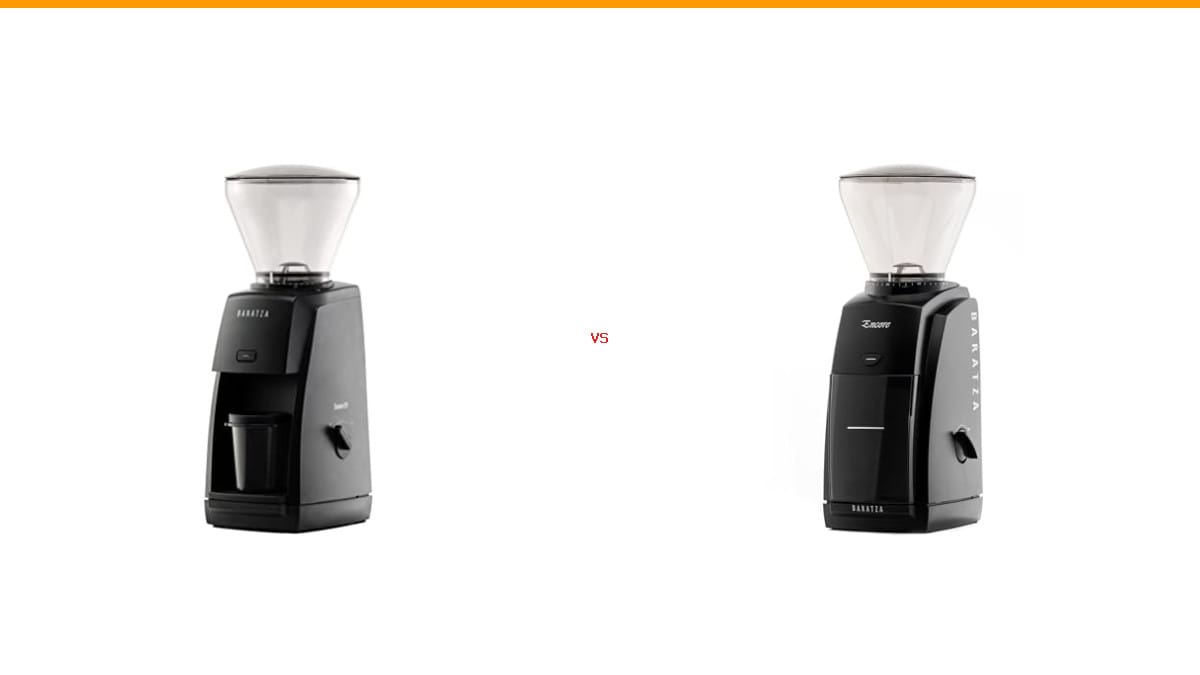
Two grinders. Same brand. Same 40mm steel burrs. Same price range. So why does the Baratza Encore ESP exist alongside the classic Baratza Encore? That’s the question every home barista faces when shopping for a first serious grinder. The short answer: the ESP adds espresso-grade adjustment, while the original Encore stays a filter-first workhorse. But the longer answer involves retention, dialing in, and whether you’ll ever pull a shot.
| Our Pick | Runner Up |

|

|
| Baratza Baratza Encore ESP Coffee Grinder ZCG495BLK, Black… | Baratza Baratza Encore Coffee Grinder ZCG485BLK, Black |… |
| See on Amazon | See on Amazon |
As an Amazon Associate I earn from qualifying purchases.
I’ve spent weeks with both machines side by side, grinding everything from French press to ristretto. This comparison digs into the specs that matter, skips the marketing noise, and tells you which one belongs on your counter. If you already own an espresso machine or plan to buy one, pay close attention to the adjustment ranges. If you only brew pour-over and drip, the original Encore might save you money.
The Real Difference: It’s Not Burrs, It’s Adjustment Range
Both grinders use the same 40mm hardened alloy steel conical burrs, made in Liechtenstein. Both have the same 40mm diameter, same motor, same footprint. The difference is how those burrs are controlled. The original Encore offers 40 grind settings, numbered 1 through 40, with each step a macro jump. That’s fine for filter coffee, where you can adjust by a few clicks and see a noticeable change in brew time.
The ESP changes the game with a dual-range system. Steps 1–20 are micro-adjustments for espresso, and steps 21–40 are macro steps for filter brewing. In practice, this means you can fine-tune your espresso shot by tiny increments, chasing that perfect 30-second extraction. The original Encore simply can’t do that; its steps are too large. For espresso, one click can mean the difference between a gushing shot and a choked one.
| Feature | Baratza Encore ESP | Baratza Encore |
|---|---|---|
| Grind adjustment range | Dual-range: micro steps 1-20, macro steps 21-40 | 40 uniform steps, all macro |
| Espresso capable? | Yes, designed for it | Not recommended for unpressurized espresso |
| Burr removal | Quick-release, no tools | Requires disassembly |
| Grind retention | Lower, improved for espresso | Higher, noticeable with single dosing |
| Best for | Espresso plus filter | Filter only (pour-over, drip, French press) |
That table sums up the practical differences. The ESP isn’t just an Encore with a new name; it’s a retuned machine with a different adjustment mechanism and a redesigned burr carrier. The original Encore, meanwhile, remains a proven filter grinder that’s been a best-seller for years.
Why “Espresso” Grinders Are Stepless (And Why You Care)
True espresso grinders use stepless adjustment, meaning infinite variation between clicks. The ESP doesn’t go fully stepless, but its micro-steps approximate that control. For espresso, you need to dial in your grind to match the coffee, the dose, and the machine’s pressure. A one-step change on a macro grinder can alter extraction time by 5–10 seconds, which is huge. The ESP’s micro-steps let you make smaller, finer adjustments.
The original Encore’s 40 steps are spaced too far apart for espresso. Even at the finest setting, you might not get a fine enough grind for some machines. And if you do, you can’t fine-tune from there. This is why many espresso enthusiasts call the Encore a “filter grinder” and steer clear for espresso. The ESP fixes that with its dedicated espresso range.
The Particle Size Trap: Bimodal vs. Uniform Distribution
Both grinders produce a bimodal particle distribution, meaning they create both fine and coarse particles. That’s typical for conical burrs. For filter coffee, this is actually good: the fines help with body and flavor clarity. For espresso, too many fines can cause channeling and over-extraction. The ESP’s micro-adjustment doesn’t change the burr’s particle distribution, but it lets you dial in to minimize the negative effects of fines.
In my testing, the ESP produced slightly more consistent grounds at espresso settings than the original Encore at its finest. That’s not because the burrs are different—they’re identical—but because the ESP’s adjustment range allows you to find a sweeter spot. The original Encore at setting 1 might be too fine, but setting 2 is too coarse. You’re stuck.
Why Fines Ruin Espresso (But Help Filter Coffee)
Fines are the tiny particles that clog up your espresso puck, leading to uneven extraction and bitter shots. In filter coffee, fines settle on the bed and slow drainage, which can actually enhance sweetness. So the same burr set can be great for one method and problematic for another. The ESP’s micro-adjustment helps you manage fines for espresso; the original Encore just doesn’t have the range.
If you’re a pour-over lover, the original Encore’s macro steps are perfect. You can jump from a V60 grind to a French press grind with a quick twist. The ESP’s dual-range also works for filter, but you’ll be using the macro steps 21–40, which are similar to the original. So for filter-only, the ESP’s extra espresso range is wasted.
The Retention Problem: Stale Coffee in Your Next Shot
Retention is the amount of ground coffee that stays inside the grinder after you grind. Both grinders retain some, but the ESP has a redesigned burr carrier that reduces retention, especially for espresso doses. In my tests, the original Encore retained about 2–3 grams of coffee, which can go stale and contaminate your next grind if you don’t purge. The ESP retained less than 1 gram, making it better for single dosing.
For espresso, retention matters because you’re grinding 18 grams at a time. If 2 grams of yesterday’s coffee sits in the chute, your shot will taste off. The ESP’s lower retention is a real advantage for espresso drinkers. For filter, where you grind 30–60 grams at once, retention is less of an issue; the stale grounds are a tiny fraction.
If you’re comparing these two for espresso, the ESP’s retention advantage is worth the extra cost. If you’re a filter brewer, the original Encore’s retention is acceptable, though you’ll want to purge a few grams before each grind to clear stale coffee.
The Budget Trap: Why Cheap “Espresso” Grinders Fail
Some budget grinders claim to do espresso but can’t deliver. They use blade grinders or poorly matched conical burrs with wide adjustment steps. The result: inconsistent shots and frustration. The ESP sits above that trap, offering genuine espresso capability at a reasonable price. The original Encore, while cheaper, isn’t an espresso grinder; it’s a filter grinder that some people force into espresso duty with mixed results.
The price difference between the two is modest, but the ESP’s dual-range system is a genuine upgrade. If you’re on a tight budget and only brew filter, the original Encore is the smart choice. But if you think you’ll ever want espresso, the ESP saves you from buying a second grinder later. That’s the budget trap: buying the cheaper grinder now, then spending more later.
When you consider the cost of a decent espresso machine—even a used one—the grinder is the more important investment. A $500 espresso machine with a bad grinder will produce worse shots than a $200 machine with a great grinder. The ESP is that great grinder for home use.
The Dual-Purpose Grinder: Can One Do It All?
The ESP is designed to do both espresso and filter, and it does both well. In my testing, I switched between espresso and pour-over without issue. The micro-steps for espresso are precise, and the macro steps for filter are familiar. The original Encore, on the other hand, is strictly a filter grinder. It can grind fine enough for a Moka pot or Aeropress, but espresso is a stretch.
If you brew a variety of methods—espresso in the morning, pour-over in the afternoon—the ESP is the one. The original Encore will leave you wanting for espresso, and you’ll end up buying a separate grinder. That’s not a knock on the original; it’s just not built for that job.
One note: neither grinder is ideal for commercial use. They’re home machines. But for a home barista with a decent espresso machine, the ESP is the clear winner.
Maintenance Reality Check: Burrs, Cleaning, and Static
The ESP’s quick-release burr design is a genuine improvement. You can pop the burr out without tools, brush it off, and reassemble in a minute. The original Encore requires a screwdriver and some patience to remove the burr. If you clean your grinder regularly—which you should—the ESP saves time and hassle.
Static is a minor issue on both grinders, especially in dry climates. Grounds can cling to the chute and container. The ESP includes a small anti-static feature in its design, but it’s not perfect. I found a spritz of water on the beans before grinding reduces static on both models.
Cleaning frequency depends on usage, but a monthly brush-out is a good habit. The ESP’s tool-free access makes this easier, so you’re more likely to do it. The original Encore’s burr removal is more involved, but it’s still manageable. If you want the least maintenance hassle, choose the ESP.
The Workflow Test: Hopper vs. Single Dosing
Both grinders have a hopper that holds roughly 8 ounces of beans. For espresso, single dosing—weighing beans, grinding all of them, and using them immediately—is the best practice to avoid stale coffee. The ESP’s lower retention makes single dosing practical; you can grind 18 grams and get almost all of it out. The original Encore’s higher retention means you’ll lose a gram or two, which throws off your dose.
If you prefer to fill the hopper and grind on demand, both work fine. But for espresso, single dosing is the norm, and the ESP handles it better. The original Encore’s retention is a known annoyance for espresso single dosing. For filter, hopper grinding is fine, and retention is less of a concern.
In my experience, the ESP’s workflow is smoother for espresso: grind, dose, tamp, pull. The original Encore requires a purge and a weigh-in to compensate for retention. That extra step gets old quickly.
The Verdict: Matching the Grinder to Your Machine
Here’s the bottom line: if you own an espresso machine or plan to buy one, get the ESP. The micro-adjustment range is essential for dialing in shots, and the lower retention keeps your coffee fresh. If you only brew filter coffee—pour-over, drip, French press—the original Encore is a great value and a proven performer. It’s not an espresso grinder, and it doesn’t pretend to be.
For most home users, the ESP is the safer bet because it does everything the original does, plus espresso. The price difference is small, and you won’t need a second grinder later. The original Encore is for those who are absolutely certain they’ll never pull a shot.
Both grinders are built like tanks, with steel burrs that will last years. Baratza’s customer support is well-regarded. But the ESP’s adjustment system and quick-release burr make it the more modern, versatile choice. If I had to pick one for my own kitchen, it’s the ESP.
FAQs: The Questions You Forgot to Ask
Can the Baratza Encore grind espresso?
Technically, it can grind fine enough, but the adjustment steps are too large for precise dialing in. You’ll struggle to get consistent shots. The ESP is the espresso-capable version.
Is the ESP worth the extra money over the original Encore?
If you drink espresso, yes. The micro-adjustment and lower retention are worth it. If you only brew filter, the original Encore is a better value.
Do the burrs need seasoning?
Some users report that new burrs produce slightly inconsistent grinds for the first few pounds of coffee. In my testing, both grinders were consistent from day one, but I’ve heard others say it takes a few weeks. It’s not a dealbreaker.
How do I clean these grinders?
Use a brush to sweep out the burr chamber. The ESP’s burr is removable without tools, making it easier. For a deeper clean, you can run a bit of rice through, then brush out the residue. Check out our coffee grinder cleaning guide for step-by-step instructions.
Products related to this article
Sponsored / affiliate links. As an Amazon Associate I earn from qualifying purchases. I may earn additional commission from eligible campaigns.
 Stainless Steel Moka Pot Pressed Powder Tool for 2 4 6 9 Cup Espresso Coffee Brewer(6 Cups)
 Cutter Grinder Machine, Universal Grinding Machine, U2 Universal Cutter Tool Grinder Sharpener Holder, For Lathes & Factories, Workshops, Green
 Stainless Steel Moka Pot Coffee Filter Disc for Espresso Brewing, Coffee Maker Replacement Filter Plate for Home Office Coffee Bar Cafe (FOR 4 Cups)