You just made a perfect flat white. The microfoam was glossy, the pour was clean. Then you rinse the wand under the tap for two seconds and call it done. We’ve all done it. A week later, that same frother smells like sour yogurt and your milk won’t foam no matter how fresh it is.
Milk protein sticks to metal and plastic with surprising strength. Hot milk leaves behind a film called milkstone that plain water won’t touch. This guide walks you through how to clean a milk frother for every type — electric wands, countertop auto frothers, and steam wands on espresso machines. You’ll get the exact steps, the right tools, and the mistakes that ruin frothers faster than anything else.
Urnex
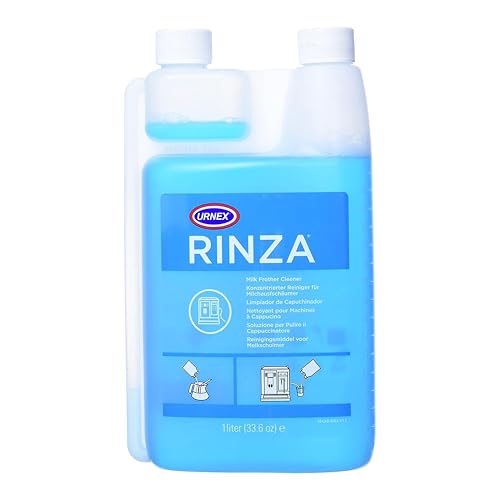
Urnex - Rinza Alkaline Formula Milk Frother…
- Milk frother cleaner breaks down milk protein buildup.
- Comes in a dual-chamber bottle that contains a built-in measuring device.
- Cycles through auto frothers for easy cleanup.
As an Amazon Associate I earn from qualifying purchases.
If you use an espresso machine, the steam wand cleaning routine is slightly different. We’ll cover that in its own section.
The Quick Daily Rinse (Non-Negotiable)
This takes fifteen seconds. Do it every single time you froth milk, and you’ll avoid 90% of the problems that send people searching for a new frother.
Right after you pour your drink, do this:
- Remove the frother from the milk. Do not let it sit with milk residue on it.
- Rinse the wand, whisk, or frothing chamber under hot running water immediately. Hot tap water works better than cold because it melts the fat.
- Wipe the exterior with a damp cloth. Milk splashes dry into a crust that’s harder to remove later.
- For electric wands, remove the whisk attachment and rinse it separately. Milk gets trapped in the small crevices where the whisk meets the shaft.
- For auto frothers, pour out any leftover milk and give the interior a quick rinse. Don’t fill it with water and run it — that just spreads milk fat around.
That’s it. This habit alone keeps your frother working like new for months. The people who skip this step are the ones asking why their frother smells bad after two weeks.
Deep Cleaning an Electric Milk Frother Wand
Electric wands are the most common type, and they’re also the easiest to clean badly. The motor housing can’t go in water, but the whisk and the shaft need more than a rinse once a week.
Here’s the weekly deep clean:
- Unplug the wand. Remove the whisk attachment.
- Fill a tall glass with hot water and add a drop of dish soap. Use a glass that’s tall enough to submerge the shaft up to — but not past — the maximum fill line.
- Submerge the shaft and whisk in the soapy water. Run the wand for 15 seconds. The spinning action cleans the shaft, but it won’t clean the whisk attachment itself.
- Take the whisk off and scrub it with a small brush. A baby bottle brush or a dedicated milk frother brush works well. Pay attention to the spot where the whisk connects to the shaft — milk fat collects there.
- Rinse everything under hot water. Dry with a lint-free cloth.
- Once a month, soak the whisk and shaft in a solution of hot water and a proper cleaning solution for ten minutes. This breaks down the milkstone that soap alone won’t remove.
One thing I learned the hard way: don’t use boiling water. It can warp the plastic housing on cheaper wands. Hot tap water is hot enough.
Deep Cleaning an Automatic Milk Frother (Countertop Jug)
Automatic frothers — the kind with a carafe and a spinning disc or whisk — need a different approach. The motor base is sealed, but the carafe and lid come off. Most are dishwasher safe, but the heat and detergent can dull the non-stick coating over time. Hand washing is gentler.
Here’s the weekly routine:
- Unplug the base. Remove the carafe and lid.
- Rinse the carafe with hot water immediately after use. Don’t let it sit.
- Wash the carafe and lid with warm soapy water. Use a non-abrasive sponge. The non-stick coating scratches easily, and scratched coating traps milk particles.
- Clean the whisk or disc separately. These often have a small rubber seal that holds onto milk residue. Pop the seal out and clean underneath it.
- Wipe the base with a damp cloth. Never submerge the base in water.
- Dry all parts fully before reassembling. Storing a wet frother invites bacterial growth and a musty smell.
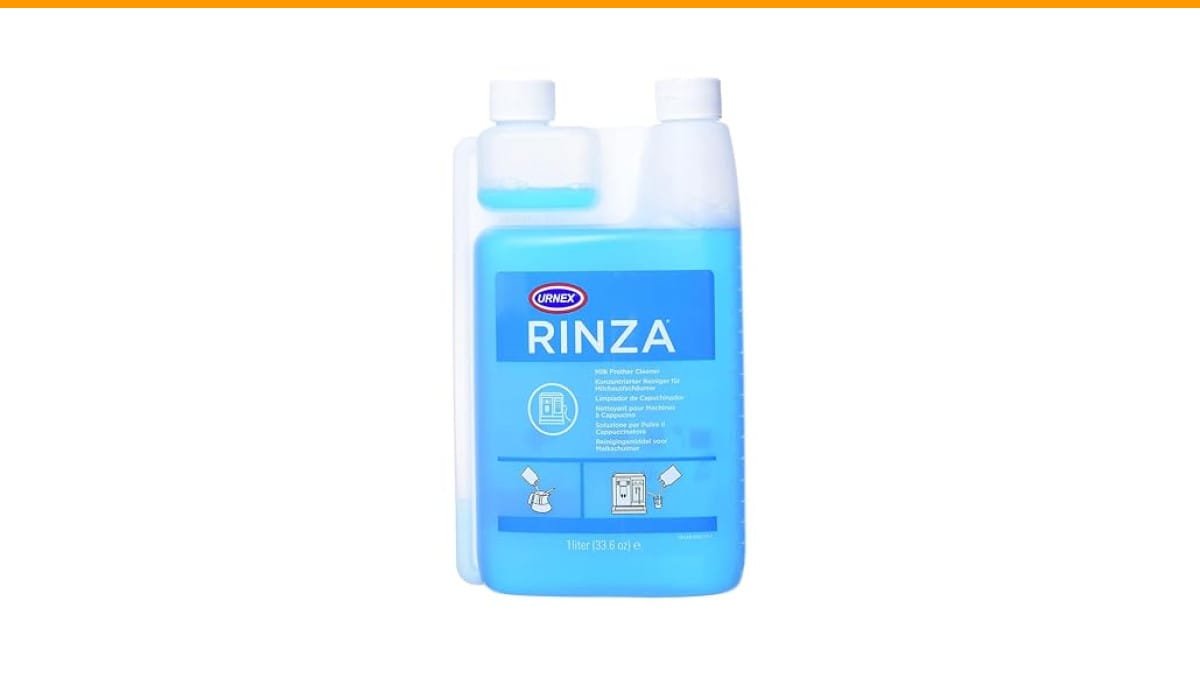
For the monthly deep clean, use a dedicated milk frother cleaner. The Urnex Rinza is a solid choice — it comes in a dual-chamber bottle with a built-in measuring device, so you don’t have to guess how much to pour. It breaks down milk protein buildup that dish soap leaves behind, and it cycles through auto frothers for easy cleanup. You’ll get more than 30 uses per bottle, which works out to less than a dollar per clean. Check the current price on Amazon.
Run the rinse cycle twice after using any chemical cleaner. You don’t want soapy residue in your next latte.
Cleaning a Steam Wand on an Espresso Machine
Steam wands are a different beast. They don’t have removable parts, and they have a tiny hole at the tip that clogs easily. If you’ve ever seen a steam wand sputtering instead of producing smooth steam, it’s clogged with dried milk.
The daily routine is non-negotiable:
- After frothing, wipe the wand with a damp cloth immediately. This removes the surface milk before it bakes on.
- Purge the wand for 2-3 seconds. Point it into the drip tray and open the steam valve. This clears milk from inside the wand.
- Wipe it again with a clean, damp cloth.
The weekly deep clean requires a bit more work:
- Fill a heatproof pitcher with hot water and add a steam wand cleaning solution or a drop of dish soap.
- Submerge the wand tip in the solution.
- Open the steam valve for 30 seconds. The steam will pull the solution up into the wand and flush out the milk residue.
- Turn off the steam, remove the wand from the solution, and purge again for 2-3 seconds.
- Wipe the wand dry.
If your wand is badly clogged, you may need to soak the tip in a cleaning solution for 30 minutes and then use a pin to clear the hole. Check our detailed steam wand guide for the full procedure.
Cleaning Method Comparison
| Method | Best For | Frequency | Time | Pros | Cons |
|---|---|---|---|---|---|
| Hot water rinse | All frothers | After every use | 15 seconds | Fast, prevents buildup | Doesn’t remove milkstone |
| Dish soap + water | Electric wands, auto frothers | Weekly | 5 minutes | Removes fat and residue | Can leave soap film if not rinsed well |
| Dedicated cleaner (e.g., Urnex Rinza) | Auto frothers, steam wands | Monthly | 10-15 minutes | Breaks down milk protein, deep cleans | Costs money, needs thorough rinsing |
| Vinegar solution | Auto frothers, steam wands | Monthly (alternative) | 15 minutes | Cheap, natural | Strong smell, may not fully remove milkstone |
| Dishwasher | Auto frother carafes (if marked safe) | Weekly | Machine cycle | Hands-off | Can dull non-stick coating |
Three Mistakes That Ruin Frothers
People kill their frothers in three predictable ways. I’ve seen all of them in my own kitchen and in reader comments.
Mistake 1: Submerging the motor base. Whether it’s a wand or an auto frother, the motor housing is not waterproof. Even a quick dunk to rinse it off can push water into the motor. That kills the unit. Wipe it with a damp cloth instead.
Mistake 2: Using abrasive scrubbers. Non-stick coatings and plastic housings scratch easily. Scratches become breeding grounds for bacteria and make future cleaning harder. Stick to soft sponges and brushes.
Mistake 3: Skipping the deep clean. A daily rinse keeps things working, but it doesn’t remove the mineral and protein buildup that accumulates over time. That buildup affects the taste of your milk and the performance of your frother. Monthly deep cleaning is essential.
Frequently Asked Questions
How often should I clean my milk frother?
Rinse it after every single use. That’s not optional. Deep clean with soap and water once a week, and use a dedicated cleaner once a month. If you use your frother multiple times a day, increase the deep clean frequency to every 3-4 days.
Can I put my milk frother in the dishwasher?
Check the manufacturer’s instructions. Some carafes and lids are dishwasher safe, but the motor base and wand are not. Even dishwasher-safe parts can lose their non-stick coating over time. Hand washing is usually gentler and extends the life of the parts.
Why does my milk frother smell bad?
That’s dried milk residue. Milk fat oxidizes and develops a sour smell as it sits. The smell is a sign that you’re not cleaning thoroughly enough. Pay attention to the whisk attachment and any rubber seals — these are the spots where residue hides. A dedicated cleaner like the Urnex Rinza will eliminate the odor.
What’s the best way to clean a clogged steam wand?
Fill a pitcher with hot water and a cleaning solution, submerge the tip, and run the steam for 30 seconds. If that doesn’t clear it, soak the tip in the solution for 30 minutes, then use a thin pin to clear the hole. Don’t force the pin — you can damage the tip. If it’s still clogged, you may need to replace the tip. Check our clogged coffee maker guide for related tips.
Can I use vinegar to clean my milk frother?
Yes, but it’s not the best option. Vinegar is good at removing mineral scale, but it’s not great at breaking down milk protein. It also leaves a strong smell that’s hard to rinse out completely. A dedicated milk frother cleaner is more effective and leaves no odor. If you use vinegar, dilute it 1:1 with water and run a rinse cycle afterward.
What to Do Next
Cleaning a milk frother isn’t complicated, but it does require consistency. The daily rinse takes seconds, and the weekly deep clean takes minutes. The monthly deep clean with a dedicated product takes a quarter of an hour.
- Rinse after every use with hot water. Do not skip this.
- Deep clean with dish soap weekly. Remove all removable parts.
- Use a dedicated milk frother cleaner monthly to break down milkstone.
- Never submerge the motor base in water.
- Use soft sponges only. Abrasive scrubbers ruin non-stick coatings.
- Dry all parts fully before reassembling.
- If you own an espresso machine, purge your steam wand after every use and deep clean it weekly.
Your frother will last years longer, your milk will taste cleaner, and your morning routine won’t include that moment of dread when you open the lid and smell yesterday’s milk. That’s worth the two minutes a day.
Products related to this article
Sponsored / affiliate links. As an Amazon Associate I earn from qualifying purchases. I may earn additional commission from eligible campaigns.
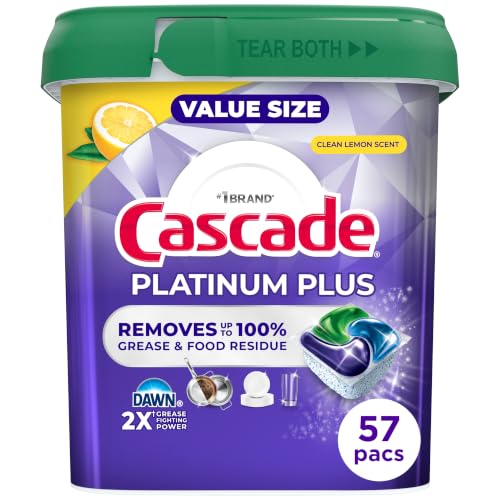 Cascade Platinum Plus Dishwasher Detergent Pods Dish Soap Lemon 57 Count
 MRS. MEYER'S CLEAN DAY Automatic Dishwasher Pods, Lavender, 20 Count - Pack of 3 (60 Total Pods)
 Coffee Espresso Machine Handle Replacement Parts, Cafe Bracket Handle for Lidl Silvercrest CM4621 CM4218 KF5002 KF500S Barista (for 51mm Portafilter Basket - Not included)