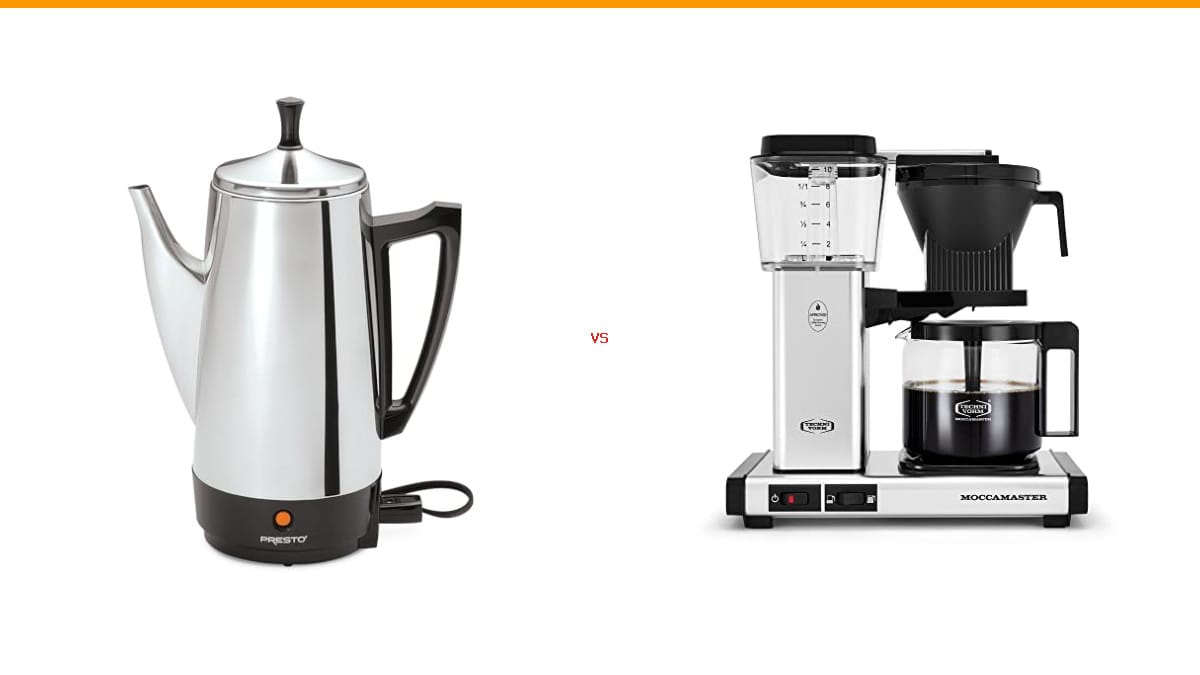
Putting a $40 electric percolator next to a $300 drip machine feels almost unfair. But shoppers do it all the time, because both promise one thing: a full pot of hot coffee without fuss. The Presto 02811 and the Technivorm Moccamaster KBGV Select sit at opposite ends of the coffee spectrum, yet they compete for the same counter space.
| Our Pick | Runner Up |

|

|
| Presto Presto 02811 Stainless Steel 12-Cup Electric Coffee… | Technivorm Moccamaster Technivorm Moccamaster 53941 KBGV Select 10-Cup Coffee… |
| See on Amazon | See on Amazon |
As an Amazon Associate I earn from qualifying purchases.
The real question isn’t which is ‘better’ in some abstract sense. It’s which one fits how you actually drink coffee. Do you want bold, oily, campfire-adjacent brew that stays hot for hours? Or do you want a clean, nuanced cup that tastes like the roaster intended? That’s the trade-off, and it’s worth getting right before you spend money.
I’ve brewed dozens of pots with both. Here’s how they stack up.
The Core Difference: Recirculation vs. One-Pass Brewing
A percolator works by boiling water up a tube and showering it over coffee grounds. That water then drips back down and gets recirculated—again and again—until the brew is strong enough. The Presto 02811 cycles water continuously, which is why it can turn out a full pot in about a minute per cup.
A drip maker like the Moccamaster heats water to a precise temperature (around 196–205°F) and lets it flow through the grounds once, into the carafe. No recirculation. That single pass is the entire basis of modern specialty coffee brewing.
These two approaches produce completely different coffee. It’s not subtle.
| Feature | Presto 02811 Percolator | Technivorm Moccamaster KBGV |
|---|---|---|
| Brewing method | Recirculating boiling water | One-pass drip, no pump |
| Capacity | 2–12 cups (5 oz each) | 10 cups (40 oz / 1.25 L) |
| Brew time (full pot) | About 1 minute per cup | 4–6 minutes |
| Temperature control | Automatic keep-warm | Fixed optimal extraction temp |
| Filter type | Metal basket (no paper needed) | Paper or mesh filter (cone #4) |
| Materials | Stainless steel | Polished silver, metal housing |
| Warranty | Standard 1-year (typical) | 5-year |
| Auto shut-off | No (keeps warming) | Yes, after 100 minutes |
Flavor Showdown: Body, Clarity, and the Bitterness Trap
Here’s where the two diverge hardest. The Presto’s metal filter lets coffee oils and fine sediment pass through. You get a thick, heavy cup with real body—almost like French press but with more bitterness. The Moccamaster’s paper filter strips those oils and fines, leaving a clean, bright, tea-like clarity.
Why Percolators Risk Over-Extraction
Because the Presto recirculates boiling water, it keeps extracting from the grounds the whole time. Leave it on for ten minutes and you’ll get a bitter, harsh brew that tastes like battery acid. The key is pulling it off heat right when the color looks right—usually after 5–7 minutes. That takes attention.
In my tests, the Presto made a genuinely strong cup. But it lacked nuance. Dark roasts turned ashy; light roasts lost their floral notes entirely. If you drink coffee with milk and sugar, you’ll probably love it. Black coffee drinkers may wince.
The Paper Filter Advantage in Drip Makers
The Moccamaster brews at a controlled temperature and never recycles water. That means no over-extraction, no bitter edge, no sludge in the bottom of your cup. The paper filter catches the oils that can make coffee taste muddy—and also removes cafestol, a compound linked to cholesterol elevation. That’s a real health angle worth noting if you drink several cups a day.
The trade-off? The Moccamaster’s coffee is lighter in body. Some people call it ‘weak’ because they’re used to percolator strength. It’s not weak—it’s just cleaner.
Round winner: Moccamaster for clarity and consistency. Presto wins only if you want maximum body and don’t mind bitterness.
Ease of Use: The ‘Set and Forget’ vs. The ‘Watch the Pot’
The Moccamaster is stupid simple. Fill the tank, add a filter, scoop in grounds, flip one switch. It brews 40 ounces in 4–6 minutes and turns itself off after 100 minutes. You can walk away and come back to a perfect pot. No babysitting.
The Presto demands more. You need to plug it in, wait for the light to signal ready, and then monitor it so it doesn’t over-brew. It also keeps the coffee hot indefinitely—which sounds nice, but that means it keeps extracting. After 30 minutes on the warmer, even good coffee turns bitter.
That said, the Presto’s automatic temperature control does keep the brew piping hot without manual adjustment. You just have to remember to unplug it when you’re done. No auto shut-off here.
Round winner: Moccamaster for pure convenience. The Presto is for people who enjoy the ritual.
Cost, Cleaning, and Long-Term Maintenance
Upfront, the Presto is a fraction of the Moccamaster’s price. But long-term costs tell a different story. The Moccamaster requires #4 cone paper filters—a few cents each. The Presto uses a permanent metal basket, so no recurring filter costs. However, the Presto’s stainless steel interior collects coffee oils that need regular scrubbing. The Moccamaster’s carafe and filter basket rinse out in seconds.
Both need descaling eventually. Hard water will clog either machine. The Moccamaster’s 5-year warranty covers parts and labor—that’s rare. The Presto has a typical 1-year warranty. If you factor in replacement costs, the Moccamaster may actually be cheaper over a decade, assuming it lasts.
Cleaning the Presto means disassembling the stem, basket, and lid. It’s not hard, but it’s more pieces than a drip machine. The Moccamaster’s brew basket and carafe are dishwasher-safe (top rack), which is a huge time saver.
Round winner: Moccamaster for maintenance ease and warranty. Presto wins on upfront price and zero filter waste.
The Great Outdoors: Why Campers Love Percolators
Here’s the thing nobody mentions in spec sheets: the Presto is electric, so it needs a wall outlet. But a stovetop percolator—same principle—works on a campfire or gas grill. The Presto itself isn’t portable, but the percolator method is. If you camp, hunt, or live somewhere with frequent power outages, a percolator is your friend.
The Moccamaster is strictly countertop. It’s heavy, needs 120V power, and won’t survive a drop on granite. The Presto, built from stainless steel, shrugs off rough handling. It’s the difference between a kitchen appliance and a tool.
Round winner: Presto for ruggedness and off-grid potential (with a stovetop version). Moccamaster for home-only use.
The Verdict: Which One Should You Buy?
Let me be direct: the Moccamaster makes better coffee, hands down. It’s more consistent, cleaner, and easier to live with. The 5-year warranty and simple design mean it’ll likely outlast three Percos. If you care about flavor nuance and you drink black coffee, this is the one.
But the Presto isn’t a bad machine. It’s just a different animal. It’s perfect for people who want strong, bold, old-school coffee without spending $300. It’s also great for large gatherings—12 cups is more than the Moccamaster’s 10, and the keep-warm feature means the last cup is as hot as the first.
Choose a Percolator If…
- You like strong, heavy-bodied coffee with sediment and oils.
- You’re on a tight budget and need a full pot.
- You camp or want a backup for power outages (get a stovetop version).
- You don’t mind monitoring the brew and cleaning a few extra parts.
Choose a Drip Maker If…
- You prefer clean, bright, nuanced coffee—especially with light roasts.
- You want set-and-forget convenience with auto shut-off.
- You drink multiple cups daily and care about cholesterol (paper filter helps).
- You value a 5-year warranty and repairability.
Frequently Asked Questions
Is percolated coffee stronger than drip?
Yes, in terms of caffeine and flavor intensity. The recirculation extracts more compounds, including bitter ones. But ‘strong’ isn’t always better—over-extracted coffee tastes harsh. Drip coffee has a more balanced strength that highlights origin notes. If you want a caffeine kick, percolator wins. If you want flavor complexity, drip wins.
Can you use fine grounds in a percolator?
Technically yes, but you shouldn’t. Fine grounds slip through the metal basket and end up as sludge in your cup. They also over-extract faster, making the brew bitter. Stick to a coarse grind—like sea salt texture—for percolators. The Moccamaster works with medium-fine drip grind, which is what most bagged coffee is ground to.
Which is easier to clean daily?
The Moccamaster. You rinse the carafe and basket, toss the paper filter, and you’re done. The Presto requires scrubbing the metal basket and stem to remove oils. Over a month, that difference adds up. If you hate chores, drip wins.
Does the Moccamaster really brew in 4–6 minutes?
Yes, for a full 40-ounce pot. That’s faster than most drip machines, which take 8–10 minutes. The Presto is faster per cup—about a minute per cup—so a full 12-cup pot takes around 12 minutes. But the Moccamaster’s time is hands-off. You press a switch and walk away.
Still torn? If you want the cleanest cup and don’t mind spending, get the Moccamaster. If you want a cheap, rugged workhorse that makes strong coffee and you’re okay with some bitterness, the Presto will serve you well. Check the current prices on Amazon for both—the gap is huge, but so is the difference in daily experience.
For more on keeping your brewer in top shape, see our guide on coffee maker cleaning frequency or learn how to clean coffee maker properly to extend its life.
Products related to this article
Sponsored / affiliate links. As an Amazon Associate I earn from qualifying purchases. I may earn additional commission from eligible campaigns.
 Coffee Mug Warmer & You are Awesome Mug Set, Electric Cup Warmer for Desk
 Stainless Steel Moka Pot Pressed Powder Tool for 2 4 6 9 Cup Espresso Coffee Brewer(6 Cups)
 Stainless Steel Moka Pot Coffee Filter Disc for Espresso Brewing, Coffee Maker Replacement Filter Plate for Home Office Coffee Bar Cafe (FOR 4 Cups)