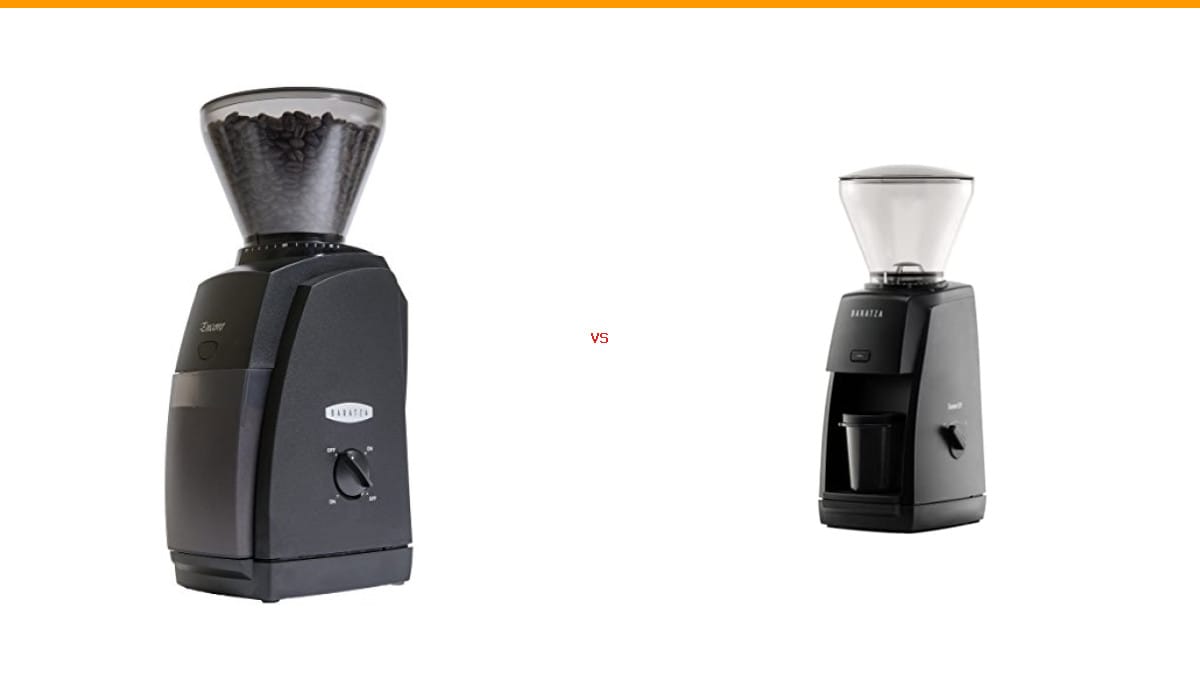
You have probably landed here with a simple question: can one coffee grinder handle both a coarse French press grind and a fine espresso grind? The short answer is yes, but the better question is which one does it without making you want to throw it out the window. The original Baratza Encore has been the default recommendation for years. The newer Encore ESP was built specifically to fix the original’s weak spot: espresso. I have spent weeks with both sitting on my counter, switching between a French press and a semi-automatic espresso machine, and the differences are more significant than the spec sheets suggest.
| Our Pick | Runner Up |

|

|
| Baratza Baratza Encore Conical Burr Coffee Grinder with… | Baratza Baratza Encore ESP Coffee Grinder ZCG495BLK, Black… |
| See on Amazon | See on Amazon |
As an Amazon Associate I earn from qualifying purchases.
The bottom line: if you only brew French press and pour-over, buy the standard Encore. If you plan to pull espresso shots at all, even occasionally, the Encore ESP is the one you want. It is that simple. The ESP adds a dual-range adjustment system that makes dialing in espresso actually possible, while the original Encore’s coarse settings are better suited for immersion and drip methods. This is a decision about where your coffee priorities sit.
This comparison is for the home user who doesn’t want two grinders cluttering the counter. It is for the person who drinks a French press on weekdays and wants a latte on Sunday. Let’s look at what each machine does well, where they fall short, and how to make the one-grinder compromise work in practice.
Why Grind Size is the Battleground for Both Brews
Grind size is the single biggest variable between these two brewing methods. Espresso needs a fine, uniform powder that packs tightly under pressure. French press needs a coarse, chunky grind that won’t slip through the mesh filter and turn your cup muddy. The gap between those two settings is enormous.
A burr grinder handles this range better than a blade grinder, which just chops beans randomly. But not all burr grinders are created equal. The original Encore has 40 settings, but they are spread across the whole spectrum. The ESP takes those same 40 steps and splits them into two ranges: micro-steps from 1 to 20 for espresso, and macro-steps from 21 to 40 for filter coffee. That change alone makes the ESP dramatically easier to use for espresso.
You cannot set the grind and forget it. Beans change as they age, humidity shifts, and your espresso machine’s pressure varies. Both grinders require occasional adjustments, but the ESP gives you the fine control to actually chase a good shot. The standard Encore skips too far between steps in the espresso range, which means you might land between settings and get a shot that runs too fast or too slow with no way to fix it.
If you are new to this, the burr grinder vs blade difference matters more than brand loyalty. A burr grinder produces consistent particle sizes, which is essential for both a clean French press cup and a balanced espresso shot.
The Physics of Extraction: Espresso vs. French Press
Extraction is the process of pulling flavor out of ground coffee. It is governed by water temperature, contact time, and grind size. Espresso and French press sit at opposite ends of this spectrum.
Espresso: Pressure, Time, and the 1:2 Ratio
Espresso uses nine bars of pressure to force hot water through a compacted puck of fine grounds. The contact time is short, usually 25 to 30 seconds. The standard brew ratio is 1:2, meaning 18 grams of coffee yields 36 grams of liquid espresso. This is an exacting process. If the grind is too fine, the water struggles to pass through and you get over-extraction, which tastes bitter and harsh. If the grind is too coarse, the water rushes through and you get under-extraction, which tastes sour and thin.
The margin for error is tiny. A difference of a few microns in particle size can change the shot time by several seconds. This is why espresso demands a grinder with fine, repeatable adjustments. The Encore ESP’s micro-steps are designed for this. The original Encore’s steps are too wide, often leaving the user stuck between a shot that chokes and one that runs too fast.
French Press: Immersion, Sediment, and the 1:15 Ratio
French press is the opposite. It relies on immersion, with coffee steeping in hot water for four minutes. The brew ratio is closer to 1:15, using more water and less coffee. The grind needs to be coarse enough that the metal mesh filter catches most of the grounds, leaving a clean cup with minimal sediment.
Consistency still matters here, but the tolerance is much wider. A slightly uneven grind produces some fines, which are tiny particles that can make the cup taste muddy. But you have a lot more room to work with than espresso. Both the Encore and the ESP handle French press grind well, producing a uniform coarse texture that brews clean.
If you are dealing with a broken grinder and need troubleshooting, check out this guide on Bodum grinder issues before you give up on the machine.
The Grinder’s Role: Burr Type, Speed, and Fines
Both the Encore and the Encore ESP use conical burrs. That is a shared DNA point. Conical burrs are known for producing a good range of particle sizes with fewer fines than some flat burr designs. Fines are the enemy of both brews, but in different ways.
Flat vs. Conical Burrs: Which Wins for Dual Use?
Flat burrs are common in high-end espresso grinders. They produce a very uniform particle distribution, which is great for espresso clarity but can make French press coffee taste a bit hollow. Conical burrs, like the ones in both Baratzas, produce a slightly wider particle distribution. This adds a little body and sweetness to filter coffee, and it works fine for espresso, though it may lack the clarity of a flat burr setup.
For dual use, conical burrs are the practical choice. They handle both ends of the spectrum without excelling at either. The ESP’s burrs are 40mm hardened alloy steel, made in Liechtenstein. The original Encore uses a similar burr set. The key difference is not the burr itself but the adjustment mechanism around it.
The ESP also features a quick-release burr design. You can pop the burr out for cleaning without taking the whole grinder apart. The original Encore requires more disassembly, which means you are less likely to do it as often as you should. Cleaning your grinder regularly is essential for maintaining flavor accuracy across the grind spectrum.
The ‘One-Grinder’ Compromise: What You Sacrifice and How to Fix It
Using one grinder for both French press and espresso is a compromise. You save counter space and money, but you lose the ability to leave each brew method dialed in perfectly. Every time you switch from a coarse French press grind to a fine espresso grind, you have to adjust the settings and purge the grinder.
Grind retention is the hidden cost. Both grinders hold a small amount of ground coffee inside the chute and around the burrs. When you switch from a coarse setting to a fine one, those retained coarse grounds mix with your espresso, ruining the shot. The same happens in reverse, where fine espresso grounds can clog the path and make your French press taste bitter.
The 5-Minute Switch-Over Workflow (Purge, Dial, Brew)
The workflow takes about five minutes. First, purge the grinder by running a small dose of fresh beans through the new setting. Throw those grounds away. This clears most of the retained coffee from the previous setting. Second, dial in your shot or brew. For espresso, pull a shot and adjust the grind based on the timing. For French press, check the grind visually and adjust if it looks too fine or too coarse. Third, brew your coffee.
This purge step wastes a few grams of coffee each time. If you switch between methods daily, that adds up. It is the main reason some people keep two grinders. But if you switch once a week, the waste is minimal, and the convenience of a single grinder wins.
You also need to be mindful of static cling. Both grinders produce some static, which makes grounds stick to the bin and the chute. The ESP has a slightly better-designed grounds bin that reduces this, but neither is perfect. A spritz of water on the beans before grinding helps reduce static significantly.
Top Grinders That Handle Both (Without Breaking a Sweat)
If you are shopping beyond these two Baratzas, a few other grinders handle dual use well. But this comparison is about the Encore and the ESP, so let’s focus on how they stack up as a pair.
Best Budget Dual-Use: Baratza Encore ESP
The ESP is the clear winner for anyone who wants to brew both espresso and French press. It costs more than the original Encore, but the dual-range adjustment system is worth every penny. You get micro-steps for espresso and macro-steps for filter coffee, all in one machine. The quick-release burr makes cleaning easy, which encourages you to maintain it properly.
The ESP is not perfect. The plastic body feels a bit flimsy, and the grounds bin is small. But for the home user, it is the most practical single-grinder solution available. Check the current price on Amazon, as it fluctuates.
Best Mid-Range All-Rounder: Fellow Opus
The Fellow Opus is another contender in this space, with a similar dual-range design. It is more expensive and has a smaller capacity, but it looks better on the counter. I have not tested it side-by-side with the ESP, but early reviews suggest it is a solid alternative if aesthetics matter to you.
Best for Espresso-First: MiiCoffee DF54
If espresso is your primary brew and French press is an occasional treat, the DF54 with flat burrs might serve you better. It produces a more uniform espresso grind, but it requires more effort to switch to coarse settings. The ESP is easier for frequent switching.
Dialing-In Cheat Sheet: Starting Points for Popular Grinders
Dialing in is the process of finding the right grind size for your specific beans and machine. Here are starting points for both grinders, based on typical performance.
For the original Encore, start at setting 28 for French press. Adjust coarser if the brew tastes bitter, finer if it tastes sour. For espresso, start at setting 12. But be warned: the steps are wide, and you may not find a perfect setting. You may need to adjust your dose or tamp pressure to compensate.
For the Encore ESP, the macro range handles French press well. Start at setting 32 and adjust from there. For espresso, use the micro range. Start at setting 12 and adjust one step at a time. The finer control makes a noticeable difference in shot quality.
Remember that bean freshness and roast level change everything. Dark roasts are more soluble and often need a coarser grind. Light roasts are denser and need a finer grind. You cannot set the grind once and forget it. Every new bag of beans requires a fresh dial-in.
Maintenance: Keeping Your Grinder Accurate Across the Spectrum
Grinders accumulate coffee oils and fines over time, which can affect performance. When you switch between coarse and fine settings, old grounds can get stuck and contaminate the next batch. This is why regular cleaning is non-negotiable.
The ESP makes this easier with its quick-release burr. You can remove the burr, brush off the chute, and reassemble in under a minute. The original Encore takes longer and requires a screwdriver. Cleaning the ESP every two weeks keeps shots consistent. The original Encore needed a deeper clean more often to maintain its accuracy.
Use a brush to remove loose grounds, and occasionally run a cleaning tablet through the grinder to remove oils. Do not use water on the burrs, as it can cause rust. A dry brush is sufficient for most maintenance. For a full breakdown, read this cleaning guide.
Comparing the Specs That Matter
| Feature | Baratza Encore | Baratza Encore ESP |
|---|---|---|
| Grind Settings | 40 uniform steps | 40 steps split into micro (1-20) and macro (21-40) ranges |
| Espresso Suitability | Limited, steps too wide | Designed for espresso with micro-adjustments |
| Filter Brew Suitability | Excellent for drip, pour-over, French press | Good, but macro steps are less granular than the original’s full range |
| Burr Removal | Requires disassembly | Quick-release, tool-free |
| Burr Material | 40mm conical steel | 40mm hardened alloy steel, made in Liechtenstein |
| Availability | Out of stock | In stock |
The Differences That Change the Buying Decision
The biggest difference is the adjustment system. The ESP’s dual-range design solves the original Encore’s biggest flaw. If you want espresso, the ESP is the only choice. The original Encore simply cannot dial in a consistent shot because the steps are too far apart.
The second difference is the burr removal. The ESP’s quick-release design makes cleaning a five-minute job. The original Encore’s burr is harder to access, which means you are less likely to clean it regularly. A dirty grinder produces inconsistent results, which is something you will notice in both your French press and espresso.
Availability also matters. The original Encore is currently out of stock. If you need a grinder now, the ESP is the one you can actually buy. That alone may make the decision for you.
Recommendation by Buyer Situation
If you are on a tight budget and only brew French press or pour-over, look for a used original Encore or consider a cheaper burr grinder. The ESP’s extra cost is not justified if you never pull a shot.
If you have limited counter space and want one grinder for everything, the ESP is the answer. It handles both ends of the spectrum without requiring a second machine. The compromise is real, but the workflow I outlined above minimizes the downside.
If you are a beginner who wants to learn espresso without buying a separate grinder, the ESP is the perfect starting point. Its micro-adjustments give you the control you need to understand how grind size affects extraction. The original Encore would frustrate you.
If you are an experienced home barista with a dedicated espresso setup, you probably already have a better grinder. The ESP is a solid backup or travel grinder, but it is not going to replace a high-end flat burr machine.
Final Verdict: Do You Need Two Grinders or Just One?
For most home users, one grinder is enough, and the Encore ESP is the one to get. It is not the best espresso grinder on the market, and it is not the best filter grinder either. But it is the best at doing both without driving you crazy. The dual-range adjustment system is a genuine innovation that makes the switch-over workflow practical.
The original Encore remains a great filter grinder, but its espresso capability is a marketing claim more than a reality. If you are serious about espresso, skip it. If you are serious about French press and pour-over, save the money and buy the original when it comes back in stock.
Keep the ESP on the counter and reserve the original for users who only brew drip coffee. That is the right split. Buy the grinder that matches your primary brew, and accept the small compromises for the secondary one.
Frequently Asked Questions
Can the original Baratza Encore grind fine enough for espresso?
Technically, yes. The Encore can grind fine enough to choke an espresso machine. But the steps between settings are too wide to dial in a proper shot. You will land between settings, and your shot will either run too fast or too slow. The ESP’s micro-steps fix this. If you are buying a grinder specifically for espresso, get the ESP.
Is the Baratza Encore ESP good for French press?
Yes, the ESP handles French press well. Use the macro range (settings 21-40) and start around 32. The grind is consistent, and the coarse texture brews clean with minimal sediment. It is not quite as versatile as the original Encore’s full range for very coarse grinds, but it is more than adequate for most home users.
How much coffee is wasted when switching between grind settings?
You will lose a few grams of coffee each time you switch from a coarse to a fine setting (or vice versa). This is the retained grounds inside the chute and around the burrs. Purging with a small dose of fresh beans clears most of it. If you switch once a day, you waste about 10 grams of coffee per week. That is a small price for the convenience of one grinder.
How often should I clean my grinder when switching between French press and espresso?
You should brush out the burr chamber and chute at least once a week if you are switching regularly. The ESP’s quick-release burr makes this painless. A deeper clean with a tablet every month keeps oils from building up and affecting flavor. Regular cleaning is the best way to maintain grind accuracy across the spectrum.
If your grinder is acting up, check this guide on bitter coffee after cleaning to avoid common mistakes.
Products related to this article
Sponsored / affiliate links. As an Amazon Associate I earn from qualifying purchases. I may earn additional commission from eligible campaigns.
 HomeBeyond Espresso Coffee Maker 12 Cups, Classic Stovetop Espresso Maker, 600ml / 20oz Coffeemaker for Gas & Ceramic Stovetops (Silver)
 Stainless Steel Moka Pot Pressed Powder Tool for 2 4 6 9 Cup Espresso Coffee Brewer(6 Cups)
 Coffee Espresso Machine Handle Replacement Parts, Cafe Bracket Handle for Lidl Silvercrest CM4621 CM4218 KF5002 KF500S Barista (for 51mm Portafilter Basket - Not included)