You bought a super automatic machine so you could press a button and walk away. Then one morning, the shot tastes bitter, the steam wand sputters, and the drip tray looks like a science experiment. That’s the moment you realize the machine didn’t stop needing maintenance — it just hid it from you.
Here’s the plain truth: a super automatic espresso machine has more moving parts than a semi-automatic. Grinder burrs, brew group, steam wand, and internal tubing all collect coffee oils and minerals. The question isn’t whether to clean it. It’s how often. This guide gives you a specific schedule with numbers you can actually follow — not vague advice like ‘clean it regularly.’ You’ll know exactly what to do daily, weekly, monthly, and every few months, plus the signs that your machine is telling you it’s time.

Tillbrook
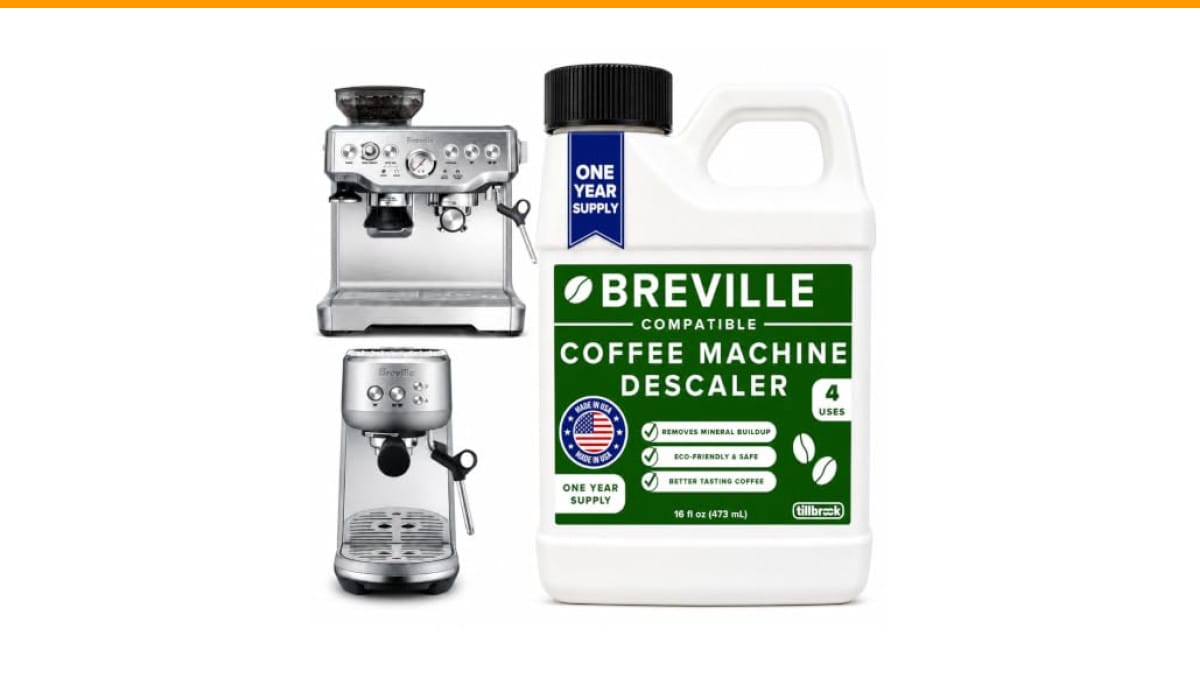
Breville Espresso Machine Compatible Descaler, 4 Uses,…
- EXCEPTIONAL RESULTS: Introducing Tillbrook Coffee Machine Descaler specifically formulated for Breville—the best choice for removi…
- 1 YEAR SUPPLY: Our concentrated formula is easy to use and provides remarkable value with 4 cleanings per bottle. Simply add 1/2 c…
- SCIENTIFICALLY ENGINEERED: Our advanced descaling solution is carefully crafted with powerful, all-natural ingredients that remove…
As an Amazon Associate I earn from qualifying purchases.
For the descaling step specifically, a product like the Tillbrook Descaler for Breville and other machines handles the mineral buildup that plain water rinsing can’t touch. It’s a 16-ounce bottle that makes four full descaling cycles, which lines up neatly with the quarterly schedule below.
Daily: The 2-Minute Habit That Prevents 80% of Problems
Most super automatic failures trace back to stale coffee oils and dried milk residue. Both are preventable with a quick daily routine. You don’t need to deep clean anything. Just run a blank shot (water only, no coffee) through the brew unit after your last cup. This flushes oils from the brew chamber and the spout. Do the same for the steam wand — purge it for 3 seconds right after steaming milk, then wipe the tip with a damp cloth. Milk dries into a stubborn film in about 10 minutes.
Empty the drip tray and the spent coffee puck container. If you leave wet pucks sitting for two days, mold starts growing. That’s not an opinion; that’s biology. The whole daily routine takes less time than waiting for your morning shot to pull.
One detail people skip: the water tank. If you have hard water, don’t refill it endlessly. Dump the remaining water every evening and refill fresh in the morning. Stagnant water grows bacteria, and you’ll taste it in the cup long before you see it.
Weekly: The Brew Unit Gets a Bath
Once a week, remove the brew unit. Every major brand (Jura, Philips, Saeco, Gaggia, Delonghi) designs this to be user-serviceable. Look in your manual for the release button. Rinse the brew unit under lukewarm running water — no soap, ever. Soap residue ruins the internal lubricants and leaves a taste no amount of rinsing removes. Let it air dry completely before reinstalling.
While it’s out, wipe the inside of the machine cavity with a damp microfiber cloth. Coffee grounds accumulate there and attract pests. Also check the rubber gaskets for cracks. A worn gasket causes leaks, and by the time you notice the leak, the damage is done.
This weekly rinse takes 5 minutes. It’s the single most effective thing you can do for longevity, and it’s the step most owners skip. Don’t be most owners.
Monthly: Deep Clean the Parts You Can Reach
Once a month, go further. Remove the drip tray and the water tank. Wash both in warm, soapy water. The drip tray has a float indicator that gets sticky with milk residue — use a bottle brush on it. Rinse everything thoroughly and dry before reassembly.
The steam wand needs more than a wipe. Fill a small jug with water and a drop of dish soap, then let the wand tip soak for 10 minutes. This dissolves the milk protein that a quick purge can’t shift. Use a pin or the tool that came with your machine to clear the tiny steam hole. If steam comes out in a weak sputter instead of a strong jet, that hole is partially blocked.
Don’t forget the grinder hopper. Wipe it out with a dry cloth to remove old bean dust. Do not wash it with water unless your manual says it’s dishwasher-safe. Moisture in the hopper causes beans to clump and clog the auger.
Quarterly: Descale — The Step People Get Wrong
Here’s where the confusion starts. Most manufacturers say ‘descales when the machine tells you to.’ That’s a trap. The machine’s sensor detects flow rate changes, which means scale has already built up. By the time the alert appears, you’re dealing with a partial blockage, not prevention.
Set a calendar reminder every 3 months. That’s the sweet spot for average home use with moderately hard water. If you live in an area with very hard water (above 180 ppm), move it to every 2 months. If you use filtered or soft water, you can stretch to every 4 months. The descaling solution dissolves limescale inside the boiler and the brew group’s internal pipes — areas you can never reach with a brush.
Use a proper descaling solution, not vinegar. Vinegar’s acetic acid is too weak for espresso-scale and leaves an aftertaste that persists for weeks. A dedicated product like the Tillbrook descaler is formulated for these machines, and one bottle covers four cycles — exactly one year at the quarterly schedule. It’s rated for Breville, Jura, Delonghi, Philips, and most other brands, so you don’t need a different product per machine.
Run the descaling cycle exactly as your manual says. Usually that means: empty the drip tray, pour the solution into the water tank, fill the rest with water, then run the program. After it finishes, run two full tanks of fresh water through to clear every trace of the solution. Skip the final rinse and you’ll taste the descaler in your next shot. It’s not harmful, but it’s unpleasant.
Comparison: Cleaning Schedule by Water Hardness
| Water Hardness | Descale Interval | Daily Rinse | Brew Unit Wash | Signs You’re Late |
|---|---|---|---|---|
| Soft (under 60 ppm) | Every 4 months | Yes | Weekly | Slow flow, faint white residue |
| Moderate (60–180 ppm) | Every 3 months | Yes | Weekly | Longer brew time, louder pump |
| Hard (over 180 ppm) | Every 2 months | Yes | Weekly | Machine stops mid-cycle, error codes |
| Filtered / RO | Every 4–5 months | Yes | Weekly | Minimal — but still descale yearly |
The table assumes average use of 2–4 shots per day. If you pull 8+ shots daily, shorten every interval by about 25%. A busy household with a super automatic is closer to light commercial use, and the machine will tell you with performance drops.
Signs Your Machine Needs Cleaning Right Now
You don’t need to wait for a calendar date. Your machine gives clear signals when it’s struggling. A shot that takes 45 seconds instead of 25 means scale is narrowing the brew path. Steam that feels weak or wet instead of dry and hot means the wand tip is clogged. Coffee that tastes sour or burnt when your beans haven’t changed means old oils are rancid inside the brew unit.
Listen for the pump. A healthy super automatic hums steadily. If the pump sounds strained or pitches higher, it’s working harder to push water through a scaled boiler. That pitch change is often the first warning, weeks before any error message appears.
Check your drip tray. If it fills faster than your coffee output explains, that’s water bypassing the brew chamber — usually a blocked outlet forcing water elsewhere. If you see oil slicks floating in the drip tray water, the internal rinse cycle isn’t clearing the brew group properly.
Frequently Asked Questions
Can I use vinegar instead of commercial descaler?
You can, but you’ll regret it. Vinegar is about 5% acetic acid. Espresso scale is mostly calcium carbonate, which technically dissolves in acid. The problem is vinegar leaves a strong smell and taste that clings to rubber seals and plastic tubing. You’ll run 6 or 7 rinse cycles and still taste it. Commercial descalers use food-safe acids that break down scale faster and rinse out clean. The Tillbrook solution is formulated specifically for this, so it’s not worth saving a dollar to ruin your next week of coffee.
How often should I replace the water filter in my super automatic?
Most brands say every 2 months or 50 liters of water, whichever comes first. If you use a filter, it removes some minerals before they reach the boiler. That means you can stretch descaling intervals slightly, but you still need to descale. A filter reduces scale; it doesn’t eliminate it. Replace the filter on schedule — an expired filter stops working and can even harbor bacteria.
Is the self-cleaning cycle enough?
No. The self-clean cycle (often called ‘Cleaning’ or ‘Rinse’) flushes the internal lines with hot water. It’s a maintenance rinse, not a deep clean. It does nothing for the grinder burrs, the steam wand tip, or the scale inside the boiler. Think of it as brushing your teeth — necessary daily, but you still need a dentist’s cleaning twice a year. The self-clean cycle handles the daily flush; the manual steps handle the rest.
Why does my machine say ‘cleaning required’ after just two weeks?
Two reasons. First, if you brew mostly dark roasts or oily beans, the machine’s oil sensor triggers earlier because there’s more residue. Second, the timer counts brewing cycles, not calendar days. If you pull 10 shots a day, the counter hits its threshold in a week. That alert is telling you to run the tablet-based cleaning cycle, not to descale. Don’t confuse the two — running descaler when the machine asks for cleaning can damage the brew unit.
What happens if I never descale?
Scale builds up on the boiler’s heating element. That layer acts as an insulator, so the machine works harder to heat water. Your energy bill goes up slightly, and the boiler can overheat. In severe cases, the heating element burns out — a repair that often costs more than the machine’s resale value. The pump also works harder against narrowed pipes, and it will eventually fail. A $10 bottle of descaler prevents a $300 repair. The math isn’t complicated.
What to Actually Do This Week
- Set a recurring calendar reminder for every 3 months, labeled ‘Descale Espresso Machine.’ Pick a specific date, like the first Sunday of March, June, September, and December.
- Start the daily blank-shot rinse today. It takes 2 minutes and prevents the most common brew-quality complaints.
- Pull the brew unit out this weekend and rinse it under lukewarm water. Time yourself — it’s faster than you think.
- Buy a descaler now, before you need it. Waiting until the machine acts up means you’ll drink bad coffee for a week while the order ships. The Tillbrook descaler covers a full year of quarterly descaling, so you only think about this once annually.
- Test your water hardness with a cheap test strip from a hardware store. This tells you whether to descale every 2, 3, or 4 months. Guessing wastes time or damages the machine.
- If your machine is already showing slow flow or weak steam, don’t wait for the calendar date. Descale this weekend.
- Write your descaling date on the bottle with a marker. When you finish a descale, write the next due date on the label. You’ll never wonder again.
Products related to this article
Sponsored / affiliate links. As an Amazon Associate I earn from qualifying purchases. I may earn additional commission from eligible campaigns.
 Coffee Espresso Machine Handle Replacement Parts, Cafe Bracket Handle for Lidl Silvercrest CM4621 CM4218 KF5002 KF500S Barista (for 51mm Portafilter Basket - Not included)
 MRS. MEYER'S CLEAN DAY Automatic Dishwasher Pods, Lavender, 20 Count - Pack of 3 (60 Total Pods)
 Cascade Platinum Plus Dishwasher Detergent Pods Dish Soap Lemon 57 Count