You just pulled a perfect shot. The crema is thick, the timing was spot on. Then you flip the portafilter over the trash can and give it a sharp tap. Half the puck sticks, coffee grounds fly onto the counter, and the loud bang makes everyone in the kitchen jump. That is the problem a knock box solves.
This guide cuts through the marketing fluff. You will learn what actually matters when you choose an espresso knock box: the physics of the knock, the ergonomics of the swing, and the materials that hold up over years of daily use. You will walk away knowing exactly which specs to check before you spend a dime.

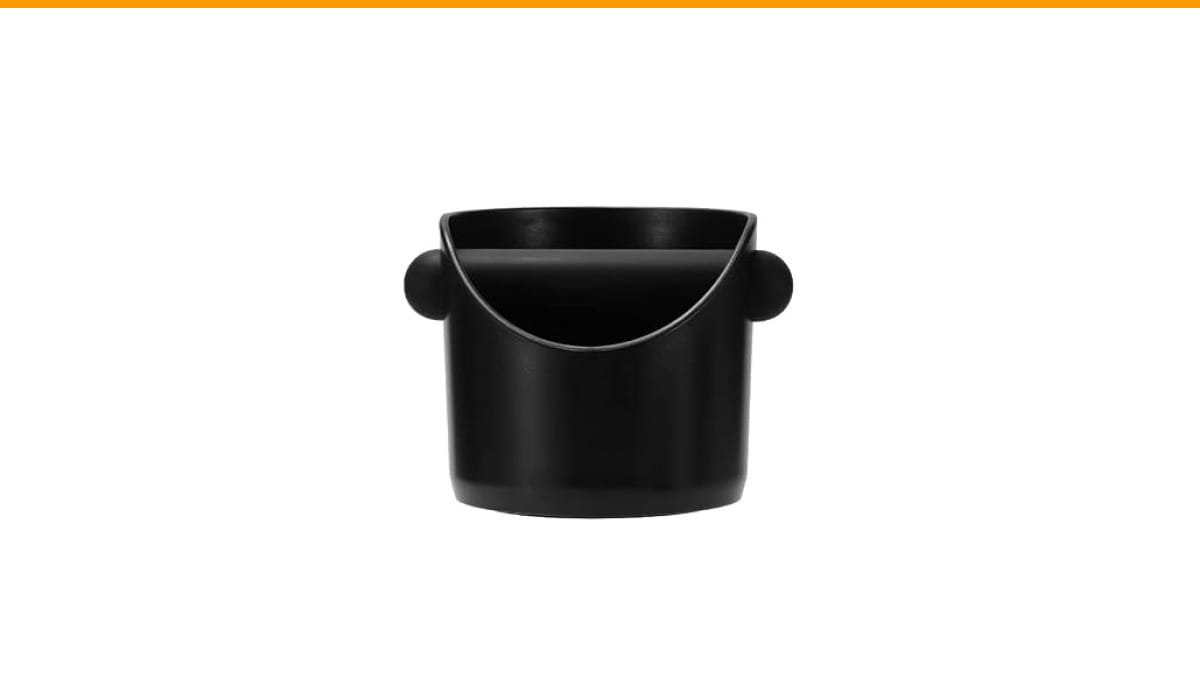
Auden Arctic
Coffee Knock Box, 4.6 in, Barista Style…
- Compact Design: This 4.6-inch barista-style knock box is perfect for collecting used espresso grounds from your espresso machine.
- Sturdy Construction: Made of heavy-duty plastic, the knock box features a non-slip base for stability.
- Removable Knock Rod: The included plastic knock rod allows for easy disposal of spent grounds.
As an Amazon Associate I earn from qualifying purchases.
If you are building a home setup and want a solid starting point, the Auden Arctic Coffee Knock Box checks the core boxes. It has a compact 4.6-inch footprint, a removable plastic knock rod, and a non-slip base that keeps it planted on the counter. It is a practical choice for a small kitchen or a first-time buyer.
Why You Actually Need a Knock Box (Beyond Mess Control)
A trash can seems fine until you use it. The problem is the bounce. When you hit the portafilter against the rim of a metal bin, the puck shatters and coffee grounds spray everywhere. A knock box has a deep well with a padded bar, so the puck falls straight down and stays contained.
There is a second benefit people overlook: wrist strain. Hitting a hard metal rim sends a shockwave up your arm. A good knock bar absorbs that impact, so you can do it fifty times a day without feeling it in your elbow.
You also keep your espresso station dry. Wet grounds stick to everything. A dedicated box gives you one place to dump, and you can clean it in thirty seconds instead of wiping down the whole counter.
The 5 Critical Specs to Check Before Buying
Capacity vs. Frequency of Emptying
Capacity is measured in the volume of spent pucks it can hold. A small box holds 10 to 15 pucks. A large one holds 30 or more. Think about how many shots you pull daily.
If you make two or three drinks a day, a compact box is fine. You will empty it once a week. If you host friends or pull multiple shots back to back, get a larger capacity so you are not dumping mid-session.
Here is the trade-off: bigger boxes take up more counter space. Measure your available area before buying. A 4.6-inch box like the Auden Arctic fits in tight spots, but a 6-inch model will not.
Base Weight and Non-Slip Materials
The base is the anchor. A lightweight box that slides around defeats the purpose. You need mass at the bottom to absorb the kinetic energy of the knock.
Stainless steel boxes are heavy and stable. Ceramic ones are even heavier but fragile. Plastic boxes need a non-slip base—usually a rubber or silicone ring—to stay put. Check the bottom of the box before you buy. A smooth plastic base with no grip will slide across your counter the first time you use it.
For home use, a plastic box with a good rubber base is often enough. You are not doing fifty knocks an hour like a commercial barista.
Knock Bar Quality and Angle
The bar is where the portafilter hits. It should be angled at about 45 degrees. That angle lets the puck slide off cleanly instead of smashing flat.
A flat bar causes splatter. The puck compresses, sticks, and you have to hit it again. A 45-degree bar lets gravity do the work. The puck releases on the first tap.
Bar material matters too. Some bars are metal, some are plastic. Metal bars are durable but louder. Plastic bars are quieter but wear down over time. Look for a removable bar. You will need to replace it eventually, and a glued-in bar makes that job miserable.
Noise Dampening Features
That sharp bang is not just annoying—it is a signal that energy is being wasted. A loud knock means the impact is transferring to the counter and the room, not into the puck.
Rubber dampening rings or silicone inserts reduce the noise significantly. Some boxes use a dual-layer construction with a rubber gasket between the inner and outer shell. In testing, a dampened box can cut the noise from a sharp crack to a dull thud. That matters if you live in an apartment or pull shots early in the morning.
Metal boxes are the loudest. If noise is a concern, go with plastic or a box with explicit dampening features.
Cleaning and Dishwasher Safety
Spent coffee grounds are oily. They stick to the sides of the box and build up a brown sludge over time. You need a box that is easy to rinse out.
Smooth interiors are better than textured ones. Corners trap grounds. A rounded interior lets you wipe it out with a paper towel in seconds.
Dishwasher safety is a bonus, not a requirement. Most plastic boxes are dishwasher safe on the top rack. Metal boxes can rust if the coating chips. Check the product description for cleaning instructions before you commit.
Ergonomics: Matching the Box to Your Portafilter Size
This is the spec most buyers miss. The height of the knock bar relative to your portafilter changes the whole motion.
If the bar is too low, you have to bend your wrist awkwardly to hit it. If it is too high, you lose leverage and the knock is weak. The ideal setup has the bar at about waist height when you stand naturally.
For a home countertop, that means the box should be tall enough to bring the bar close to your portafilter level. Measure your portafilter diameter too. A 58mm portafilter (standard for most machines like Breville) needs a bar wide enough to catch the full basket. A narrow bar will miss the edges and leave grounds stuck.
If you are using a semi-automatic machine, you likely have a standard 58mm portafilter. Check that the knock bar is at least that wide. Some compact boxes have bars that are only 2.5 inches wide, which is too narrow for a full-sized basket.
Troubleshooting Wet Pucks and Splatter Issues
Wet pucks are a symptom of a different problem—usually your grind or dose—but the knock box can make it worse or better.
A wet puck is soft and sticky. It does not release cleanly. It smears across the bar and leaves half the grounds in the basket. You end up tapping three or four times, which creates splatter.
Here is what helps: a sharp-edged bar. A bar with a squared-off edge cuts through the wet puck and separates it from the basket. A rounded bar just squishes it. Look for a bar with a defined edge, not a smooth dome.
You can also adjust your technique. Instead of a straight down hit, use a slightly angled swing. Hit the bar with the edge of the basket, not the center. That breaks the suction between the puck and the basket walls.
If you are dealing with persistent wet pucks, check your grind size and extraction time. The knock box is not the fix for a bad shot, but a good one will not make it worse.
Material Guide: Steel, Ceramic, or Plastic?
Each material has a real trade-off. Here is the honest breakdown.
Stainless steel looks great on a counter. It matches most espresso machines and feels premium. It is heavy, so it stays put. The downsides are noise and price. Steel rings like a bell when you hit it. You will hear the knock through the whole house. It also costs more than plastic.
Ceramic is the heaviest option. It does not move at all when you knock. It also looks elegant and comes in various colors. The problem is fragility. Drop a portafilter on it and you might chip the rim. Ceramic is also hard to clean because the surface is porous if unglazed. Stick with glazed ceramic if you go this route.
Plastic is the practical choice for most home users. It is light, cheap, and quiet. The Auden Arctic uses heavy-duty plastic with a non-slip base, which solves the stability problem. Plastic does not match a brushed steel machine aesthetically, but you can find matte black versions that blend in well.
My opinion: for a home kitchen, plastic is the smart buy. It does 90% of what steel does at half the price and a fraction of the noise. If you are building a showpiece coffee bar and want the look, steel is fine—just wear earplugs.
Top 5 Knock Boxes That Solve Real Problems (Not Just Lists)
Here is a comparison of common models based on the specs that matter. Prices change, so check current listings.
| Model | Material | Bar Angle | Noise Level | Best For |
|---|---|---|---|---|
| Auden Arctic (B0DP42DYKQ) | Plastic | 45° (approx.) | Low | Compact home setups |
| Normcore Dosing Knock Box | Stainless Steel | 45° | High | Heavy daily use |
| Breville Knock Box | Plastic | 30° (approx.) | Medium | Breville machine owners |
| Ceramic Knock Box (various brands) | Ceramic | 40° (approx.) | Medium | Aesthetic-focused users |
| Large Capacity Steel Box (various brands) | Steel | 45° | High | Home baristas pulling 5+ shots daily |
Do not get caught up in brand names. Focus on the specs in the table. If you need a compact box that will not break the bank or your eardrums, the Auden Arctic is a solid pick. If you want a heavy steel box that feels like commercial equipment, look for a larger model with a dampening pad.
Quick Maintenance Routine for Longevity
A knock box is low maintenance, but it is not zero maintenance. Here is a routine that takes two minutes.
- Empty daily: Do not let grounds sit overnight. They dry out and stick to the walls.
- Rinse after each use: A quick rinse under the faucet clears the oils before they harden.
- Wipe the bar: Spent grounds leave residue on the knock bar. Wipe it with a dry cloth to keep the edge sharp.
- Deep clean weekly: Soak the box in warm soapy water for five minutes. Scrub the interior with a soft sponge. Avoid abrasive pads that scratch the surface.
- Replace the bar when worn: If you see grooves in the bar or the puck starts sticking, it is time for a new bar. A worn bar ruins the angle and causes splatter.
If your box has a removable inner cup, take it out for cleaning. That makes the job much easier. The Auden Arctic has a smooth interior, which speeds up this whole process.
Frequently Asked Questions (Including Decaf and Tea Leaves)
Can I use a knock box for decaf espresso?
Yes. Decaf pucks are often wetter and stickier than regular espresso because the beans are processed differently. You might need to knock harder. A sharp-edged bar helps here more than with regular shots. The box itself does not care what you put in it.
Can I toss tea leaves or coffee grounds from a French press into it?
You can, but it is not ideal. A knock box is designed for dense espresso pucks. Loose tea leaves and coarse French press grounds will not fall out cleanly—they will cling to the bar and the sides. You will spend more time cleaning it. Stick to espresso pucks for best results.
How often should I empty my knock box?
Empty it when it is about two-thirds full. If you let it fill to the top, the next knock will compact the old grounds and make them hard to remove. For a compact box like the Auden Arctic, that is roughly every 10 to 15 shots. For a larger box, every 25 to 30 shots.
Why does my knock box slide across the counter?
Your box either has a worn-out non-slip base or the base material is too smooth. Check the bottom for a rubber ring. If it is missing or worn, you can add adhesive rubber feet from a hardware store. If the box has no base at all, consider a heavier model.
Is a metal knock bar better than a plastic one?
Metal bars last longer and have a sharper edge, which helps release wet pucks. But they are loud. Plastic bars are quieter and cheaper to replace. For a home user, a quality plastic bar is fine. If you notice the plastic bar wearing down after a year, just replace it—it is a cheap part.
Three Common Mistakes and How to Avoid Them
Mistake 1: Buying a box that is too small. You think you will only pull one shot a day. Then you start experimenting with different beans and pulling multiple shots to dial in. A 4.6-inch box fills up fast. If you have the counter space, go one size up.
Mistake 2: Ignoring the bar angle. A flat bar is a splatter machine. Check the angle before you buy. If the product photos do not show the bar clearly, look for a side view. A 45-degree angle is the sweet spot.
Mistake 3: Forgetting about noise. You will use this thing every single day. If it sounds like a hammer hitting a pipe, you will dread it. Consider a plastic box or one with dampening features, especially if you live in an apartment. Your neighbors will thank you.
Final Verdict: The Best Choice for Your Setup
Choosing a knock box comes down to three questions: how much counter space do you have, how many shots do you pull, and how much noise can you tolerate?
- Match the bar width to your portafilter size (58mm is standard).
- Look for a 45-degree bar angle to prevent splatter.
- Pick a box with a non-slip base and enough mass to stay put.
- Plastic boxes are quieter and easier to clean than steel.
- Check that the knock bar is removable for replacement.
- Empty the box when it is two-thirds full to avoid compacted grounds.
- Rinse the interior after each use to prevent oil buildup.
For most home users, a compact plastic box with a removable bar and a non-slip base is the right call. The Auden Arctic fits that description. It is not the flashiest option, but it does the job without drama. If you need a quieter setup or have a tight space, it is worth a look. Check the current price on Amazon to see if it fits your budget.
If you are still sorting out your espresso machine setup, read our guide on automatic espresso machines under $1000 to see what pairs well with your new knock box.
Products related to this article
Sponsored / affiliate links. As an Amazon Associate I earn from qualifying purchases. I may earn additional commission from eligible campaigns.
 Coffee Espresso Machine Handle Replacement Parts, Cafe Bracket Handle for Lidl Silvercrest CM4621 CM4218 KF5002 KF500S Barista (for 51mm Portafilter Basket - Not included)
 Linnkyfloa Coffee Espresso Maker Handle Replacement for Stovetop Moka Pot or Percolator, Black Plastic for Spare Part Compatible with Italian(9-12 Cup)
 Wrenmor Replacement Handle For Coffee Espresso Moka Stove Pot, Black Plastic Accessory Compatible With 1/3/6/9/12 Cup Sizes For Easy Installation And Long-Lasting Use(1 Cup)