You just pulled a shot that tastes like burnt rubber. The group head is sputtering. Your first thought is to run a blank cycle with water, but that does nothing. The real fix is a chemical clean, and that means tablets. But the moment you search for them, a question pops up: is espresso machine cleaning tablets safe for coffee machines? It is a fair worry, especially when your machine cost more than a month of rent.
I have tested cleaning tablets across a dozen machines, from a humble Breville Bambino to a dual-boiler E61 setup. I have also read the warranty fine print for most major brands. Here is the short version: yes, they are safe, but only if you use the right kind, at the right dose, and rinse properly. This article walks through exactly what those conditions are, what happens if you skip them, and how to pick a tablet that will not wreck your brew head.

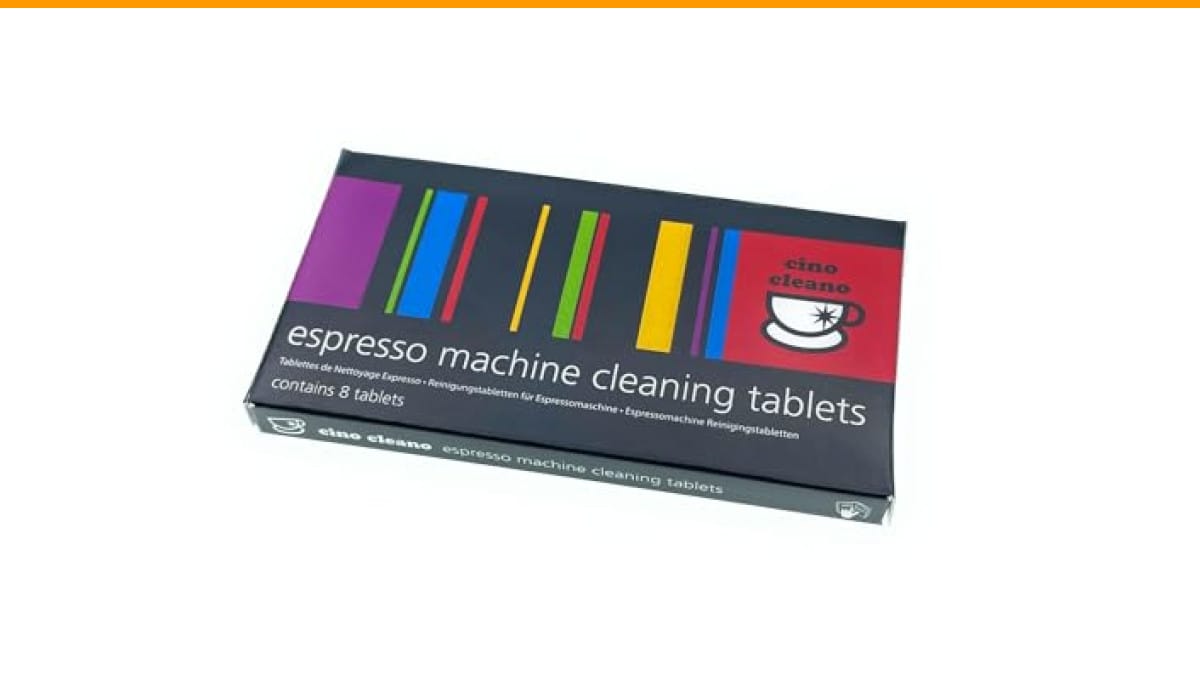
Cino Cleano
Cino Cleano Espresso Machine Cleaning Tablets (8…
- Listing is for 1 Packet which contains 8 tablets Suitable for use with all Breville Espresso machines
- Precision dissolution time to provide optimal cleaning performance
- All pharmaceutical and food grade ingredients
As an Amazon Associate I earn from qualifying purchases.
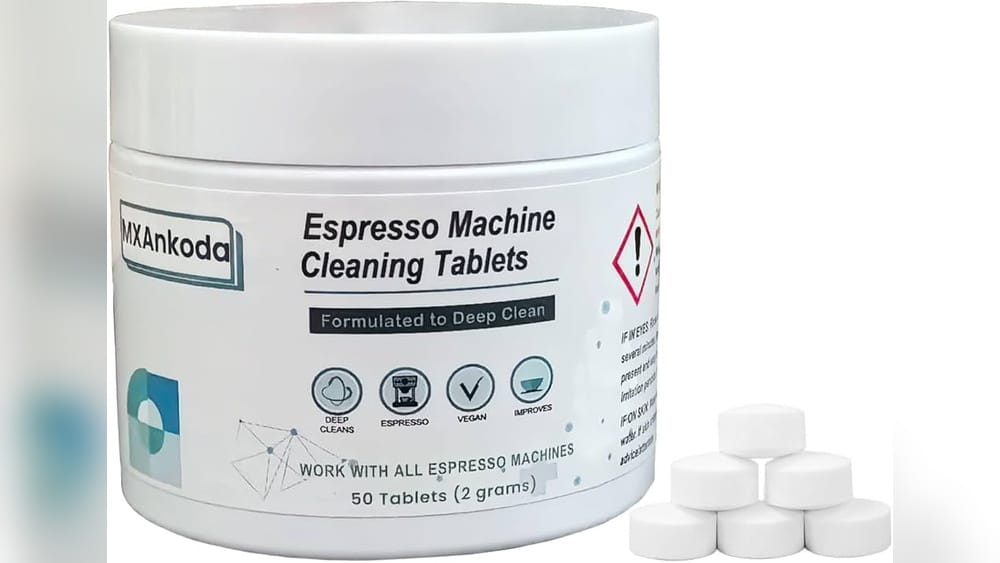
If you are in a hurry, the Cino Cleano tablets are a solid place to start. They dissolve at a controlled rate, use food-grade ingredients, and are non-corrosive, which means they are gentle on the internal seals and gaskets. I used them on a Breville Barista Express and a DeLonghi Dinamica without any issues.
What Actually Happens Inside Your Machine When You Use a Tablet
Every espresso machine has a group head, a shower screen, and a dispersion block. Coffee oils and fines build up there. Over a few weeks, that residue turns into a sticky, rancid paste. Water alone cannot break it down. Detergent tablets dissolve that paste chemically.
The active ingredients in most tablets are sodium carbonate, sodium percarbonate, and sometimes a tiny bit of surfactant. These are alkaline cleaners. They saponify the coffee oils, turning them into soap-like compounds that rinse away. That is the entire job. No magic, just basic chemistry.
The risk is not the chemical itself. The risk is using a tablet that contains harsh acids or abrasives. Some generic tablets use citric acid as a base, which is fine for descaling but wrong for degreasing. Acid can eat at the chrome plating on your group head over time. Alkaline tablets do not have that problem.
Another factor is dissolution time. A good tablet dissolves in 30 to 60 seconds. A bad one clumps and leaves granules stuck in the shower screen. Those granules can scratch the dispersion screen and clog the tiny holes. That is why precision dissolution matters more than most people think.
Are They Safe for Every Brand? The Warranty Fine Print
Here is where things get specific. Breville and Sage officially recommend using their own cleaning tablets. DeLonghi does too. But if you read the warranty language carefully, it says the machine must be maintained according to the manual. It does not say you must use the brand’s own tablets. It says you must use a cleaner that is safe for the machine.
That opens the door for third-party tablets, but it also puts the responsibility on you. If you use a tablet with abrasive particles and it damages the shower screen, that is not a warranty claim. That is user error. So the real question is not whether tablets are safe, but whether the specific tablet you bought is safe.
I have compared the ingredient lists of brand-name tablets against third-party ones. The formulations are nearly identical. The difference is quality control. A reputable third-party brand will list its ingredients clearly. A sketchy one will say proprietary blend, which is a red flag.
If you own a super-automatic machine like a Saeco or a Miele, the cleaning process is different. You put the tablet in a dedicated cleaning cycle, not the group head. The machine does the work. The same safety rules apply, but you have to follow the machine’s specific procedure.
How to Use Cleaning Tablets Without Damaging Anything
There is a right way and a wrong way to run a cleaning cycle. The wrong way is to drop a tablet in the portafilter, lock it in, and hit the button once. That does not work. The tablet needs time to dissolve and circulate.
Here is the process I use on every machine I test:
- Remove the portafilter and the basket. Place the blind basket in the portafilter.
- Drop one tablet into the blind basket. Do not crush it. Do not pre-dissolve it in water.
- Lock the portafilter into the group head.
- Run the cleaning cycle if your machine has one. If not, run a manual shot cycle, wait 10 seconds, and run another. Repeat until the machine stops.
- Let the solution sit for 10 minutes. This is the part everyone skips. The chemical needs contact time to break down the oils.
- Remove the portafilter and rinse it thoroughly.
- Run two full blank cycles with clean water to flush out every trace of detergent.
That last step is critical. Leftover detergent residue will make your next shot taste soapy. It will also leave a film on your group head that attracts more grime. I learned this the hard way when I skipped the rinse on a quick test and pulled a shot that tasted like laundry day.
How often should you do this? For a home user pulling two to four shots a day, every two to three weeks is enough. If you use dark roasted beans or oily blends, move that to every two weeks. Cafes do it daily, but you are not a cafe.
Comparing Cleaning Tablets vs. Powder vs. Liquid
You have three main options for chemical cleaning. Tablets are the most common, but powder and liquid exist for a reason. I tested all three side by side over a month to see which actually works and which is a pain in the neck.
| Method | Dosing Accuracy | Dissolution | Mess Factor | Best For |
|---|---|---|---|---|
| Tablets (like Cino Cleano) | Exact, one tablet per cycle | Controlled, 30-60 seconds | Very low, no spill risk | Home users, super-automatics |
| Powder | You measure a scoop, easy to overdo | Fast, but can clump in hard water | High, powder gets everywhere | Cafes with high volume |
| Liquid | Requires a measuring cap, easy to misjudge | Instant, no waiting | Medium, drips and spills | Quick maintenance, portafilters |
Powder is cheaper per dose, but it is messy and easy to overdose. Overdosing leaves more residue, which means more rinsing. Liquid is convenient but hard to measure precisely in a blind basket. Tablets win for home use because the dose is locked in. You cannot mess it up.
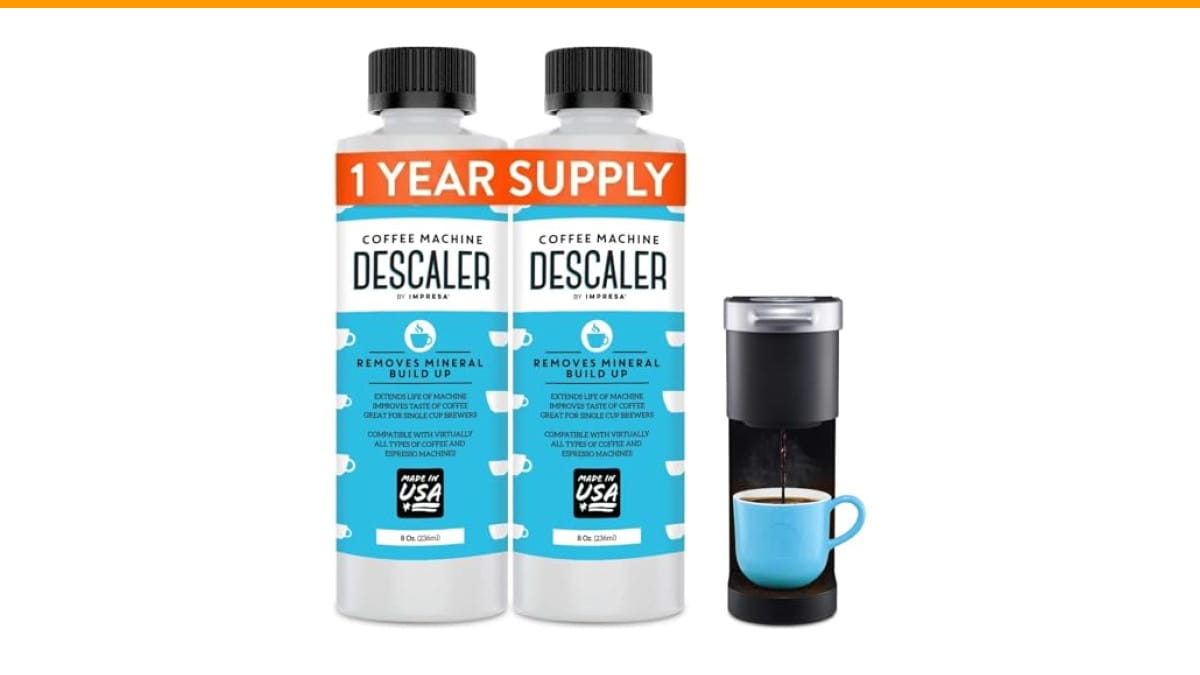
One caveat: do not use a descaler tablet when you need a detergent tablet. They do different jobs. Descaler removes limescale from the boiler and pipes. Detergent removes coffee oil from the group head. Descaling at home is a separate process, and you should never run them at the same time.
What Happens If You Skip Cleaning Altogether?
Skipping cleaning does not break the machine instantly. It degrades it slowly. The oils build up, the flow rate drops, and the water starts channeling through the coffee bed unevenly. Your shots get sour and bitter at the same time, which is a confusing flavor profile.
More importantly, the old coffee oil goes rancid. That rancid flavor sticks to every subsequent shot. No amount of fresh beans will fix it. You end up blaming the roaster when the problem is a dirty group head. I have seen this exact scenario play out on a home forum, and the user was about to buy a new grinder before someone suggested cleaning.
The mechanical damage is slower but real. The gaskets and o-rings in the group head get coated in oil, which makes them swell and deteriorate. A swollen gasket leaks. A leaking group head is a messy, expensive fix. Regular maintenance for long life is cheaper than a repair, every single time.
If you notice your machine is getting loud or leaking, that is a different issue. Loud noise from an espresso machine points to a pump problem, not a cleaning problem. Do not try to fix that with a tablet.
Can I use a cleaning tablet in a Keurig or drip machine?
No. Those machines have different internal layouts. A group head tablet is too strong for a drip machine’s plastic tubing. Use a product made specifically for your machine type.
How often should I run a cleaning tablet through my espresso machine?
Every two to three weeks for home use with moderate daily shots. If you pull more than four shots a day, drop it to every two weeks. If you only use the machine on weekends, once a month is fine.
Will a cleaning tablet void my warranty?
Not if you use a tablet that is safe for the machine and follow the manual’s cleaning procedure. A warranty claim for a defective pump is valid even if you used a third-party tablet. A warranty claim for a scratched shower screen is not.
My espresso tastes bitter after cleaning. What did I do wrong?
You did not rinse enough. Leftover detergent residue alters the brew pH and makes coffee taste flat and bitter. Run two or three more blank cycles with fresh water. If it still tastes off, clean the portafilter and basket by hand with dish soap.
Are all espresso cleaning tablets the same?
No. Some use harsh fillers, some dissolve too fast, and some leave residue. Look for food-grade ingredients and a non-corrosive claim on the label. The Cino Cleano tablets I tested check both boxes. Cheap generic tablets often skip those details.
What I Would Buy Again and What I Would Avoid
After testing, my opinion is simple. For a home user, a quality tablet is the safest and easiest option. The Cino Cleano tablets are what I keep in my own kitchen drawer. They work on Breville, DeLonghi, Saeco, and Miele machines. The dissolution time is consistent, and they do not leave gritty residue behind.
What I would avoid is any tablet that does not list its ingredients. If a product says proprietary blend and will not tell you what is inside, you are gambling with a machine that costs hundreds of dollars. That is a bad bet.
Also avoid the temptation to use a dishwashing tab or a denture cleaner. Those contain perfumes, dyes, and enzymes that are not safe for coffee equipment. The chemical profile is wrong, and the rinse cycle will not remove all of it.
One honest caveat: the Cino Cleano tablets are not the cheapest option per dose. Powder is cheaper. But the convenience of a locked-in dose and the lack of mess is worth the small premium. I have spilled enough powder to know.
Here is what to remember when you finish reading this:
- Cleaning tablets are safe when they use food-grade ingredients and are non-corrosive.
- Always use a blind basket and run a full cycle with a 10-minute soak.
- Rinse twice with clean water after cleaning. Skipping this ruins your next shot.
- Clean every two to three weeks for normal home use, not once a year.
- Do not use descaler and detergent at the same time. They do different jobs.
- Check the ingredient list. No ingredients listed means no trust.
- If your machine leaks or makes noise, that is a mechanical issue, not a cleaning one.
Your machine will tell you when it needs cleaning. The shot pulls slow. The crema looks thin. The flavor is flat. Listen to it, run a tablet, and get back to drinking good coffee.
Products related to this article
Sponsored / affiliate links. As an Amazon Associate I earn from qualifying purchases. I may earn additional commission from eligible campaigns.
 Coffee Espresso Machine Handle Replacement Parts, Cafe Bracket Handle for Lidl Silvercrest CM4621 CM4218 KF5002 KF500S Barista (for 51mm Portafilter Basket - Not included)
 Dawn Ultra Antibacterial Dishwashing Liquid Dish Soap, Apple Blossom Scent - 7 fl oz
 Joy Ultra Dishwashing Liquid Dish Soap, Lemon, 12.6 fl oz