You bought a semi-automatic espresso machine because you wanted cafe-level shots at home. Then reality hit. The first pull ran too fast and tasted sour. The second one choked and dribbled out bitter syrup. You are not alone. Most home baristas quit in the first two weeks because they skip the fundamentals.
This guide fixes that. You will learn the exact workflow for pulling a balanced shot, how to texture milk properly, and why your machine’s pressure gauge matters more than you think. No vague advice here. Just numbers, conditions, and steps you can repeat.

CASABREWS
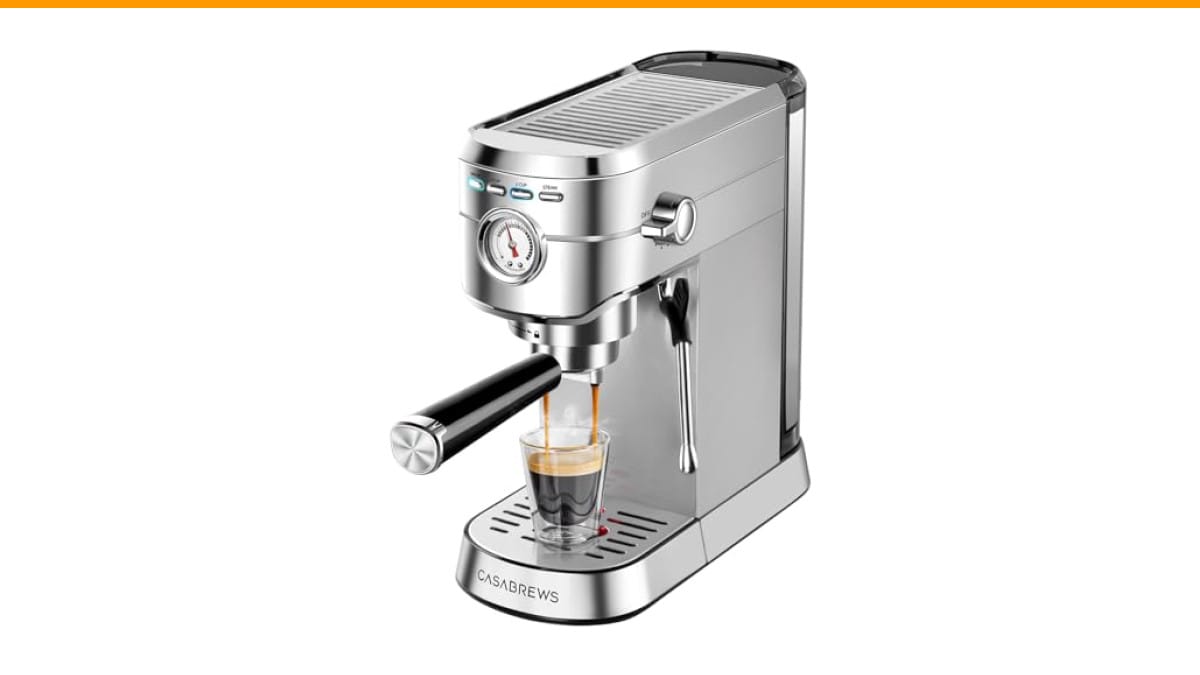
CASABREWS CM5418 Compact Espresso Machine with Milk…
- Make Your Favorite Espresso Coffee At Home: The CASABREWS coffee machine with milk frother allows you to prepare all your favorite…
- Professional 20 Bar Pressure System: Semi-Automatic 2-in-1 Espresso Maker, with 20 bar professional Italian pump and 1350 W powerf…
- Milk Frothing System: Our espresso machine with milk frother has a powerful steam wand, so you can texture creamy, rich microfoam…
As an Amazon Associate I earn from qualifying purchases.
If you are still shopping, the semi vs automatic comparison explains the difference in control. This article reviews the CASABREWS CM5418 Compact Espresso Machine. It is a solid entry point because the 20 bar pump and built-in pressure gauge take the guesswork out of your first few hundred shots.
Myth 1: You Need a $2026 Grinder to Make Good Espresso
People love blaming their equipment. The truth is most bad shots come from inconsistent grind size, not the machine. A blade grinder is the real problem. It produces uneven particles, so fine and coarse grounds extract at different rates. Your shot tastes sour and bitter at the same time.
You do not need a commercial grinder. You need a burr grinder that lets you adjust the setting in small steps. The CASABREWS CM5418 comes with a tamper, but you will still need a separate grinder. Budget for a decent burr model. It makes a bigger difference than upgrading your machine.
Here is a quick test. Grind fresh beans and spread them on a white plate. If you see obvious chunks mixed with powder, your grinder is holding you back.
The 30-Second Shot Recipe That Works Every Time
Stop overcomplicating the process. A standard double shot uses 18 grams of dry coffee. You want 36 grams of liquid espresso in the cup. The extraction should take 25 to 30 seconds from the moment you hit the brew button.
Follow this sequence on the CASABREWS CM5418:
- Fill the 34 oz water tank and turn the machine on. Let it heat for 15 minutes. The portafilter needs to be hot.
- Weigh out 18 grams of beans. Grind them fine, like table salt.
- Distribute the grounds evenly in the portafilter. Tap the side to level them.
- Tamp with firm, even pressure. You want a flat, polished surface.
- Lock the portafilter into the group head. Place your scale and cup underneath.
- Press the 2-cup button. Watch the pressure gauge. It should sit in the espresso range on the dial.
- Stop the shot when the scale hits 36 grams. If it hits 36 grams before 20 seconds, grind finer. If it takes longer than 35 seconds, grind coarser.
That last step is the key. Adjust the grind, not the machine settings. The pressure gauge on the CM5418 helps you see if you are in the right zone. A reading below the espresso range means your grind is too coarse. A reading too high means you are choking the puck.
Myth 2: More Steam Power Means Better Milk Froth
People assume a powerful steam wand is all you need. That is wrong. The wand’s power only determines how fast you heat the milk. The texture comes from your technique. A weak wand can still produce silky microfoam if you position the tip correctly.
On the CASABREWS CM5418, the steam wand is capable but not instant. It takes about 30 seconds to heat 6 ounces of cold milk. That is fine. You have time to control the aeration.
Here is the method that works:
- Use cold whole milk. Fill the pitcher one-third full.
- Purge the wand for 2 seconds before dipping it in.
- Place the tip just below the surface, near the side of the pitcher.
- Open the steam valve fully. You should hear a gentle hiss, like tearing paper.
- Keep the tip at the surface until the milk warms to about 90°F. The volume should increase by half.
- Submerge the tip fully to create a whirlpool. This mixes the foam into the milk.
- Turn off the steam when the pitcher feels too hot to hold for more than 3 seconds, around 140°F.
One warning. Do not brew coffee immediately after steaming. The CM5418’s manual explicitly states the machine needs to cool down. The lights will flash if you trigger the over-heating protection. Wait a few minutes or run a small amount of water through the group head to reset it.
Dialing In: The Only Troubleshooting Table You Need
Most people give up because they do not know what their shot is telling them. Here is a simple reference for what goes wrong and what to change. Use this procedure every time you switch beans.
| Symptom | Cause | Fix |
|---|---|---|
| Shot runs fast, under 20 seconds | Grind too coarse | Grind finer by 2 steps |
| Shot drips slowly, over 35 seconds | Grind too fine | Grind coarser by 2 steps |
| Sour, sharp taste | Under-extraction | Grind finer or increase dose |
| Bitter, burnt taste | Over-extraction | Grind coarser or decrease dose |
| No crema, thin body | Old beans or low pressure | Use beans roasted within 4 weeks |
| Water sprays from portafilter | Uneven tamp | Distribute grounds before tamping |
This table assumes your machine is working correctly. If you get leaking from the group head or strange noises, check the leaking water guide for fixes. Those problems are separate from dialing in.
Cleaning Is Part of the Workflow
Nobody wants to hear this, but a dirty machine makes bad coffee. Old coffee oils go rancid. They coat the group head and the portafilter basket. Your next shot picks up that stale flavor. The steam wand also needs attention. Milk residue bakes onto the tip and blocks the holes.
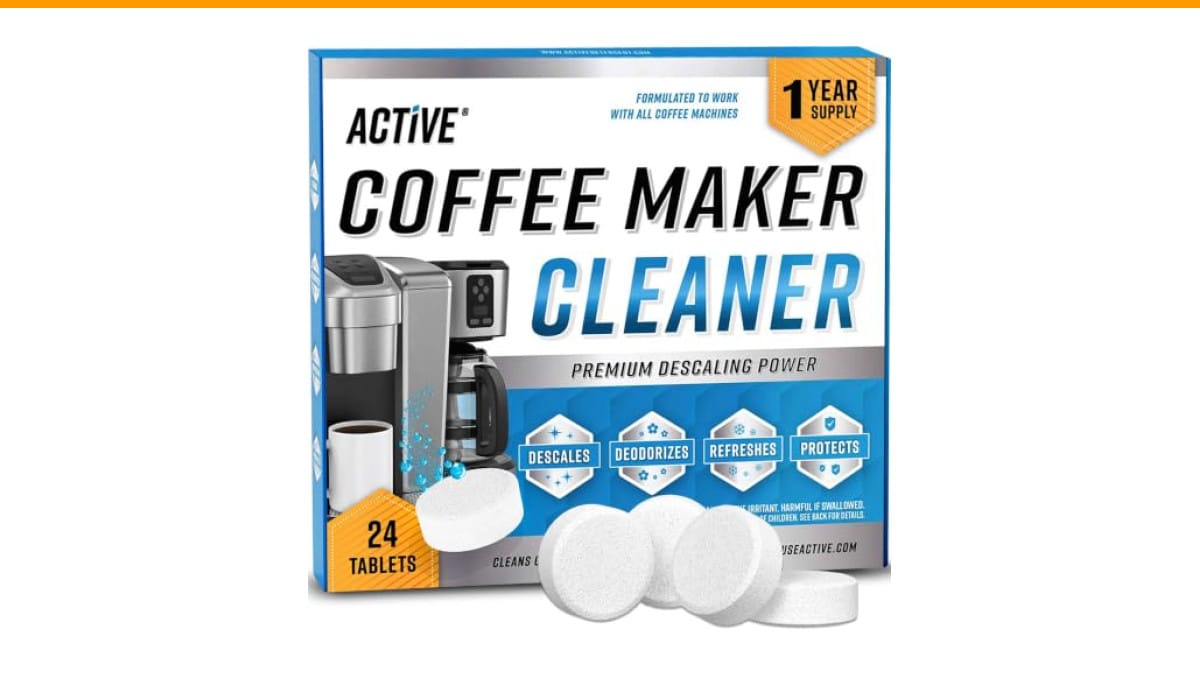
Make it part of your routine, not a monthly chore. After every session, knock out the puck and rinse the portafilter under hot water. Wipe the group head with a damp cloth. Purge the steam wand into a rag for 2 seconds. Once a week, backflush with a cleaning tablet if your machine supports it. The CM5418 does not have a three-way valve, so skip the backflush and focus on wiping and soaking the basket instead. For a full breakdown, read the deep cleaning guide.
Descaling matters too. Hard water builds scale inside the boiler, which reduces pressure and makes your shots run slow. Use a descaling solution every two to three months. The process is simple: run the solution through the tank, then rinse with fresh water. More details are in the descaling tutorial.
Frequently Asked Questions
Why does my shot taste sour even when I follow the recipe?
Sourness means under-extraction. The water did not pull enough flavor out of the grounds. The fix is usually a finer grind. Go two steps finer on your grinder and pull again. Also check your dose. If you used 16 grams instead of 18, the puck is too thin and water passes through too fast.
Should I use the single or double basket?
Use the double basket. Single baskets are notoriously hard to dial in because the puck is thin and prone to channeling. The CM5418 includes both, but stick to the two-cup filter until you master the basics. You can always split the double shot into two cups.
How long should I heat the machine before pulling a shot?
At least 15 minutes. The metal group head needs to absorb heat. If you start early, the water loses temperature when it hits the cold metal. The result is a lukewarm, under-extracted shot. The CM5418 heats up quickly, but the portafilter needs to be locked in and warming the whole time.
Can I use pre-ground coffee from the supermarket?
You can, but you will not get great results. Pre-ground coffee is ground for drip machines, not espresso. It is too coarse. Buy whole beans and grind them right before brewing. The difference is night and day. If you must use pre-ground, look for an espresso-specific grind and use it within a week of opening.
Why does the machine stop working after I steam milk?
That is the over-heating protection. The boiler gets too hot after steaming. The CM5418’s lights will flash to warn you. Do not panic. Turn the machine off, wait five minutes, and turn it back on. Run a small amount of water through the group head to cool the boiler faster. This is normal behavior, not a defect.
What to Remember When You Start
- Weigh your beans every time. 18 grams in, 36 grams out.
- Time your shot. 25 to 30 seconds is the target zone.
- Adjust the grind, not the machine pressure.
- Let the machine heat for 15 minutes before brewing.
- Texture milk before pulling the shot, then let the machine cool down.
- Clean the portafilter and steam wand after every use.
- Buy a burr grinder before you buy a fancier espresso machine.
Products related to this article
Sponsored / affiliate links. As an Amazon Associate I earn from qualifying purchases. I may earn additional commission from eligible campaigns.
 Coffee Espresso Machine Handle Replacement Parts, Cafe Bracket Handle for Lidl Silvercrest CM4621 CM4218 KF5002 KF500S Barista (for 51mm Portafilter Basket - Not included)
 Quick Heating Cup Warmer, Three Temperature Settings, Splashproof and Portable, for Coffee, Milk, Lightweight ABS Material
 HomeBeyond Espresso Coffee Maker 12 Cups, Classic Stovetop Espresso Maker, 600ml / 20oz Coffeemaker for Gas & Ceramic Stovetops (Silver)