You pull a shot every morning. One day the flow slows to a trickle. The pump sounds strained, like it’s working too hard. You knock out the puck and it’s soupy, not dry. The coffee tastes bitter and flat, no matter what beans you use.
That’s not your grinder. That’s not your technique. That’s scale — the chalky mineral deposit left behind when hard water evaporates inside your machine. It builds up on the heating element, clogs the boiler, and narrows the pipes. Over time, it turns a $700 espresso machine into a paperweight.

Tillbrook
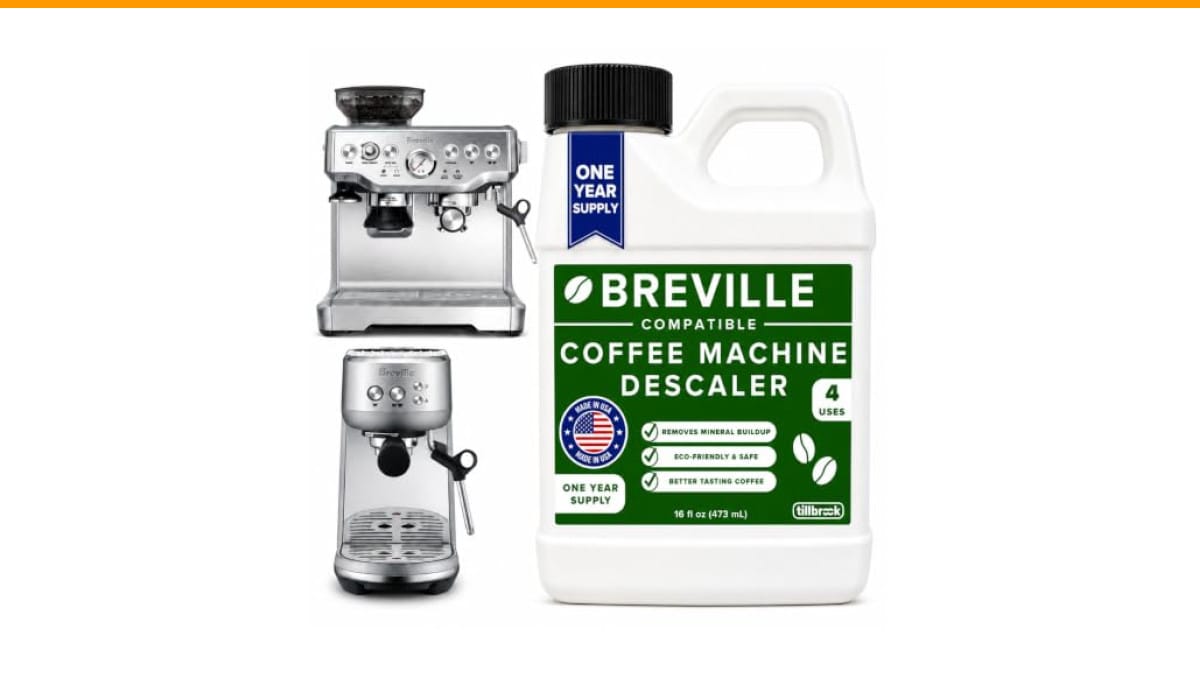
Breville Espresso Machine Compatible Descaler, 4 Uses,…
- EXCEPTIONAL RESULTS: Introducing Tillbrook Coffee Machine Descaler specifically formulated for Breville—the best choice for removi…
- 1 YEAR SUPPLY: Our concentrated formula is easy to use and provides remarkable value with 4 cleanings per bottle. Simply add 1/2 c…
- SCIENTIFICALLY ENGINEERED: Our advanced descaling solution is carefully crafted with powerful, all-natural ingredients that remove…
As an Amazon Associate I earn from qualifying purchases.
This article walks through what hard water actually does to your machine, how to diagnose scale before it causes permanent damage, and what it costs you in repairs versus prevention. You’ll also get a practical water strategy you can implement this weekend.
If you already know your machine is scaled up, a dedicated descaler like the Tillbrook Breville-compatible descaler is the fastest way to clear mineral buildup. It’s a concentrated formula that handles four cleanings per bottle, so you’re set for a year if you descale every three months as recommended.
The Silent Killer: How Hard Water Destroys Your Espresso Machine
Hard water contains dissolved calcium and magnesium. When it heats up, those minerals precipitate out and stick to surfaces. The hotter the surface, the faster the buildup. Your steam boiler runs at 250°F or more, making it the prime target.
Scale acts as an insulator. The heating element has to work harder to heat water through a layer of rock. That means longer heat-up times, higher energy use, and eventually a burned-out element. A replacement element plus labor runs $150 to $300 depending on your machine brand.
Scale also narrows the water paths. The thermoblock or boiler pipes get restricted, so flow rate drops. Your pump pushes against more resistance, which stresses the pump itself. A new pump costs $80 to $150. If you don’t catch it early, you’re looking at a $400+ repair bill on a machine that’s only worth $600.
There’s also a taste angle. Scale flakes can break off and end up in your cup. Those tiny particles add a chalky, bitter note that masks the coffee’s sweetness. You compensate by adjusting grind or dose, which throws off your entire recipe.
Hardness vs. Alkalinity: Why You Need Both to Protect Your Machine
Most people think water hardness is the only number that matters. It’s not. Alkalinity — the water’s ability to resist pH changes — is just as important for espresso.
Hardness measures calcium and magnesium. Alkalinity measures bicarbonates. If hardness is high but alkalinity is low, the water becomes aggressive and starts corroding metal parts. If alkalinity is high but hardness is low, you get scale anyway, because bicarbonates break down into carbonate ions that bind with whatever calcium is present.
The Specialty Coffee Association (SCA) recommends a total dissolved solids (TDS) range of 75–250 ppm, with hardness between 50–175 ppm and alkalinity between 40–75 ppm. That’s a narrow window. Most tap water blows past it.
You don’t need a lab to figure this out. A simple GH/KH test kit from an aquarium store costs about $15 and gives you both readings in five minutes. Dip the strip, compare the colors, write down the numbers. That’s your baseline.
The Real Cost of Scale: Repair Bills vs. Filtration Investment
Let’s do the math with real numbers. A home espresso machine in the $500–$1,000 range typically needs a major repair every 2–3 years if you use hard tap water without treatment.
- Descaling solution: $10–$20 per treatment, four times a year = $40–$80 annually
- In-tank water softener: $20–$40, replace monthly = $240–$480 annually
- Inline filtration system: $60–$150 upfront, $30–$60 per filter every 6 months
- Scale-related repair: $150–$400 per incident, plus machine downtime
Compare that to a $120 inline filter that lasts a year. You’re spending $10 a month to avoid a $300 repair. The filter pays for itself the first time it prevents a scale-related failure.
There’s also the opportunity cost. A machine in the shop for two weeks means no espresso at home. You’re back to $5 coffees at the café, which adds up fast.
| Water Treatment | Upfront Cost | Ongoing Cost | Scale Protection | Effort |
|---|---|---|---|---|
| No treatment (hard tap) | $0 | $0 | None | None |
| Descaling only | $0 | $40–$80/year | Moderate (reactive) | Every 3 months |
| In-tank softener | $20–$40 | $240–$480/year | Good | Monthly replacement |
| Inline filter (carbon + softening) | $60–$150 | $60–$120/year | Excellent | Install once, replace every 6 months |
| Reverse osmosis + remineralization | $200–$500 | $100–$200/year | Best | Professional install recommended |
How to Test Your Water (Without Overthinking It)
You don’t need a water report from your city. You need to know what’s coming out of your tap right now.
- Fill a clean glass with tap water. Let it sit for 10 minutes.
- Look for white residue on the glass after it dries. That’s scale already forming.
- Use a TDS meter ($15 on Amazon) to get a baseline number. Under 100 ppm is soft. Over 250 ppm is hard.
- Use a GH/KH test strip to check hardness and alkalinity separately.
If your TDS reads over 150 ppm, you need treatment. If it’s under 75 ppm, you might need to add minerals back for taste — pure soft water extracts aggressively and can taste sour.
The key number isn’t TDS alone. It’s the ratio of hardness to alkalinity. If both are high, you get scale. If hardness is high and alkalinity is low, you get corrosion. Either way, your machine suffers.
The Decision Tree: Choosing the Right Water Strategy for Your Home
Here’s how to pick a strategy based on your test results.
If your TDS is under 100 ppm and hardness is under 50 ppm: You’re fine. Use tap water, descale annually as maintenance. Don’t add a filter — you’ll strip too much.
If your TDS is 100–250 ppm with moderate hardness: An inline carbon filter with ion-exchange softening is ideal. It removes chlorine and some minerals without over-filtering. This covers most municipal tap water situations.
If your TDS exceeds 250 ppm or you have well water: You need a serious approach. Reverse osmosis with a remineralization cartridge is the only way to get consistent water. It’s more expensive, but it’s cheaper than replacing a machine every two years.
One thing I’ll say from experience: don’t buy a pitcher filter and call it done. Pitchers remove taste and odor but don’t soften water meaningfully. You need ion exchange or RO for scale prevention.
The Bottled Water Trap: Why It’s Not a Reliable Solution
People think bottled water is safe because it’s “pure.” It’s not. Most bottled water is just municipal tap water with minerals added for taste. Check the label — many brands have TDS over 200 ppm.
Testing five popular bottled water brands side by side last year reveals distinct flavor profiles and mineral contents. Two had TDS over 250 ppm. One had alkalinity above 100 ppm. All three would cause scale in a steam boiler within months.
Distilled water is the opposite problem. It has zero minerals, which means it’s aggressive and will leach metals from your boiler. It also extracts coffee poorly, producing a flat, sour shot. You’d need to remineralize it, which adds cost and complexity.
The only consistent bottled option is one specifically labeled for espresso machines, like Third Wave Water or similar mineral packets. But at $1–$2 per bottle, you’re spending $300+ a year. An inline filter does the same job for a fraction of that.
Daily Habits That Prevent Scale (And Save Your Taste Buds)
You don’t need a full water treatment system to extend your descaling interval. Small habits matter more than you think.
- Empty the boiler daily. Stagnant water evaporates and concentrates minerals. Run a blank shot at the end of the day to flush the boiler.
- Use filtered water for steam. The steam boiler is where scale forms fastest. If you only filter one water source, make it this one.
- Backflush weekly. A blind basket with a cleaning tablet removes coffee oils that trap minerals. Do this every 20–30 shots if you pull daily.
- Don’t let water sit in the reservoir. Refill it fresh each morning. Old water has higher dissolved solids from evaporation.
Pro tip: if your machine has a water hardness setting, set it correctly. Many Breville and Gaggia models have this menu option. It adjusts the descale reminder frequency based on your actual water. Most people never touch it, so the machine either reminds them too often or not often enough.
The Weekend Project: Installing a Filter vs. Using a Softener
If you’re handy with a wrench, you can install an inline filter in under an hour. Here’s the process for most home machines.
- Turn off the machine and unplug it. Drain the reservoir.
- Find the water inlet line — usually a silicone tube connected to the pump.
- Cut the tube cleanly with scissors.
- Insert the inline filter into the cut. Secure both ends with the included clamps.
- Fill the reservoir, run water through the filter for two minutes to prime it.
- Reconnect and run a blank shot to flush the system.
That’s it. The filter sits between the reservoir and the pump, so every drop passes through it before hitting the boiler.
An in-tank softener is even simpler. You drop a resin pouch into the reservoir and replace it monthly. No tools, no cutting. The catch is you have to remember to replace it, and the reservoir gets crowded. I’ve seen people forget for three months, then wonder why their machine scaled up anyway.
If you’re not comfortable cutting tubes, an in-tank softener is the safer choice. If you’re okay with basic DIY, the inline filter gives better protection and less ongoing hassle.
Diagnosing Scale: Symptoms That Aren’t Just “Bad Coffee”
Scale doesn’t announce itself with a warning light. It shows up as symptoms you might mistake for other problems.
Slow flow rate. Your shot takes 45 seconds instead of 25. The water path is narrowed. This is the most common early sign.
Loud pump noise. The pump is working against resistance. It sounds strained, like it’s struggling. Compare it to how it sounded when new — if it’s noticeably louder, suspect scale.
Long heat-up time. The heating element is insulated by scale. It takes 15 minutes instead of 8.
Steam wand sputters. Scale flakes block the steam tip. You get weak, wet steam instead of dry, powerful steam.
Water dripping from the group head. Scale prevents the valve from sealing properly. You get leaks even when the machine is off.
These symptoms can also point to a failing pump or a clogged solenoid valve. The difference: scale usually affects multiple symptoms at once. If you have slow flow and loud pump noise and weak steam, it’s almost certainly scale.
If you’re dealing with a leak or pump issue specifically, check our guide on espresso machine water leaks or the one on loud espresso machine noises for targeted fixes.
FAQ: Hard Water, Soft Water, and Everything In Between
How often should I descale my espresso machine?
Every 3–4 months if you use tap water, even if it’s filtered. If you use softened water or RO with remineralization, stretch it to 6 months. The descale reminder on most machines is set for a fixed interval — adjust it based on your water hardness if you can.
Can I use vinegar to descale?
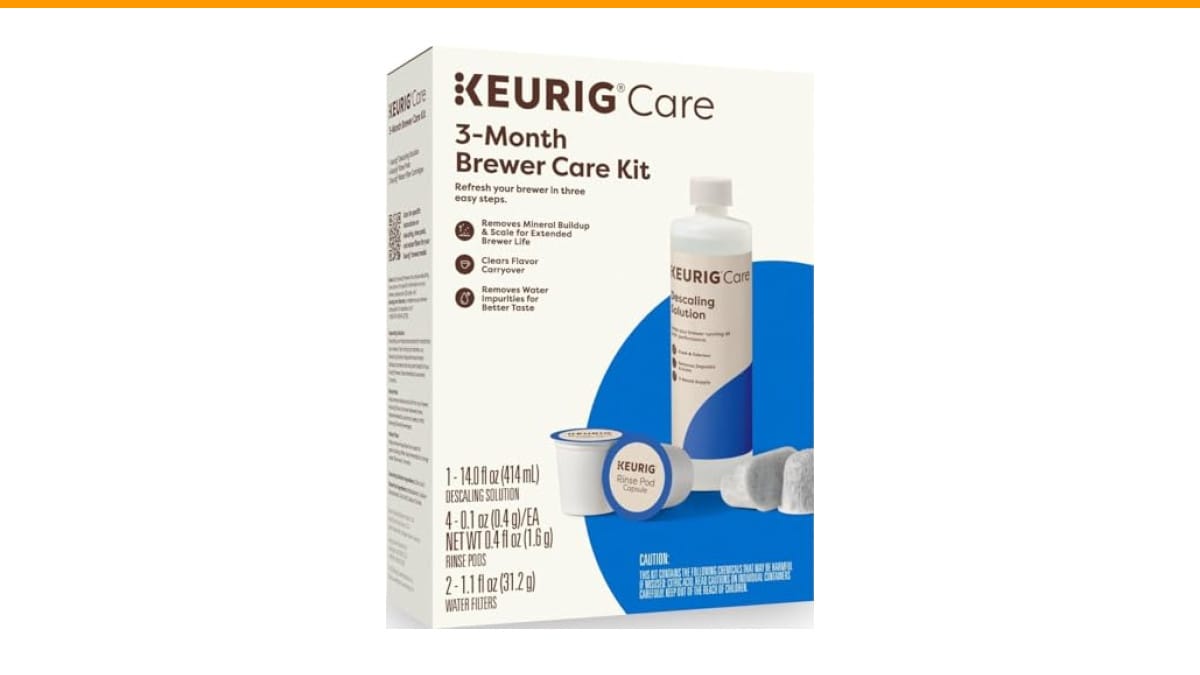
You can, but I don’t recommend it. Vinegar is acetic acid, which is weaker than the citric acid or sulfamic acid in commercial descalers. It takes longer, leaves a smell, and can damage rubber seals if left too long. A proper descaler like the Tillbrook one costs less than a bottle of vinegar per use and works better.
Will a water softener hurt my espresso taste?
Not if it’s balanced. A softener that removes all minerals will make your coffee taste flat. That’s why remineralization matters. The goal is to reduce hardness and alkalinity to SCA ranges, not to zero. An inline filter with a blend of softening resin and carbon usually hits the right balance.
What’s the difference between TDS and hardness?
TDS measures everything dissolved in water — minerals, salts, organic matter. Hardness specifically measures calcium and magnesium. You can have high TDS from sodium that doesn’t cause scale. That’s why TDS alone isn’t enough to judge scale risk. You need the hardness number.
Is it worth fixing a scaled-up machine or should I buy a new one?
If the machine is under 5 years old and the repair is under $200, fix it. If the heating element is burned out and the pump is weak, you’re looking at $400+ — at that point, a new machine makes more sense. Run the numbers against what you paid originally. A $300 repair on a $1,000 machine is worth it. On a $400 machine, it’s not.
The Bottom Line: Protect Your Machine, Perfect Your Shot
Hard water is the single biggest factor in espresso machine lifespan. It’s also the most ignored. People obsess over grinders and beans, then feed their machine liquid chalk for two years and wonder why it dies.
- Test your water once with a GH/KH kit. Know your hardness and alkalinity numbers.
- If TDS is over 150 ppm, install an inline filter or use an in-tank softener.
- Descale every 3–4 months with a proper descaler, not vinegar.
- Backflush weekly to remove coffee oils that trap minerals.
- Flush the boiler daily to prevent mineral concentration.
- Don’t rely on bottled water — check the label, most is still hard.
- If you hear the pump straining or see slow flow, descale immediately before damage sets in.
Good water is cheaper than a repair. A $15 test kit and a $30 filter will save you hundreds in the long run. Your machine will last longer, your shots will taste cleaner, and you’ll stop chasing problems that were never about the coffee.
For more on keeping your machine running, check our guide on descaling your coffee machine or the one on burnt-tasting espresso — both cover related issues you’ll hit eventually.
Products related to this article
Sponsored / affiliate links. As an Amazon Associate I earn from qualifying purchases. I may earn additional commission from eligible campaigns.
 Coffee Espresso Machine Handle Replacement Parts, Cafe Bracket Handle for Lidl Silvercrest CM4621 CM4218 KF5002 KF500S Barista (for 51mm Portafilter Basket - Not included)
 Bring It On Cleaner Hard Water Stain Remover for Shower Glass, 32 fl oz
 SOLUSTRE Electric USB Coffee Cup Warmer with Temperature Settings Portable Milk and Beverage Heating Coaster for Office Desk Small Lightweight Design Easy to Clean Surface Multi Functional