You notice your morning cup tastes a bit flat. The brew takes longer than it used to, and the stream of coffee comes out in a weak trickle instead of a solid flow. You might even hear a faint hissing or gurgling sound that wasn’t there last month. Most owners blame the coffee pods or the machine’s age. Often, the real culprit is hiding in your pipes: hard water.
Hard water contains dissolved calcium and magnesium. When it heats up inside your brewer, those minerals precipitate out and stick to surfaces as limescale. This scale is more than an eyesore. It slowly destroys the internal parts that make your single-serve machine work. This article walks you through exactly what happens, how to spot the damage early, and the practical steps to keep your brewer running for years instead of months.

IMPRESA
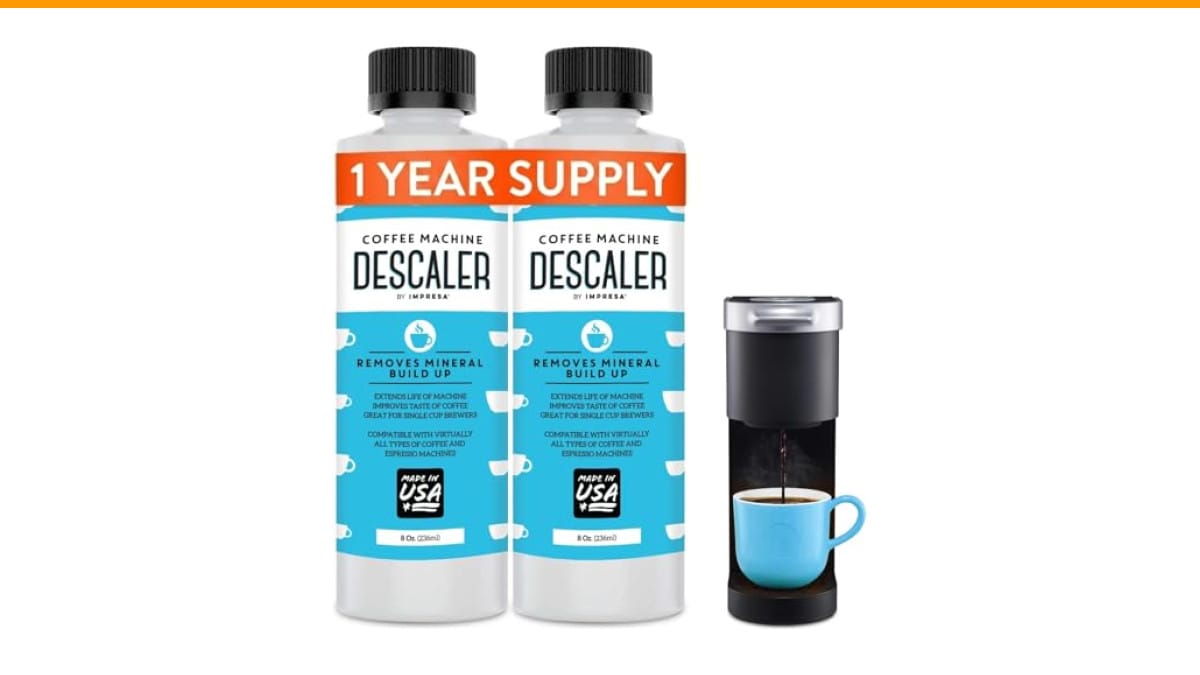
IMPRESA Coffee Machine Descaler, 2-Pack (1-Year Supply)…
- 2-Pack Coffee Descaler and Cleaner - Clean and rinse away residue and oil buildup in your coffee maker with Impresa's Coffee Desca…
- Highly Effective, Made in USA Formula - Unlike most common solutions, our coffee machine cleaner uses just 4 ounces (1/2 bottle) p…
- Preserves Your Machine - Using a coffee descaling solution eliminates limescale and mineral build-up to prevent corrosion, signifi…
As an Amazon Associate I earn from qualifying purchases.
You will learn the specific weak points of pod machines, a realistic descaling schedule, and how to decide between filtered water and frequent cleaning. You’ll also know when fixing the machine is pointless and replacement is the smarter move.
For a straightforward fix, the IMPRESA Coffee Machine Descaler, 2-Pack handles the job without fuss. It uses just 4 ounces per cleaning session, so one bottle covers two descales. The two-bottle pack gives you a full year of maintenance if you clean every three to four months.
The Hidden Cost of Hard Water in Your Single-Serve Coffee Maker
Single-serve brewers are more vulnerable to hard water than traditional drip machines. A drip coffee maker pushes water through a shower head and a flat basket. The path is short and wide. A pod machine forces hot water through a narrow needle, down a small chamber, and through the coffee pod itself under pressure.
That narrow path is the problem. Scale builds up faster in small passages. A thin layer of calcium carbonate that barely affects a drip brewer can completely block a pod machine’s needle. The result is a machine that brews slower, extracts less flavor, and eventually stops working.
You also have to consider the cost. A decent single-serve brewer costs anywhere from $80 to $200. A replacement needle assembly or pump repair often runs $50 to $100 in parts and labor. That is half the price of a new machine. Preventing scale is far cheaper than repairing the damage.
What Hard Water Actually Does to Your Machine (The Science of Scale)
Water hardness is measured in grains per gallon (gpg) or parts per million (ppm). Soft water sits below 1 gpg (17 ppm). Moderately hard water is 3.5 to 7 gpg (60 to 120 ppm). Very hard water exceeds 10.5 gpg (180 ppm). If you live in the Midwest or Southwest, your tap water might be over 15 gpg.
When water heats to brewing temperature (around 190°F to 200°F), the solubility of calcium carbonate drops. The minerals come out of solution and deposit on the hottest surfaces first. That means the heating element and the boiler walls take the brunt of the buildup.
Scale acts as an insulator. It traps heat inside the metal instead of transferring it to the water. Your machine has to work harder and run longer to reach the target temperature. This wastes energy and stresses the internal components. Over time, the heating element can overheat and burn out completely.
Think of it like a kettle. You have seen the white crust inside a kettle after months of use. That same crust is forming inside your coffee maker, but you cannot see it. By the time you notice the symptoms, the scale layer is already thick.
The Needle and Tubing Problem Specific to Pods
Pod machines use a sharp hollow needle to pierce the plastic or foil top of the pod. Water flows through this needle into the coffee grounds. The needle’s inner diameter is only a few millimeters wide. Scale crystals easily accumulate at the needle tip and along the inner wall.
Once the needle narrows, the water flow rate drops. You get a slower brew and weaker coffee. The machine’s pump works harder to push water through the restriction, which puts extra strain on the pump motor. In severe cases, the needle clogs entirely, and the machine refuses to brew.
Internal tubing is another weak spot. These flexible silicone or plastic hoses carry hot water from the boiler to the brew head. Scale forms on the inner walls of these tubes. The buildup reduces water volume and can flake off into your cup. Those white specks you occasionally see in your mug are not coffee grounds; they are limescale fragments.
How Scale Attacks the Heating Element and Pump
The heating element is the most expensive component in a single-serve brewer. It is a metal block or coil that heats water on demand. Scale deposits on the element’s surface create a barrier. The element gets hotter internally while the water stays cooler. This condition, called dry boiling, eventually burns out the element.
The pump is a small electric motor with an impeller. It draws water from the reservoir and pushes it through the system. Scale can clog the pump’s inlet valve or coat the impeller blades. A scaled pump makes a louder whining noise and loses pressure. When the pump fails, your machine is effectively dead.
There is also the issue of plastic components and seals. Many internal parts are made of polypropylene or silicone. Scale crystals are sharp and abrasive. As water flows over them, they can scratch and wear down these softer materials. Over time, seals degrade and begin to leak. You might notice water pooling under the machine or steam escaping from odd places.
5 Warning Signs Your Single-Serve Maker is Scaling Up
Hard water damage does not happen overnight. It creeps in over weeks and months. Watch for these five signs that indicate scale is building up inside your machine.
- Longer brew time. If a normal brew cycle takes 60 seconds and now takes 90 seconds or more, scale is restricting water flow. The pump is struggling to push water through the narrowed passages.
- Loud or unusual noises. A healthy brewer makes a steady hum. A scaled machine might whine, gurgle, or sputter. These sounds come from the pump working against resistance and air bubbles trapped by scale deposits.
- Weak or cold coffee. Scale on the heating element means the water never reaches the proper brewing temperature. Under-extracted coffee tastes sour, thin, or flat. If your coffee suddenly tastes weak even with a fresh pod, suspect scale.
- Visible white flakes in your cup. This is the most obvious sign. Small white particles floating in your coffee are pieces of limescale that broke off the heating element or tubing. This is a clear signal that descaling is overdue.
- Machine stops mid-brew or refuses to start. A completely clogged needle or a failed pump will halt the brew cycle. If the machine beeps but does not dispense water, scale is the likely cause unless the reservoir sensor is faulty.
If you notice any of these signs, do not ignore them. The scale will not dissolve on its own. It only gets worse with each brew cycle.
The Real Price of Neglect: Repair vs. Replacement
Let us talk about money. A bottle of descaling solution costs around $10 to $15. A descaling session takes about 30 minutes of your time. Skipping that routine maintenance can lead to a repair bill that exceeds the machine’s value.
Consider a typical single-serve brewer priced at $120. If you descale every three months, your annual maintenance cost is roughly $40 to $60 in solution. Over two years, that is $120 in cleaning products. That sounds like a lot until you compare it to buying a new machine every 12 to 18 months because the old one died.
Most single-serve brewers have a lifespan of 3 to 5 years with proper care. Without descaling, that lifespan drops to 1 to 2 years. The math favors regular maintenance. A $15 bottle of cleaner is much cheaper than a $120 replacement.
There is also the cost of your time and frustration. A broken coffee maker ruins your morning routine. Waiting for a replacement to ship or driving to the store is an inconvenience. A scheduled descaling session prevents all of that.
The Best Defense: A Water Strategy for Single-Serve Owners
Descaling is the cure, but prevention is the better strategy. The simplest way to reduce scale buildup is to control what goes into the water reservoir. You have a few options, each with different costs and benefits.
| Water Source | Calcium/Magnesium | Effect on Scale | Cost per Year | Best For |
|---|---|---|---|---|
| Hard tap water | High | Rapid scale buildup | $0 water + $60 descaling | No budget for water |
| Pitcher filter (e.g., Brita) | Reduced ~50% | Slower buildup | $30 filter + $40 descaling | Most households |
| Inline filter (e.g., under-sink) | Reduced ~80% | Minimal buildup | $80 filter + $20 descaling | High-volume users |
| Distilled or reverse osmosis | Near zero | No scale | $150 bottled or $200 RO system | Serious coffee drinkers |
The table shows a clear trade-off. Cheaper water sources lead to more frequent descaling. Expensive water sources reduce maintenance but cost more upfront. For most people, a pitcher filter is the sweet spot. It cuts scale buildup by half and costs less than $50 per year.
One caveat: do not use distilled water exclusively. Distilled water has no minerals at all, which can actually leach metals from the boiler over time. A small amount of mineral content is beneficial for taste and machine longevity. A pitcher filter or a 50/50 mix of distilled and tap water works best.
Choosing the Right Water Filter (Pitcher vs. Inline)
A pitcher filter like a Brita or PUR is the easiest option. You fill it from the tap, wait a few minutes, and pour the filtered water into the machine’s reservoir. Pitcher filters use activated carbon and ion-exchange resin. The resin swaps calcium and magnesium ions for sodium or potassium ions, reducing hardness.
Pitcher filters are not perfect. They reduce hardness by about 50%, not 100%. You still need to descale, but less frequently. The filter cartridges need replacing every 40 gallons or every two months, whichever comes first. If you forget to replace the filter, it becomes a breeding ground for bacteria.
An inline filter connects directly to your kitchen water line. It sits under the sink and filters all water coming out of the tap. These systems use a larger resin bed and can reduce hardness by 80% or more. They cost more upfront ($50 to $150) but last longer between replacements (6 months to a year). If you drink a lot of coffee or cook with filtered water, an inline system is worth the investment.
The Ultimate Descaling Schedule for Hard Water Homes
How often should you descale? The answer depends on your water hardness and how much coffee you brew. Here is a practical schedule based on brewing frequency and water quality.
- Soft water (below 1 gpg): Descale every 6 months. Scale builds slowly, so you have a longer window.
- Moderately hard water (3-7 gpg): Descale every 3 months. This is the default recommendation for most US households.
- Very hard water (above 10 gpg): Descale every 1-2 months. The scale builds fast, and you need to stay ahead of it.
- High usage (4+ cups per day): Move up one tier. More brewing means more water through the system, which means more mineral deposits.
Mark your calendar. Set a reminder on your phone. The single most effective habit is consistency. A 30-minute descaling session every three months will double the lifespan of your machine.
Step-by-Step: How to Descale Your Single-Serve Maker Properly
Descaling is not complicated, but you need to do it correctly to avoid damaging the machine. Here is a step-by-step process that works for most pod-based brewers.
- Empty the reservoir. Pour out any remaining water. Remove the water filter if you use one, as the descaling solution can damage the filter media.
- Mix the descaling solution. Follow the instructions on the bottle. For the IMPRESA solution, you use 4 ounces per session. Add the solution to the reservoir, then fill the rest with fresh water to the max line.
- Run a brew cycle without a pod. Place a large mug or bowl under the spout. Run the machine through a regular brew cycle. Discard the water. Repeat this until the reservoir is empty.
- Let it sit. After the last cycle, leave the machine off for 15-30 minutes. This allows the solution to soak inside the needle and tubing, dissolving stubborn scale.
- Rinse thoroughly. Fill the reservoir with fresh water only. Run at least two full brew cycles to flush out any remaining descaling solution. The water should run clear and odor-free.
- Wipe down the exterior. Use a damp cloth to clean the drip tray and the outside of the machine. This removes any solution that splashed during the process.
Do not use more solution than the instructions specify. A stronger concentration does not clean faster; it can damage the rubber seals and plastic parts. If your machine has a specific descaling mode (many Keurig models have one), use that instead of a regular brew cycle.
You can also check our guide on proper cleaning methods for more details on general maintenance.
When to Call It Quits: Is It Time for a New Machine?
Descaling fixes most problems, but not all. If you have descaled and the machine still brews slowly or makes strange noises, you might have permanent damage. Here are the signs that repair or replacement is the only option.
First, check the pump. If the machine makes a loud whining noise even after descaling, the pump motor is likely worn out. Replacing a pump is possible but often costs more than the machine is worth.
Second, check for leaks. If water pools under the machine during brewing, a seal has failed. Scale crystals can scratch and deform the rubber gaskets. Replacing seals is a fiddly job that requires disassembling the machine.
Third, check the heating element. If the machine takes forever to heat up or produces cold coffee, the element may be burned out. This is usually a fatal condition for a budget brewer.
Before you give up, try one last deep clean. Run a descaling cycle, then a vinegar cycle (if the manufacturer allows it), then several water-only cycles. If the machine still performs poorly, it is time to shop for a replacement. You can learn more about common failures in our troubleshooting guide.
When you buy a new machine, start with a good water strategy from day one. Use filtered water and set a descaling reminder. The new machine will last much longer than the old one.
Frequently Asked Questions
Can I use vinegar instead of descaling solution?
Yes, white vinegar works in a pinch. It contains acetic acid, which dissolves calcium carbonate. Mix one part vinegar with two parts water and run it through the machine. The downside is the strong smell, which can linger for several brews. You will need to run 3-4 water-only cycles to flush out the vinegar taste. Commercial descalers like the IMPRESA solution are faster and leave no odor. For a one-time emergency, vinegar is fine. For regular maintenance, use a proper descaling product.
Will a water softener save my coffee maker?
A whole-house water softener removes calcium and magnesium before they reach your tap. It is the most effective solution for preventing scale. The softener exchanges those minerals for sodium. The water still has a small amount of dissolved solids, but it will not form scale. If you already have a water softener, your coffee maker is protected. If you do not, a pitcher filter is a cheaper alternative that provides most of the benefit.
How do I know if my water is hard?
You can buy a water hardness test strip at a hardware store for a few dollars. Dip it in a glass of tap water and compare the color to the chart. Alternatively, check your local water utility’s annual water quality report. It lists the hardness level in your area. If you see white spots on your dishes or soap scum in your shower, your water is likely hard.
Does descaling improve the taste of coffee?
Yes. Scale buildup on the heating element prevents water from reaching the optimal brewing temperature. Under-heated water extracts less flavor from the coffee grounds. Descaled machines brew hotter, which leads to a fuller, richer cup. Also, removing old scale prevents those white flakes from ending up in your mug. The difference is noticeable, especially if you have not descaled in months.
Is it safe to drink coffee from a scaled machine?
Drinking coffee from a scaled machine is not dangerous in the short term. Calcium carbonate is not toxic. However, the scale can harbor bacteria over time, and the flaking particles are unpleasant. The bigger risk is machine failure. A scaled machine eventually stops working, leaving you without coffee. Regular descaling keeps both your machine and your cup clean.
Final Brew: Protecting Your Investment
Hard water is the silent killer of single-serve coffee makers. It attacks the needle, the tubing, the heating element, and the pump. The damage is gradual, but the consequences are expensive.
- Use filtered water (pitcher or inline) to cut scale buildup by half or more.
- Descale every 3 months for moderate hardness, or every 1-2 months for very hard water.
- Watch for slow brewing, loud noises, weak coffee, and white flakes as early warning signs.
- Use a commercial descaling solution like the IMPRESA 2-Pack for a thorough, odor-free clean.
- Rinse the machine with 2-3 water-only cycles after descaling to remove all residue.
- Replace the machine if it leaks, whines, or brews cold coffee even after descaling.
- Set a calendar reminder for descaling. Consistency beats intensity.
Your coffee maker is a small appliance, but it serves a big purpose. A few minutes of maintenance every few months keeps it brewing reliably. That is a trade worth making.
Products related to this article
Sponsored / affiliate links. As an Amazon Associate I earn from qualifying purchases. I may earn additional commission from eligible campaigns.