You pull a shot that looks beautiful, but it trickles out at a pace that makes you check your watch. The crema is thin. The flavor is flat. You backflush, you change beans, you adjust the grind. Nothing helps. The machine is only two years old, and you’re already shopping for a replacement. Chances are, you’re not a bad barista. You have a hard water problem.
Hard water is the silent killer of semi-automatic espresso machines. It doesn’t fail all at once. It builds up slowly, layer by layer, inside the boiler and along the group head. By the time you notice the symptoms, the damage is often already done. This article covers exactly what hard water does to your machine, what it costs you in real money, and why the most common ‘fix’ (distilled water) can make things worse. You’ll leave with a water test plan and a descaling schedule based on data, not guesswork.
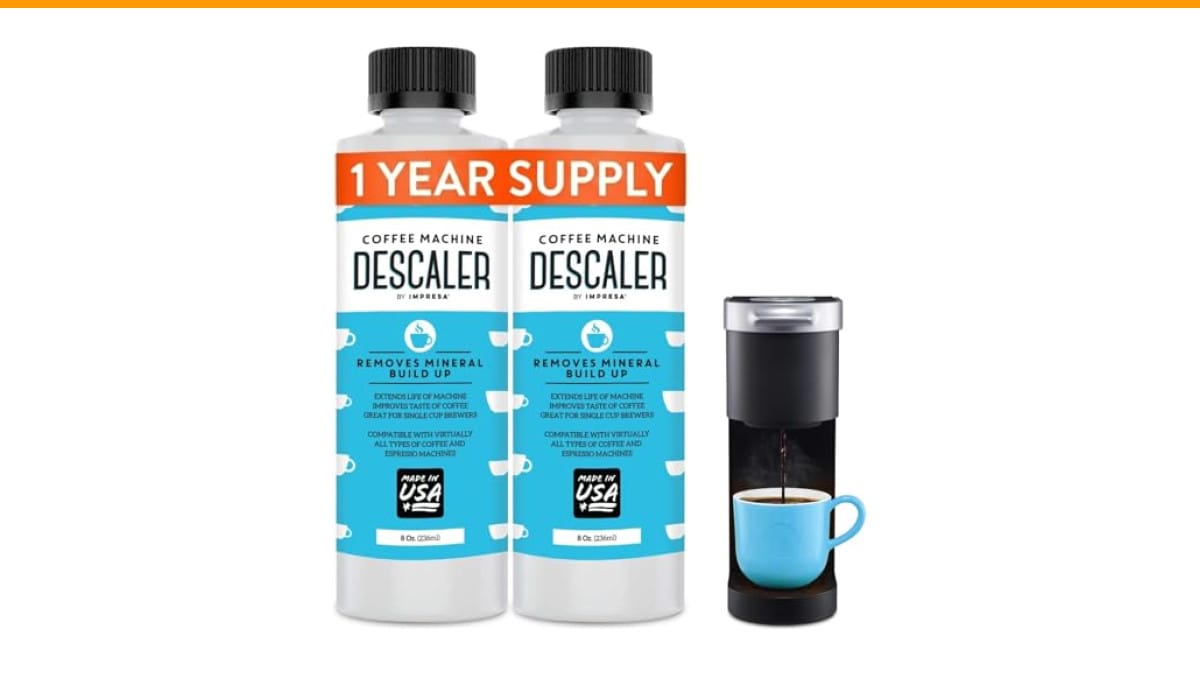
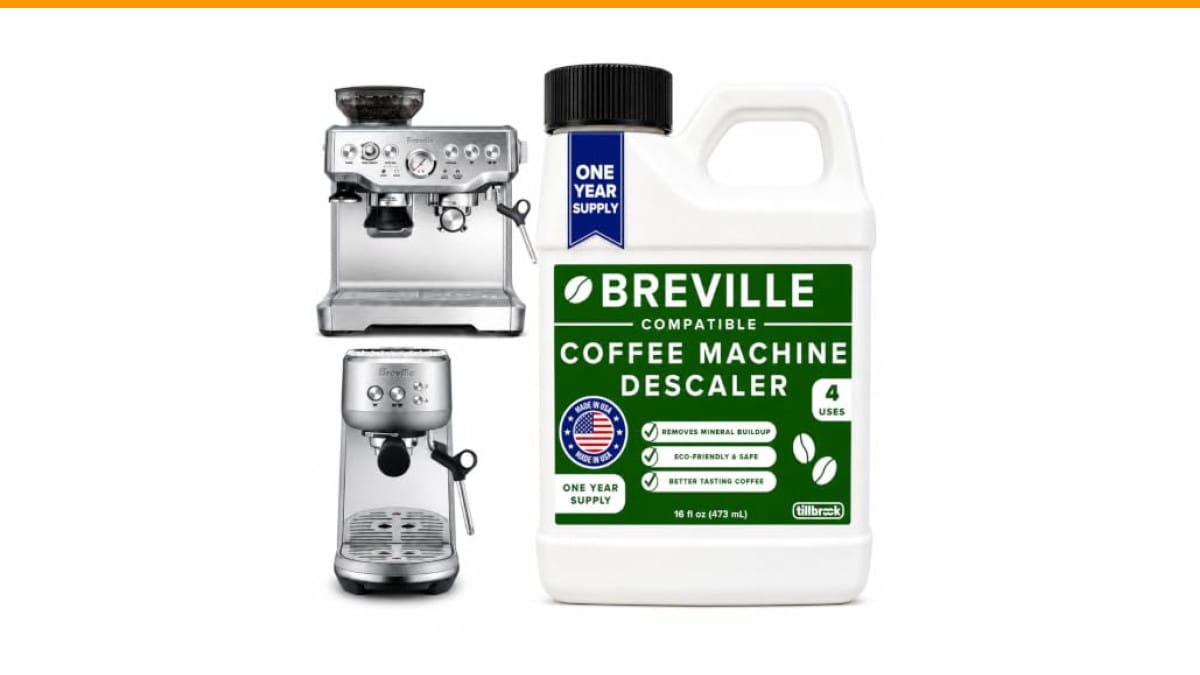
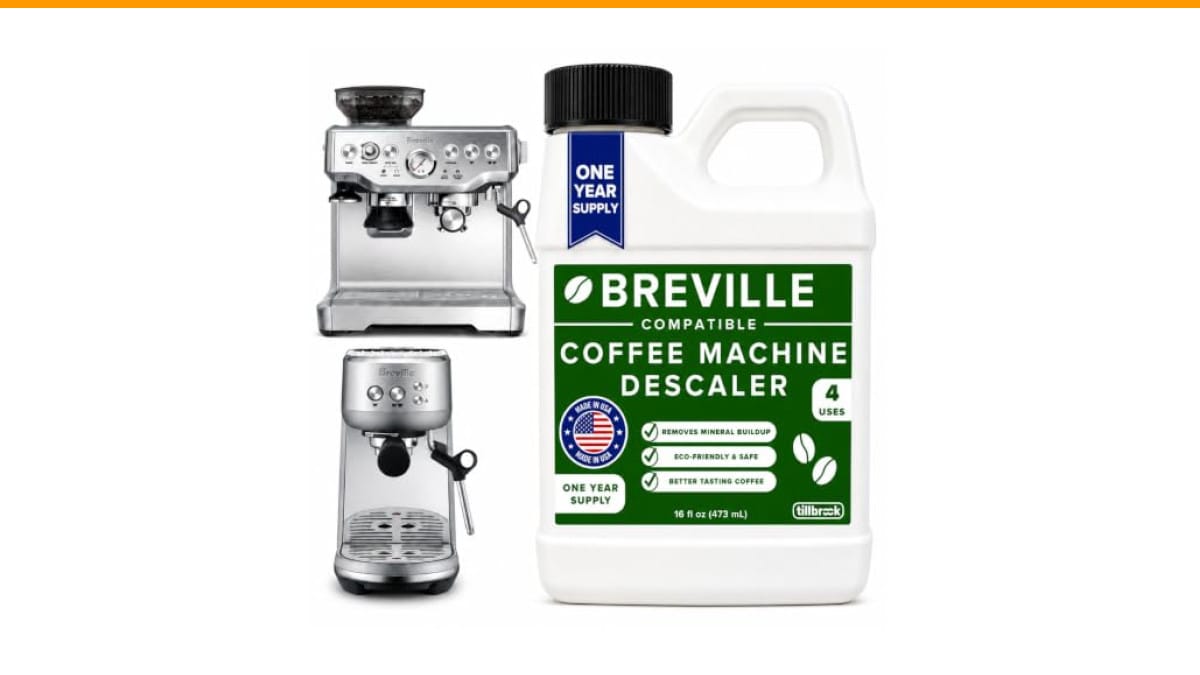
If you’re already seeing scale buildup and need to act fast, a dedicated descaling solution like the Tillbrook Breville Descaler is a good first step. It’s formulated for Breville machines but works across most brands, and a single bottle gives you four cleanings. It won’t fix a boiler that’s already cracked, but it will clear out the calcium carbonate that’s choking your current setup.
What Hard Water Actually Does to Your Semi-Automatic Machine
Hard water is full of dissolved minerals, mainly calcium carbonate and magnesium. When you heat that water to 200°F in your boiler, the minerals precipitate out of the solution. They solidify and stick to the metal. This is limescale.
Think of it like plaque in an artery. A thin layer doesn’t stop the flow, but it narrows the path. Over time, that scale layer gets thicker. It acts as an insulator, which means your heating element has to work harder and run longer to hit the same temperature. That wastes energy and puts constant stress on the thermostat.
Scale doesn’t just sit there. It breaks off in chunks. Those chunks travel through the machine and get caught in narrow passages. The most common victim is the solenoid valve, which controls water flow. A single flake of scale can jam it completely, leaving you with a machine that won’t dispense water or a group head that drips continuously.
Your water chemistry isn’t just about the boiler. It affects extraction quality directly. Scale on the group head and shower screen disrupts water distribution. You get channeling, where water finds the path of least resistance through the coffee puck. That produces sour, under-extracted shots with no body. You’ll blame the beans, but the machine is the problem.
The Hidden Cost: Why Scale is Expensive (Not Just Annoying)
Most home users ignore descaling because it feels like a chore. Let me put the cost of that chore into perspective. A replacement boiler for a mid-range semi-automatic machine runs between $150 and $300 for the part alone. Labor, if you have a shop do it, pushes that to $400 or more. A new solenoid valve is cheaper, around $50, but diagnosing the problem and swapping it out takes a couple of hours of your time.
Compare that to the cost of prevention. A basic water hardness test strip kit costs about $10. A pitcher filter with a softening cartridge runs $30 to $40 a year. A dedicated descaling solution costs about $15 per treatment. You can protect a $700 machine for less than $50 a year.
The math gets worse if you wait. Once scale builds up thick enough, it can crack the boiler. The metal expands and contracts with heat, but scale doesn’t. That differential stress causes stress fractures. A cracked boiler is a total loss. You’re buying a new machine. That’s the real financial impact of hard water.
Specific Components Under Attack
Not all parts fail the same way. Here’s what actually breaks in a semi-automatic:
- Boiler and heating element: Scale insulates the element, causing it to overheat and burn out. This is the most expensive failure.
- Solenoid valve: This valve directs water during the brew cycle. Scale flakes wedge in the mechanism, causing it to stick open or closed.
- Group head and shower screen: Scale clogs the tiny holes, leading to uneven water flow and poor extraction.
- Steam wand: Milk residue and scale combine to block the tip. You’ll notice weak steam pressure or a hissing sound.
If you hear loud noises from your machine, like a rumbling or knocking sound, that’s often water boiling under a layer of scale. It’s a sign the scale is already thick. Check out our guide on loud espresso machine noises for more on that symptom.
The Soft Water Trap: Why Distilled Water is Also Dangerous
Here’s where most people go wrong. They learn hard water causes scale, so they switch to distilled or reverse osmosis (RO) water. That solves the limescale problem, but it creates a new one: corrosion.
Pure water with zero mineral content is chemically aggressive. It wants to dissolve things to reach equilibrium. When it runs through your boiler, it leaches metal ions from the stainless steel or brass. Over time, this causes pitting and corrosion. You’re trading clogged pipes for rusted ones.
The Role of Minerals in Extraction and Corrosion
Minerals aren’t just a necessary evil. They’re essential to good coffee. Calcium and magnesium ions interact with the coffee grounds to extract flavor compounds more efficiently. Water that’s too soft produces a flat, sour, and lifeless espresso. The Specialty Coffee Association recommends a target range of 150-300 ppm (parts per million) total dissolved solids, with a minimum of 50 ppm of calcium hardness.
So you need some minerals, just not too many. The goal is water that is hard enough to taste good and protect the metal, but soft enough not to leave scale. This is the balance most people miss.
How to Test Your Water Hardness (And What Numbers Mean)
You can’t manage what you don’t measure. Stop guessing and test your water. Here’s the simple process:
- Buy a water hardness test strip kit (available online or at hardware stores).
- Fill a clean glass with tap water.
- Dip the strip for 2-3 seconds, then wait 60 seconds.
- Compare the color to the chart on the bottle.
The results are measured in grains per gallon (gpg) or parts per million (ppm). Here’s what those numbers mean for your espresso machine:
| Hardness Level | PPM (mg/L) | GPG | Risk Level | Recommended Action |
|---|---|---|---|---|
| Soft | 0-60 | 0-3.5 | Corrosion risk | Add minerals back or blend with tap water |
| Moderately Hard | 61-120 | 3.5-7 | Low | Descale every 6 months |
| Hard | 121-180 | 7-10.5 | High | Use filtration, descale every 3 months |
| Very Hard | 180+ | 10.5+ | Severe | Use softened water, descale monthly |
If your water measures above 120 ppm, you need a treatment plan before your machine becomes a paperweight.
The Best Water Treatment Plan for Semi-Automatics
There are two main approaches to fixing your water: filtration and softening. They are not the same thing, and using the wrong one can cause problems.
Filtration vs. Softening: What’s the Difference?
Filtration physically removes particles, chlorine, and some sediment, but it does not remove dissolved minerals. A carbon filter makes water taste better but does nothing for scale. If you have hard water, a simple Brita pitcher will not solve your scale problem.
Softening uses an ion-exchange resin to swap calcium and magnesium ions for sodium ions. This is the only way to actually reduce water hardness. A countertop water softener or an inline softener cartridge designed for espresso machines is the right tool.
For most home users, the simplest solution is a pitcher-style softener or a dedicated espresso machine water filter that contains ion-exchange resin. These are inexpensive and easy to maintain.
The Remineralization Solution for RO Water
If you already have an RO system under your sink, don’t use that water directly. You need to remineralize it. You can buy a remineralization cartridge that adds back a controlled amount of calcium and magnesium, or you can blend RO water with tap water at a 50/50 ratio to hit the sweet spot of roughly 100 ppm.
This is a common mistake I see on forums. People proudly state they use only distilled water, and their machine is spotless. It is spotless because it’s dissolving from the inside out. You won’t see the damage until the water starts tasting metallic or a fitting starts leaking.
Your Descaling Schedule: A Data-Driven Approach
The ‘descale once a month’ rule is nonsense. It ignores two variables: your water hardness and how many shots you pull. A machine that pulls two shots a day in a soft-water area needs descaling far less often than a machine that pulls ten shots a day in a hard-water area.
Here’s a better formula. Take your water hardness in ppm from the test above. Multiply it by the number of shots you pull per day. That gives you a ‘scale load index.’ If your index is under 500, descale every six months. If it’s between 500 and 1000, descale every three months. If it’s over 1000, descale monthly.
For example, if your water is 150 ppm and you pull 4 shots a day, your index is 600. That puts you on the quarterly schedule. This is a practical way to tailor maintenance to your actual usage.
Quick Fix: A Decision Tree for Your Water Type
Not sure what to do right now? Follow this simple logic:
- If your water is 0-60 ppm: Blend it with tap water or use a remineralizer. Do not use it straight.
- If your water is 60-120 ppm: Use a basic carbon filter for taste. Stick to the standard descaling schedule.
- If your water is 120-180 ppm: Buy a water softener pitcher. Use it for all water that goes into the machine.
- If your water is 180+ ppm: Invest in an under-sink softener or use a dedicated espresso water recipe. Descaling alone won’t save you.
You can also check your municipal water quality report online. Most cities publish this data annually. It tells you the exact hardness of your tap water without a test kit, though a kit is still more accurate for your specific home and pipes.
Frequently Asked Questions
Will descaling fix a machine that’s already slow?
Sometimes, yes. If the slow flow is caused by scale on the group head or in the solenoid, a descale can break it up. If the scale has caused the pump to fail or the boiler to crack, no amount of descaling will help. You’ll need to replace parts. It’s worth trying a descale first, but don’t be surprised if it doesn’t solve everything.
Can I use vinegar to descale my espresso machine?
You can, but I don’t recommend it. Vinegar is a weak acid. It takes longer to work and leaves a strong smell that’s hard to rinse out completely. It can also damage rubber seals over time. A commercial descaler is formulated to dissolve calcium carbonate quickly and safely. It’s worth the few extra dollars to protect a machine that costs hundreds.
How do I know if my water is too soft?
If your espresso tastes sour and thin, and you’re using distilled or RO water, that’s a strong clue. Test the water with a strip. If it reads below 50 ppm, your water is too soft for good extraction. Your shots will lack body and sweetness.
Does a water filter pitcher remove hardness?
Standard Brita-style pitchers use activated carbon. They remove chlorine and improve taste but do not remove dissolved calcium or magnesium. You need a pitcher with an ion-exchange resin, or a specific ‘water softener’ pitcher, to actually reduce hardness.
Is it safe to use tap water in my espresso machine?
It depends entirely on your local water hardness. If you live in a soft-water area, tap water is fine. If you live in a hard-water area, tap water will eventually destroy the machine. Test it first. That’s the only honest answer.
What To Do Next: A Practical Plan
You don’t need to become a water chemist to protect your machine. You need a routine. Here’s the short version:
- Test your water hardness this week. It costs $10 and takes five minutes.
- If your hardness is above 120 ppm, buy a softening pitcher or inline filter before your next shot.
- If you’re using distilled or RO water, stop. Blend it with tap water or add a remineralizer.
- Set a descaling reminder based on your scale load index, not a random calendar date.
- Backflush your group head weekly to keep coffee oils from mixing with scale and creating a stubborn sludge.
- If you’re already seeing symptoms, descale now with a quality solution like the Tillbrook Descaler before the damage gets worse.
- If your machine is leaking or making unusual noises, don’t wait. Diagnose it early with our leaking machine guide before a small issue becomes a boiler replacement.
Water management is the difference between a machine that lasts five years and one that lasts fifteen. The choice is yours, and it costs less than a bag of good coffee beans.
Products related to this article
Sponsored / affiliate links. As an Amazon Associate I earn from qualifying purchases. I may earn additional commission from eligible campaigns.
 Coffee Espresso Machine Handle Replacement Parts, Cafe Bracket Handle for Lidl Silvercrest CM4621 CM4218 KF5002 KF500S Barista (for 51mm Portafilter Basket - Not included)
 SOLUSTRE Electric USB Coffee Cup Warmer with Temperature Settings Portable Milk and Beverage Heating Coaster for Office Desk Small Lightweight Design Easy to Clean Surface Multi Functional
 Bring It On Cleaner Hard Water Stain Remover for Shower Glass, 32 fl oz