You’ve just poured a perfect latte, the microfoam is glossy, and the crema is intact. Then you look at the pitcher. There’s a stubborn white ring baked onto the bottom, and the spout has a crusty film that plain water won’t touch. We’ve all been there. That residue isn’t just old milk — it’s milk protein (casein) that denatures and bonds to stainless steel when heated. If you don’t remove it properly, it will start flaking into your next drink and give your milk a slightly burnt, sour note.
This guide walks you through the practical side of cleaning a milk frothing pitcher, whether you use a manual steam wand at home or an automatic frother. You’ll get the exact steps for daily rinses, weekly deep cleans, and a chemical soak for when things get really bad. You’ll also learn why soap isn’t always your friend and how to test if your pitcher is actually clean.
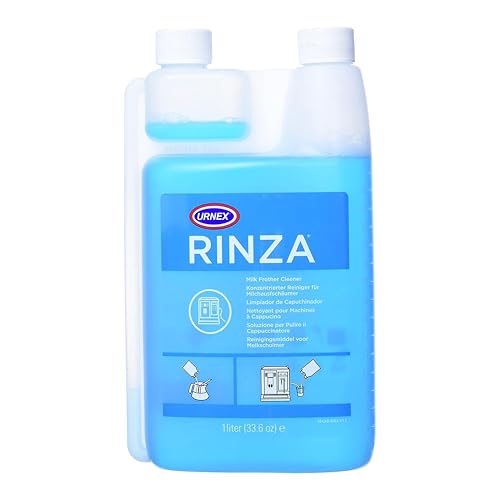
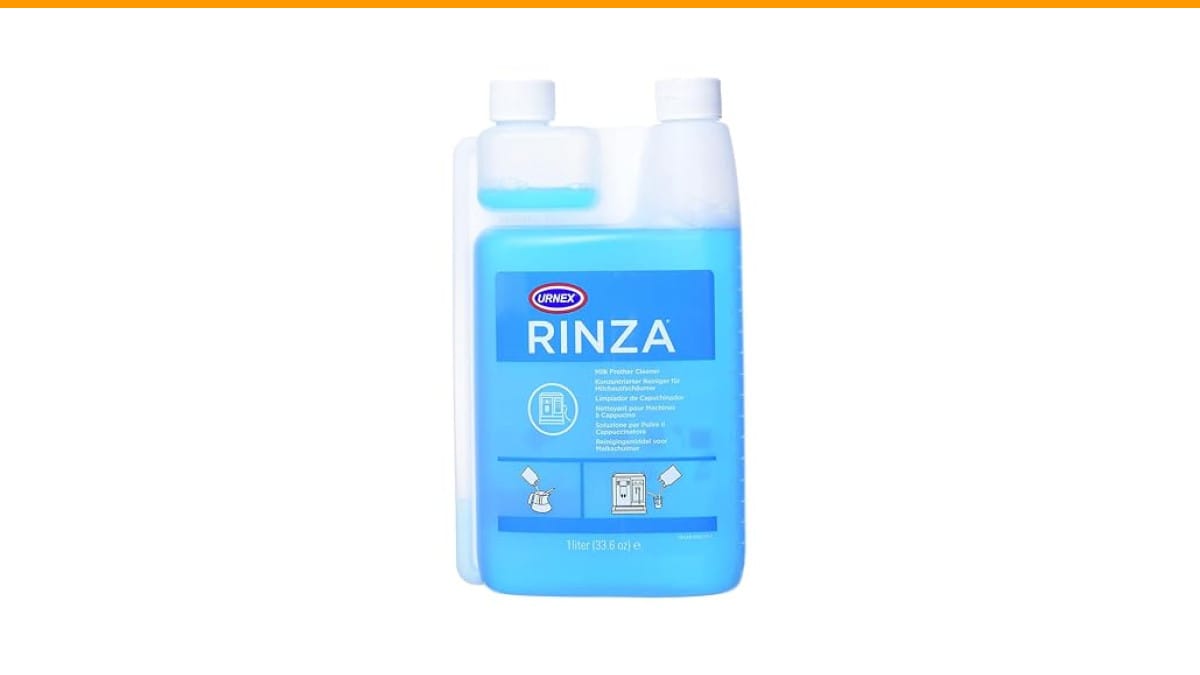
Urnex
Urnex - Rinza Alkaline Formula Milk Frother…
- Milk frother cleaner breaks down milk protein buildup.
- Comes in a dual-chamber bottle that contains a built-in measuring device.
- Cycles through auto frothers for easy cleanup.
As an Amazon Associate I earn from qualifying purchases.
For the stubborn buildup that resists regular washing, a dedicated alkaline cleaner like the Urnex Rinza Alkaline Formula Milk Frother Cleaner breaks down milk protein without harsh scrubbing. It comes in a dual-chamber bottle with a built-in measuring cup, so you don’t have to guess the dose. It’s a solid option for anyone who frothed milk more than twice a day.
Why Your Pitcher Smells Even After You Wash It
Most people rinse a pitcher with hot water and maybe a drop of dish soap. That gets the visible milk out, but it doesn’t touch the invisible film. When you heat milk past 140°F (60°C), the proteins unwind and stick to the metal surface. This film is hydrophobic, meaning it repels water. So plain rinsing just slides over it.
That sour smell you notice after a few hours? That’s bacteria feeding on the protein residue. It’s not dangerous in small amounts, but it will taint the flavor of your next cortado. If you want a clean tasting cup, the film has to go.
The good news is you don’t need industrial chemicals. You need the right temperature, the right detergent, and a few minutes of patience.
Daily Cleaning: The 3-Step Routine That Takes 60 Seconds
Do this immediately after you pour your milk. Waiting until the pitcher cools down makes the job harder because the protein sets like glue.
- Rinse with cold water first. Cold water prevents the protein from coagulating further. Swirl it around to dislodge the bulk of the milk. Dump it out.
- Fill halfway with hot water (120-130°F). Add one drop of mild dish soap. Use a soft sponge or a dedicated bottle brush to scrub the inside, especially the bottom corners and the spout lip. Do not use an abrasive pad — it scratches the stainless steel, and those scratches become hiding spots for bacteria.
- Rinse thoroughly with hot water. Soap residue leaves a bitter taste. Keep rinsing until the water sheets off the metal evenly. If you see water beading up, there’s still a film.
Pro tip: Dry the pitcher upside down on a rack. Storing it wet invites mineral spots and rust, especially if you have hard water.
Weekly Deep Clean: Removing the Protein Film
Even with daily washing, a thin layer of protein will accumulate over a week. You’ll notice it as a slight dullness on the metal or a faint smell. This is where a dedicated cleaner makes a difference.
An alkaline cleaner, like the Urnex Rinza, works by breaking the peptide bonds in the milk protein. It’s the same class of chemical used in commercial dairy equipment. It’s not a descaler — it won’t touch hard water scale, but it annihilates milk residue.
- Mix the recommended dose (usually about 1 tablespoon per 16 oz of water) in the pitcher with hot water.
- Let it soak for 15-20 minutes. For heavy buildup, soak for 30 minutes.
- Pour the solution out and rinse thoroughly with hot water.
- Wash once more with a drop of dish soap to neutralize any residual cleaner, then rinse again.
If you don’t have a commercial cleaner, a baking soda paste (3 parts baking soda to 1 part water) works as a mild abrasive. Rub it in with a soft cloth, let it sit for 5 minutes, then rinse. It’s not as effective as an alkaline soak, but it’s better than nothing.
Cleaning the Steam Wand and Pitcher Together
Your pitcher isn’t the only thing that touches milk. The steam wand tip gets the same protein film, and if it’s clogged, your pitcher will fill with weak, watery foam. You should clean the wand every time you steam, and do a deeper purge weekly. Check our detailed guide on steam wand maintenance for the full process.
The key connection: if your wand is dirty, it blows bacteria and old milk into your clean pitcher. So clean them as a system, not as separate items.
| Method | Best For | Time Needed | Removes Protein Film? | Risk of Scratching |
|---|---|---|---|---|
| Hot Water Rinse | Immediate post-use | 10 seconds | No | None |
| Dish Soap + Sponge | Daily washing | 1 minute | Partial | Low (if soft sponge) |
| Alkaline Soak (Urnex Rinza) | Weekly deep clean | 15-30 minutes | Yes, fully | None |
| Baking Soda Paste | Light film, no chemicals | 5-10 minutes | Moderate | Low (if gentle) |
| Abrasive Pad / Steel Wool | Never use this | N/A | No | High — ruins finish |
How to Test If Your Pitcher Is Actually Clean
Rinsing until the water sheets off is a good start, but there’s a more reliable test. Fill the pitcher with cold water and let it sit for 2 minutes. Pour it out and look at the surface. If you see any rainbow-colored iridescence or small droplets clinging to the wall, there’s still a fat or protein layer. A truly clean stainless steel surface will look uniformly wet, then dry evenly.
Another test is the smell test after drying. If you get any sour or milky odor, run the alkaline soak again.
Common Mistakes That Ruin Pitchers
I’ve seen people wreck perfectly good pitchers in three ways. Avoid these and your pitcher will last for years.
- Using cold water with soap. Cold water doesn’t dissolve milk fat. It leaves a greasy film that traps bacteria. Always use hot water for the soapy wash.
- Scrubbing with a metal pad. This scratches the surface. Those scratches hold onto milk protein and are almost impossible to clean out. You’ll end up with a permanently stained pitcher.
- Ignoring the spout. The spout is where milk drips and dries. It’s the hardest part to clean. Use a small brush or a cotton swab dipped in the cleaning solution to get inside it.
If you have an automatic frother like the Aeroccino, the cleaning rules are slightly different. Those have a non-stick coating that you should never scrub. Check our troubleshooting guide for Aeroccino not frothing to see if residue is the culprit.
Frequently Asked Questions
Can I put my milk frothing pitcher in the dishwasher?
Most stainless steel pitchers are dishwasher safe, but I don’t recommend it. Dishwasher detergent is highly alkaline and can etch the metal surface, leaving a cloudy film. Also, the high heat can warp the spout on thinner pitchers. Hand washing takes 60 seconds and preserves the finish.
Why does my milk smell burnt after cleaning?
That smell is usually from overheating the milk, not from the pitcher. If you steam milk past 160°F, the proteins break down and release sulfur compounds. Clean your pitcher first, then try steaming to a lower temperature (around 150°F). If the smell persists, your pitcher might have a deep scratch harboring old milk.
Is baking soda safe for stainless steel?
Yes, baking soda is a mild abrasive (Mohs hardness of 2.5) and won’t scratch stainless steel (hardness of 5.5). Just make sure you use a soft cloth and don’t apply excessive pressure. Rinse thoroughly afterward.
How often should I deep clean my pitcher?
If you use your pitcher daily, deep clean it once a week. If you’re a heavy home barista (2+ drinks a day), do it every 4-5 days. If you only use it on weekends, a monthly soak is fine. The schedule matters less than the condition — if you see a film, clean it.
Can I use vinegar to clean milk residue?
Vinegar is an acid, and it’s great for descaling (removing mineral deposits) but useless against milk protein. It can actually make the protein film tougher. Use an alkaline cleaner for milk, and save the vinegar for your boiler. If you’re dealing with scale in your machine, see our guide on cleaning with vinegar — just don’t use it on the pitcher.
What to Remember Before You Froth Again
- Rinse with cold water immediately after pouring — it stops the protein from setting.
- Wash with hot water and a drop of mild soap daily. Never use abrasive pads.
- Soak in an alkaline cleaner (like Urnex Rinza) weekly to break down the invisible film.
- Dry the pitcher upside down to prevent water spots and bacteria growth.
- Clean the steam wand at the same time — a dirty wand ruins a clean pitcher.
- Watch for water beading on the metal; it’s a sign of leftover residue.
- If your pitcher smells sour after drying, run another alkaline soak before your next use.
Products related to this article
Sponsored / affiliate links. As an Amazon Associate I earn from qualifying purchases. I may earn additional commission from eligible campaigns.