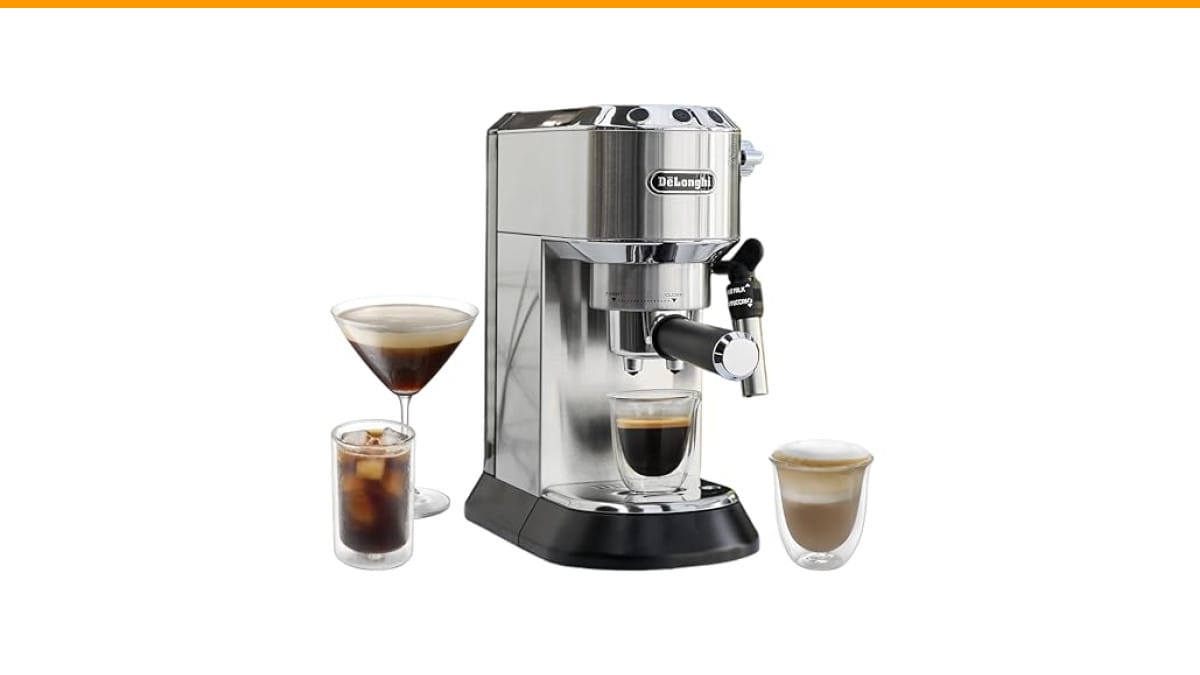
Six forty-five in the morning. The alarm hasn’t even stopped buzzing and I’m standing in the kitchen, half-asleep, staring at two machines on the counter. On the left, a standard drip coffee maker that’s been there for years. On the right, the new De’Longhi EC685M Dedica we unboxed for this review. My wife wants her usual 12-ounce mug of black coffee. I want a cortado. Two different machines, two different rituals, one kitchen counter.

De'Longhi
De'Longhi EC685M Dedica Deluxe Automatic Espresso Machine,35…
- 15-bar professional pressure ensures quality results every time, and adjustable controls allow you to make modifications for your…
- Whatever your preference - single or double espresso, cappuccino or latte -the machine brews authentic barista-quality beverages j…
- The Premium Adjustable Frother allows you to adjust the foam and steam levels to customize a variety of delicious espresso-based d…
As an Amazon Associate I earn from qualifying purchases.
That’s the real question behind every home espresso machine vs coffee maker debate. It’s not about which one makes “better” coffee. It’s about what your mornings actually look like and what you’re willing to trade to get the cup you want.
We spent two weeks running both machines side by side. We pulled shots, brewed pots, steamed milk, and tracked every minute and every dollar. Here’s what we learned.
The Short Answer: What’s the Real Difference?
An espresso machine forces hot water through finely ground coffee at 15 bars of pressure. A coffee maker relies on gravity, slowly dripping water over a bed of medium-ground coffee. That one mechanical difference changes everything downstream.
Pressure extracts coffee in about 25 seconds. Gravity takes four to six minutes. The result is a concentrated shot with a layer of crema versus a larger, milder cup with no crema at all. The Dedica we tested delivers that 15-bar professional pressure consistently, and the difference in the cup is dramatic.
But here’s the thing nobody tells you: the espresso machine is a tool, not a solution. The coffee maker is both. You can buy the best espresso machine in the world and make terrible espresso if your beans are stale or your grind is off. A $20 drip machine makes drinkable coffee almost no matter what you do.
Brewing Science: Pressure vs. Gravity
Let’s get technical for a minute, because this is where the machines diverge completely.
Drip coffee brewing happens at around 195-205°F. Water sits in a reservoir, heats up, and then showers over the grounds. The extraction is gentle and forgiving. You can use pre-ground coffee from a bag, a coarse grind, even stale beans, and you’ll still get a recognizable cup of coffee.
Espresso is less forgiving. The Dedica’s 15-bar pump pushes water through a compacted puck of coffee at roughly 9 bars of effective pressure. The grind size needs to be fine, the dose needs to be consistent, and the extraction time needs to land in that 25-30 second window. Get it right and you’re rewarded with a thick, syrupy shot with a hazelnut-colored crema. Get it wrong and you’re drinking sour or bitter sludge.
Water temperature stability matters more than most people think. The Dedica’s thermoblock heating system does a decent job maintaining temperature shot after shot, but it’s not a dual-boiler commercial machine. We noticed the first shot of the morning ran slightly cooler than the third. It’s a minor issue, but it affects flavor if you’re sensitive to acidity.
Taste and Texture: Why Crema Matters
Crema is the golden foam that sits on top of a properly pulled espresso shot. It’s not decoration. It traps volatile aromatic compounds and oils that give espresso its signature mouthfeel and lingering finish. A coffee maker can’t produce crema because the brewing pressure is too low to emulsify the coffee oils.
In our side-by-side tasting, the difference was obvious. The drip coffee was clean and bright, with a thinner body. The espresso from the Dedica was dense, almost buttery, with a sweetness that carried through the milk in a cappuccino. The Premium Adjustable Frother on the Dedica deserves credit here. It let us dial in the steam pressure to create microfoam for latte art, which is something you simply can’t do with a coffee maker.
That said, the flavor profile of espresso isn’t automatically better. Some people genuinely prefer the lighter, more tea-like body of drip coffee. Espresso is intense. It’s not a morning beverage you sip for twenty minutes. It’s a two-ounce shot that demands your attention.
Cost Analysis: Upfront Price vs. Cost-Per-Cup
Here’s where the home espresso machine vs coffee maker decision gets real. The upfront cost difference is substantial. A decent drip machine runs $30 to $100. A real espresso machine like the Dedica costs several times that. But the upfront price is only half the story.
Espresso uses about 7 to 9 grams of coffee per shot. A standard 12-ounce bag of beans yields roughly 40 to 50 shots. Drip coffee uses 10 to 15 grams per 6-ounce cup, so the same bag makes fewer cups but each cup is larger. The math roughly evens out per ounce of brewed coffee.
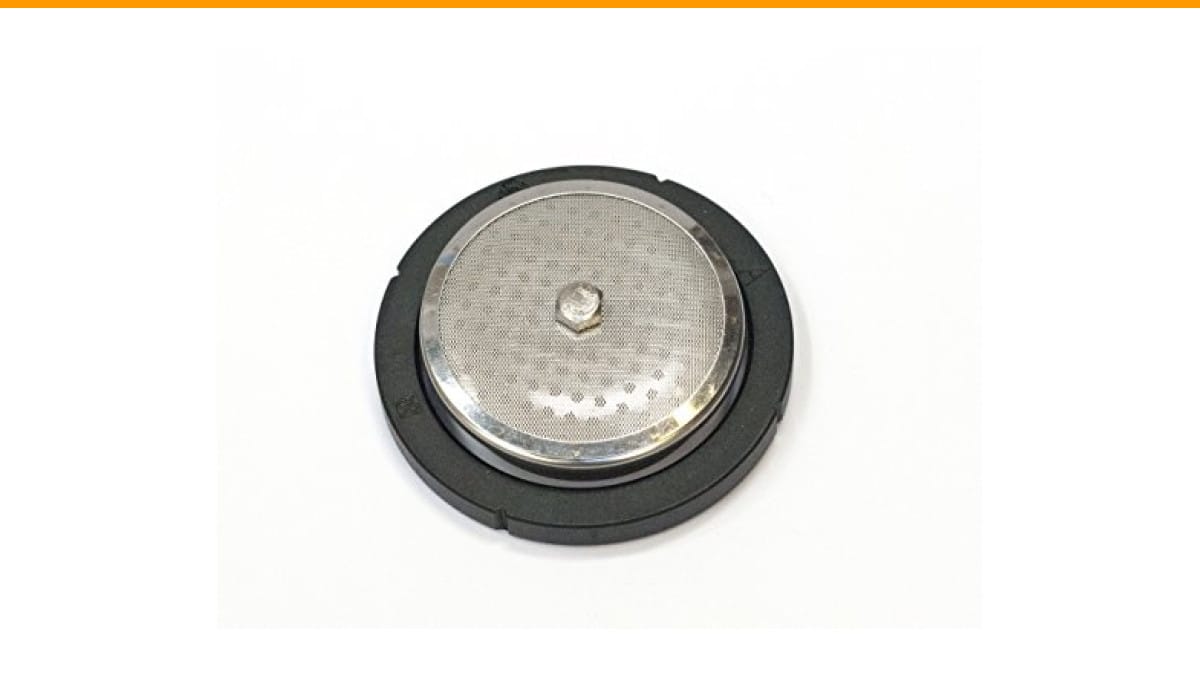
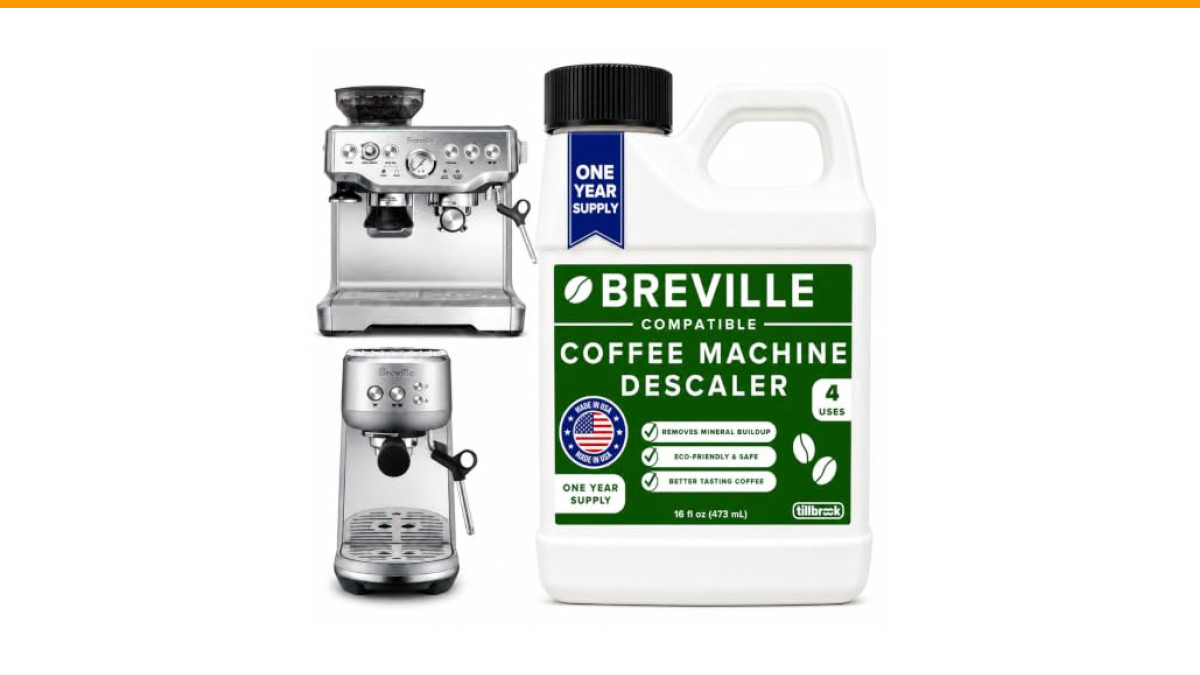
The bigger cost difference is in equipment and maintenance. Espresso requires a decent burr grinder, which adds $100 to $300 to your setup. You’ll also need to descale the machine regularly and replace the portafilter gasket eventually. Drip coffee makers need periodic cleaning, but the parts are cheaper and easier to replace.
The 5-Year Cost Breakdown
Let’s run the numbers for a single person drinking one espresso or one 12-ounce cup of drip coffee daily.
Over five years, the drip coffee path looks like this: $60 for the machine, $1,100 for beans at $22 per 12-ounce bag every two weeks, $20 for filters, and $15 for descaling solution. Total: roughly $1,195.
The espresso path: $350 for the Dedica (check the current price on Amazon, it fluctuates), $250 for a capable hand grinder, $1,000 for beans at the same $22 per bag rate, $30 for descaling supplies, and $20 for replacement gaskets. Total: roughly $1,650.
The espresso route costs about $450 more over five years. That’s $90 a year, or less than $0.25 per day, for a dramatically different coffee experience. Whether that’s worth it depends entirely on how much you value the ritual and the taste.
Daily Workflow: Speed, Cleanup, and Counter Space
Morning speed is where the coffee maker wins a decisive victory.
With the drip machine, we set up the filter, added grounds, poured water, and pressed start. Total hands-on time: 90 seconds. Then we walked away and came back four minutes later to a full pot.
The Dedica demands more attention. You grind, dose, tamp, lock the portafilter, place the cup, and hit the button. The Automatic Flow Stop feature helps by dispensing a consistent shot volume, so you don’t have to babysit the extraction. But you’re still looking at two to three minutes of active work before you get your shot. Then you steam milk, which adds another minute and requires immediate cleanup to prevent dried milk residue.
Counter space is another factor. The Dedica is compact for an espresso machine, but it’s still taller and deeper than most drip machines. It also needs room on the side for the portafilter to swing out and a spot for the frother to reach your milk pitcher. If your kitchen counter is tight, this matters.
Cleanup is a mixed bag. The drip machine produces a wet filter and a carafe to wash. The Dedica produces a portafilter with spent coffee puck, a drip tray that fills quickly, and a steam wand that needs purging. The Dedica’s double drip tray is adjustable or removable to fit taller latte glasses, which is a nice touch, but it also means more parts to keep track of.
The Grind: Why Your Burr Grinder is the Real Hero
Here’s the honest truth we learned during testing: the espresso machine is not the most important piece of equipment on your counter. The grinder is.
A blade grinder produces uneven particles, which leads to over-extraction in the fine bits and under-extraction in the coarse bits. The result is a muddy, inconsistent shot. A burr grinder produces uniform particles, which allows the water to extract evenly. We used a decent hand grinder with the Dedica and the improvement in flavor was night and day.
If you already own a burr grinder for your drip coffee, you’re halfway to espresso. You don’t need a new grinder. You just need to adjust the grind setting finer. The Dedica comes with a pressurized portafilter basket that’s forgiving of coarser grinds, but you’ll get better results with a non-pressurized basket and a proper fine grind.
If you’re starting from scratch, budget for a grinder before you budget for the machine. A $200 grinder with a $200 espresso machine beats a $400 espresso machine with a $30 blade grinder every single time.
The Decision Matrix: Which Machine Fits Your Life?
We’ve covered the science, the taste, the cost, and the workflow. Now let’s get practical. Here’s a quick reference for different types of drinkers.
| Your Situation | Best Choice | Why |
|---|---|---|
| Single drinker, one cup in the morning | Espresso machine | The extra 2 minutes of workflow pays off in a superior single cup |
| Household of 3+ regular drip drinkers | Coffee maker | Brewing a pot for multiple people with espresso is painfully slow |
| You entertain guests often | Espresso machine | Crafting cappuccinos and lattes is a social ritual |
| You drink coffee for caffeine, not flavor | Coffee maker | Larger volume, lower cost per cup, less effort |
| You enjoy the process and experimentation | Espresso machine | Dialing in grind, dose, and extraction time is part of the fun |
| Limited counter space | Coffee maker | The Dedica is compact but still demands more room |
| You want milk-based drinks | Espresso machine | No coffee maker can steam milk properly |
You should buy a coffee maker if…
You drink multiple cups a day, you’re not picky about crema or texture, and you don’t want to think about grind size or extraction time. A coffee maker is the low-stress, high-volume solution. It’s also the right call if you’re feeding a family or if your morning routine leaves zero time for fiddling with a portafilter.
You should buy an espresso machine if…
You’re the kind of person who savors a single excellent cup. You like milk-based drinks. You’re willing to learn a small skill and invest in a decent grinder. The Dedica is a great entry point because it’s forgiving enough for beginners but capable enough to grow with you. The adjustable controls and the frother give you room to experiment without overwhelming you.
The Verdict: Can One Machine Do Both?
Short answer: no. And you shouldn’t expect it to.
The De’Longhi EC685M Dedica is a genuine espresso machine. It pulls real shots with real crema, steams milk properly, and fits in a smaller footprint than most espresso machines. It’s not perfect. The thermoblock takes a few minutes to heat up, the drip tray fills quickly, and you’ll need to practice your tamping technique. But for a home user who wants authentic espresso-based drinks without spending $1,000, it’s a solid choice.
The coffee maker remains the better tool for volume and convenience. If you’re honest with yourself about your habits, the choice becomes clear.
Our recommendation: if you’re a single-cup drinker who enjoys the ritual and wants to explore espresso, get the Dedica and a good burr grinder. If you’re brewing for a household or just need caffeine in the fastest, cheapest way possible, stick with a coffee maker. And if you’re torn, consider doing what we did. Keep the drip machine for busy weekdays and pull shots on the weekend. That’s the best of both worlds.
Whatever you choose, remember that automatic espresso machine vs semi is a separate decision you’ll face later. And no matter which machine you own, regular descaling coffee machine will keep it running well for years. For more guidance on choosing a higher-end model, check our automatic espresso machine guide.
Frequently Asked Questions
Can I use regular ground coffee in the Dedica?
Yes, but the results will be mediocre. The Dedica’s pressurized basket tolerates pre-ground coffee, but you’ll get dramatically better flavor with freshly ground beans. If you’re serious about espresso, buy whole beans and grind them right before brewing.
How long does the Dedica take to heat up?
About three minutes from cold start. The thermoblock heats quickly, but it’s not instant. We found that turning it on while we ground the beans and prepped the portafilter worked well. The machine is ready by the time we were.
Is the milk frother easy to clean?
It’s manageable. The Premium Adjustable Frother has a removable outer sleeve that you rinse under the tap. You should also purge the steam wand for a second after frothing to clear any milk residue inside. It’s a 30-second task, not a chore.
Do I need to buy a separate grinder?
Technically, no. The Dedica works with pre-ground coffee and even includes a pressurized basket designed for it. But for the best flavor, yes, you need a burr grinder. It’s the single biggest upgrade you can make to your espresso setup.
What’s the environmental impact of each machine?
Drip coffee makers use more electricity over a longer brew cycle but don’t require a pump. Espresso machines draw more power during the shot and for the steam boiler. Neither uses pods, so there’s no single-use plastic waste. The espresso machine will likely last longer if maintained properly, which offsets its higher manufacturing footprint over time.
Ready to buy? Check the latest price on Amazon
Sponsored / affiliate links. As an Amazon Associate I earn from qualifying purchases. I may earn additional commission from eligible campaigns.Products related to this article
 Coffee Espresso Machine Handle Replacement Parts, Cafe Bracket Handle for Lidl Silvercrest CM4621 CM4218 KF5002 KF500S Barista (for 51mm Portafilter Basket - Not included)
 HomeBeyond Espresso Coffee Maker 12 Cups, Classic Stovetop Espresso Maker, 600ml / 20oz Coffeemaker for Gas & Ceramic Stovetops (Silver)
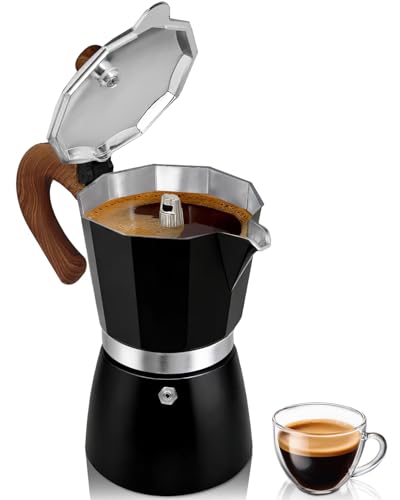 Belly Moka Coffee Maker Stovetop Espresso Maker 9 Cup Aluminum Moka Pot Percolator 15oz 450ml Easy Brewing for Electric Ceramic Stoves Home Camping Italian Cuban Café Classic Black