You just poured a perfect latte. The microfoam is glossy, the crema is intact. Then you rinse the pitcher under hot water, give it a quick wipe, and set it on the rack. That routine is probably leaving a thin, invisible film of milk protein on the steel. Over a week, that film turns into a chalky residue that kills your foam texture and starts to smell faintly sour.
Sanitizing a milk frothing pitcher isn’t the same as washing a regular cup. Milk protein bonds to stainless steel at a molecular level, and plain dish soap doesn’t always break that bond. This guide covers the actual steps to remove protein buildup, the tools that work best, and a few methods you can compare side by side. You will know exactly what to do, whether you have a basic steaming pitcher or a fancy auto-frother.
Urnex
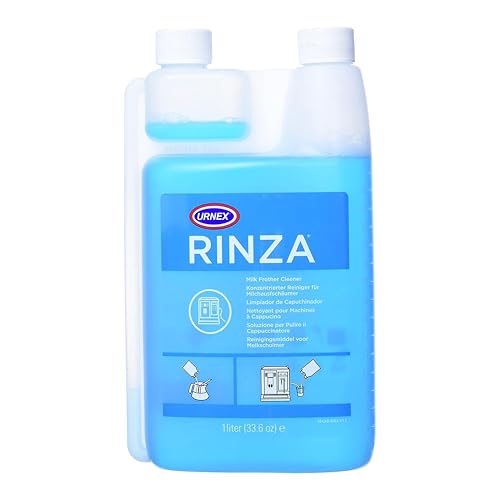
Urnex - Rinza Alkaline Formula Milk Frother…
- Milk frother cleaner breaks down milk protein buildup.
- Comes in a dual-chamber bottle that contains a built-in measuring device.
- Cycles through auto frothers for easy cleanup.
As an Amazon Associate I earn from qualifying purchases.
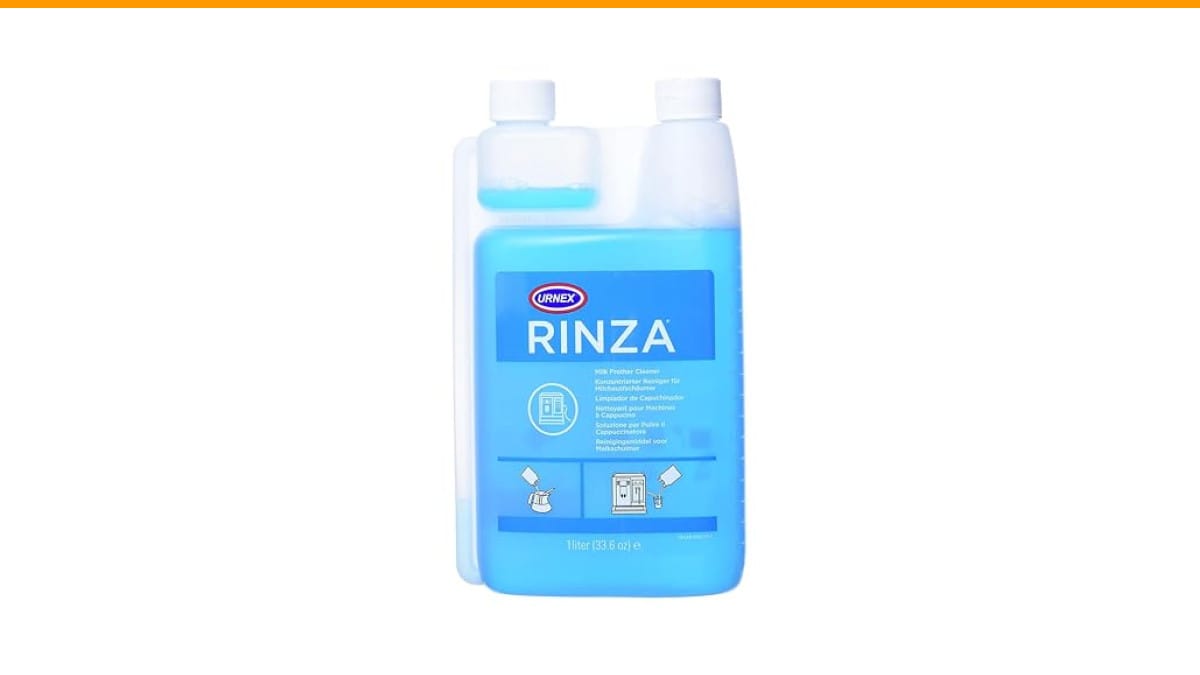
If you are dealing with a machine that has internal milk lines, a dedicated cleaner like the Urnex Rinza Milk Frother Cleaner makes the job far easier. It is an alkaline formula designed specifically to dissolve milk protein, and it comes in a dual-chamber bottle with a built-in measuring device. It cycles through auto frothers and works on traditional steam wands and steel pitchers alike.
Why Soap and Water Is Not Enough
Milk contains casein, a protein that clings to surfaces when heated. Heat denatures the protein, turning it sticky. That is why your pitcher feels slightly tacky even after a rinse. Regular dish soap cuts fat, but it struggles with the baked-on protein layer.
The other problem is mineral scale. Hard water leaves calcium deposits that create a rough surface. Bacteria love those microscopic crevices. A sanitizing routine needs to address both protein and scale, not just visible grime.
For home users, the simplest test is to wipe the inside of a clean, dry pitcher with a white paper towel. If you see any gray or yellowish smear, you have protein residue. That residue is what ruins the texture of your next microfoam.
The Two-Pass Cleaning Method
You need two separate steps: a chemical clean and a thermal sanitize. The chemical clean breaks down the protein. The thermal step kills bacteria. Doing both takes about ten minutes.
Step 1: Chemical Soak or Scrub
Fill the pitcher with hot water (around 140°F) and add a cleaning agent. You have three options here:
- Alkaline cleaner like the Urnex Rinza mentioned above. Use the built-in measuring chamber for the correct dose. Soak for 10–15 minutes.
- Baking soda paste for a quick daily scrub. Mix three parts baking soda with one part water. Rub with a soft sponge, focusing on the bottom corners where milk pools.
- White vinegar for mineral scale. Use a 1:3 vinegar-to-water ratio. This will not remove protein well, so use it only if you have hard water spots.
Scrub the inside with a non-abrasive sponge. Do not use steel wool; it scratches the finish and gives bacteria new places to hide.
Step 2: Hot Water Rinse and Steam
Rinse the pitcher thoroughly under running water. Then fill it halfway with fresh water and place it on the steam wand. Purge the wand for two seconds first to clear any milk residue inside the tip. Submerge the tip and steam the water until it reaches 170°F or higher. That temperature pasteurizes the internal surface.
Pour out the water and let the pitcher air dry upside down on a rack. Do not towel dry with a kitchen cloth; that just reintroduces bacteria from the cloth.
Comparing Sanitizing Methods
Not every method fits every situation. Here is how the common approaches stack up in real testing.
| Method | Best For | Time Needed | Removes Protein | Removes Scale | Cost Per Use |
|---|---|---|---|---|---|
| Dish soap + hot water | Daily rinsing between drinks | 1 minute | Partial | No | Negligible |
| Alkaline cleaner (Urnex Rinza) | Weekly deep clean, auto frothers | 10–15 minutes | Yes | Yes | Low |
| Baking soda paste | Manual scrubbing, no chemicals | 5 minutes | Yes | Mild | Very low |
| Vinegar solution | Hard water scale only | 15 minutes | No | Yes | Very low |
| Dishwasher (top rack) | Stainless pitchers without painted logos | Full cycle | Partial | Depends on detergent | Low |
In my experience, the dishwasher is the weakest option. The heat is fine, but the detergent spray rarely reaches the inside bottom of a tall pitcher. You end up with a clean rim and a cloudy base.
How Often Should You Do This?
Frequency depends on how often you use the pitcher. A home user pulling two lattes a day can get away with a deep clean once a week. A daily user should do the alkaline soak every five days or so. If you are steaming milk multiple times in one sitting, rinse the pitcher with hot water between batches and do the full sanitize at the end of the session.
Watch for these signs that you are overdue: microfoam that looks bubbly instead of silky, a sour smell from the pitcher, or white residue on the inside wall after drying. Any one of those means the protein layer is thick enough to affect your milk.
One thing to note: if you own a Breville or similar machine with an integrated steam wand, the wand itself needs the same treatment. A clean pitcher does not help if the wand tip is crusty. Check our guide on how to clean a steam wand for the full routine.
Frequently Asked Questions
Can I use bleach to sanitize a milk pitcher?
You can, but you should not. Bleach is harsh on stainless steel and can leave a residual chemical taste that transfers to the next milk. It also does not break down protein effectively. An alkaline cleaner or baking soda is safer and works better.
Does boiling water sanitize the pitcher?
Boiling water kills bacteria, but it does not remove the protein film. You would kill the germs living in the residue while leaving the residue itself intact. Use boiling water after a chemical clean, not instead of one.
Is it safe to put a milk frothing pitcher in the dishwasher?
Most stainless steel pitchers are dishwasher safe, but the results are mediocre. The detergent can pit the finish over time, and the interior often stays dirty. Hand washing with a targeted cleaner gives you a visibly cleaner result. Check the manufacturer’s label if your pitcher has a non-stick coating.
How do I remove a burnt milk smell from the pitcher?
That smell is cooked protein. Soak the pitcher in a hot alkaline solution for 20 minutes, then scrub with baking soda. Rinse thoroughly and steam fresh water through the wand. If the smell persists after two soaks, the pitcher may be scratched enough to harbor residue permanently.
Can I use the same sanitizing routine for a Nespresso Aeroccino?
No. The Aeroccino has a non-stick coating and a motor base that cannot be submerged. You need to follow the manufacturer’s instructions for that specific device. If it is not frothing correctly, the issue might be a dirty sensor rather than the pitcher itself. See our troubleshooting guide for Nespresso Aeroccino not frothing.
What to Remember for Clean Pitchers
- Rinse with hot water immediately after each use to prevent protein from baking on.
- Do a chemical soak at least once a week using an alkaline cleaner like Urnex Rinza.
- Use a soft sponge only. Scratched steel is a bacteria magnet.
- Dry the pitcher upside down on a rack, never with a shared kitchen towel.
- Sanitize the steam wand at the same time. A clean pitcher with a dirty wand defeats the purpose.
- If your pitcher smells sour, soak it longer. The smell is protein, not just odor.
- Follow your machine’s manual for any non-stick or motorized frothers.
Regular maintenance takes less time than you think. A ten-minute soak once a week keeps your milk tasting clean and your foam texture consistent. For a deeper look at keeping all your coffee gear in shape, see our general guide on how often to clean a coffee maker. Your pitcher will thank you, and so will your next latte.
Products related to this article
Sponsored / affiliate links. As an Amazon Associate I earn from qualifying purchases. I may earn additional commission from eligible campaigns.
 SOLUSTRE Electric USB Coffee Cup Warmer with Temperature Settings Portable Milk and Beverage Heating Coaster for Office Desk Small Lightweight Design Easy to Clean Surface Multi Functional
 Cascade Platinum Plus Dishwasher Detergent Pods Dish Soap Lemon 57 Count
 Quick Heating Cup Warmer, Three Temperature Settings, Splashproof and Portable, for Coffee, Milk, Lightweight ABS Material