You’re ready for a quiet cup of tea, you scoop loose leaves into your favorite infuser, and then it happens. The hinge snaps. The mesh tears. The lid won’t close. A broken tea infuser turns a two-minute ritual into a frustrating puzzle.
Most people toss the infuser and buy another one. But many of these failures are fixable with tools you already own. I’ve repaired dozens of strainers over the years, from cheap mesh balls to stainless steel basket types. This guide covers the four most common failures and exactly how to fix each one.
You’ll walk away knowing how to diagnose the problem, which repairs hold up, and when it’s genuinely time to replace the thing. I’ll also share a few workarounds that get you steeping tonight, even if your repair has to wait.
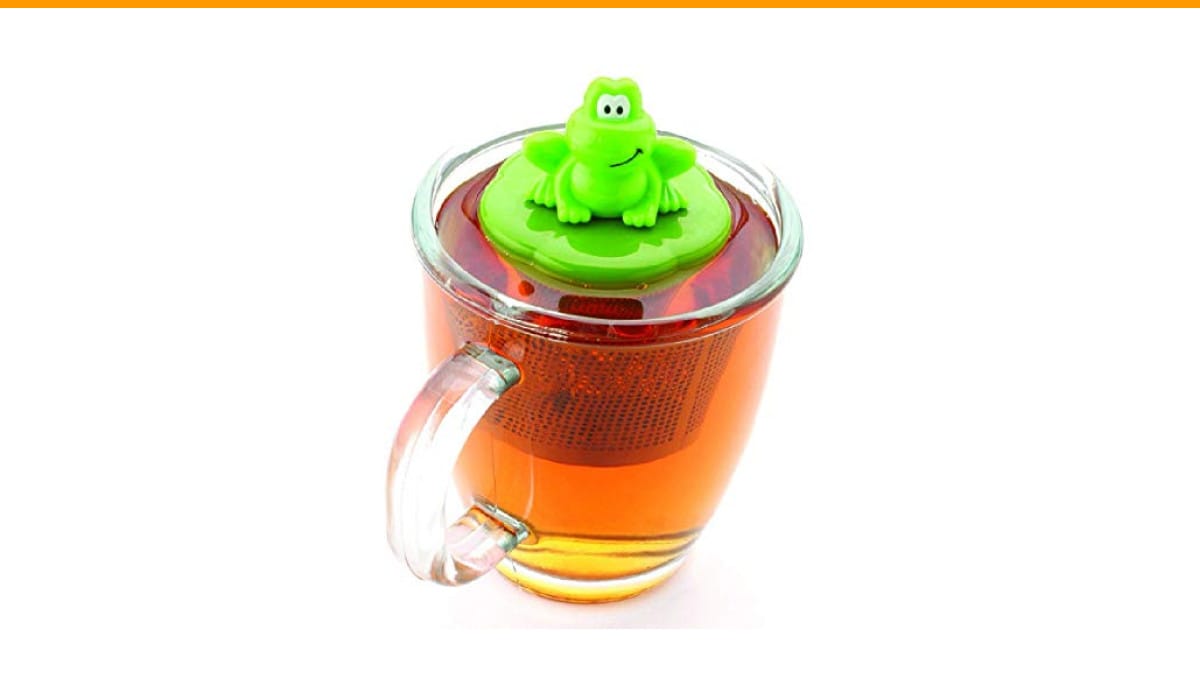
If your infuser is beyond saving, a solid replacement like the Joie Ribbit Floating Tea Cup Infuser uses stainless steel mesh and a secure closing top, so you won’t be dealing with the same hinge problems.
Diagnose the Failure Before You Grab a Tool
Not every broken infuser needs the same fix. Look at the part that failed and how it failed. That tells you whether a repair will actually hold.
The most common failures I see in testing are:
- Broken hinge pin — the little metal rod that connects the two halves. It either pops out or snaps.
- Torn or stretched mesh — usually from overstuffing or from poking the mesh with a spoon to release leaves.
- Stuck or stripped lid closure — the latch or hook won’t catch, so the infuser opens in the cup.
- Rust or corrosion on the spring — this makes the lid hard to close or keeps it from staying shut.
Each of these has a different repair path. A popped hinge pin is a five-minute fix. A torn mesh is usually terminal. Knowing the difference saves you time and frustration.
How to Fix a Broken Tea Infuser: The Core Repairs
Repair 1: Re-seating a Popped Hinge Pin
This is the easiest win. Most infusers use a small metal pin that slides through the hinge barrel. When it slides out, the two halves separate.
- Line up the two halves of the infuser so the hinge barrels align.
- Insert the pin from one side. Use needle-nose pliers to push it through if it’s tight.
- Bend the end of the pin slightly with the pliers — just a 10-degree bend — so it can’t slide back out.
That bend is the trick most people miss. A straight pin will work loose again within a week. A slightly bent pin stays put.
If the pin snapped in half, you need a replacement. A paperclip cut to length works as a temporary hinge pin. It’s not perfect, but it’ll hold for a few weeks until you decide on a permanent fix.
Repair 2: Fixing a Stuck or Stripped Lid Closure
The lid on a ball-style infuser uses a small hook or latch that catches the rim. When that latch wears down, the lid pops open in hot water and leaves float everywhere.
If the latch is just stiff, clean it thoroughly. Dried tea oils and mineral deposits from hard water build up and make the mechanism stick. Soak the whole infuser in a 50/50 white vinegar and water solution for 30 minutes, then scrub the latch area with an old toothbrush.
If the latch is actually stripped — the metal is worn smooth — you can add material back. A tiny dab of epoxy applied to the underside of the latch creates a new catching surface. Let it cure for 24 hours before using the infuser. This fix works well on stainless steel infusers.
Repair 3: Re-forming a Bent or Warped Mesh
Mesh that gets pushed out of shape usually comes from overstuffing. The mesh is fine — it’s just stretched. You can often push it back.
Use your thumbs to gently press the mesh back into its original dome shape. Work from the outside in, applying even pressure. If the mesh has a dent, place the infuser over the rounded end of a wooden spoon handle and press from the inside out.
This works best on fine stainless steel mesh. It does not work on nylon or plastic mesh, which tends to crease rather than spring back.
Repair 4: Replacing a Broken Spring
Some infusers use a spring to keep tension on the lid. When that spring rusts or loses its temper, the lid won’t stay closed.
You can replace a small spring with one from a retractable ballpoint pen. Cut it to the same length as the original. The tension won’t be identical, but it’ll keep the lid shut well enough.
If the spring is rusted, don’t just clean it — replace it. Rust weakens the metal and you’ll be fixing it again in a month.
When Replacement Beats Repair
Not every infuser deserves to be saved. Here’s my honest rule of thumb: if the mesh is torn, replace the infuser. Patching a tear in the mesh never holds up. The patch fails under heat and water, and you end up with leaves in your cup anyway.
If the infuser is plated metal and the plating is flaking off, replace it. Flaking plating means the base metal is exposed, and that base metal is often aluminum. You don’t want aluminum leaching into hot water.
If you’ve already repaired the same infuser twice, buy a new one. The third repair is rarely worth the time.
I’ve compared several replacement options side by side in my own kitchen, and the Joie Ribbit Floating Tea Cup Infuser stands out for one reason: it floats on the water’s surface instead of sitting on the bottom. That means it doesn’t rest on a hinge that takes the brunt of the force. The design sidesteps the most common failure point entirely.
| Problem | Repair Time | Tools Needed | Success Rate | Better to Replace? |
|---|---|---|---|---|
| Popped hinge pin | 5 minutes | Needle-nose pliers | 90% | No |
| Stripped lid latch | 30 minutes + cure time | Epoxy, toothbrush | 70% | Only if latch is fully snapped |
| Bent mesh (not torn) | 10 minutes | Wooden spoon handle | 80% | No |
| Torn mesh | N/A | None | 0% | Yes |
| Rusted spring | 15 minutes | Pen spring, wire cutters | 75% | If rust is severe |
Quick Workarounds While You Wait for a Replacement
Your infuser is broken and you want tea now. Skip the repair for a minute and use one of these methods.
Use a paper coffee filter. Spoon loose tea into the center, gather the edges, and tie it off with kitchen twine. Drop the bundle into your mug. It works exactly like a disposable tea bag.
Use a French press. If you own one for coffee, it makes an excellent tea brewer. Add tea leaves, pour hot water, steep, then press the plunger down. The mesh filter catches the leaves.
Use a fine-mesh kitchen strainer. Brew your tea loose in the pot, then strain it as you pour into your cup. This is the oldest method in the book and it works perfectly.
For a permanent upgrade, consider a cup-style infuser like the Joie Ribbit. It has a wider mesh area than most ball infusers, which means more room for the leaves to expand. That’s not a small detail — tea leaves need room to unfurl to release full flavor, and a cramped ball infuser gives you weak, watery tea.
Preventing the Next Breakage
Most infuser failures come down to two habits: overstuffing and rough handling.
Don’t fill the infuser more than two-thirds full. Loose tea expands by up to three times when it hits hot water. A full infuser becomes a stretched infuser within a few uses.
Don’t tap the infuser against the rim of the mug to shake out the leaves. That impact stresses the hinge and the mesh. Instead, use a spoon to scoop the spent leaves out, or run the infuser under warm water to rinse them away.
Wash the infuser by hand. Dishwasher detergent is aggressive on mesh and plating. A quick rinse and a soft scrub keeps it working for years.
Regular cleaning also prevents the mineral buildup that makes hinges stiff. If you own a coffee maker with the same scale problem, the cleaning routine is nearly identical — vinegar soak, rinse, repeat.
Can I fix a tea infuser with a torn mesh?
No. A torn mesh cannot be reliably repaired. Any patch you apply will fail under heat and water pressure. Replace the infuser.
What’s the best glue for a broken tea infuser?
Use a food-safe epoxy rated for high temperatures. Regular super glue becomes brittle in hot water and can flake off into your tea. Apply a thin layer and let it cure fully for 24 hours before use.
Why does my tea infuser keep popping open in the cup?
That’s a worn latch or a weak spring. Clean the latch mechanism first. If it’s still loose, add a small dab of epoxy to build up the catching surface, or replace the spring with one from a pen.
Is it safe to use a rusted tea infuser?
No. Rust means the protective coating has failed and the base metal is exposed. Stop using it and replace the infuser.
How long should a good tea infuser last?
With hand washing and careful use, a stainless steel infuser should last five years or more. Cheap plated versions often fail within a year because the plating wears off quickly.
What to Do Next
- Assess the failure point first — a popped pin is fixable, a torn mesh is not.
- Bend the hinge pin slightly when reinserting it so it stays put.
- Soak a sticky lid in vinegar to remove mineral buildup before you try any repairs.
- Re-form bent mesh with gentle thumb pressure over a rounded surface.
- Replace rusted springs with a pen spring cut to length.
- Never overstuff the infuser — fill it only two-thirds full.
- If you’re replacing it, choose a design that avoids the weak hinge point entirely, like a floating cup infuser.
If you’re also dealing with scale in your other kitchen gear, the same vinegar method works on your coffee maker and even your grinder burrs. A clean kitchen is a working kitchen.
Products related to this article
Sponsored / affiliate links. As an Amazon Associate I earn from qualifying purchases. I may earn additional commission from eligible campaigns.
 Stainless Steel Moka Pot Coffee Filter Disc for Espresso Brewing, Coffee Maker Replacement Filter Plate for Home Office Coffee Bar Cafe (FOR 4 Cups)
 Long Handle Wooden Spoon For Mixing Coffee Tea Jam and Bath Salt In Kitchen, Environmentally Friendly Table Spoon, 8.6 Inches,4 Pieces…
 3 Piece Wooden Mixing Spoon Set for Cooking, Tea, Coffee, Dessert