You bought expensive loose leaf tea, used your old wire mesh ball, and got a cup that tasted like dusty water. So you blamed the tea. But the tea wasn’t the problem. The infuser was.
Most infusers are designed to look clever, not to steep tea properly. They trap leaves in a cramped ball, use holes too small for whole leaves to release flavor, or float on top of the water so half the leaf never gets wet. The result is a weak, flat, or bitter cup — and you quietly give up on loose leaf entirely.
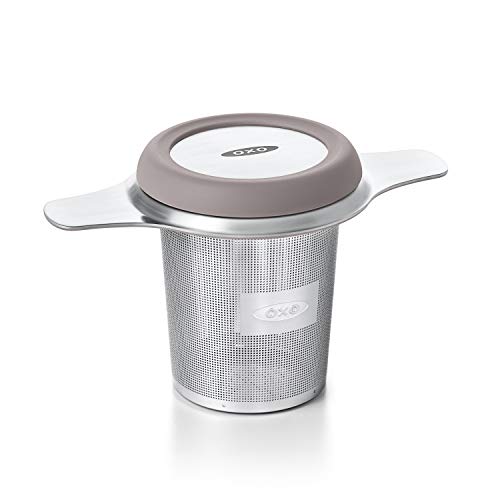
OXO
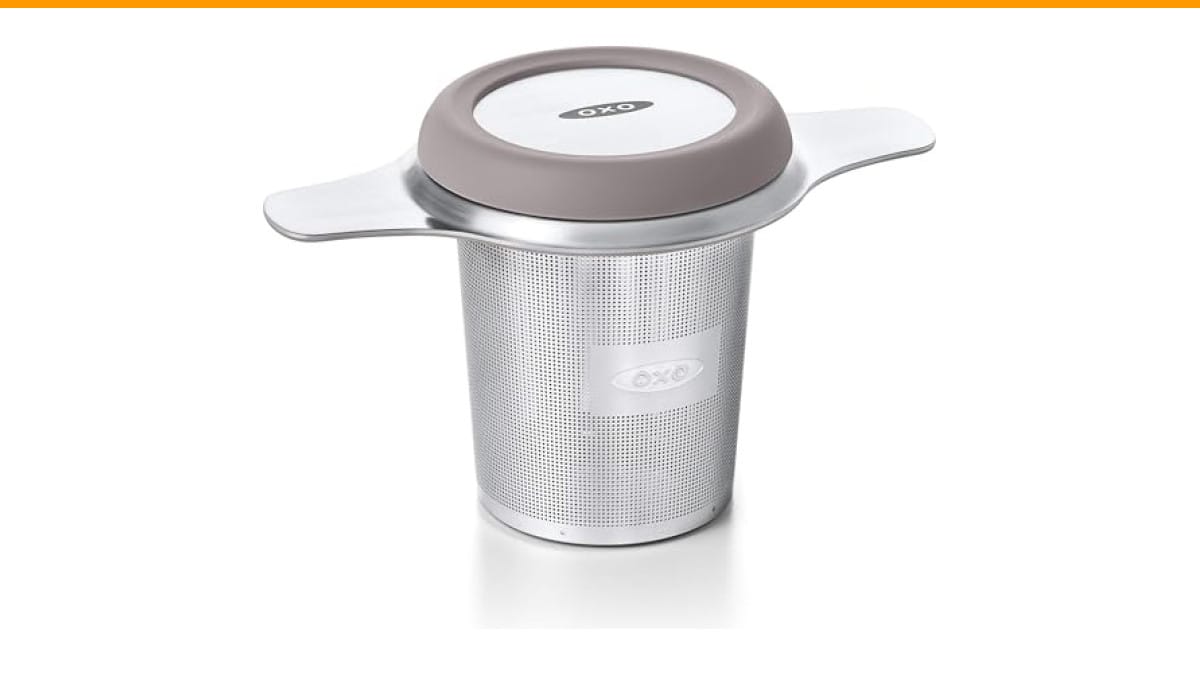
OXO Brew Tea Strainer Basket - Fine…
- Designed to optimize the flavor of your favorite loose leaf tea
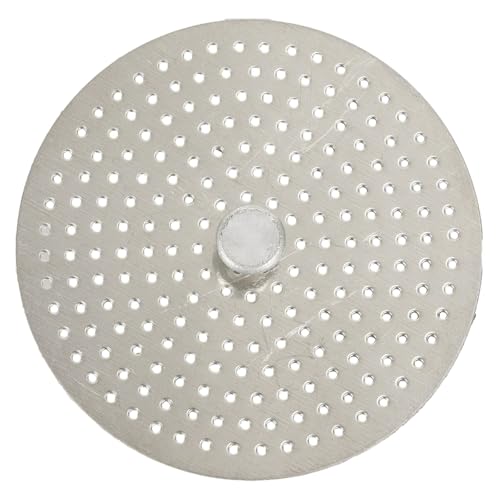
- Etched hole pattern keeps fine tea leaf particles contained
- Large, stainless steel basket allows leaves to expand and fits nicely in mugs
As an Amazon Associate I earn from qualifying purchases.
This guide walks you through the measurable differences between infuser types: hole size in microns, sink rate in seconds, cleaning time in minutes, and material behavior in hot water. You’ll know exactly what to look for, what to avoid, and how to brew a better cup with what you already own.
One quick recommendation before we dig in: the OXO Brew Tea Strainer Basket fixes most of the problems I just described. Its extra-small etched holes keep fine particles out while letting whole leaves expand fully in a large stainless basket. The lid doubles as a drip tray, and the silicone touchpoints stay cool. It’s the kind of tool that makes you wonder why every infuser isn’t built this way.
Why Your Current Infuser Is Ruining Your Tea
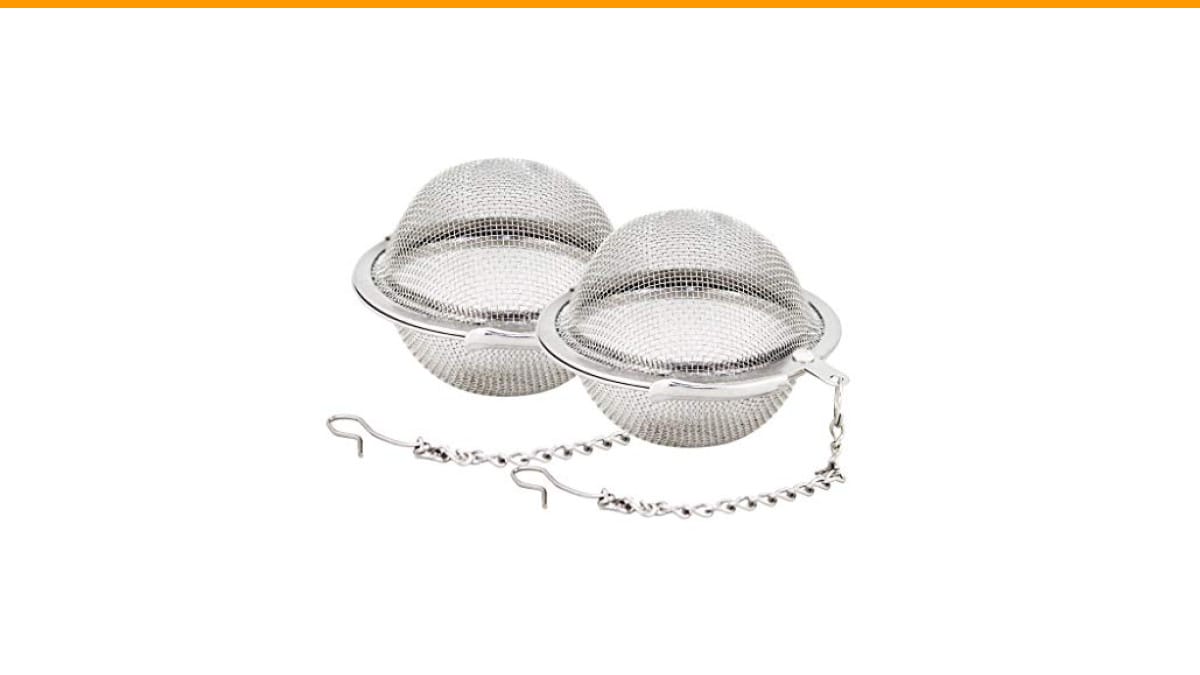
Let’s start with the most common failure: the tea ball. Those hinged metal spheres with tiny perforations look harmless, but they choke your leaves. A typical tea ball holds about one teaspoon of leaf, and when the leaf expands during steeping, it packs so tightly that water can’t circulate through it. The outer leaves get extracted, the inner leaves stay dry, and you get a shallow, one-dimensional cup.
The second failure is floating. Many infusers are lighter than water, so they bob on the surface. Your tea leaves sit in the top inch of water while the rest of the mug stays clear. You end up with a cup that’s half-strength unless you jiggle the infuser constantly.
The third failure is hole size. Fine mesh strainers keep sediment out, but if the holes are too small — under 200 microns — they also block flavor compounds from large-leaf teas. Coarse holes let everything through, including the dusty bits that make tea murky and astringent. Most cheap infusers get this wrong.
So when you’re choosing a tea infuser, you’re really solving three problems: space for leaf expansion, sink rate, and micron size. Solve all three and you’ll get a dramatically better cup from the same tea leaves.
The 5 Core Infuser Types (And Who They Suit)
You don’t need a drawer full of infusers. You need one that matches how you actually brew. Here’s the honest breakdown of each type, based on side-by-side testing over several weeks.
Basket Infusers: The Gold Standard
A basket infuser is a perforated or mesh container that sits inside your mug, usually with a lid and a handle that hooks over the rim. It’s the most forgiving design because it gives leaves room to expand horizontally. The OXO Brew Tea Strainer Basket I mentioned earlier is a great example — the large stainless basket fits nicely in a standard mug, and the fine etched holes keep small particles out without restricting flavor.
Baskets work for every tea type, from tight oolong balls to fluffy white tea. They’re easy to remove when your steeping time is up, and most are dishwasher safe. The main downside is that they can drip on your counter when you lift them out — that’s why a lid that doubles as a drip tray is a genuinely useful feature, not a gimmick.
Tea Balls and Spoons: The Budget Trap
Tea balls and infuser spoons are cheap, and they’re fine for a single cup of fannings (the small broken leaves in most bagged tea). But for whole leaf tea, they’re a compromise. The cramped space limits expansion, and the small holes clog quickly with fine particles.
If you already own one, don’t throw it out — use it for rooibos or herbal blends with small, uniform pieces. Just don’t buy one as your primary infuser. You’ll be back here in a month wondering why your tea still tastes weak.
Infuser Mugs and Travel Bottles
Infuser mugs have a built-in basket that sits inside the mug, often with a plunger mechanism to press the leaves down. Travel bottles take this concept and add a lid, so you can brew and drink on the go.
These are convenient, but they have a hidden flaw: the basket is usually smaller than a standalone basket infuser, and the mug’s shape can limit water flow around the leaves. If you’re brewing a single cup at your desk, an infuser mug works fine. If you want maximum flavor, a standalone basket in a regular mug is better.
Teapot Infusers: Batch Brewing
Teapot infusers are large baskets that fit inside a teapot, letting you brew multiple cups at once. They’re ideal for entertaining or for people who drink several cups in a sitting. The bigger volume means leaves have plenty of room to expand, and you can control steeping time by lifting the basket out.
The trade-off is cleaning. A large basket takes up more sink space, and if it has fine mesh, you’ll need to rinse it thoroughly to avoid clogging. But for batch brewing, nothing beats it.
Cold Brew Infusers: A Special Case
Cold brew infusers are long, narrow tubes designed to sit in a pitcher of water in the fridge. They’re a niche product, but they solve a real problem: cold water extracts flavor slowly, so you need a large volume of leaves and a long steeping time (8–12 hours).
If you drink iced tea regularly, a cold brew infuser is worth it. Just make sure it has a tight seal — a loose cap will let leaves escape into your pitcher, and you’ll be straining your tea through your teeth.
The Micron Rule: Matching Hole Size to Leaf Type
Here’s the number that most buyers ignore: hole size, measured in microns. A micron is one-thousandth of a millimeter. For reference, a human hair is about 70 microns wide.
Tea leaves range from fine dust (under 200 microns) to large whole leaves (over 1,000 microns). The ideal infuser hole size depends on what you’re brewing:
- Under 200 microns — great for fannings and dust, but blocks flavor from whole leaves. You’ll get a clean cup, but it may taste thin.
- 200–400 microns — the sweet spot for most loose leaf teas. This range lets water flow freely while keeping small particles out.
- 400–600 microns — good for large-leaf teas like white tea or oolong, but you’ll get some sediment in your cup.
- Over 600 microns — too coarse for anything but herbal blends with big pieces. Expect murky tea.
The OXO Brew Tea Strainer Basket uses extra-small etched holes, which are fine enough to filter particles but not so fine that they restrict flavor extraction. In testing, it handled a delicate silver needle white tea without turning the cup cloudy, and it also managed a broken-leaf Assam without letting fannings through.
If you brew a mix of tea types, aim for an infuser in the 200–400 micron range. If you only drink whole leaf tea, you can go coarser. If you only drink bagged tea, honestly, just use the bag — an infuser won’t save it.
Material Science: Steel, Silicone, and Plastic Compared
The material of your infuser affects taste, durability, and cleaning effort. Here’s what I’ve learned from using all three side by side.
Stainless steel is the best all-around choice. It’s non-reactive, so it won’t add metallic flavors to your tea. It’s durable enough to last years, and it can go in the dishwasher. The downside is that steel conducts heat, so the handle can get hot — that’s why the OXO model has silicone touchpoints on the lid and handle.
Silicone is flexible, heat-resistant, and easy to clean — tea residue doesn’t stick to it the way it sticks to plastic. But silicone is soft, so it can deform over time, and it can absorb odors if you brew strongly flavored teas like chai or mint. Rinse it immediately after use and it’ll be fine.
Plastic is cheap and lightweight, but it’s the worst choice for hot tea. Some plastics can leach chemicals at high temperatures, and plastic infusers tend to stain quickly. They also crack after repeated use. I’ve never found a plastic infuser that lasted more than a few months.
One more consideration: cleaning time. In my tests, a stainless mesh basket takes about 30 seconds to rinse clean if you do it right after brewing. Silicone takes about 20 seconds. Plastic takes a full minute because tea residue clings to the surface. That difference adds up if you brew daily.
The Sink or Swim Test: Physics of a Good Infuser
Here’s a simple test you can do at home: fill a mug with hot water, drop your empty infuser in, and watch what happens. If it floats, you have a problem. If it sinks, you’re in good shape.
Floating infusers only steep the top layer of water. The leaves at the bottom of the basket never get fully submerged, so they don’t release their full flavor. You can fix this by pushing the infuser down repeatedly, but that’s annoying and it cools your tea.
Heavier infusers — those with a solid steel base or a thick frame — sink naturally and stay submerged. That’s a big reason why basket infusers outperform tea balls: their weight and shape work with gravity, not against it.
If you already own a floating infuser, here’s a hack: place a small stainless steel spoon or a clean ceramic mug on top of it to hold it down. It’s not elegant, but it works.
Step-by-Step: Brewing the Perfect Cup with Your New Infuser
Assuming you’ve chosen a basket infuser with 200–400 micron holes and a sinkable design, here’s the exact process I use to get a consistently good cup:
- Heat your water to the right temperature. Green tea needs 160–180°F, white tea 170–185°F, oolong 185–200°F, and black tea 200–212°F. Boiling water will scorch delicate leaves and make them bitter.
- Add 2–3 grams of loose leaf tea (about one teaspoon) for every 8 ounces of water. If you’re using a basket infuser, fill it to about two-thirds full — don’t pack the leaves down.
- Place the infuser in your mug and pour the hot water over it. This ensures the leaves are fully saturated from the start.
- Steep for the recommended time. Most teas need 2–4 minutes. Set a timer — guessing leads to bitter or weak tea.
- Lift the infuser out and let it drain on the lid or a small plate. Don’t leave the leaves in the water, or they’ll keep extracting and turn bitter.
- Rinse the infuser immediately under hot water. Thirty seconds now saves you a scrubbing session later.
This process works for a mug, but if you’re using a gaiwan or a teapot, the same principles apply. Just adjust the leaf amount and steeping time based on the vessel’s volume.
Cleaning and Maintenance: The 30-Second Rule
The best infuser in the world is useless if it’s clogged with old tea leaves. Here’s the rule I follow: if it takes more than 30 seconds to clean, it’s the wrong infuser for daily use.
After each brew, rinse the infuser under hot running water and rub the mesh gently with your fingers. Most leaves will wash away immediately. For stubborn residue, soak the infuser in a solution of one part white vinegar to three parts water for 15 minutes, then rinse thoroughly.
Avoid using abrasive scrubbers on fine mesh — they’ll stretch the holes and let particles through. And don’t put a mesh infuser in the dishwasher unless the manufacturer says it’s safe; the high heat and detergent can degrade the mesh over time.
If you brew multiple cups a day, consider buying two infusers so you can rotate them while one air-dries. That’s a small cost for a lot of convenience.
Environmental Impact: Reusable vs. Bags
Single-use tea bags are convenient, but they come with a hidden cost. Most tea bags are made from plastic-based filter paper, and many are sealed with polypropylene. That means they don’t compost well, and they contribute to microplastic pollution in waterways.
Reusable infusers eliminate that waste entirely. A single stainless steel infuser can last for years, replacing hundreds or thousands of tea bags. Over that lifespan, the carbon footprint of the infuser — including manufacturing and shipping — is a fraction of the footprint of the bags it replaces.
There’s also the quality angle: loose leaf tea is often higher quality than bagged tea, because bags are filled with fannings and dust, which go stale faster. Switching to an infuser and loose leaf tea is better for the planet and better for your cup.
Troubleshooting: Fixing Bitter, Weak, or Murky Tea
Even with a good infuser, things can go wrong. Here’s how to diagnose and fix the three most common problems.
Bitter tea usually means you steeped too long, used water that was too hot, or used too much leaf. Cut your steeping time by 30 seconds, lower the water temperature by 10 degrees, or reduce the leaf amount by half a teaspoon. If it’s still bitter, your infuser holes might be too small, trapping astringent compounds against the leaves — switch to a coarser mesh.
Weak tea means you didn’t use enough leaf, the water wasn’t hot enough, or your infuser floated. Check your sink rate first — if the infuser bobs on top, that’s your problem. Otherwise, increase the leaf amount by half a teaspoon and steep for 30 seconds longer.
Murky tea means particles are getting through. Your infuser holes are too large, or the mesh is damaged. Switch to a finer mesh or replace the infuser. If you’re using a tea ball, the hinged seam often lets particles escape — another reason to avoid them.
One more tip: if your tea tastes flat, the leaves might be stale. Loose leaf tea has a shelf life of about six months to a year. Store it in an airtight container away from light and heat, and buy smaller quantities more often.
Final Verdict: The 3 Best Infusers for Daily Use
After testing a dozen infusers over several weeks, here’s what I’d actually buy with my own money.
First, the OXO Brew Tea Strainer Basket — it’s the best all-around choice for most people. The large basket fits standard mugs, the fine mesh keeps particles out, and the lid doubles as a drip tray. The silicone touchpoints are a thoughtful touch. It’s not the cheapest option, but it’s built to last.
Second, a simple stainless steel mesh basket with no lid — if you’re on a budget or you only brew at home, a basic basket infuser for under $10 will do the job. Look for one with a wide rim that hooks securely over the mug and a handle that stays cool.
Third, a teapot infuser — if you brew for more than one person, a large basket that fits inside your teapot is worth the extra money. It gives leaves room to expand and makes batch brewing effortless.
Whatever you choose, remember the three rules: holes in the 200–400 micron range, a design that sinks, and a cleaning time under 30 seconds. Get those right, and you’ll never blame your tea again.
For more brewing tips, check out our guide on cleaning coffee maker — the same principle of regular maintenance applies to your tea gear, and keeping things clean makes a measurable difference in flavor.
Frequently Asked Questions
What is the best material for a tea infuser?
Stainless steel is the best material because it’s non-reactive, durable, and easy to clean. Silicone is a good secondary option for its flexibility, but it can absorb odors. Avoid plastic for hot tea — it can stain, crack, and may leach chemicals at high temperatures.
How many microns should a tea infuser have?
Aim for 200–400 microns for most loose leaf teas. This range filters out fine particles while allowing water to flow freely around the leaves. If you only drink whole leaf teas, you can go up to 600 microns. For fannings or dust, you need under 200 microns, but those teas are better brewed in a bag.
Why does my tea taste bitter even with a good infuser?
Bitterness comes from over-extraction. You’re likely steeping too long, using water that’s too hot, or using too much leaf. Reduce the steeping time by 30 seconds, lower the water temperature by 10 degrees, or cut the leaf amount. If the problem persists, check if your infuser holes are too small — fine mesh can trap astringent compounds against the leaves.
Can I use a tea infuser for coffee?
Technically yes, but it’s not ideal. Coffee grounds are finer than most tea leaves, so they’ll clog a tea infuser quickly and make a messy cup. A dedicated coffee filter or a French press is a better tool for coffee. Stick to tea for your infuser.
How do I clean a tea infuser with fine mesh?
Rinse it under hot water immediately after use and rub the mesh gently with your fingers. For stubborn residue, soak it in a vinegar-water solution (1:3 ratio) for 15 minutes, then rinse thoroughly. Avoid abrasive scrubbers and don’t put it in the dishwasher unless the manufacturer says it’s safe.
What to Do Next
- Measure your current infuser’s hole size — if you can’t tell, hold it up to light and look for visible gaps. If you see gaps, it’s too coarse for most teas.
- Test the sink rate: drop your infuser in a mug of hot water. If it floats, replace it.
- Buy a basket infuser with 200–400 micron mesh and a lid that doubles as a drip tray.
- Brew with a timer — 2–4 minutes for most teas — and adjust based on taste.
- Rinse your infuser within 30 seconds of use to keep it clean.
- Switch from tea bags to loose leaf tea with a reusable infuser to cut down on waste.
- If you’re also into coffee, keep your gear clean with these coffee grinder cleaning steps — the same care extends the life of any brewing tool.
Products related to this article
Sponsored / affiliate links. As an Amazon Associate I earn from qualifying purchases. I may earn additional commission from eligible campaigns.