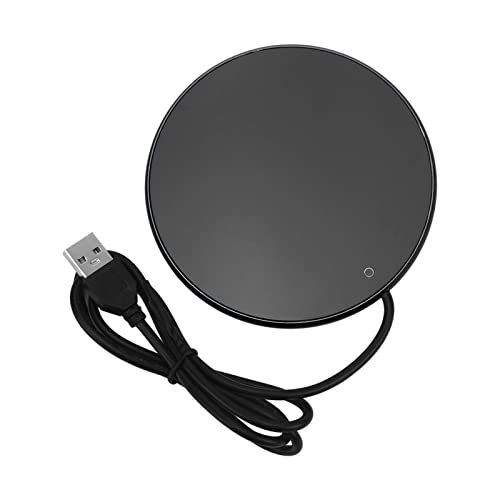
You bought a mug warmer to stop drinking cold coffee at your desk. Six months later, the heating plate looks stained, the surface feels rough, and your coffee barely reaches lukewarm. Sound familiar?
Most people treat a coffee mug warmer like a permanent desk accessory. It’s not. It’s a consumable appliance with a predictable death cycle, much like a phone battery or a printer cartridge. The real question isn’t just how long it lasts in years, but how many hours of actual heating you get before performance drops off a cliff.

KitchekShop
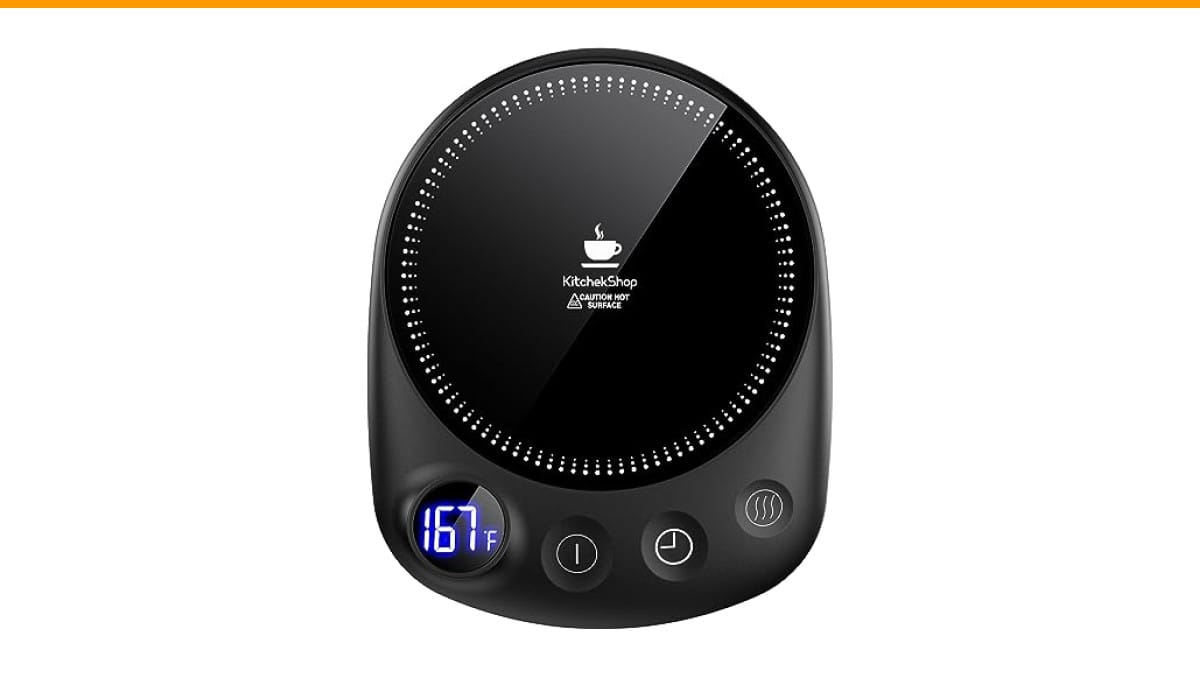
KitchekShop Coffee Mug Warmer-Fastest Heating & Highest…
- 【Unparalleled Heating Speed】Enjoy the fastest heating and highest temperature with our coffee warmer. Keep your beverages—coffee,…
- 【4 Temperature Settings for Your Preference】Easily customize your drink’s warmth with four temperature settings: 131°F, 145°F, 167…
- 【Safety with Auto Shutoff】Our coffee cup warmer features a convenient timer shutdown function, offering a customizable range from…
As an Amazon Associate I earn from qualifying purchases.
This guide breaks down the lifespan of plate warmers and self-heating mugs, the specific failure points you’ll hit first, and the exact signs that tell you it’s time to buy a replacement. You’ll also get a cost-per-cup breakdown so you know whether that cheap $15 plate actually saves you money or just costs more in the long run.
If you’re shopping right now, one option worth a look is the KitchekShop Coffee Mug Warmer. It uses a larger heating panel and four temperature settings up to 185°F, which matters for lifespan because you can run it at a lower temp when you don’t need max heat. That alone reduces wear on the heating element.
The Short Answer: How Many Years (and Hours) to Expect
A typical plug-in coffee mug warmer lasts between 1 and 3 years of regular desk use. That translates to roughly 2,000 to 5,000 hours of actual heating time. The wide range comes down to build quality, how hot you run it, and whether you leave it on overnight.
Cheap warmers under $20 often die in the first year. The heating element burns out, or the internal thermostat drifts so far that the plate runs either too hot or not hot enough. Mid-range units from brands like Cosori or Mr. Coffee usually make it to the 2-year mark. Premium self-heating mugs like Ember tend to fail at the battery or the charging coaster long before the heating element gives out.
Here’s the key distinction most reviews miss: calendar years don’t matter as much as hours of use. A warmer used 2 hours a day will last 3 years. The same unit used 10 hours a day might die in 9 months. The heating element degrades with thermal cycling — the repeated expansion and contraction of the metal as it heats up and cools down.
Think of it like a toaster. You don’t expect a toaster to last forever, and you probably replace it every few years when the slots stop toasting evenly. A mug warmer follows the same logic, except the failure is slower and less obvious.
One thing nobody mentions: the heating plate coating degrades before the element fails. That non-stick or ceramic coating slowly wears away from the friction of sliding mugs on and off. You’ll see tiny scratches, then discoloration, then a rough texture. That’s the first sign your warmer is approaching end of life, even if it still heats fine.
Plate Warmers vs. Self-Heating Mugs: Different Lifespans
You have two main categories to choose from, and they don’t age the same way. A plate warmer is a flat surface you set any mug on. A self-heating mug has the heating element built into the cup itself. Each has its own failure modes and expected lifespan.
Plate Warmers (Mr. Coffee, Cosori, KitchekShop)
Plate warmers are simpler machines. A resistive heating element sits under a metal or ceramic plate, and a thermostat cycles power to hold a target temperature. Because they have fewer parts, they often last longer than self-heating mugs in terms of calendar years.
But the heating element is exposed to air and constant thermal stress. Most plate warmers use a mica or ceramic heating element rated for a few thousand hours. Once that element burns out, the warmer is dead. There’s no user-serviceable part inside.
The KitchekShop model mentioned earlier uses a larger heating panel, which spreads the heat across a wider surface. That means the element doesn’t have to work as hard to hit the same temperature, which slightly extends its lifespan compared to a smaller, hotter element.
Plate warmers also have a thermostat that can fail. If your warmer starts getting too hot — coffee boiling when it used to stay at a gentle simmer — the thermostat has drifted or failed closed. That’s a safety issue, not just a performance one.
Self-Heating Mugs (Ember, Nextboom)
Self-heating mugs pack a heating element, a battery, and a temperature sensor into a ceramic or stainless steel vessel. That’s a lot of technology in a small space, and it means more things to break.
The battery is the first thing to go. Most self-heating mugs use a lithium-ion battery that loses capacity after 300 to 500 charge cycles. If you use it daily, that’s about 1 to 1.5 years before the mug won’t hold a charge long enough to finish a drink. The heating element itself often outlasts the battery, but it doesn’t matter if the battery can’t power it.
The charging coaster is the second failure point. The metal contacts corrode over time, especially if you wash the mug and don’t dry the bottom completely. Once the contacts fail, the mug won’t charge at all.
Water damage is the third killer. Even if a mug claims to be splash-proof, the internal electronics are vulnerable to moisture over time. Steam from hot coffee can seep into the seams and corrode the circuit board.
For a self-heating mug, expect 1 to 2 years of reliable use. The battery degradation is the hard limit, and it’s not replaceable in most models.
The Real Failure Points: What Breaks First
Let’s get specific about what actually fails, because it’s rarely the dramatic ‘it stopped working’ moment. Most warmers die slowly, with performance degrading over weeks.
1. The heating element burns out. This is the most common failure for plate warmers. You’ll notice the plate takes longer to reach temperature, then it stops getting hot at all. There’s no repair for this; the element is embedded in the base.
2. The thermostat drifts. A thermostat that’s supposed to hold 145°F might start cycling at 130°F or 160°F. You’ll notice your coffee isn’t as hot as it used to be, or it’s borderline boiling. A drifting thermostat is a sign of wear, not a setting issue.
3. The power cord or connector gets loose. If the warmer has a detachable cord, the connector can wear out from repeated plugging and unplugging. A loose connection causes intermittent heating — the warmer works, then stops, then works again. This is both annoying and a fire risk.
4. The heating plate coating degrades. This is the ‘smell’ and ‘taste’ factor that nobody talks about. As the coating wears, the exposed metal can oxidize. You might notice a metallic taste in your coffee or a faint burnt smell when the warmer runs. Once the coating is gone, the plate also becomes harder to clean, and stuck-on residue burns onto the surface.
5. The indicator light flickers. A flickering indicator light is often the first electrical warning sign. It means the internal wiring or the switch is starting to fail. If you see this, start shopping for a replacement — the unit is on borrowed time.
6. The cord gets warm. A warm or hot cord during use is a serious warning. It means the cord or the connection point has high resistance, which generates heat. This is an electrical safety hazard, and you should stop using the warmer immediately.
Brand-by-Brand Lifespan Report Card
Here’s a realistic look at how long specific brands tend to last, based on user reports and typical build quality. These are estimates, not guarantees, but they’ll give you a benchmark.
| Brand / Type | Typical Lifespan | Most Common Failure | Repairable? |
|---|---|---|---|
| Mr. Coffee (plate) | 1–2 years | Heating element burns out | No |
| Cosori (plate) | 2–3 years | Thermostat drift | No |
| KitchekShop (plate) | 2–3 years | Coating wear on plate | No, but slow degradation |
| Ember (self-heating mug) | 1–2 years | Battery capacity loss | No |
| Nextboom (self-heating mug) | 1–1.5 years | Charging coaster contacts | No |
| Generic / no-name (plate) | 6–12 months | Element or switch failure | No |
The pattern is clear: you get what you pay for. A $10 warmer is a disposable item. A $30 warmer from a known brand is a 2-year appliance. A $100 self-heating mug is a premium gadget that still has a hard battery limit.
5 Habits That Kill Your Warmer Fast
You can cut your warmer’s lifespan in half without realizing it. These habits are common, and they’re all avoidable.
- Running it at max heat all day. The highest temperature setting puts the most stress on the heating element. If you’re just keeping coffee warm, 131°F or 145°F is plenty. Reserve 185°F for when you actually want a near-boiling drink.
- Leaving it on overnight. A warmer left on for 10 hours straight is doing 10 hours of thermal cycling. That’s wear you don’t need. Use the auto-shutoff timer if your model has one, like the 1–12 hour timer on the KitchekShop unit.
- Using mugs with rough or textured bottoms. Stoneware and unglazed ceramic mugs act like sandpaper on the heating plate. They accelerate coating wear. Stick to smooth, flat-bottomed mugs and you’ll extend the plate’s life significantly.
- Sliding the mug instead of lifting it. Every time you slide a heavy ceramic mug across the plate, you’re grinding the coating. Lift the mug, even just an inch, and place it down.
- Ignoring spills and drips. Coffee that boils over and dries onto the plate creates a crust. That crust insulates the heat and makes the element work harder. Wipe the plate clean after every use, once it’s cool.
How to Extend Lifespan (Pro Maintenance Tips)
These won’t make a $10 warmer last forever, but they’ll get you closer to the top end of the lifespan range.
Clean the plate weekly. Unplug the warmer, let it cool completely, and wipe the plate with a damp cloth. For stubborn residue, use a mild glass cleaner or a paste of baking soda and water. Avoid abrasive scrubbers — they’ll strip the coating.
Use the lowest temperature that works. The difference between 131°F and 185°F is the difference between a gentle cycle and a hard workout for the heating element. Lower heat means less thermal stress and a longer life.
Give it a rest. If you’re not drinking for more than 30 minutes, turn it off. The warmer doesn’t need to run all day to be useful. A 1–2 hour session is plenty for most desk workers.
Keep it dry. Don’t set a dripping-wet mug on the plate. Water can seep into the seams and corrode the internal connections. Dry the bottom of your mug first.
Check the cord regularly. Look for fraying, discoloration, or a loose fit at the base. Catching a cord problem early can prevent a short circuit.
The Upgrade Trigger: When to Replace vs. Live With It
Most people wait until the warmer completely dies. That’s a mistake. The performance degradation is gradual, and you’ll be drinking lukewarm coffee for weeks before you realize the warmer is the problem.
Run this checklist once a month. If you hit two or more of these, it’s time to replace the unit:
- Time to reach your target temperature has doubled from when it was new. If it used to hit 145°F in 5 minutes and now takes 10, the element is degrading.
- The plate doesn’t feel uniformly hot. Cold spots on the surface mean the element is failing unevenly.
- You notice a metallic taste in your coffee that wasn’t there before. That’s the coating wearing off.
- The indicator light flickers or dims during use.
- The warmer cycles on and off more frequently than it used to, even at the same setting.
If the unit still heats fine but the plate is scratched and stained, you can live with it for a while. Just know that cleaning will get harder, and the taste risk increases. If the cord is warm or the light flickers, replace it now. Those are safety issues, not just performance ones.
The Hidden Cost: Is It Cheaper to Replace or Rebuy?
Let’s talk money, because the cost-per-sip math changes the decision.
A $20 plate warmer that lasts 2 years costs about $10 per year. If you drink 2 cups of coffee a day, that’s about 1.4 cents per cup. That’s nothing. Even if you replace it every year, you’re spending a penny per cup to keep your coffee hot.
A $130 self-heating mug like the Ember that lasts 1.5 years costs about $87 per year. At 2 cups a day, that’s about 12 cents per cup. Still not a lot, but 10 times more expensive than the plate warmer.
Here’s the catch: a cheap warmer that dies in 6 months costs the same per year as a mid-range one that lasts 2 years. The $10 no-name unit isn’t a bargain if you’re buying two of them a year. The $30 Cosori or KitchekShop unit that lasts 2–3 years is the better value in almost every scenario.
The real hidden cost is the coffee you waste. If your warmer stops working properly and you dump half of every cup because it’s cold, that’s $1–$2 of coffee wasted per day. That adds up to more than the cost of a new warmer in a month. Replacing a dying warmer isn’t an expense; it’s a way to stop throwing money into the sink.
Frequently Asked Questions (FAQs)
Can I leave my coffee mug warmer on all day?
You can, but you shouldn’t if you want it to last. The heating element is rated for a certain number of hours, and leaving it on for 8–10 hours a day burns through that budget fast. If you need all-day warmth, use a model with an auto-shutoff timer, like the KitchekShop warmer with its 1–12 hour timer, and set it to the minimum time you actually need.
Why does my mug warmer smell like burnt plastic?
That smell usually appears in the first few uses as the manufacturing oils burn off. If it continues after a week, it’s a sign the heating element is overheating or the coating is degrading. Check the plate for discoloration. If the smell persists, stop using the warmer — it’s not safe.
Does a higher wattage warmer last longer?
Not necessarily. Higher wattage means the element can reach temperature faster, which means less time running at full power. But it also means more thermal stress when it’s running. The build quality and the thermostat matter more than raw wattage. A well-built 120W warmer will outlast a cheap 300W unit.
Can I use a mug warmer with a stainless steel cup?
Yes, but it won’t work as well. Stainless steel conducts heat away from the plate quickly, which makes the warmer work harder to maintain temperature. That extra work generates more heat stress on the element. A ceramic or glass mug with a flat bottom is always the best choice for both performance and lifespan.
Is it worth repairing a coffee mug warmer?
Almost never. The heating element and thermostat are embedded in the base and aren’t user-serviceable. A repair would cost more than a new unit. The only exception is a loose power cord, which a competent person could solder back, but that’s not worth the safety risk. Just replace it.
The Bottom Line
A coffee mug warmer is a small appliance with a finite life, and that’s okay. You’re not buying a family heirloom; you’re buying a tool to keep your coffee at the right temperature for a year or two.
- Expect 1–3 years from a plate warmer, 1–2 years from a self-heating mug.
- Track hours of use, not calendar years. Heavy daily use kills warmers faster.
- Watch for the early warning signs: slow heating, cold spots, flickering lights, warm cords.
- Lift your mug, don’t slide it, to protect the plate coating.
- Run at the lowest temperature that works for you — it’s easier on the element.
- Don’t repair a dead warmer; replacement is cheaper than any fix.
- A mid-range warmer at $25–$35 is the best cost-per-cup value over a 2-year span.
When your current warmer starts showing its age, don’t wait for it to die completely. Replace it while you’re still enjoying your coffee, not after you’ve been drinking lukewarm sludge for a week. And if you’re in the market now, the KitchekShop warmer is a solid choice with a larger heating panel and a timer that helps you avoid the overnight-running mistake. Keeping your warmer clean and running at sensible temps will get you the most for your money, just like maintaining your coffee machine does. And if you notice your coffee tastes off, it might not be the warmer — check why coffee turns bitter after cleaning before you blame the hardware.
Products related to this article
Sponsored / affiliate links. As an Amazon Associate I earn from qualifying purchases. I may earn additional commission from eligible campaigns.