You just pulled a shot that tastes hollow and sour. The beans are fresh, the water temperature is right, but something is off. You check the grind and it looks like a mix of flour and gravel. That is the signature of worn burrs.
Most people keep using a dull grinder for months, blaming the coffee or their technique. The truth is simpler: the burrs are tired. This article tells you exactly how long a burr grinder lasts, not in vague years, but in pounds of coffee ground. You will also get a practical diagnostic test, a maintenance schedule, and a cost-benefit breakdown for repair versus replacement.

OXO
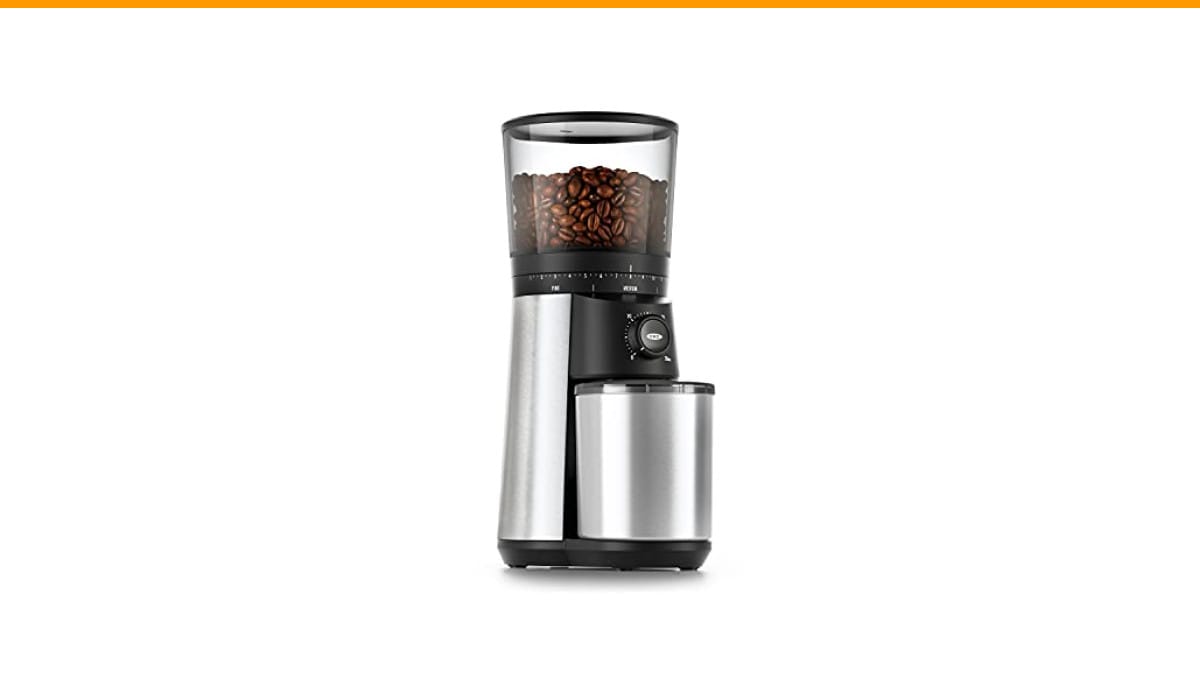
OXO Brew Conical Burr Electric Coffee Bean…
- 40mm stainless steel conical burrs: Precision grinding system produces uniform coffee grounds to ensure even extraction for rich,…
- 15 grind settings (plus 43 micro-adjustments): Easily customize your coffee grind—from fine for espresso to coarse for French pres…
- One-touch start: The Conical Burr Coffee Grinder remembers your last setting. Just push to grind—no need to reset each time.
As an Amazon Associate I earn from qualifying purchases.
If you are in the market right now, the OXO Brew Conical Burr Grinder is a solid home choice. Its 40mm stainless steel conical burrs and 15 grind settings (with 43 micro-adjustments) give you a wide range to dial in your brew. It is not a commercial machine, but it handles daily home use well.
The Short Answer: How Many Years (and Pounds) to Expect
Here is the number that matters: pounds of coffee ground, not months owned. A typical home user grinds about 2 pounds of coffee per week. At that rate, a quality steel burr grinder lasts between 500 and 1,000 pounds. That translates to roughly 5 to 10 years. Light users who grind once a day might stretch that to 15 years.
Commercial cafes grind 20 to 50 pounds daily. Their burrs die in 3 to 6 months. That is why you see cafés replacing burrs on a strict schedule. Home users rarely track this, so they end up drinking mediocre coffee for years without knowing why.
Cheap grinders with plastic gears or weak motors often fail before the burrs wear out. The motor burns out, the gear strip, or the adjustment mechanism breaks. In those cases, the burrs are fine, but the machine is dead. For this reason, the motor and build quality often matter more than the burr material itself.
Burr Material Matters: Steel vs. Ceramic Lifespan
The two main materials for burrs are stainless steel and ceramic. They behave very differently over time.
Stainless Steel Burrs
Steel is the workhorse. It is tough, resists chipping, and stays sharp for hundreds of pounds. The trade-off is heat. Steel burrs run hotter than ceramic, especially at fine settings. If you grind slowly and in short bursts, heat is rarely a problem. If you run a 60-second grind for espresso, you may notice the grounds coming out warm. That heat can evaporate some volatile oils, slightly dulling the aroma.
Steel burrs are also easier to sharpen or replace. Most aftermarket burr sets (like those from Baratza or Fellow) are steel. They are the standard for espresso because they produce a consistent particle size under load.
Ceramic Burrs
Ceramic stays cooler and is harder than steel, so it holds an edge longer in theory. But it is brittle. A stray rock or a hard bean can chip a ceramic burr. Once chipped, that burr is ruined and will produce inconsistent grounds forever. Ceramic burrs are common in hand grinders and budget electric grinders. They are fine for pour-over and French press, but I would not trust them for daily espresso duty.
My honest take: for home use, stainless steel is the safer bet. It tolerates mistakes and lasts just as long in practice. Ceramic only wins if you grind very little and want zero heat transfer.
The 5 Objective Signs Your Burrs Are Failing (with a Diagnostic Test)
Taste is subjective. Particle size is not. Here are five objective signs that your burrs are dead, plus a test you can run in two minutes.
- Inconsistent particle size: Grind 10 grams of coffee at a medium setting. Spread the grounds on a white plate. If you see a wide mix of boulders and powder, the burrs are dull.
- Longer grind time: Time how long it takes to grind 18 grams. If it takes 30% longer than when the grinder was new, the burrs are struggling.
- Motor RPM drop: Listen to the motor. A healthy grinder runs at a steady pitch. If it slows down or sounds labored, the burrs are creating too much resistance.
- Visible nicks or rounding: Remove the burrs and look at the cutting edges. Sharp burrs feel like a file. Worn burrs feel smooth or show visible chips.
- Grind retention increases: Worn burrs create more fines that stick to the chute. If you are suddenly knocking out 2 grams of retained coffee, that is a sign of trouble.
Run the plate test first. It costs nothing and tells you more than any other check. If you see a bimodal distribution (lots of fines plus lots of boulders), your burrs are past their prime.
The Hidden Cost of Worn Burrs: Why Your Coffee Tastes Bad
Worn burrs do not just make ugly grounds. They actively ruin your coffee. Dull cutting edges tear the bean instead of slicing it. Tearing produces a disproportionate amount of ultra-fine powder (fines) and large shards. During extraction, the fines over-extract and taste bitter. The shards under-extract and taste sour. Your palate picks up both, and the result is a muddy, harsh cup.
You might compensate by grinding finer, which makes the problem worse. Finer settings on dull burrs create more fines and more heat. It is a death spiral. You keep adjusting, the coffee keeps tasting worse, and you never think to check the burrs.
There is also a financial angle. If you are buying specialty beans at $20 per pound and getting a mediocre cup, you are wasting money. A $40 burr set is cheaper than 2 pounds of wasted coffee.
Replacement vs. Repair: The Real Cost-Benefit Analysis
When the burrs are dead, you have two options: replace the burrs or buy a new grinder. Here is how to decide.
For popular home grinders (Baratza Encore, Virtuoso, Fellow Ode), replacement burr sets cost between $30 and $60. Installation takes 10 minutes with a screwdriver. If your grinder is otherwise healthy, replacing burrs is a no-brainer. You get a machine that performs like new for less than the cost of a decent bag of beans.
For budget grinders under $100, replacement burrs are often not available. The manufacturer does not sell them separately. In that case, your only option is a new grinder. This is why I recommend spending a little more upfront on a grinder with replaceable burrs. It saves you money in the long run.
If the motor is also struggling (slow start, burning smell, overheating), skip the burr replacement. A new grinder is the better investment. The motor is the most expensive part, and you cannot easily replace it.
Here is a quick comparison table to help you decide:
| Scenario | Best Action | Cost Range | Time Investment |
|---|---|---|---|
| Burrs worn, motor fine | Replace burrs | $30–$60 | 15 minutes |
| Burrs worn, motor weak | Buy new grinder | $100–$300 | None |
| Budget grinder, no parts | Buy new grinder | $50–$150 | None |
| High-end grinder, minor chip | Replace burrs | $50–$100 | 20 minutes |
How to Extend Burr Life: A Maintenance Schedule That Works
Burrs do not die of old age. They die from neglect and contamination. A simple routine doubles their lifespan.
- Weekly: Brush out the burr chamber and chute. Use a stiff pastry brush. This removes oily coffee residue that gums up the cutting edges.
- Monthly: Run a few grams of grinder cleaner (like Grindz) or instant rice through the grinder. This absorbs oils and knocks loose compacted grounds. Do not use water.
- Every 3 months: Remove the upper burr and vacuum the chamber. Check for any foreign objects like pebbles.
- Never grind oily dark roasts daily: The oils coat the burrs and accelerate dulling. If you love dark roasts, alternate with a medium roast.
Static cling is another issue. Dry, cold weather causes grounds to stick to the chute. A tiny spritz of water on the beans (the Ross Droplet Technique) reduces static and keeps the grind path clear. This is not about cleaning, but it helps maintain consistent performance.
For a full step-by-step process, check our guide on how to clean your grinder.
The Break-In Period: What to Expect from New Burrs
New burrs are sharp, almost aggressive. They do not perform at their best right away. The first 2 to 5 pounds of coffee is the seasoning period. During this time, the cutting edges micro-polish against the coffee beans. You may notice the grind size drifts slightly finer as the burrs settle.
Do not panic and change your settings during the break-in. Grind a few pounds of cheap beans, dial in your espresso, and then leave it alone. After about 5 pounds, the burrs hit their peak consistency. They will stay at that level for hundreds of pounds before gradually declining.
One tip: mark your dial setting with a piece of tape when the burrs are new. If you ever need to remove the burrs for cleaning, you can return to that exact spot. The performance will be slightly different after seasoning, but it gives you a reference point.
Warranty Secrets: Getting Free Burrs from Manufacturers
Before you pay for new burrs, check your warranty. Many manufacturers cover burr wear for a limited time, even though it is a consumable part. Baratza offers a 1-year warranty on the whole grinder, but they often send free burr sets to customers within that window if the burrs are defective.
Some higher-end brands (like Fellow) offer a 2-year warranty that explicitly covers burrs. Read the fine print on your product page. If you are within the warranty period and the burrs are chipped or visibly defective, email customer support with a photo. They usually send a replacement set without asking for the old ones back.
If you are out of warranty, ask anyway. Manufacturers know that a happy customer buys again. A polite email asking for a discount on a burr set often works. It costs you nothing but a minute of typing.
FAQ: Quick Answers on Burr Longevity
How many pounds of coffee can a steel burr grind?
Most quality steel burrs last between 500 and 1,000 pounds. Budget grinders may only make it to 300 pounds before the motor or gears fail.
Do ceramic burrs last longer than steel?
In theory, yes, because ceramic is harder. In practice, they chip more easily, which kills them instantly. Steel is more forgiving and easier to replace.
Can I sharpen coffee grinder burrs at home?
No. You cannot effectively sharpen burrs with a whetstone or file. The geometry is too complex. Just replace them.
How often should I replace burrs for espresso?
Espresso is the harshest use. Plan on replacing burrs every 300 to 500 pounds if you are pulling daily shots. The fine grind setting wears the edges faster.
Is it worth replacing burrs on a $50 grinder?
Usually not. Replacement burrs for budget grinders are rare and cost nearly half the price of the machine. Save that money for a better grinder.
Final Verdict: When to Invest in a New Grinder
Here is the bottom line for your wallet and your cup:
- Track pounds, not years. 500 to 1,000 pounds is the real lifespan for steel burrs.
- Run the plate test every 6 months. If you see boulders and powder, the burrs are done.
- Replace burrs on any grinder that costs over $150. It is cheaper than a new machine.
- Skip burr replacement on budget grinders. Buy a new one with replaceable parts.
- Brush the burr chamber weekly and run cleaner monthly. It doubles lifespan.
- Check your warranty before buying new burrs. You might get them free.
- Buy a grinder with a strong motor and replaceable burrs. The OXO Brew Conical Burr Grinder fits this bill for most home users.
If you are comparing grinders, read our breakdown of burr vs. blade grinders. And if you just cleaned your grinder and the coffee still tastes off, this guide on bitter coffee after cleaning might solve the mystery.
Products related to this article
Sponsored / affiliate links. As an Amazon Associate I earn from qualifying purchases. I may earn additional commission from eligible campaigns.
 Meat Cutter Machine, Stainless Steel Electric Meat Slicer Machine with Three functional modes & Inclined Discharge Port Shredded Cutting Machine for Home Restaurants Supermarket (15mm)
 Wooden Coffee Mixing Spoons, 3PCS Long Handle Wooden Mixing Spoon, Cooking Long Handle Tasting Spoons for Kitchen Soup Coffee Cocktail Honey Mixing Stirring
 SOLUSTRE Electric USB Coffee Cup Warmer with Temperature Settings Portable Milk and Beverage Heating Coaster for Office Desk Small Lightweight Design Easy to Clean Surface Multi Functional