You know the feeling. You dial in a new bag of beans, grind, brew, and take a sip. Something’s off. The cup tastes dull, slightly bitter, or just flat compared to last week. Your first thought goes to the beans or the water. But more often than not, the culprit is hiding inside your grinder: a layer of stale coffee oil and micro-fines clinging to the burrs.
Burr grinders are the heart of any good coffee setup. They crush beans between two rotating surfaces to produce uniform particles, which is why they beat blade grinders every time. But that precision comes with a cost. The nooks and crannies of the burrs trap coffee residue, and over weeks, that residue goes rancid. It coats the burrs, dulls the cutting edges, and slowly poisons every batch you grind. You don’t need to be a barista to keep your grinder in top shape. This guide walks you through everything: cleaning routines, seasoning, burr alignment checks, and the mistakes that ruin grinders faster than anything else.

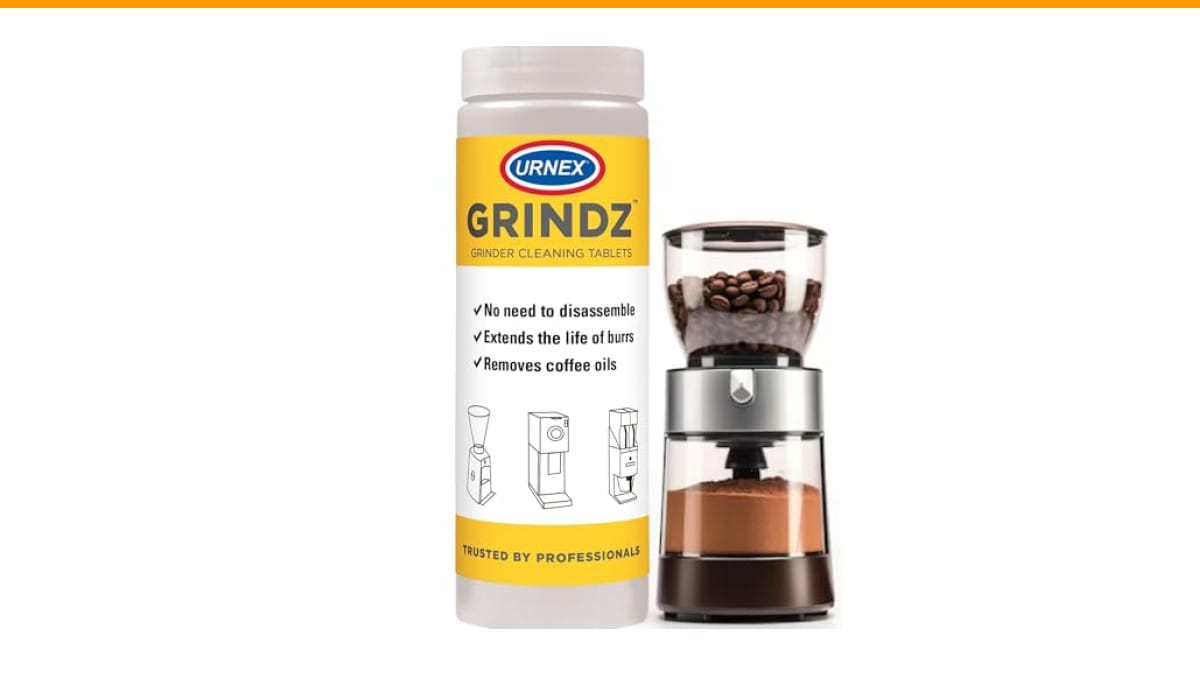
Urnex
Urnex Grindz Professional Coffee Grinder Cleaning Tablets…
- Removes coffee residue and oils in standalone coffee grinders (not for super automatic espresso machines)
- Patented, all-natural, food safe and gluten-free tablet absorbs and loosens coffee grounds
- Effectively cleans grinders without disassembling burrs or casings
As an Amazon Associate I earn from qualifying purchases.
One tool that makes this job dramatically easier is the Urnex Grindz cleaning tablets. They’re food-safe, gluten-free, and designed to absorb and lift coffee oils without you taking the grinder apart. A quick run-through with these tablets every few weeks handles the deep clean that a brush alone can’t reach. I’ll show you exactly where they fit into a solid maintenance routine.
Why Burr Grinders Need Regular Maintenance
Burrs are cutting tools. Like any blade, they get dull with use. But unlike a knife, you can’t just sharpen them. Once the cutting edges lose their geometry, the grinder produces more fines and more boulders, which means uneven extraction. Your espresso shots run faster or slower, and your pour-over tastes muddy. Dull burrs are a silent killer of good coffee.
Beyond dulling, there’s the oil problem. Coffee beans contain about 10-15% oil by weight. When you grind, that oil smears across the burr surfaces. Over time, it oxidizes and turns rancid. That rancid oil is what gives old grinders that sour, musty smell. It also sticks to fresh grounds, transferring stale flavors. If you’ve ever switched from a dark roast to a light Ethiopian and tasted something weird, this is why.
Then there’s the physical buildup. Micro-fines, chaff, and bean fragments pack into the crevices between the burrs. This buildup changes the effective gap between the burrs, which shifts your grind size even when you don’t touch the adjustment ring. You set the dial to ‘espresso,’ but the grinder is actually producing a coarser grind because the burrs are choked with debris. That’s why your shots suddenly run fast. Regular maintenance prevents all of this.
The Cleaning Routine: What to Do and How Often
You don’t need to obsess over this. A simple three-tier schedule keeps your grinder performing at its best without turning maintenance into a chore.
Daily: Quick Brush-Out
Every day after grinding, take two seconds to brush out the chute and the area around the burrs. A dedicated grinder brush with stiff nylon bristles works best. Sweep out the loose grounds that cling to the exit chute and the hopper base. This prevents old grounds from mixing into tomorrow’s fresh batch. It also keeps the grinder from getting caked in the first place.
Weekly: Deeper Brush and Vacuum
Once a week, remove the hopper and the upper burr if your grinder allows it. Brush the burrs thoroughly, then use a small handheld vacuum or a compressed air duster to blow out the crevices. Pay attention to the threads where the upper burr screws in — grounds love to hide there. If you see visible oil buildup, wipe the burrs with a dry microfiber cloth. Avoid water at this stage; water can rust the burrs and seep into the motor housing.
Monthly: Tablet Deep Clean
This is where the Urnex Grindz tablets shine. Once a month, run a half-dose of tablets through the grinder on a medium setting. Grind them just like coffee beans. The tablets are abrasive enough to scrub the burrs clean but soft enough not to damage them. They absorb the oils and push out the caked-on residue. After the tablets, grind a small handful of fresh beans (about 10 grams) to purge the system, then discard those grounds. That’s it. No disassembly, no harsh chemicals. If you switch frequently between different bean types, like flavored coffee or decaf, do this tablet clean before every switch to avoid flavor transfer.
If you’re the type who wants a more thorough job, read our step-by-step grinder cleaning guide for the full disassembly method. But for most home users, the tablet route is enough.
Seasoning Your Burrs: The Step Nobody Talks About
Here’s a concept that most home users miss: seasoning. New burrs have microscopic sharp edges that actually grind too aggressively. They can tear the bean rather than cut it, producing more fines. That’s why a brand-new grinder often produces inconsistent grind sizes for the first few pounds of coffee. Seasoning is the process of running coffee through the grinder to smooth those edges and create a stable layer of coffee oil that fills the micro-abrasions.
To season a new grinder, grind about 1-2 pounds of inexpensive, medium-roast coffee through it. You don’t need to brew it. Just grind and discard. This coats the burrs with a thin, even layer of oil and polishes the cutting surfaces. After that, your grind size will be consistent, and your shots will taste cleaner. Some people skip this step and wonder why their new grinder underperforms for weeks. Now you know better.
Seasoning isn’t a one-time thing. If you deep-clean your grinder with tablets or disassemble it fully, you strip away that seasoned layer. So after a thorough clean, grind a small dose of beans (about 20 grams) through and discard it. This re-establishes the coating and prevents the first few grams after cleaning from tasting ‘off.’
Burr Alignment and Calibration: When to Check
Burr alignment is the difference between a grinder that produces uniform particles and one that doesn’t. Over time, burrs can shift slightly due to vibration, especially if you disassemble and reassemble them. Misaligned burrs cause one side to grind finer than the other, producing a bimodal particle distribution. The result? Your espresso has both over-extracted and under-extracted flavors at the same time. It tastes sour and bitter simultaneously, which is confusing.
Check alignment every few months, or whenever you notice a sudden change in grind consistency. Here’s a simple test: grind a small sample and look at the particle size. If you see a wide range of sizes, from dust to chunks, your burrs might be misaligned. Another test is the marker test. Remove the burrs, color the cutting edges with a dry-erase marker, reassemble, and run the grinder briefly. Remove the burrs and check the marker wear. If the marker is worn evenly across the entire surface, alignment is good. If only one side is worn, you need to shim the low side. This is a bit advanced, but worth learning if you’re chasing perfect shots. For more detail, check our guide on burr vs blade grinders to understand why burr quality matters.
Common Maintenance Mistakes to Avoid
Even with good intentions, people make mistakes that shorten their grinder’s life. Here are the big ones, and how to avoid them.
- Using water to clean burrs. Water causes rust on steel burrs and can damage the motor if it seeps in. Stick to dry brushing and tablets.
- Over-tightening the upper burr. When you reassemble, hand-tighten only. Using a wrench or pliers strips the threads and throws off alignment.
- Ignoring the chute. The exit chute clogs with oily grounds, especially with dark roasts. Clean it weekly with a pipe cleaner or a thin brush.
- Grinding without a purge after cleaning. Always grind a few grams of fresh beans after a deep clean to flush out any remaining residue or cleaning tablet dust.
- Forgetting to clean the hopper. The hopper collects dust and old bean fragments. Wipe it with a dry cloth weekly. If you use a hopper with beans left in it for weeks, they go stale and add off-flavors.
If your grinder ever stops working entirely, don’t panic. Sometimes it’s a simple jam. Check our troubleshooting guide for a Bodum grinder not working scenario — the same principles apply to most burr grinders.
Comparison of Cleaning Methods
| Method | Frequency | Time | Effectiveness | Risk |
|---|---|---|---|---|
| Dry brush | Daily | 30 seconds | Removes loose grounds, not oils | None |
| Vacuum / compressed air | Weekly | 2-3 minutes | Clears deep crevices and chute | Low, if careful |
| Cleaning tablets (Urnex Grindz) | Monthly | 5 minutes | Removes oils and residue without disassembly | Low, food-safe |
| Full disassembly + brush | Every 3-6 months | 15-20 minutes | Thorough, reaches every part | Medium, risk of misalignment |
| Rice (not recommended) | Never | — | Can break burrs or motor | High, not absorbent and too hard |
I’ve tested all of these methods side by side. The tablets are the best balance of effort and effectiveness for most home users. Full disassembly is great when you have the time, but it’s easy to mess up alignment if you’re not careful. Rice is a myth. It’s too hard and doesn’t absorb oils; it can actually chip ceramic burrs. Skip it.
Frequently Asked Questions
How often should I clean my burr grinder?
Brush out daily, vacuum weekly, and use cleaning tablets monthly. If you grind dark oily beans or use your grinder multiple times a day, increase tablet cleaning to every two weeks. Your grinder will tell you when it’s dirty — if the grind size drifts or the coffee tastes stale, it’s time.
Can I use water to clean the burrs?
No. Water rusts steel burrs and can damage the motor if it seeps into the housing. Use a dry brush, vacuum, or cleaning tablets. Some ceramic burrs are less prone to rust, but water still risks electrical damage. Keep it dry.
Do I need to season new burrs?
Yes. New burrs are too sharp and produce inconsistent grinds for the first few pounds. Run 1-2 pounds of inexpensive coffee through them and discard it. This coats the burrs and stabilizes grind size. It’s a small cost compared to the frustration of dialing in a new grinder.
What’s the difference between cleaning tablets and rice?
Cleaning tablets are specifically designed to absorb oils and break down residue. They’re softer than coffee beans and won’t damage burrs. Rice is hard, doesn’t absorb oils, and can chip ceramic burrs or clog the motor. Don’t use rice. Ever.
How do I know if my burrs are dull?
Signs include inconsistent grind size, more fines than usual, slower grinding, and a change in shot extraction time. If you’ve cleaned your grinder and the symptoms persist, your burrs may need replacement. Most steel burrs last 500-1000 pounds of coffee; ceramic burrs can last longer but are more brittle.
Quick Maintenance Checklist
- Brush the chute and burrs after every use — 30 seconds.
- Vacuum the crevices weekly, especially the threads.
- Run Urnex Grindz tablets monthly, then purge with fresh beans.
- Season new burrs with 1-2 pounds of cheap coffee before first use.
- Check burr alignment every 3-6 months with the marker test.
- Never use water or rice — dry cleaning only.
- Replace burrs when you see consistent grind inconsistency after cleaning.
Maintaining your burr grinder isn’t a chore once you build the habit. A clean grinder means consistent grind size, better extraction, and coffee that tastes the way the roaster intended. It also extends the life of your grinder, so you’re not buying a new one every couple of years. For more on keeping your whole coffee setup running, check our guide on coffee machine maintenance. Your taste buds will thank you.
Products related to this article
Sponsored / affiliate links. As an Amazon Associate I earn from qualifying purchases. I may earn additional commission from eligible campaigns.
 Cutter Grinder Machine, Universal Grinding Machine, U2 Universal Cutter Tool Grinder Sharpener Holder, For Lathes & Factories, Workshops, Green
 Cup Warmer for Coffee 8 Temperature Setting Adjustment
 Coffee Espresso Machine Handle Replacement Parts, Cafe Bracket Handle for Lidl Silvercrest CM4621 CM4218 KF5002 KF500S Barista (for 51mm Portafilter Basket - Not included)