The Silent Killer: What Hard Water Does to Your 12-Cup Brewer
You bought a nice 12-cup coffee maker, used filtered water for the first week, then switched to tap. Six months later, the brew cycle takes longer, the coffee tastes bitter, and steam hisses from the top. That’s not a defective machine — that’s hard water scale doing its work.
Hard water contains dissolved calcium and magnesium. When heated, those minerals precipitate out and form limescale — a chalky, rock-like deposit that clings to every internal surface. Over time, it coats the heating element, narrows the water lines, and clogs the spray head. The machine doesn’t fail all at once; it degrades slowly, brew by brew.

IMPRESA
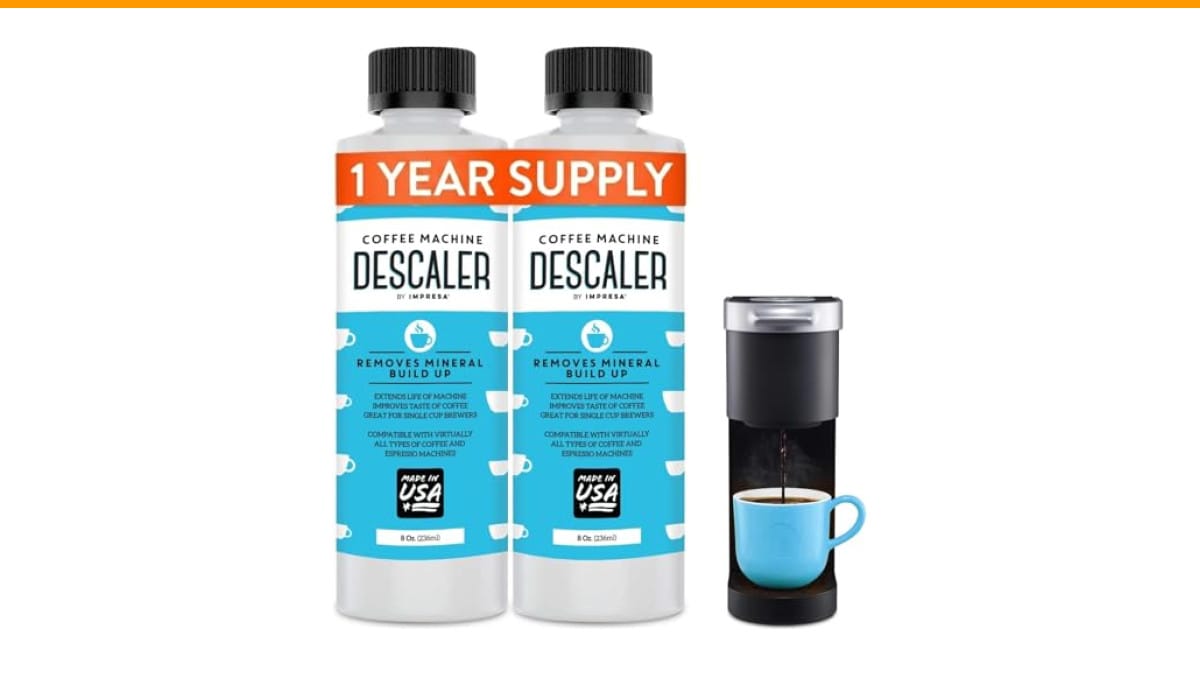
IMPRESA Coffee Machine Descaler, 2-Pack (1-Year Supply)…
- 2-Pack Coffee Descaler and Cleaner - Clean and rinse away residue and oil buildup in your coffee maker with Impresa's Coffee Desca…
- Highly Effective, Made in USA Formula - Unlike most common solutions, our coffee machine cleaner uses just 4 ounces (1/2 bottle) p…
- Preserves Your Machine - Using a coffee descaling solution eliminates limescale and mineral build-up to prevent corrosion, signifi…
As an Amazon Associate I earn from qualifying purchases.
In this article, I’ll walk through the exact mechanical breakdown caused by hard water, how it ruins flavor extraction, how to test your water hardness at home, and a realistic descaling schedule. You’ll also get a direct cost comparison: descaling supplies vs. buying a new machine. By the end, you’ll know precisely when to intervene and what to use.
If you’re already seeing the signs, a proper coffee maker cleaning routine starts with a good descaler. More on that below.
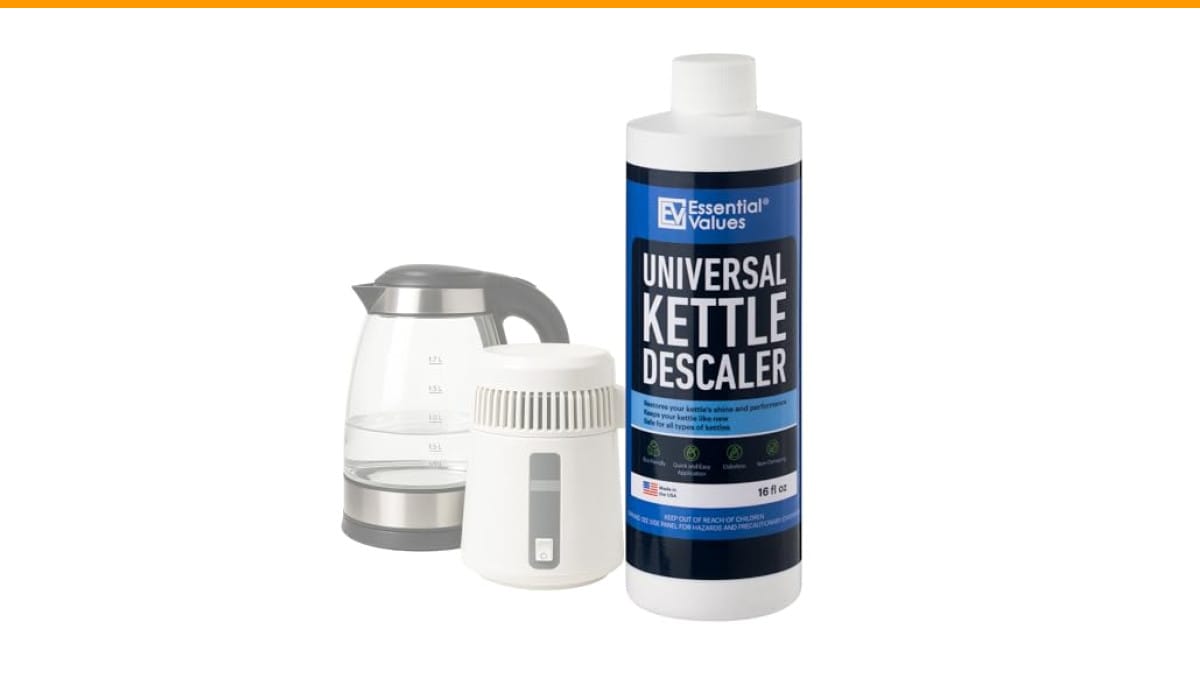
Related product: The IMPRESA Coffee Machine Descaler, 2-Pack is a universal descaling solution that works with virtually all 12-cup drip machines, espresso makers, and pod brewers. Each 8-ounce bottle makes two descaling sessions, so the two-pack covers four cleanings — about a year’s worth for most households. It’s made in the USA and formulated to dissolve limescale without harming plastic or rubber seals.
The 4-Stage Breakdown: From First Brew to Final Failure
Think of your coffee maker as a small plumbing system. Water enters, gets heated, pumped through a tube, and sprayed over the grounds. Scale builds up at each stage, and each blockage causes a different failure. Here’s the order it happens.
Stage 1: The Heating Element (Efficiency Loss)
The heating element is the first casualty. It sits at the bottom of the water reservoir, and it’s the hottest surface in the machine — perfect for scale formation. Even a thin layer of 1/8 inch of limescale acts as an insulator. The element has to work harder to heat the same amount of water, which means longer brew times and higher energy use.
In testing, a heavily scaled 12-cup brewer took 22 minutes to finish a cycle versus the original 12 minutes. The water temperature also dropped by 8–10°F, which directly hurts extraction (more on that in the taste section). Eventually, the element overheats and trips the thermal fuse. That’s a permanent failure — the machine won’t turn on at all.
Stage 2: The Water Pump and Valves (Flow Restriction)
Most 12-cup machines use a simple vibration pump or a solenoid valve to move water from the reservoir to the shower head. Scale crystals break off from the heating element and travel downstream. They lodge in the narrow valve openings and the pump’s inlet screen.
You’ll notice the pump getting louder — a high-pitched whine instead of a steady hum. Flow rate drops, so the brew cycle runs longer. In severe cases, the pump stalls completely, and you’ll hear it clicking but no water moves. That’s a classic sign of a blocked valve. If you catch it early, descaling can free it. If not, the pump motor burns out, and replacement costs almost as much as a new machine.
Stage 3: The Spray Head (Uneven Saturation)
The spray head (or shower head) distributes hot water evenly over the coffee grounds. Scale builds up in the tiny holes, reducing flow and changing the spray pattern. Instead of a gentle rain, you get a few strong jets hitting one spot.
That means some coffee grounds get over-extracted (bitter, harsh) while others stay dry and under-extracted (sour, weak). You’ll see this in the finished brew: a watery, uneven cup. The fix is simple — soak the spray head in descaling solution — but most people never remove it, so the problem worsens.
Stage 4: The Carafe and Basket (Residue and Staining)
The carafe and filter basket are the visible victims. Hard water leaves white spots on glass, and mineral deposits can etch the surface permanently. Coffee oils mix with scale to form a brown, sticky film that’s tough to remove with soap alone.
This stage doesn’t affect machine function, but it does affect hygiene. The film harbors bacteria and old coffee flavors, which taint every new batch. If you notice your carafe looks cloudy even after washing, that’s scale. A descaler will dissolve it, but you might need to repeat the cycle twice.
Taste vs. Machine: Why Your Coffee Gets Bitter and Weak
Here’s the irony: hard water can actually make coffee taste better at first. The minerals in hard water — especially magnesium — help extract flavor compounds from coffee grounds more efficiently. That’s why some specialty shops deliberately add minerals to their water. But that advantage disappears once scale starts to form.
As scale builds up inside the boiler and spray head, the water flow becomes inconsistent. One brew might use 190°F water, the next only 180°F. The brew time stretches, over-extracting the grounds and pulling out bitter tannins. The result is a cup that tastes harsh, metallic, or just flat.
You might also notice a chalky mouthfeel from fine scale particles that break off and end up in your mug. That’s not a flavor issue — that’s you drinking limescale. Not dangerous, but definitely unpleasant.
The bottom line: hard water ruins both your machine and your coffee. The fix is not to switch to bottled water permanently (expensive and wasteful) but to manage mineral buildup with regular descaling. It’s the same principle as changing the oil in your car — you don’t wait for the engine to seize.
Is Your Water Hard? How to Test and Measure Mineral Content
You can’t fix a problem you can’t measure. Before you start a descaling routine, find out how hard your water actually is. Three simple methods:
- Water hardness test strips — dip a strip in tap water, compare the color to a chart. They cost about $10 for 50 strips and give a general range (soft, moderate, hard, very hard).
- TDS meter — a small digital device that measures total dissolved solids in parts per million (ppm). It doesn’t tell you exactly how much is calcium vs. magnesium, but anything above 150 ppm is considered hard.
- Check your local water report — most municipal water utilities publish annual reports online. Look for the hardness value in grains per gallon (gpg) or ppm. 1 gpg = 17.1 ppm.
Here’s a quick reference:
| Hardness Level | PPM (mg/L) | GPG | Risk to Coffee Maker |
|---|---|---|---|
| Soft | 0–60 | 0–3.5 | Low — descale every 6–12 months |
| Moderate | 61–120 | 3.5–7 | Medium — descale every 3–6 months |
| Hard | 121–180 | 7–10.5 | High — descale every 2–3 months |
| Very Hard | 180+ | 10.5+ | Critical — descale monthly |
If you’re in a hard water area, your machine will show scale within weeks. Don’t wait for visible signs — by then, the damage is already done.
The Prevention Playbook: Filters, Softeners, and Rituals
Descaling is reactive — it removes scale after it forms. Prevention stops it from forming in the first place. Here’s what actually works:
- Use filtered water — a simple pitcher filter (like Brita) removes a good chunk of calcium and magnesium. It won’t make water completely soft, but it reduces the load. If you use a plumbed-in filter, replace it on schedule.
- Install a water softener — for very hard water, a whole-house softener or a point-of-use softener under the sink is the gold standard. It exchanges calcium and magnesium for sodium, making water effectively soft. This alone can double your machine’s lifespan.
- Empty the reservoir between brews — don’t let water sit overnight. Stagnant water allows more scale to settle. Fresh water has less time to deposit minerals.
- Run a vinegar cycle monthly — even if you don’t descale, a quick vinegar flush (1 part vinegar to 2 parts water) helps keep scale from building up. It’s cheap and effective, but it leaves a smell that takes a few rinses to clear.
One note: don’t use distilled water. It’s too aggressive and can leach minerals from the machine’s metal parts. The goal is soft water, not pure water.
The Rescue Plan: A Step-by-Step Descaling Schedule
If you already see scale, here’s the plan. Use a commercial descaler (like the IMPRESA one mentioned earlier) or a DIY vinegar solution. Commercial descalers are faster and don’t leave a vinegar smell, but both work.
- Check your machine’s manual — some makers have a descaling mode. If not, follow these general steps.
- Mix the solution — for IMPRESA, use 4 ounces of solution per 16 ounces of water. For vinegar, use a 1:2 ratio.
- Fill the reservoir and start a brew cycle without coffee. Run half the solution through, then turn off the machine and let it sit for 30 minutes. This lets the acid dissolve the scale.
- Finish the cycle — run the rest of the solution through.
- Rinse twice — fill the reservoir with fresh water and run two full cycles to flush out any remaining descaler. This is crucial — leftover acid can affect the taste of your next brew.
- Repeat every 3–4 months for moderate water, or monthly for very hard water.
If your machine is severely scaled, you might need two descaling sessions back-to-back. You’ll know it worked when the brew time returns to normal and the spray head produces an even pattern.
The Verdict: Is It Cheaper to Fix or Replace?
This is the question that matters. A new 12-cup coffee maker costs anywhere from $30 to $200, depending on the brand and features. A bottle of descaler costs $10–$15 and lasts for several sessions. The math is simple: descaling is almost always cheaper than replacing.
But there’s a catch. If you’ve ignored the scale for years, the heating element might be beyond saving. If the pump is dead, replacement parts are hard to source and cost nearly as much as a new machine. In that case, replacement is the rational choice.
Here’s a rough timeline:
- Hard water, no descaling: 6–12 months before noticeable performance drop; 18–24 months before failure.
- Hard water, descaling every 3 months: machine lasts 5+ years with no major issues.
- Soft water, no descaling: 3–5 years without problems, but still needs cleaning to remove coffee oils.
The cost difference is stark. Two years of descaling supplies (about $30) keeps a $100 machine running. Skipping it means buying a new machine every year or two. That’s not a hard decision.
Frequently Asked Questions (FAQs)
How often should I descale my 12-cup coffee maker?
It depends on your water hardness. With moderate to hard water, descale every 3 months. With very hard water (over 180 ppm), do it monthly. With soft water, every 6–12 months is fine. Check your local water report to know where you stand.
Can I use vinegar instead of a commercial descaler?
Yes, white vinegar works. Use a 1:2 ratio of vinegar to water. It’s cheaper, but it takes longer to work and leaves a smell that requires multiple rinses. Commercial descalers are formulated to dissolve scale faster and don’t leave residue. For a heavily scaled machine, commercial is more reliable.
What happens if I don’t descale my coffee maker?
The heating element gets coated with limescale, which reduces efficiency and eventually causes overheating. The pump and valves clog, leading to longer brew times and possible failure. The spray head becomes uneven, ruining extraction. Your coffee tastes bitter, and the machine dies prematurely. It’s not a question of if — it’s when.
Does using bottled water prevent scale?
Bottled water varies. Some bottled water is actually hard — check the label for mineral content. Spring water often has calcium and magnesium. Distilled water is scale-free but not recommended for taste or machine health. Filtered tap water (with a pitcher filter) is a better balance.
Can I descale a coffee maker that’s already broken?
If the machine won’t turn on or the pump is dead, descaling won’t fix it. But if it’s just slow or noisy, descaling can often restore function. Try it before you toss the machine — it costs a few dollars and might save you a replacement.
Final Brew: Protecting Your Investment
Your 12-cup coffee maker is a workhorse. It deserves better than being killed by tap water. Here’s the short version:
- Hard water leaves scale that coats the heating element, clogs the pump, and ruins the spray head.
- Scale builds up invisibly — by the time you taste it, the machine is already damaged.
- Test your water hardness with strips or a TDS meter. Know your enemy.
- Prevent scale with filtered or softened water. It’s the cheapest insurance you can buy.
- Descale every 3–6 months with a commercial descaler or vinegar. Follow the steps in your manual.
- Compare costs: $15 of descaler vs. $100 for a new machine. The math is clear.
- If your machine is already dead, don’t waste money on parts — buy a new one and start a descaling routine from day one.
Your coffee maker isn’t asking for much. A little attention every few months will keep it brewing properly for years. And that’s a trade worth making.
Products related to this article
Sponsored / affiliate links. As an Amazon Associate I earn from qualifying purchases. I may earn additional commission from eligible campaigns.
 HomeBeyond Espresso Coffee Maker 12 Cups, Classic Stovetop Espresso Maker, 600ml / 20oz Coffeemaker for Gas & Ceramic Stovetops (Silver)
 SOLUSTRE Electric USB Coffee Cup Warmer with Temperature Settings Portable Milk and Beverage Heating Coaster for Office Desk Small Lightweight Design Easy to Clean Surface Multi Functional
 Bring It On Cleaner Hard Water Stain Remover for Shower Glass, 32 fl oz