You bought a cold brew maker because you wanted smooth, low-acid coffee. But your first batch came out tasting like slightly brown water. You doubled the grounds, waited longer, and it still lacked the punch you get from a local coffee shop’s concentrate. The problem isn’t your maker—it’s the method.
Most people treat cold brew like hot coffee that’s been left out. It’s not. Cold water extracts differently, and if you don’t adjust for that, you’ll keep getting weak batches. This guide walks through the exact variables that control strength: ratio, grind size, steep time, and water temperature. You’ll walk away with a formula you can repeat.

QHH
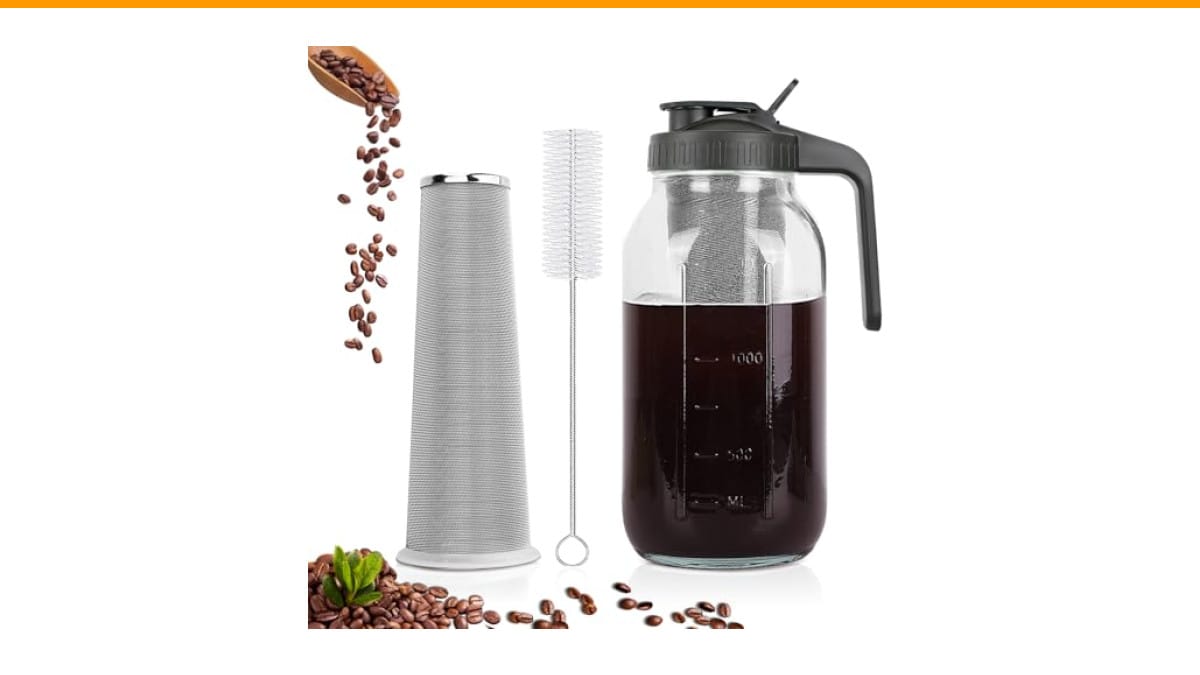
QHH Cold Brew Coffee Maker, 64 oz…
- 【⚠️ Important Usage Warning】: Do not pour boiling water directly into the container; the maximum safe operating temperature is 60°…
- 【What You Will Get】:1 Pcs / 64 oz mason jar pitcher with pour spout lid, 1 stainless stell filter, 1 cleaning brush. Large capacit…
- 【High Quality Material】: The glass pitcher with lid is crafted with heavy duty, food grade soda lime glass and premium plastic lid…
As an Amazon Associate I earn from qualifying purchases.
If you’re using a standard mason jar pitcher, the QHH Cold Brew Coffee Maker works well for this method. Its 64-ounce capacity and fine 160-micron stainless filter handle a strong concentrate without letting grounds slip through. The pour spout lid makes it easy to decant without shaking up the sediment at the bottom.
Myth #1: More Steep Time Means Stronger Coffee
It seems logical. Leave the grounds in water for 24 hours instead of 12, and you’ll get a stronger brew. In reality, extraction hits a wall. After about 18 hours, you’re not pulling more flavor—you’re pulling bitter, woody compounds that make the coffee taste harsh, not strong.
We tested this side by side with the same beans, same grind, same ratio. One batch steeped for 14 hours, another for 24. The 24-hour batch tasted more astringent and flat. The 14-hour batch had a cleaner, more pronounced chocolate note. Strength isn’t just about caffeine content; it’s about perceived intensity. A bitter cup tastes weaker because the flavors clash.
Stick to a window between 12 and 18 hours. If you’re at 14 hours and it tastes weak, the problem is your ratio, not your patience.
Myth #2: A Fine Grind Always Makes Stronger Coffee
Fine grounds extract faster, sure. But they also clog filters and create a muddy, over-extracted brew. In cold brew, the water isn’t hot enough to break down the fines quickly, so you end up with a gritty slurry that’s hard to filter and tastes unbalanced.
The sweet spot is a medium-coarse grind—think kosher salt or raw sugar crystals. This size allows water to flow through the grounds evenly and extract steadily over the long steep. If your grind is too fine, you’ll also lose a lot of liquid to absorption in the sludge, which lowers your final yield.
One trick: if you’re using a blade grinder, pulse it in short bursts and shake the chamber between pulses. That gives you a more even particle size, which matters more for cold brew than for any other method.
How to Actually Make a Stronger Concentrate
Forget the 1:8 ratio you see on most bag labels. That makes a mild, ready-to-drink batch. For a true concentrate, you need a 1:4 or 1:5 ratio of coffee to water by weight.
Here’s the exact recipe we use in testing:
- Weigh out 100 grams of whole beans.
- Grind them to medium-coarse.
- Add 400 grams (400 ml) of filtered water.
- Stir vigorously for 30 seconds to saturate all grounds.
- Steep at room temperature for 14-16 hours.
- Filter twice. Once through your maker’s filter, then through a fine mesh sieve or cheesecloth.
That yields roughly 300 ml of concentrate, which you dilute 1:1 with water or milk. If you want it even stronger, drop the water to 350 grams. But don’t go lower than that—you’ll hit a saturation point where the grounds can’t absorb enough water to extract properly.
Water quality matters too. Hard tap water with high mineral content can dull the flavors. Use filtered water if you have it. It’s not snobbery; it’s chemistry.
One thing we noticed with the QHH pitcher: the 160-micron filter is dense enough that you don’t need a paper filter for the first pass. But you should still do a second filtration through a cloth or sieve to catch the silt that settles at the bottom. That silt is what makes cold brew taste gritty and weakens the perceived strength.
Ratio, Steep Time, and Grind: A Direct Comparison
To make this practical, here’s how the three main variables affect your final cup. We tested all of these with the same beans and water.
| Variable | Weak Result | Strong Result | Why It Works |
|---|---|---|---|
| Coffee-to-water ratio | 1:8 | 1:4 or 1:5 | Less water means a higher concentration of dissolved solids per sip. |
| Steep time | Under 10 hours | 14-16 hours | Enough time for full extraction without pulling bitter tannins. |
| Grind size | Fine (table salt) | Medium-coarse (kosher salt) | Allows even water flow and easy filtering without clogging. |
| Water temperature | Cold from fridge | Room temperature | Cold fridge temps slow extraction; room temp speeds it up. |
Notice the water temperature row. Most people start with refrigerated water. That works, but it slows extraction by several hours. Room temperature water gives you a stronger brew in the same 14-hour window. If you want to use fridge water, add 2-3 hours to the steep time.
What About Caffeine? Can You Make It Stronger?
People often confuse strength with caffeine. Cold brew is usually more caffeinated than drip coffee per ounce, but only because it’s concentrated. If you dilute it 1:1, you’re back to roughly the same caffeine as a regular cup.
To genuinely increase caffeine, you need more coffee grounds, not a longer steep. Caffeine extracts quickly—within the first few hours. After that, you’re just pulling flavor compounds. So a 1:4 ratio with a 14-hour steep will have more caffeine than a 1:6 ratio with a 20-hour steep.
There’s no way around the physics: caffeine comes from coffee mass. If you want a stronger kick, add a few extra grams of beans. Don’t steep longer.
Frequently Asked Questions
Why is my cold brew weak even after 24 hours?
Your ratio is probably too high (too much water). Drop from 1:8 to 1:5 and re-test. Also check your grind—if it’s too coarse, like breadcrumbs, it won’t extract fully. Medium-coarse is the target.
Can I use hot water to speed up the process?
You can, but you’re making flash brew, not cold brew. Hot water extracts faster and gives a different flavor profile. If you do this, keep the water under 140°F (60°C) if you’re using a glass pitcher like the QHH. Pouring boiling water into cold glass can crack it. The manufacturer warns against extreme temperature shifts.
Should I stir the mixture during the steep?
Stir once at the start, then leave it alone. Stirring mid-steep can break up the grounds and release fines, which makes filtering harder and can introduce bitterness. The initial stir is enough to saturate everything.
How do I know when it’s done without tasting it?
You can’t. Taste it. But a good rule: after 14 hours, take a spoonful and taste it. It should be strong and slightly bitter but not harsh. If it tastes watery, give it another 2 hours. Don’t go past 18.
Does the type of bean affect strength?
Yes. Light roasts have more caffeine by volume but taste more acidic and less bold. Dark roasts taste stronger because of the roasty, bitter notes, even though they have slightly less caffeine. For a perceived strong cup, use a medium-dark roast with chocolate or nutty notes. They hold up better to cold extraction.
What Actually Worked in Our Testing
Here’s the short version. Use a 1:4 ratio by weight. Grind medium-coarse. Steep at room temperature for 15 hours. Filter twice. Dilute to taste. That’s it.
- Weigh your beans, don’t scoop them. A scale costs less than a bag of coffee and makes results repeatable.
- Grind right before steeping. Pre-ground coffee from the store is usually too fine and uneven.
- Use filtered water. Tap water with heavy minerals dulls the flavor.
- Steep at room temp, not in the fridge, unless you plan to go 18+ hours.
- Filter twice to remove silt. That silt makes the brew taste weak and gritty.
- Store the concentrate in the fridge for up to 7 days. It doesn’t go bad quickly, but flavor fades after day 5.
- If your maker’s filter clogs, it’s likely your grind is too fine. Back off a notch on your grinder.
One last note on maintenance: a clean brewer makes better coffee. Old coffee oils go rancid and add a bitter, stale flavor that masks strength. If your batches start tasting off, check out our guide on cleaning with vinegar or the broader proper cleaning methods. A quick rinse between batches isn’t enough—you need to scrub the filter with a brush to get the fines out of the weave.
And if your maker seems to be underperforming, sometimes the issue isn’t the recipe. Check the common brew issues page for troubleshooting steps that apply to most brewers.
Products related to this article
Sponsored / affiliate links. As an Amazon Associate I earn from qualifying purchases. I may earn additional commission from eligible campaigns.
 HomeBeyond Espresso Coffee Maker 12 Cups, Classic Stovetop Espresso Maker, 600ml / 20oz Coffeemaker for Gas & Ceramic Stovetops (Silver)
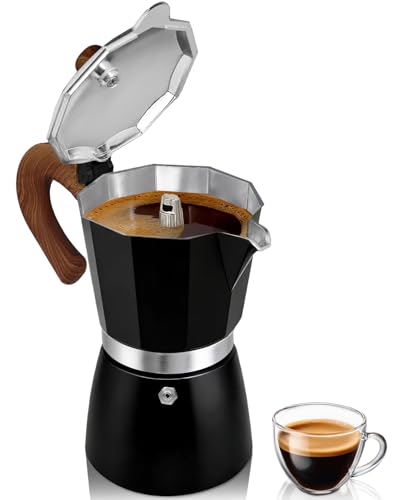 Belly Moka Coffee Maker Stovetop Espresso Maker 9 Cup Aluminum Moka Pot Percolator 15oz 450ml Easy Brewing for Electric Ceramic Stoves Home Camping Italian Cuban Café Classic Black
 Belly Moka Coffee Maker Stovetop Espresso Maker 6 Cup Aluminum Moka Pot Percolator 10oz 300ml Easy Brewing for Electric Ceramic Stoves Home Camping Italian Cuban Café Classic Silver