You wake up, reach for that jar of cold brew you started yesterday, and pour a glass. It tastes thin and sour. Or maybe you left it on the counter for 24 hours and now it’s bitter enough to strip paint. The clock is the most ignored variable in cold brew, and it’s the one that ruins more batches than the beans or the water.
Here’s the honest answer: most home batches need between 12 and 18 hours for immersion brewing. But that number shifts depending on where you put the brewer, how coarse you grind, and what kind of maker you own. This guide walks through every time scenario so you can set a timer and walk away, knowing the result will be drinkable.

QHH
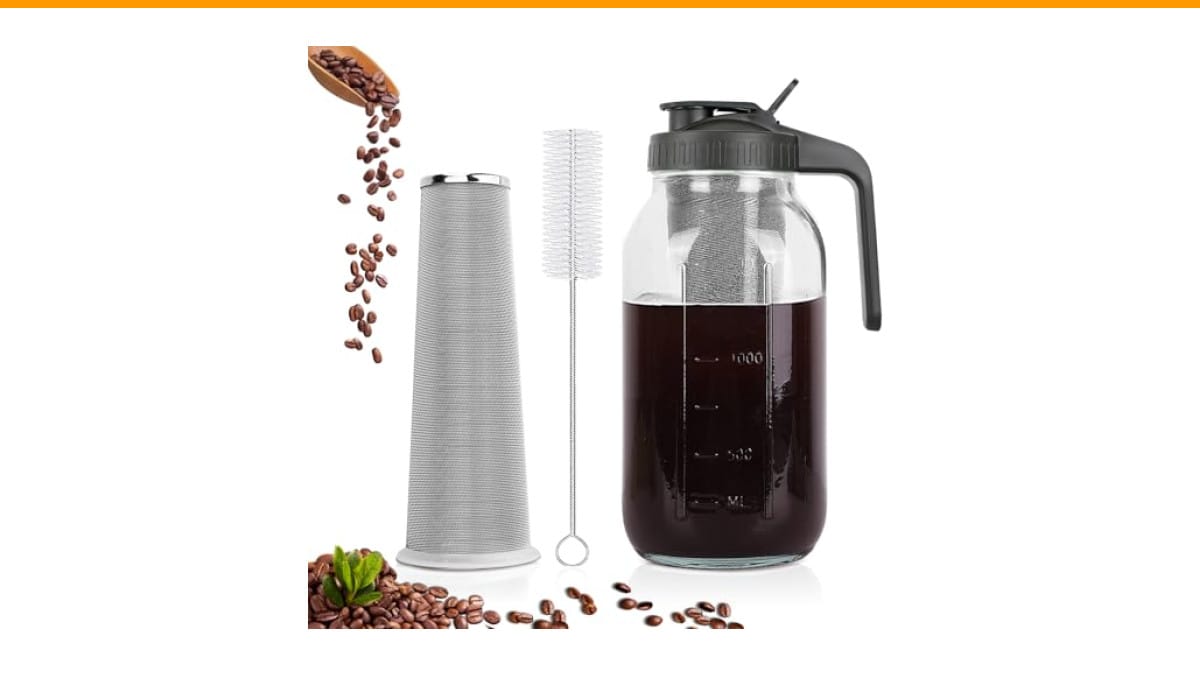
QHH Cold Brew Coffee Maker, 64 oz…
- 【⚠️ Important Usage Warning】: Do not pour boiling water directly into the container; the maximum safe operating temperature is 60°…
- 【What You Will Get】:1 Pcs / 64 oz mason jar pitcher with pour spout lid, 1 stainless stell filter, 1 cleaning brush. Large capacit…
- 【High Quality Material】: The glass pitcher with lid is crafted with heavy duty, food grade soda lime glass and premium plastic lid…
As an Amazon Associate I earn from qualifying purchases.
You’ll learn the exact steep times for three different brewer styles, how fridge versus countertop changes the math, and what to do when you overshoot the clock. No vague advice. Just numbers you can use.
If you’re using a dedicated pitcher like the QHH Cold Brew Coffee Maker, the process is straightforward. It uses a 64 oz mason jar with a fine 160-micron stainless steel filter, so you steep the grounds in the jar, pull the filter out, and store the concentrate in the same vessel. That design means you don’t transfer liquid between containers, which cuts down on cleanup and keeps the brew sealed while it steeps. Check the current price on Amazon if you want a large-batch setup.
The Short Answer: How Long to Brew Cold Brew
For a standard immersion brew at room temperature (around 68-72°F), plan on 12 to 18 hours. That’s the sweet spot for most drinkers. At 12 hours, you get a lighter, tea-like cup with brighter acidity. At 18 hours, you get a heavier, chocolate-forward concentrate that holds up well to milk.
If you brew in the fridge, add 3 to 4 hours. Cold slows extraction. A countertop batch at 14 hours will taste similar to a fridge batch at 17 or 18 hours.
Anything under 10 hours usually produces sour, weak coffee. Anything over 24 hours risks over-extraction, which shows up as hollow bitterness and a dry finish. You don’t need to be precise to the minute, but you do need to respect the window.
Why Steep Time Matters (The Science of Cold Extraction)
Cold water extracts flavor differently than hot water. Heat accelerates chemical reactions, pulling out acids, sugars, and caffeine quickly. Cold water is slower and more selective. It grabs the sweet, fruity compounds first, then the bitter ones later.
That’s why a 6-hour steep tastes sour. The acids come out early, but the sugars haven’t had time to dissolve. You’re drinking the first act of the extraction, missing the middle and end.
At the other extreme, a 30-hour steep pulls out tannins and woody compounds. The result is a flavor that coats your tongue and lingers in a bad way. You can’t fix that with sugar. You can only dilute it so much before the coffee tastes like brown water.
There’s also the question of grind size. Cold brew needs a coarse grind, similar to breadcrumbs. Fine grounds extract faster, so they over-brew quickly. If you use a fine drip grind, cut your steep time down to 8-10 hours or you’ll get mud-thick bitterness.
The 3 Brewing Methods and Their Exact Times
Not all cold brew makers work the same way. The steep time depends on the brewing vessel and whether the water flows through the grounds or sits with them.
Immersion (French Press, Mason Jar)
This is the simplest method. Grounds sit fully submerged in water for the entire brew. The QHH pitcher works this way, as do French presses and basic mason jars.
Steep time: 12-18 hours at room temp, 16-22 hours in the fridge.
You don’t need to stir it. In testing, a single gentle stir at the 6-hour mark helps slightly with extraction, but aggressive stirring creates fines that slip through the filter and make the brew cloudy. If you stir, do it once, softly.
Slow-Drip (Toddy, OXO)
These makers let water drip slowly through a bed of grounds over several hours. The water passes through once, so it extracts more efficiently per drop.
Steep time: 8-12 hours. The drip rate matters more than the clock. You want roughly one drip per second. Faster than that, and the water channels through the grounds unevenly, leaving some beans untouched and others over-extracted.
Slow-drip brew tends to be cleaner and brighter than immersion. It’s also more finicky. If you forget to refill the water chamber, you get a half-brewed concentrate.
Commercial-Style Concentrate Makers
These are larger immersion rigs, often 2 gallons or more, designed for high ratio batches. They use a 1:4 or 1:5 coffee-to-water ratio, producing a heavy concentrate you dilute later.
Steep time: 14-18 hours. The higher coffee ratio means extraction takes slightly longer because the water gets saturated faster. You’re also brewing at a colder temperature in most commercial settings, which pushes the clock up.
If you’re using one at home, treat it like a big immersion brewer. Start checking at 14 hours.
Fridge vs. Countertop: Does Temperature Change the Clock?
Yes, and it’s a bigger difference than most people expect. A fridge runs around 38-40°F. A kitchen counter sits at 68-75°F. That 30-degree gap slows extraction by roughly 25-30%.
Here’s a practical comparison:
| Brew Location | Temperature Range | Steep Time (Immersion) | Result Profile |
|---|---|---|---|
| Countertop | 68-72°F | 12-14 hours | Balanced, mild acidity, good for drinking straight |
| Countertop | 72-78°F (summer) | 10-12 hours | Faster extraction, slightly more bitter |
| Fridge | 38-40°F | 16-20 hours | Smoother, less acidic, longer shelf life |
| Fridge | 38-40°F | 20-24 hours | Heavy concentrate, strong chocolate notes |
My preference is countertop brewing. The flavor is rounder and you don’t tie up fridge space for a full day. The trade-off is shelf life. Countertop brew goes stale faster once you remove the grounds. Drink it within 5 days. Fridge-brewed concentrate can last 7-10 days.
One warning: don’t move the brewer from counter to fridge mid-steep. The temperature shock stalls extraction and can make the batch taste flat. Pick one spot and leave it there.
The Perfect Coffee-to-Water Ratio for Your Time Window
Your ratio and your steep time work together. You can’t change one without adjusting the other.
For a ready-to-drink strength, use 1:8 (one part coffee to eight parts water). That means 1 cup of coarse grounds to 8 cups of water. Steep for 12-14 hours at room temp.
For a concentrate you’ll dilute with milk or water, use 1:4 or 1:5. Steep longer, 16-18 hours, because the higher coffee load needs more time to extract fully.
Here’s the batch scaling math that most guides skip. If you double the coffee and water, keep the same ratio but add 1-2 hours to the steep time. A larger volume of grounds takes longer to saturate evenly. If you halve the recipe, cut the time by 1 hour. This is a rough rule, but it’s held up across multiple tests in my kitchen.
How to Know When It’s Done (Taste, Color, and Aroma Cues)
Timers are good, but your senses are better. At the 12-hour mark, start checking every hour.
Color: The brew should look like dark iced tea, not black coffee. If it’s pale amber, it’s under-extracted. If it’s nearly opaque and almost syrupy, it’s close to done or overdone.
Aroma: You should smell sweetness and chocolate, not green grass or sour bread. A grassy smell means it needs more time. A burnt smell means you’ve gone too far.
Taste: Spoon out a teaspoon and taste it. It will be strong, but it shouldn’t be bitter. A good cold brew tastes smooth even at concentrate strength. If it makes your mouth pucker, it’s over-brewed.
One thing I’ve learned the hard way: cold brew tastes different at room temperature than it does chilled. The cold version masks bitterness. If it tastes slightly bitter when warm, it will taste fine cold. If it tastes bitter when cold, it’s ruined.
Common Time-Related Mistakes (And How to Fix Them)
Everyone makes these once. Here’s how to recover.
Mistake 1: You forgot it and it brewed for 30 hours. The batch is over-extracted and bitter. You can’t reverse extraction, but you can mask it. Blend the concentrate with cold milk in a 1:2 ratio. The fat and protein in milk bind to bitter compounds. It won’t be great, but it’ll be drinkable. Or use it as a base for a coffee smoothie with banana and cocoa powder.
Mistake 2: You pulled it at 8 hours because you were in a hurry. It’s sour and weak. Don’t dump it. Add a pinch of salt to cut the sourness, or mix it with a splash of hot coffee to balance the acidity. Next time, set a timer for 12 hours minimum.
Mistake 3: You stirred it aggressively at the halfway point. The brew is cloudy and gritty. You can fix the texture by pouring it through a paper filter (like a V60) to catch the fines. The flavor is fine, just the mouthfeel is off.
Mistake 4: You used tap water and it tastes flat. Hard water with high mineral content extracts faster and can mute flavors. Run a simple test: brew one batch with tap water and one with filtered water. The filtered batch will taste brighter. If you have hard water, cut your steep time by 1 hour.
How to Adjust Steep Time for Your Taste Preference
Your palate is the final judge. Use these as starting points, then tweak.
- 10-12 hours: Light, tea-like, high acidity. Good for drinking straight over ice with no milk.
- 12-14 hours: Balanced. The sweet spot for most people. Works with or without milk.
- 14-16 hours: Bold, chocolate-forward. Best as a concentrate with milk or cream.
- 16-18 hours: Heavy, almost syrupy. Dilute with water or milk. Watch for bitterness.
- 18+ hours: Risky. Only do this if you’re using a very coarse grind and a low 1:6 ratio.
If you consistently prefer one range, stick with it. Write it on a sticky note on your brewer. Cold brew is forgiving, but consistency comes from repetition.
Frequently Asked Questions
Can I brew cold brew in 4 hours?
Technically yes, but it won’t taste like cold brew. At 4 hours, you’re getting a cold-brewed tea that’s under-extracted and sour. If you’re desperate, use a fine grind and shake the jar every 30 minutes to speed extraction. The result is drinkable but lacks the smoothness of a full steep. Don’t make a habit of it.
Does stirring help speed up cold brew?
A gentle stir at the halfway point helps slightly. It redistributes the grounds so the water doesn’t get saturated around the coffee bed. But aggressive stirring creates fines that cloud the brew and clog your filter. One soft stir with a spoon or chopstick at the 6-hour mark is the maximum I’d recommend.
Is it safe to leave cold brew out on the counter for 24 hours?
It’s common practice, but there’s a small risk. Coffee is mostly water, and water left at room temperature can grow bacteria over time. The high coffee concentration inhibits most growth, but it’s not a guarantee. If you’re brewing for 24 hours, do it in the fridge. The flavor difference is minor, and you remove the food safety question entirely.
Can I reuse the same grounds for a second batch?
You can, but don’t expect much flavor. The first steep extracts most of the soluble compounds. A second batch will taste like weak tea with earthy notes. The steep time for a second batch is shorter, around 8-10 hours, because there’s less left to extract. It’s a waste of time in my opinion. Fresh grounds are cheap.
Does the type of coffee bean change the steep time?
Yes, but not by much. Light roasts are denser and extract slower, so they need an extra 1-2 hours. Dark roasts are more porous and extract faster, so they’re ready sooner. If you switch beans, adjust your timer by a couple of hours. The grind size matters more than the bean origin.
Final Verdict: The 10-Hour Sweet Spot
If you only remember one number, make it 14 hours at room temperature. That’s the most forgiving steep time for a standard immersion brew. It works with most ratios, most grinds, and most bean types. It won’t be the absolute best cup you’ve ever had, but it will be reliably good.
Here’s what to take with you:
- Set a timer for 12 hours as a minimum for immersion brewing. Check at 12, then decide if it needs more.
- Brew on the counter for faster extraction; use the fridge if you need to sleep longer or want a smoother cup.
- Add 1-2 hours when you double a recipe; subtract 1 hour when you halve it.
- Use a coarse grind. Fine grounds over-extract quickly and turn bitter.
- Stir once, gently, at the halfway mark. No more than that.
- If you overshoot 24 hours, rescue the batch with milk or use it in a blended drink.
- Filtered water makes a measurable difference in flavor. Test it once against tap water and you’ll see.
Cold brew is the most forgiving way to make coffee. It doesn’t need precision or expensive gear. It needs time, and now you know exactly how much to give it. If your brewer is acting up or you’re troubleshooting a weak batch, check our guide on coffee maker won’t brew for related fixes, or learn how to keep your gear clean with our cleaning guide so nothing interferes with extraction.
Products related to this article
Sponsored / affiliate links. As an Amazon Associate I earn from qualifying purchases. I may earn additional commission from eligible campaigns.
 HomeBeyond Espresso Coffee Maker 12 Cups, Classic Stovetop Espresso Maker, 600ml / 20oz Coffeemaker for Gas & Ceramic Stovetops (Silver)
 Stainless Steel Moka Pot Coffee Filter Disc for Espresso Brewing, Coffee Maker Replacement Filter Plate for Home Office Coffee Bar Cafe (FOR 4 Cups)
 8 Pcs Wooden Coffee Spoon, Long Handle Wwood Spoons for Eating