You wake up, stumble to the kitchen, and fill your coffee maker with water from a Brita pitcher. It feels like the right move—better taste, less scale. But somewhere in the back of your mind, you wonder: is that pitcher quietly running up my electric bill? Does it need power to filter? Am I paying for something I don’t know about?
Here’s the plain truth: a water filter pitcher uses zero electricity. Zero watts. Zero kilowatt-hours. It’s a passive device—gravity pulls water through a carbon block, and that’s it. But that’s not the whole story. The energy question gets interesting when you look at the entire brewing workflow: the coffee maker, the kettle, the fridge you store the pitcher in, and even the long-term efficiency of your machine. That’s what we’ll dig into here.
BRITA
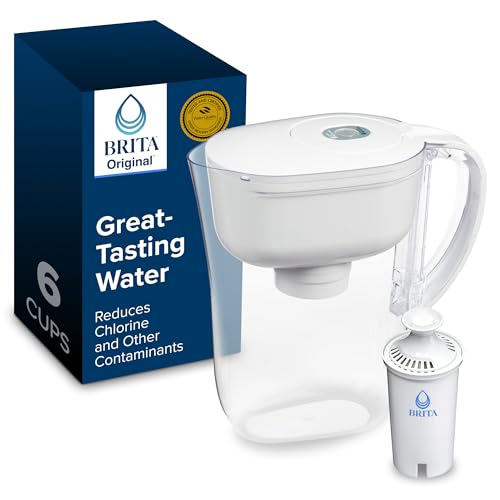
Brita Small 6-Cup Water Filter Pitcher, Includes…
- CERTIFIED WATER FILTRATION: WQA NSF/ANSI certified Brita Metro water filter pitcher reduces chlorine taste and odor, copper, mercu…
- SMARTLIGHT FILTER INDICATOR: Brita's most accurate and precise pitcher filter change indicator tells you exactly when to replace y…
- MINI-FRIDGE-FRIENDLY DESIGN: This 6-cup BPA-free water pitcher is space-efficient and fits in most mini-fridges; easy-fill lid mak…
As an Amazon Associate I earn from qualifying purchases.
By the end, you’ll know exactly what each part of your coffee routine costs in electricity, how a pitcher compares to an electric kettle and a drip maker for the same cup, and why filtered water might actually save you money on your power bill over time—not by using less energy directly, but by keeping your coffee maker running efficiently for longer.
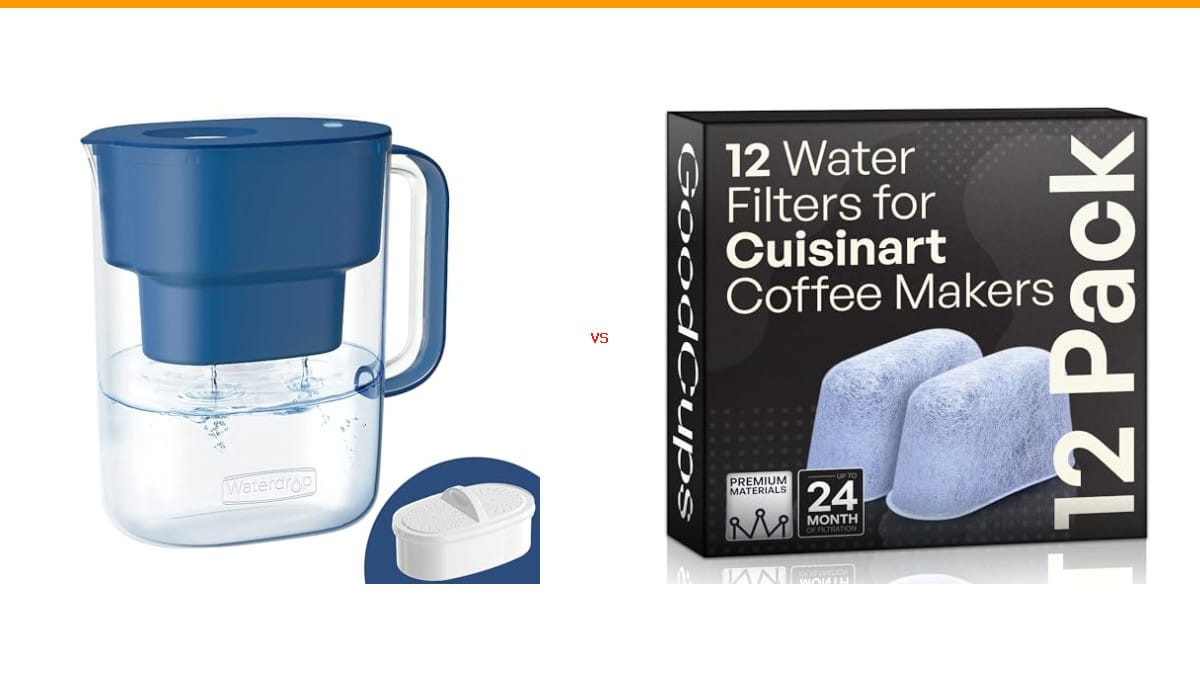
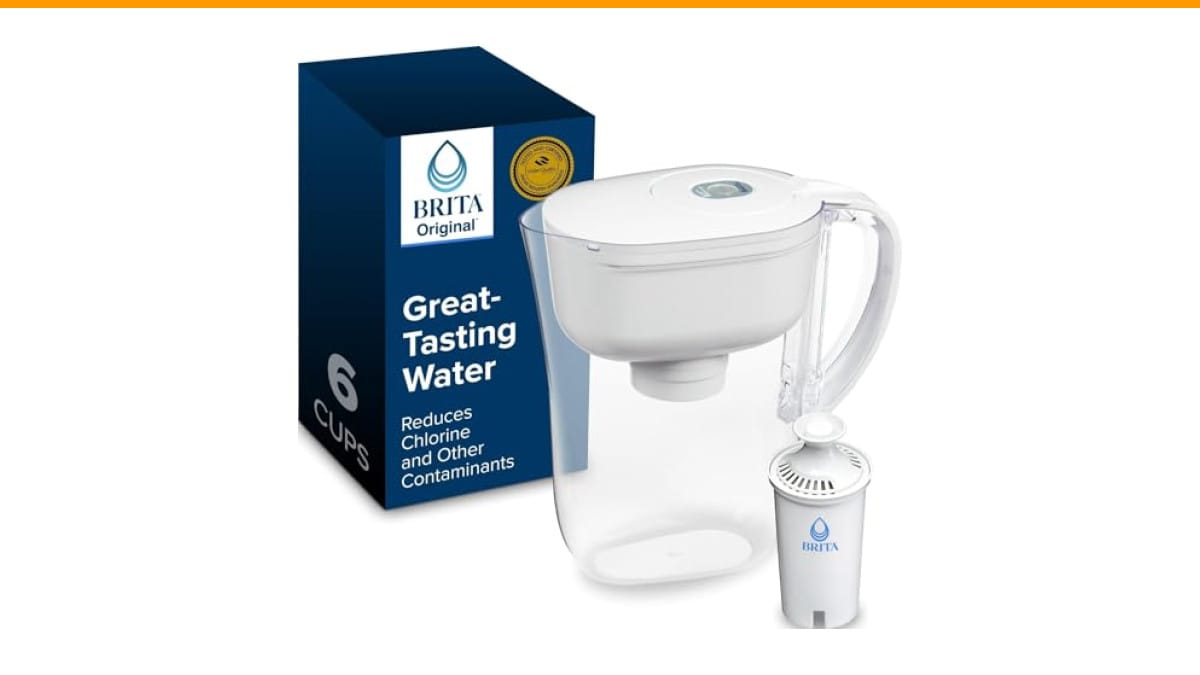
If you’re in the market for a simple, no-power filtration solution, the Brita Small 6-Cup Water Filter Pitcher is a solid pick. It’s compact enough for a mini-fridge, includes a standard filter, and has a SmartLight indicator that tells you when to swap the filter—every 40 gallons or about two months. It’s the kind of thing you set and forget, and it costs nothing to run.
The Short Answer: Why a Pitcher Uses Zero Electricity
Let’s get the headline out of the way: a water filter pitcher has no plug, no motor, no heating element. It’s a plastic container with a filter cartridge. Water sits in the top chamber, gravity pulls it through the filter media, and it collects in the bottom chamber. That’s the entire mechanism.
Compare that to a countertop water dispenser, which needs a compressor to cool water and a heating element for hot water. Those units can draw anywhere from 100 to 800 watts depending on whether they’re heating or cooling. A pitcher? Zero watts, always.
So when someone asks, “How much electricity does a water filter pitcher for coffee use?” the answer is literally zero. The only energy associated with a pitcher is the energy you use to fill it from your tap and the energy your fridge uses to keep it cold—if you store it there. We’ll get to that fridge factor in a bit.
This is why I call the pitcher the “zero-watt hero” of the coffee workflow. Every other piece of gear—the grinder, the kettle, the brewer—consumes power. The pitcher is the only component that contributes clean water without adding a single watt to your bill.
Breaking Down the Brewing Process: Where the Power Actually Goes
To understand your true energy cost per cup, you need to look at the whole chain. For a typical drip coffee setup, the power draw happens in two places: the coffee maker itself and, if you’re boiling water separately, the kettle. The pitcher isn’t one of them.
The Coffee Maker (The Real Energy Hog)
A standard drip coffee maker draws between 600 and 1,200 watts while brewing. The heating element is the culprit—it has to bring cold water from your tap (or pitcher) up to around 200°F. The brew cycle for a full pot usually takes 6 to 10 minutes.
Let’s do the math. Say your coffee maker uses 900 watts and runs for 8 minutes. That’s 900 watts × 0.133 hours (8 minutes is 0.133 hours) = 120 watt-hours, or 0.12 kWh. At the U.S. average electricity rate of about 16 cents per kWh, that’s roughly 2 cents per pot. Brew one pot a day, and that’s about 60 cents a month.
But here’s the catch: many drip makers keep the heating plate on for hours after brewing. That’s a separate heating element, often drawing 50 to 100 watts. If you leave the carafe on the hot plate for two hours, you’re adding another 0.1 to 0.2 kWh—doubling your cost. The pitcher doesn’t cause this, but the habit of leaving the brewer on does.
The Kettle (If You Boil Manually)
For pour-over or French press, you’re using a kettle. An electric kettle draws 1,200 to 1,500 watts, but it only runs for 2 to 4 minutes to boil 500 ml of water. That’s 1,500 watts × 0.05 hours = 75 watt-hours, or 0.075 kWh. At 16 cents per kWh, that’s about 1.2 cents per boil.
A stovetop kettle uses gas or electric heat. If you have an electric stove, a burner draws about the same as an electric kettle—1,200 to 1,500 watts—but it takes longer to heat because the heat transfers through the metal. You might run the burner for 5 to 6 minutes, which pushes the cost to 1.5 to 2 cents per boil. Gas is cheaper per BTU, but the efficiency loss from open flame means you’re still paying roughly the same.
So the kettle adds about a cent or two to your cup. The pitcher adds nothing.
Calculating Your True Cost Per Cup (Pitcher vs. Drip vs. Kettle)
Let’s put this side by side. The table below compares the energy cost for making a single 12-ounce cup of coffee using different methods. I’ve assumed a typical U.S. electricity rate of 16 cents per kWh, and I’m including only the brewing energy—not the water heating for the pitcher (which is tap water, so no energy) and not the fridge storage (which we’ll cover next).
| Method | Power Draw (Watts) | Active Time (Minutes) | Energy Used (kWh) | Cost per Cup |
|---|---|---|---|---|
| Drip coffee maker (full pot) | 900 | 8 | 0.12 | 2.0 cents |
| Electric kettle (pour-over) | 1,500 | 3 | 0.075 | 1.2 cents |
| Stovetop kettle (electric stove) | 1,200 | 5 | 0.10 | 1.6 cents |
| Single-serve pod machine (e.g., Keurig) | 1,200 | 1 | 0.02 | 0.3 cents |
| Water filter pitcher | 0 | 0 | 0 | 0 cents |
Notice the single-serve pod machine looks cheap per cup—0.3 cents—but that ignores the fact that most pod machines keep water hot all day in an internal tank. That standby draw can be 100 to 200 watts continuously, which adds up to 2.4 to 4.8 kWh per day if left on. That’s 38 to 77 cents a day, or $11 to $23 a month. The pitcher has no standby draw because it has no power at all.
So the real cost isn’t per cup; it’s per day. A drip maker that’s left on the hot plate for two hours costs about 4 cents per day. A Keurig left on all day costs 50 cents or more. The pitcher? Zero.
The Hidden “Fridge Factor”: Does Storing Water Cost Energy?
Here’s a question most people don’t think about: does keeping your pitcher in the fridge increase your electricity bill? The answer is yes, but it’s tiny—and it’s not the pitcher’s fault.
Your fridge works by removing heat from the interior. Every time you open the door, warm air enters, and the compressor runs to cool it back down. A pitcher full of water acts as a thermal mass. When you put it in the fridge, the water is at room temperature, so the fridge has to cool it down. That initial cooling takes energy—roughly 0.02 kWh to chill 2 liters of water from 70°F to 40°F. At 16 cents per kWh, that’s about a third of a cent.
Once the water is cold, it actually helps the fridge stay cold. The thermal mass of the water stabilizes the temperature, so the compressor cycles on less often. Over a week, you might save a fraction of a cent—or break even. The net effect is negligible.
Contrast that with a countertop electric water dispenser, which has a compressor running continuously to keep water cold. Those draw 50 to 100 watts even when idle. Over a month, that’s 36 to 72 kWh, or $5.76 to $11.52. A pitcher in the fridge costs you nothing after the initial cooldown.
So the “fridge factor” is a myth in terms of cost. The fridge is running anyway; the pitcher is just a passenger.
The Scale Effect: How Filtered Water Extends Coffee Maker Lifespan
This is the part that most energy guides miss. Hard water contains calcium and magnesium ions. When you heat water in your coffee maker, those ions precipitate out as scale—a chalky buildup that coats the heating element and internal tubes.
Scale is an insulator. It traps heat inside the element, so the element has to work harder and run longer to reach the target temperature. A coffee maker with significant scale can draw the same wattage but take 20% to 30% longer to brew. That means your 8-minute brew becomes 10 minutes, and your energy cost per pot goes up by that same percentage.
Filtered water from a pitcher removes most of those minerals. The Brita filter reduces calcium and magnesium, along with chlorine, copper, and mercury. That means less scale buildup, which means your coffee maker maintains its original efficiency. Over a year, that could save you a few dollars in electricity—not a fortune, but it also extends the life of your machine.
I’ve seen coffee makers with severe scale that took nearly twice as long to brew. The heating element was so coated that it couldn’t transfer heat effectively. If you want your machine to last, filtered water is a cheap insurance policy. And since the pitcher costs nothing to run, the only expense is the filter itself—about $5 to $8 per month, which is far less than a new coffee maker.
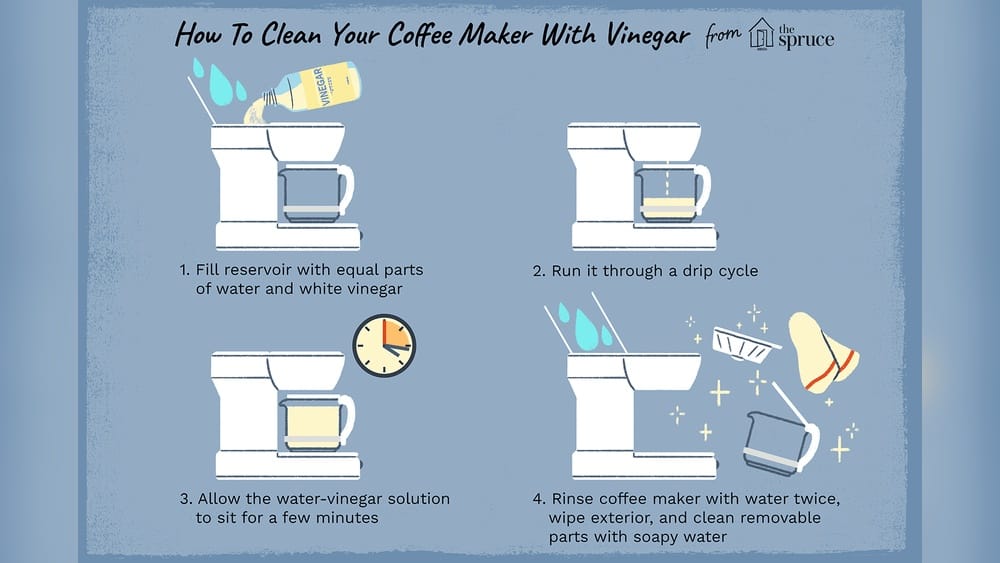
If you’re dealing with an existing scale problem, check out our guide on cleaning coffee makers to restore efficiency before you switch to filtered water.
Comparing Total Energy Footprint: Pitcher vs. Countertop Filtration Systems
You might be considering a countertop water filter that plugs in—the kind with a UV light or a motorized pump. Those systems use electricity, but how much?
Let’s break it down. A typical countertop reverse osmosis system has a pump that draws 20 to 30 watts, but it only runs during production, which might be 10 minutes per gallon. That’s about 4 watt-hours per gallon—negligible. However, many of these systems have a storage tank with a float valve, and some have a UV sterilizer that runs 24/7. A UV lamp can draw 14 watts, which adds up to 0.336 kWh per day, or about 10 kWh per month. At 16 cents per kWh, that’s $1.60 per month just for the UV.
Then there are electric water dispensers that heat and cool water. These are the energy hogs, as I mentioned earlier. A hot/cold dispenser can draw 500 watts when heating and 100 watts when cooling. If it cycles on and off throughout the day, the total energy use can be 1 to 2 kWh per day, or $5 to $10 per month.
Compare that to a pitcher: zero watts, zero cost. The only energy footprint is the fridge space it occupies, which we’ve already shown is negligible. If you’re choosing between a plug-in filtration system and a pitcher, the pitcher wins on energy hands down.
That said, a plug-in system might be worth it if you need large volumes of filtered water for drinking and cooking, not just coffee. But for coffee specifically, a pitcher is all you need—and it costs nothing to run.
Frequently Asked Questions
Does a Brita pitcher use electricity?
No. A Brita pitcher is a passive gravity filter. It has no electrical components, no plug, and no battery. It filters water through a carbon block using gravity alone. The only electricity involved is what your fridge uses to keep it cold, which is negligible—about a third of a cent for the initial cooldown, then nothing.
Is it cheaper to use a pitcher than a Keurig?
It depends on what you mean by “cheaper.” A pitcher itself costs nothing to run, but you have to replace the filter every 40 gallons or two months—about $5 to $8. A Keurig uses electricity, and if you leave it on all day, the standby draw can add $10 to $20 to your monthly bill. Plus, K-Cups cost more per cup than ground coffee. So yes, using a pitcher with a drip maker or pour-over is cheaper both in electricity and in coffee cost.
Does cold water brew faster in a coffee maker?
No. Coffee makers are designed to heat cold water to brewing temperature. If you use cold water from the fridge, the heating element has to work a little longer to bring it up to temperature—about 10% longer for water at 40°F vs. 70°F. That adds a few seconds to the brew cycle and a tiny amount of energy. Using room-temperature water from a pitcher stored on the counter is actually more efficient. But the difference is so small it’s not worth worrying about.
Does filtered water prevent scale in coffee makers?
Yes, to a large degree. Filtered water from a pitcher reduces calcium and magnesium, which are the minerals that form scale. It doesn’t remove all of them, but it significantly reduces buildup. A coffee maker with less scale will maintain its heating efficiency and last longer. That’s a real energy saving over time, because a scaled-up machine uses more electricity to brew the same amount of coffee.
Can I use a pitcher for pour-over coffee?
Absolutely. A pitcher is perfect for pour-over. You can store it on the counter or in the fridge, and you’ll have filtered water ready to boil in a kettle. The only downside is that the pitcher doesn’t heat water—you’ll still need a kettle. But the energy cost of boiling water is the same whether you use filtered or tap water, so you’re not adding any extra electricity use.
What You Actually Need to Remember
- A water filter pitcher uses 0 watts—no electricity, no standby draw, no phantom load.
- The coffee maker is the real energy cost: about 2 cents per pot, plus up to 4 cents per day if you leave the hot plate on.
- An electric kettle adds another 1 to 2 cents per boil, depending on your stove type.
- Storing the pitcher in the fridge costs about a third of a cent for the initial cooldown, then nothing—the thermal mass actually helps the fridge run less.
- Filtered water reduces scale buildup, which keeps your coffee maker efficient and can save you money on electricity over time.
- Countertop electric filtration systems with UV or heating elements can cost $5 to $10 per month to run—a pitcher is $0.
- If you’re comparing energy footprints, the pitcher is the only zero-watt appliance in your coffee workflow. That’s the whole point.
So next time someone asks you how much electricity a water filter pitcher for coffee uses, you can tell them: none. It’s the rare kitchen item that costs nothing to run, does its job without a cord, and even helps your coffee maker live longer. That’s a win in my book.
If you’re already dealing with a slow or noisy coffee maker, it might be scale. Check our article on coffee machine maintenance for tips, and consider switching to filtered water to prevent future buildup.
For more coffee gear insights, including kitchen hacks and brewing guides, browse the rest of CafeNFood.
Products related to this article
Sponsored / affiliate links. As an Amazon Associate I earn from qualifying purchases. I may earn additional commission from eligible campaigns.
 SOLUSTRE Electric USB Coffee Cup Warmer with Temperature Settings Portable Milk and Beverage Heating Coaster for Office Desk Small Lightweight Design Easy to Clean Surface Multi Functional
 Stainless Steel Moka Pot Coffee Filter Disc for Espresso Brewing, Coffee Maker Replacement Filter Plate for Home Office Coffee Bar Cafe (FOR 4 Cups)
 Dawn Ultra Gentle Clean 2x Grease Cleaning Power Dish washing Liquid, Pomegranate Rosewater Scent 16.2 oz