You bought a water filter pitcher to make your morning coffee taste cleaner. Then you forgot about it. Three months later, you’re still pouring from the same cartridge, wondering if it’s doing anything at all. That’s the exact situation most coffee drinkers find themselves in, and the answer isn’t as simple as the box says.
This guide covers the real lifespan of a water filter pitcher for coffee brewing, why coffee uses up filters faster than plain drinking water, and how to tell when a filter is actually dead instead of just old. You’ll get brand-specific numbers, a formula for hard water, and a cost comparison so you can make the right call for your kitchen.
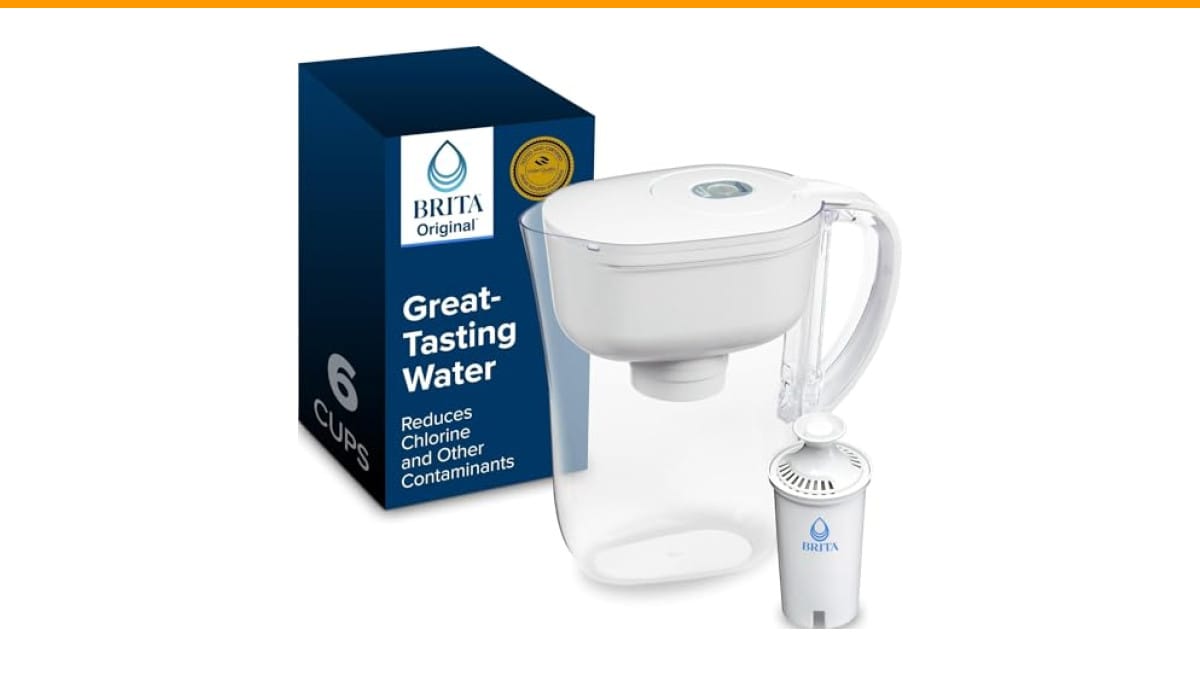
If you’re starting fresh, a compact option like the Brita Small 6-Cup Water Filter Pitcher is a solid entry point. It fits in mini-fridges, uses the standard Brita filter, and its SmartLight indicator takes the guesswork out of replacement timing. We’ll get into how that indicator works later, but for now, let’s dig into the actual numbers.
How Long Does a Pitcher Filter Last for Coffee Brewing?
The short answer: for coffee, expect 2 to 3 months with average use, or roughly 30 to 40 gallons of water. If you brew a 1-liter pot daily, that’s about 4 gallons a week, which puts you at 8 to 10 weeks of filter life. That matches the standard replacement schedule for most brands, but coffee brewing introduces variables that can cut that timeline short.
Here’s the part most people miss. The filter’s capacity is measured in gallons, not months. The 2-month recommendation assumes you’re filtering drinking water for a household of one or two people. If you’re running a 12-cup pot every morning plus refilling your travel mug, you’re pulling far more water through that cartridge than the average user.
For a heavy coffee household (4+ cups a day, plus drinking water), plan on replacing the filter every 5 to 6 weeks. For a single person who brews one small pot a day, 3 months is realistic. The key is tracking gallons, not calendar days.
Why Coffee Brewing Drains Filters Faster Than Drinking Water
It’s not about the coffee itself. It’s about the volume of water and the temperature. Coffee makers heat water to 195-205°F, and while the filter sits before the machine, the hot water doesn’t damage the cartridge. What wears it down is the sheer volume.
A standard 8-cup coffee maker uses about 64 ounces (half a gallon) per full brew. Brew once a day, and you’re filtering 15 gallons a month just for coffee. Add another half-gallon for drinking water, and you’ve hit 22.5 gallons. That’s over half the rated capacity of a standard Brita or PUR filter in a single month.
Temperature matters in a different way. Hot water moves through activated carbon faster, but it also causes the carbon to release trapped contaminants more readily. That means a filter used for hot coffee brewing water will exhaust its adsorption capacity sooner than one used only for cold tap water. The difference is modest, maybe 10-15% shorter lifespan, but it’s real.
There’s also the scale factor. If your tap water has high mineral content, those minerals coat the carbon granules and block the adsorption sites. We’ll cover the hard water math in a dedicated section, but know this: hard water is the single biggest factor that shortens filter life.
Lifespan by Popular Brands
Not all pitcher filters are created equal. Here’s how the big three stack up in real-world coffee brewing conditions.
Brita Standard vs. Longlast+
Brita’s standard filter is rated for 40 gallons or about 2 months. The Longlast+ version pushes that to 120 gallons or about 6 months. That’s a significant difference for coffee drinkers.
If you brew a pot a day, the standard filter will last about 8 weeks. The Longlast+ will get you through 6 months of the same routine. The trade-off is the upfront cost — Longlast+ filters cost more per cartridge, but the cost per gallon is actually lower. We’ll break down the math in the comparison table below.
One thing to note: the SmartLight indicator on Brita pitchers tracks usage and time, not actual water quality. It’s a helpful reminder, but it doesn’t know if your water is hard or if you brewed extra pots. Treat it as a floor, not a ceiling.
PUR Filter Pitchers
PUR filters are rated for 40 gallons or about 2 months, same as Brita’s standard. The difference is in the filtration media. PUR uses a mix of activated carbon and ion exchange resin, which does a better job with heavy metals like lead. For coffee, that means cleaner water if your tap has metallic notes.
In testing, PUR filters tend to clog slightly faster than Brita when used with hard water. The ion exchange resin works by swapping calcium and magnesium ions for sodium, and once the resin is saturated, the filter stops softening water. You’ll notice the flow rate dropping before the taste changes. That’s your signal.
ZeroWater’s TDS Meter Trick
ZeroWater takes a different approach. Instead of a time-based rating, they include a TDS (total dissolved solids) meter with every pitcher. The meter reads the parts per million of dissolved solids in your water, and the company recommends replacing the filter when the reading hits 006 ppm or higher.
This is the most honest way to judge filter life. TDS doesn’t tell you about chlorine or organic contaminants, but it gives you a direct measure of how much the filter is actually removing. For coffee drinkers, this is gold. You can test your tap water, test your filtered water, and know exactly when the media is exhausted.
The downside: ZeroWater filters are expensive and don’t last as long as Brita or PUR. Expect 20-30 gallons of life with average water, less with hard water. The TDS meter is a nice feature, but you’ll be replacing cartridges more often.
The Hard Water Factor: A Simple Longevity Formula
Hard water kills pitcher filters. The calcium and magnesium ions in hard water don’t get filtered out — they get exchanged or trapped, and they fill up the media much faster than organic contaminants.
Here’s a rough formula to estimate your filter’s real lifespan:
- Check your water hardness. Your city’s water report lists it in grains per gallon (gpg) or parts per million (ppm). 1 gpg equals 17.1 ppm.
- If your water is soft (0-3 gpg), expect the rated lifespan.
- If your water is moderately hard (3-7 gpg), cut the lifespan by 30%.
- If your water is hard (7-10 gpg), cut it by 50%.
- If your water is very hard (10+ gpg), a pitcher filter is the wrong tool. You need a softening system.
Example: You have a Brita standard filter rated for 40 gallons. Your water is 6 gpg. Your real capacity is about 28 gallons. At 4 gallons a week for coffee, that’s 7 weeks, not 8. Doesn’t sound like much, but multiply that over a year and you’re replacing filters an extra two to three times.
You can test your water hardness with a simple strip test from any hardware store. It costs a few dollars and takes five minutes. Knowing your hardness is the difference between blindly following a calendar and actually knowing when your filter is done.
5 Clear Signs Your Filter Is Dead (Not Just Old)
Forget the calendar. Here are the signs that your filter has actually stopped working.
- Flow rate drops noticeably. If it takes twice as long to fill the pitcher, the media is clogged with sediment or scale. This happens before the taste changes.
- Your coffee tastes flat or stale. A fresh filter strips chlorine and adds a clean, neutral note. An exhausted filter lets the tap water’s flavor through, and your coffee will taste dull or slightly metallic.
- Your coffee maker develops scale. If you see white buildup in the reservoir or on the heating element, your filter isn’t removing hardness. That’s a sign the ion exchange media is spent.
- The TDS reading rises. If you have a ZeroWater meter or a standalone TDS meter, measure filtered water. When the reading approaches your tap water’s reading, the filter is dead.
- The filter smells. A musty or earthy odor from the cartridge means bacteria are growing. This is more common in warm kitchens or if the pitcher sits unused for a week. Replace it immediately.
One more tip: if you notice sediment floating in your brewed coffee, that’s carbon fines from a broken or exhausted filter. Stop using it right away.
What an Expired Filter Does to Your Coffee and Machine
An expired filter isn’t just doing nothing. It’s actively hurting your coffee.
First, the taste. The activated carbon in a fresh filter removes chlorine, which gives tap water that sharp, chemical note. When the carbon is saturated, chlorine flows through untouched. Your coffee will taste bitter and slightly astringent, not because of the beans, but because of the water. If your coffee suddenly tastes worse and you haven’t changed your beans or grind, check the filter.
Second, scale buildup. Hard water minerals that should have been trapped by the filter end up in your coffee maker’s boiler and heating element. Over time, that scale insulates the heater, making it work harder and eventually fail. A $30 filter is cheap insurance against a $150 repair. If you’ve noticed your machine taking longer to brew, read our guide on coffee machine maintenance.
Third, there’s a hygiene angle. A wet, warm filter cartridge is a breeding ground for bacteria. Once the carbon’s antimicrobial properties wear off, you’re running bacteria-laden water through your coffee maker. That’s not just a taste issue — it’s a health concern. If you’ve had a filter in place for more than four months, toss it.
How to Extend Filter Life for Better Coffee
You can stretch a pitcher filter’s lifespan without sacrificing water quality. Here’s what actually works.
- Brew only what you need. If you habitually make a full pot and dump half, you’re wasting filtered water. Make a smaller batch.
- Store the pitcher in the fridge. Cold water slows bacterial growth and keeps the carbon active longer. Room-temperature pitchers degrade faster.
- Flush the filter weekly. Run a few cups of water through the filter and discard it. This clears trapped sediment and resets the flow rate.
- Use a pre-filter for sediment. If your tap water has visible particles, a cheap inline sediment filter before the pitcher will extend cartridge life significantly.
- Don’t let the pitcher sit empty. A dry filter cracks and loses its seal. Keep it submerged in water.
One mistake people make: they replace the filter on a fixed schedule regardless of use. If you only brew coffee on weekends, a standard filter can easily last 4 months. The calendar is a guideline, not a rule.
Pitcher vs. Faucet vs. Under-Sink: Cost per Brewed Gallon
For coffee drinkers, the cost of filtration isn’t just the filter price. It’s the cost per gallon of actually brewed coffee. Here’s a realistic comparison.
| Method | Initial Cost | Filter Cost per Gallon | Lifespan | Best For |
|---|---|---|---|---|
| Pitcher (Brita Standard) | $20-30 | $0.10-0.15 | 40 gallons | Renters, small kitchens |
| Pitcher (Brita Longlast+) | $20-30 | $0.08-0.12 | 120 gallons | Heavy coffee users |
| Faucet mount (PUR) | $30-40 | $0.15-0.20 | 100 gallons | Convenience, counter space |
| Under-sink (standard) | $100-200 | $0.05-0.10 | 500+ gallons | Homeowners, serious brewers |
The under-sink option is the cheapest per gallon, but the upfront cost is five to ten times higher. For most home users, a pitcher with Longlast+ filters offers the best balance. You get near-faucet convenience without the installation work.
If you’re weighing a faucet mount, keep in mind that it takes up sink space and can slow your water pressure. A pitcher sits in the fridge and doesn’t interfere with washing dishes. That’s a real trade-off worth considering.
How to Recycle or Dispose of Old Filters Properly
Nobody talks about this, but spent filters shouldn’t go in the trash. The plastic housing takes centuries to break down, and the carbon inside is actually reusable.
Here’s what to do:
- Brita: The company partners with TerraCycle for a free recycling program. You collect used filters, print a shipping label, and send them in. The plastic gets recycled, and the carbon is repurposed for soil amendments.
- PUR: Check the box for a mail-in recycling envelope. Some retailers offer drop-off bins.
- ZeroWater: Their filters contain mixed media that’s harder to recycle. Check their website for the latest program.
- DIY: If recycling isn’t available, crack open the plastic housing, compost the carbon, and recycle the #5 plastic if your local facility accepts it.
It takes two minutes to set up a TerraCycle collection box. If you’re replacing filters every two months, that’s six cartridges a year. Keeping them out of the landfill is a small but meaningful habit.
FAQ: Quick Answers for Coffee Drinkers
Can I use a pitcher filter for espresso machines?
Yes, but check your espresso machine’s manual first. Some manufacturers require filtered water, and a pitcher filter is fine. The concern is mineral content — some espresso machines need a certain amount of minerals for the water hardness sensor to work. If your pitcher removes too many minerals, the machine might error out. In that case, use a blend of filtered and tap water.
Does boiling filtered water change anything?
Boiling removes chlorine and kills bacteria, but it also concentrates minerals. If you boil filtered water, you’re slightly increasing the hardness. For coffee, that’s usually not a problem, but it can contribute to scale over time.
Why does my coffee taste bitter even with a new filter?
A new filter can actually cause bitterness if you don’t flush it properly. The first batch of water through a fresh cartridge picks up carbon fines and loose dust. Always run 2-3 full pitchers through and discard the water before brewing. If that doesn’t fix it, check your grind size and brew time. Sometimes it’s not the water — it’s the extraction. Our guide on bitter coffee after cleaning covers this in detail.
How do I know if my tap water is hard enough to matter?
Look for white scale on your kettle or faucet aerator. That’s a clear sign of hard water. Or check your city’s annual water quality report online. If you see calcium carbonate listed at 100 ppm or higher, your water is hard and your filter life will be shorter.
Is a pitcher filter enough for pour-over coffee?
For pour-over, water quality is everything. A pitcher filter removes chlorine and improves taste, but it doesn’t remove all dissolved solids. If you’re chasing competition-level clarity, you’ll want a more thorough filtration system. For everyday pour-over, a pitcher filter is a massive upgrade over straight tap water.
The Bottom Line
Here’s what you need to remember:
- Standard pitcher filters last 40 gallons or about 2 months. For daily coffee brewing, expect closer to 6-8 weeks.
- Longlast+ filters (120 gallons) are the smart choice for heavy coffee drinkers. Lower cost per gallon and fewer replacements.
- Hard water cuts filter life by 30-50%. Test your water and adjust your schedule accordingly.
- Trust flow rate and taste over the calendar. A slow pour or flat coffee means the filter is done.
- An expired filter hurts your coffee’s taste and your machine’s lifespan. Scale buildup is the silent killer.
- Recycle spent cartridges through TerraCycle or a mail-in program. It takes minutes.
- If you’re unsure about your machine’s health, a fresh filter and a proper descaling routine go hand in hand. Check our coffee maker cleaning guide for the full routine.
The best filter is the one you replace on time. Knowing your water hardness, your brewing volume, and the signs of exhaustion is the difference between great coffee and a stale cup. Now go check your filter.
Products related to this article
Sponsored / affiliate links. As an Amazon Associate I earn from qualifying purchases. I may earn additional commission from eligible campaigns.
 HomeBeyond Espresso Coffee Maker 12 Cups, Classic Stovetop Espresso Maker, 600ml / 20oz Coffeemaker for Gas & Ceramic Stovetops (Silver)
 Coffee Espresso Machine Handle Replacement Parts, Cafe Bracket Handle for Lidl Silvercrest CM4621 CM4218 KF5002 KF500S Barista (for 51mm Portafilter Basket - Not included)
 Quick Heating Cup Warmer, Three Temperature Settings, Splashproof and Portable, for Coffee, Milk, Lightweight ABS Material