You pour your morning coffee, and it tastes… off. Metallic, maybe a little bitter. The machine sputters instead of streaming. You know what it needs: a descale. But you’ve got thirty minutes before work, and you’re wondering if that’s enough time to actually get it done.
The short answer: most descaling jobs take 30 to 60 minutes total, but that number depends heavily on your machine type, the method you use, and how much limescale has built up. Some automatic cycles run as short as 20 minutes; manual descaling with a soak can stretch past 90. This guide gives you a minute-by-minute time budget so you can plan your morning (or afternoon) without guessing.

IMPRESA
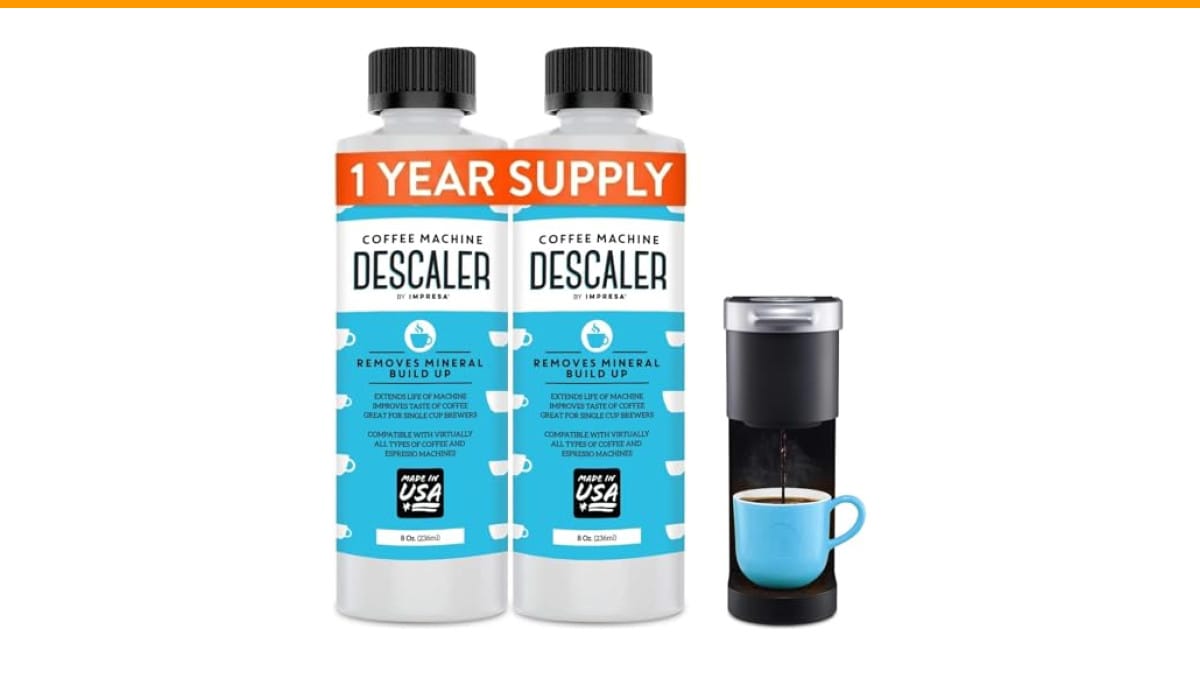
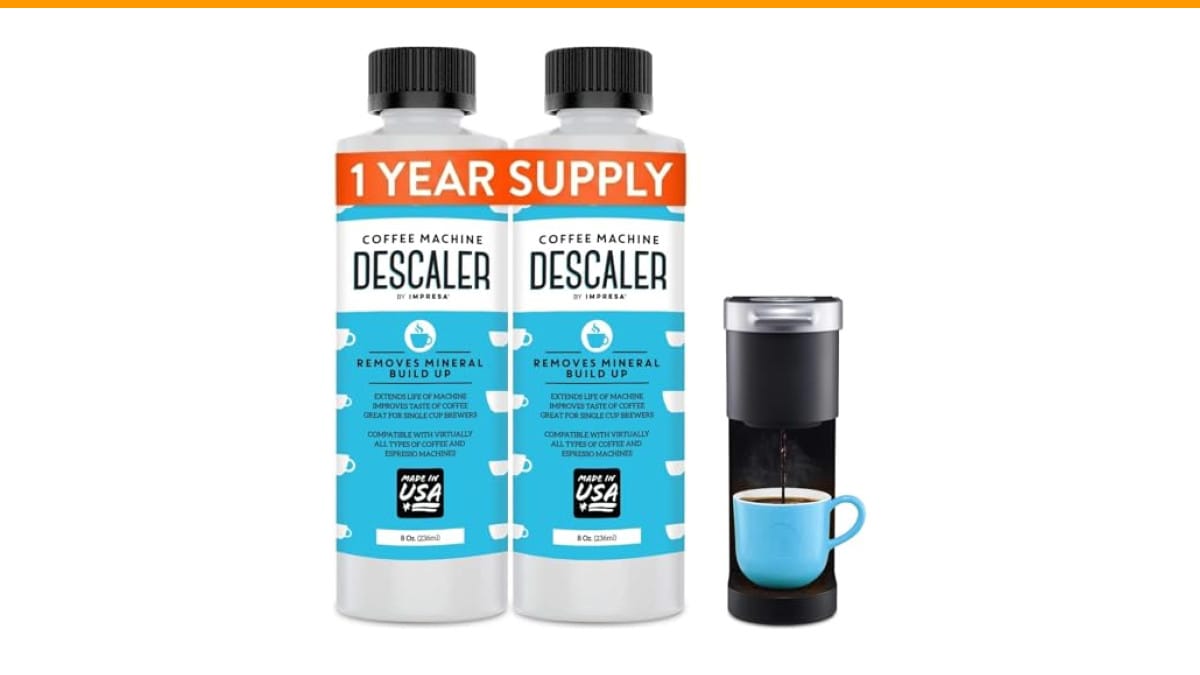
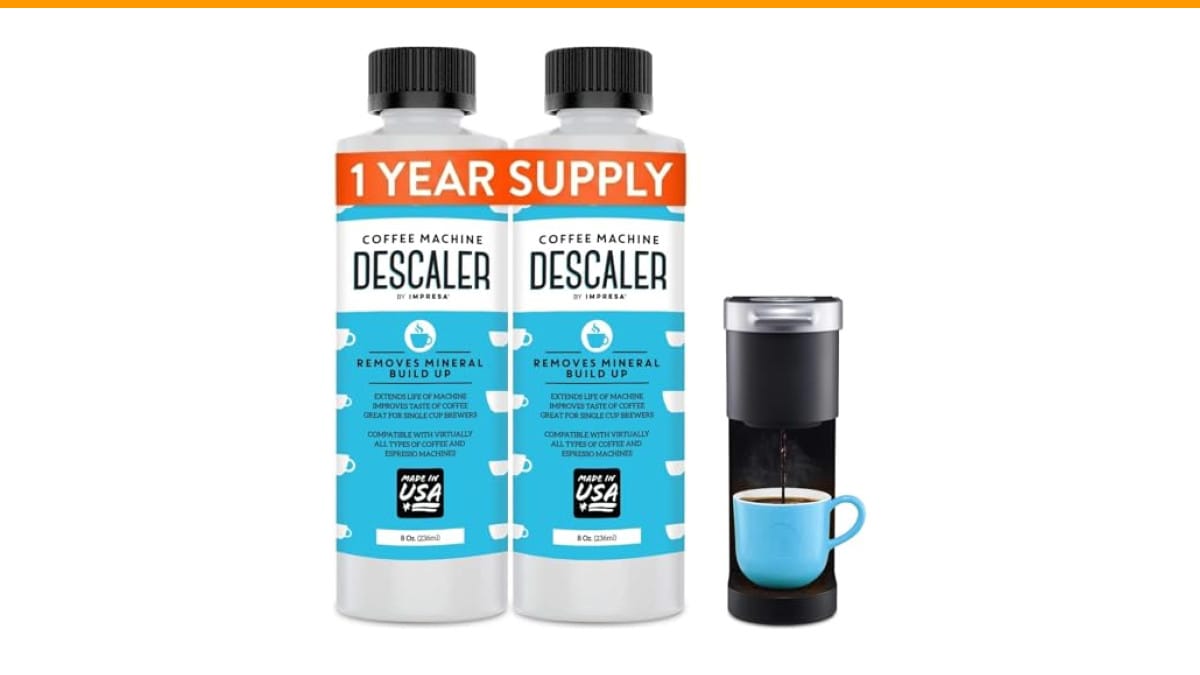
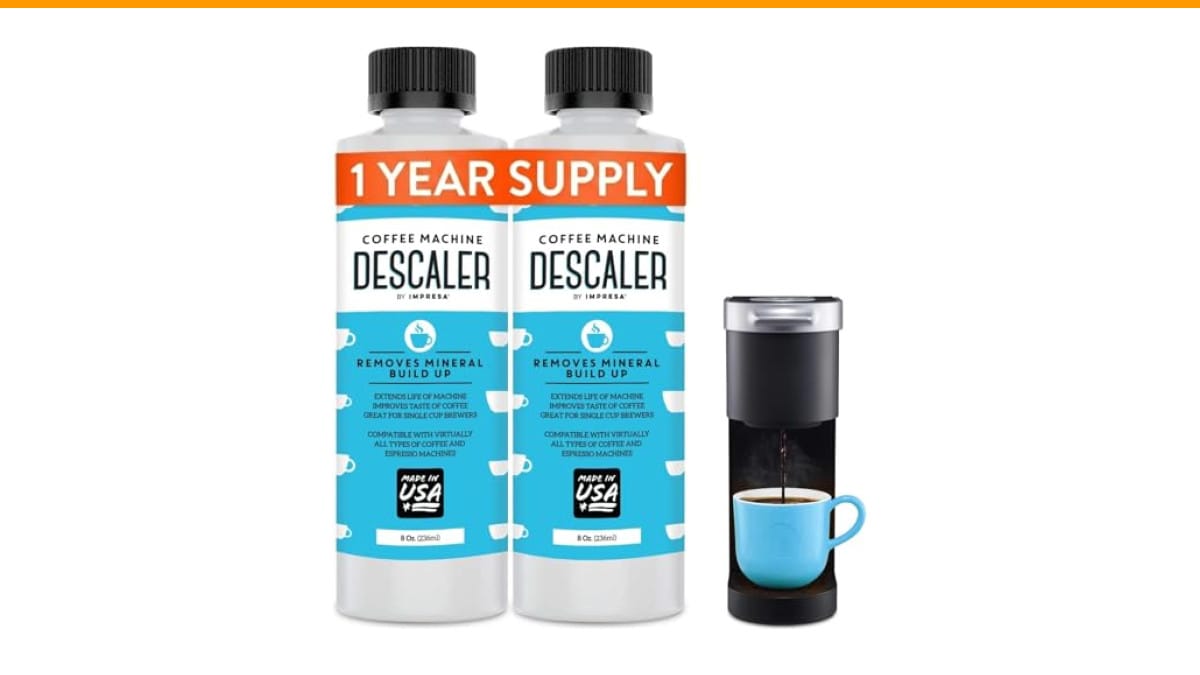
IMPRESA Coffee Machine Descaler, 2-Pack (1-Year Supply)…
- 2-Pack Coffee Descaler and Cleaner - Clean and rinse away residue and oil buildup in your coffee maker with Impresa's Coffee Desca…
- Highly Effective, Made in USA Formula - Unlike most common solutions, our coffee machine cleaner uses just 4 ounces (1/2 bottle) p…
- Preserves Your Machine - Using a coffee descaling solution eliminates limescale and mineral build-up to prevent corrosion, signifi…
As an Amazon Associate I earn from qualifying purchases.
You’ll learn exactly how long each step takes, what changes the clock, and how to tell if the descale actually worked. No vague “it depends” — just real numbers for real machines.
If you’re about to start and need a reliable descaling solution, the IMPRESA Coffee Machine Descaler (2-pack) is a solid choice. It’s a universal formula that works with Keurig, Nespresso, Breville, De’Longhi, and most other single-serve or espresso machines. Each 8-ounce bottle handles two descaling sessions, so one pack covers four cleanings — about a year of regular maintenance.
The Short Answer: How Long Does Descaling Really Take?
Here’s the honest breakdown: plan for 30 to 60 minutes from start to finish. That includes filling the reservoir, running the solution through, letting it sit, and doing a rinse cycle.
But there’s a big difference between active time (your hands-on work) and total time (the machine running). Active time is usually just 5 to 10 minutes. The rest is the machine doing its thing.
If you’re using a manual method with vinegar or citric acid, add 15 to 30 minutes of soak time. That can push total time to 90 minutes on stubborn scale.
- Automatic cycle (Keurig, Nespresso, Breville): 20 to 45 minutes total
- Manual descaling (vinegar or citric acid): 45 to 90 minutes total
- Rinse cycle (always required): 5 to 10 minutes extra
So if you’re in a rush, an automatic cycle is your best bet. But don’t skip the rinse — that’s non-negotiable.
Why Time Varies: Machine Type, Method, and Scale Severity
Three factors control the clock: your machine’s design, the descaling method you choose, and how much mineral deposits have built up inside.
Machine Type
Drip coffee makers (like Mr. Coffee or Cuisinart) have simple water paths. A descale cycle is just pumping solution through — usually 15 to 25 minutes. Espresso machines with a brew boiler and steam wand are more complex. They need to cycle solution through the boiler, the group head, and the steam wand separately. That adds time — expect 30 to 45 minutes for a standard espresso machine.
Single-serve pod machines (Keurig, Nespresso) fall in between. Their descaling mode runs a series of pumps and pauses, typically 20 to 35 minutes.
Method
Commercial descaling solutions (like the IMPRESA one) are formulated to dissolve limescale quickly. They often require a shorter soak time than DIY options. Vinegar is weaker — it needs a longer soak to work. Citric acid is stronger than vinegar but still not as fast as a dedicated descaler.
Scale Severity
If you’ve never descaled your machine, or you live in a hard water area, the scale layer is thick. That means the solution needs more time to penetrate and dissolve. You might need to run the cycle twice, or let it soak for 30 minutes instead of 15. One sign of heavy buildup: the flow rate is noticeably slower than when the machine was new.
Manual Descaling Time Breakdown (Step-by-Step)
Manual descaling is when you run the solution through the machine yourself, without an automatic cycle. It’s common on drip machines and older espresso machines that lack a descaling program.
Here’s a realistic timeline:
- Prepare the solution (2 minutes). Mix the descaler with water in the reservoir. Follow the label — usually a 1:1 or 1:2 ratio.
- Run half the solution through (5–10 minutes). Start a brew cycle without coffee. Let the solution flow through the system.
- Let it sit (15–30 minutes). This is the soak time. The solution needs to dwell inside the boiler and lines to dissolve scale. Set a timer.
- Run the rest of the solution (5–10 minutes). Finish the remaining solution in the reservoir.
- Rinse with fresh water (10–15 minutes). Run at least two full reservoirs of clean water through the machine to flush out any leftover descaler.
Total: 40 to 70 minutes, depending on soak time.
Active Time vs. Total Time
Your hands-on time is just the prep and button pressing — maybe 5 minutes total. The rest is the machine running or the solution soaking. You can walk away and do something else. That’s why descaling doesn’t have to ruin your whole morning.
But here’s a catch: don’t leave the machine unattended during the rinse cycle. If the reservoir runs dry, the pump can suck air, which can damage the heating element. Set a reminder to check it.
Automatic Descaling Cycles: What to Expect by Brand
Most modern machines have a descaling mode that automates the process. You press a button, and it cycles through solution, soak, and rinse phases automatically. Here are real-world timings for popular brands.
Keurig
Keurig’s descaling cycle takes about 25 to 30 minutes. The machine alternates between brewing solution and resting. You’ll need to refill the reservoir once during the cycle, then run a final rinse. Total time is around 35 minutes if you include the rinse.
Nespresso
Nespresso machines (like the Vertuo or OriginalLine) have a descaling mode that runs for 20 to 25 minutes. The process includes a series of beeps and pauses. After the solution is done, you rinse with fresh water — another 5 to 10 minutes. So plan for 30 minutes total.
Breville and De’Longhi Espresso Machines
These are the slowest. A typical Breville Barista Express descale cycle runs 30 to 45 minutes because it flushes the boiler, group head, and steam wand separately. De’Longhi machines are similar — expect 30 to 40 minutes. The extra time is worth it, because these machines have more internal parts that need cleaning.
| Machine Type / Brand | Automatic Cycle Time | Rinse Time | Total Time |
|---|---|---|---|
| Keurig (single-serve) | 25–30 min | 5–10 min | 30–40 min |
| Nespresso (Vertuo/Original) | 20–25 min | 5–10 min | 25–35 min |
| Breville (espresso) | 30–45 min | 10–15 min | 40–60 min |
| De’Longhi (espresso) | 30–40 min | 10–15 min | 40–55 min |
| Drip coffee maker (manual) | N/A (manual) | 10–15 min | 50–70 min (with soak) |
The “Soak Time” Factor: When to Let It Sit
Soak time is the secret weapon for stubborn scale. The descaling solution needs to sit in contact with the limescale to dissolve it. If you just run it through and rinse immediately, you’ll only remove light film — heavy buildup will remain.
How long should you let it sit? Check your descaler’s instructions. Most commercial solutions recommend 15 to 30 minutes. Vinegar-based DIY methods often need 30 to 45 minutes because acetic acid is milder.
Here’s a guideline based on water hardness:
- Soft water: 10–15 minute soak is plenty.
- Moderate hardness: 15–20 minutes.
- Hard water (well water or high mineral content): 30 minutes or more. If you see visible flakes in the reservoir, let it soak longer.
One trick: after the soak, if the solution looks cloudy or has white particles, that’s scale dissolving. Run the cycle again if needed.
How to Tell It’s Working (and When It’s Done)
You don’t have to guess whether the descale worked. Look for these signs during the cycle:
- Flow rate improves. At the start, water may come out in a sputter or thin stream. By the end, it should flow steadily.
- No more hissing or gurgling. A noisy machine often means scale is interfering with the pump. After a good descale, it runs quieter.
- Taste changes. The coffee should taste cleaner — no metallic or bitter edge. That bitter taste often comes from scale, not the beans.
- Steam wand works properly. For espresso machines, the wand should produce strong, dry steam instead of weak, wet steam.
If you’re halfway through and the flow is still slow, don’t stop. Let it finish, then run another rinse cycle. Sometimes it takes two descaling sessions to clear years of buildup.
What if you interrupt the cycle mid-way? Most machines will just stop — the pump pauses, and you can restart from the beginning. No damage, but you’ll waste the solution already used. The exception is if you let the reservoir run dry while the pump is on; that can overheat the heating element. So always keep an eye on the water level.
Speed Up the Process Without Cutting Corners
You can shave time off descaling without skipping steps. Here’s what works:
- Use warm water to mix the solution. Warm solution works faster than cold.
- Pre-soak the reservoir. Pour the solution in and let it sit for 10 minutes before you start the cycle. That gives it a head start on the scale in the water lines.
- Run a shorter rinse. Two full reservoirs is standard, but if your machine has a “rinse” mode, use it — it’s more efficient than running brew cycles.
- Choose a concentrated descaler. The IMPRESA solution uses 4 ounces per session, so you’re not diluting as much. That means less water to pump through.
What doesn’t work: cranking the heat or using boiling water. That can damage rubber seals. Stick to the recommended temperature.
Common Mistakes That Add Time to Your Descaling
A few mistakes can turn a 30-minute job into a two-hour ordeal. Avoid these:
- Skipping the soak. You’ll have to run the cycle twice, which takes longer than a single soak.
- Using too much descaler. It won’t dissolve scale faster — it just leaves more residue to rinse out.
- Not rinsing thoroughly. Leftover descaler can taste bitter and may even corrode internal parts over time. Rinse until the water runs clear.
- Descaling a cold machine. The solution works best at room temperature or slightly warm. If your machine has been off for hours, run a quick hot water cycle first.
- Ignoring the water hardness. If you have hard water, you’ll need to descale more often — about every 3 months instead of every 6. That’s not a time issue, but it prevents future long descaling sessions.
Final Verdict: Plan for 30–60 Minutes Total
Here’s your takeaway: descaling is not a 10-minute job, but it’s also not an all-day project. Budget 30 to 60 minutes, depending on your machine and method. The active time is just 5 to 10 minutes — the rest is the machine running or the solution soaking.
Set a timer, walk away, and come back to a cleaner machine and better-tasting coffee. If you’re using an automatic cycle, you can even do it while you’re getting ready for work. Just don’t forget to rinse.
For a step-by-step walkthrough, check out our descaling guide for more details. And if you’re dealing with a clogged machine, our cleaning tips might help. Regular maintenance — including descaling every 3 to 6 months — keeps your machine running for years. See our maintenance advice for the full plan.
Products related to this article
Sponsored / affiliate links. As an Amazon Associate I earn from qualifying purchases. I may earn additional commission from eligible campaigns.
 KARHDIR 15" Walk Behind Floor Scrubber Machine, 23" Squeegee
 Coffee Espresso Machine Handle Replacement Parts, Cafe Bracket Handle for Lidl Silvercrest CM4621 CM4218 KF5002 KF500S Barista (for 51mm Portafilter Basket - Not included)
 Long Handle Wooden Spoon For Mixing Coffee Tea Jam and Bath Salt In Kitchen, Environmentally Friendly Table Spoon, 8.6 Inches,4 Pieces…