You pull a shot and it tastes bitter. The flow slows to a trickle. Maybe you hear a faint hiss that wasn’t there last week. Most owners blame the beans or the grinder. Usually, the machine is just dirty.
Automatic espresso machines hide their mess well. You see a clean portafilter and a shiny drip tray, but inside the group head, oils are turning rancid. Scale is building up on the boiler like plaque in a pipe. This article is a diagnostic manual. You’ll learn exactly how often to clean an automatic espresso machine, tied to how many shots you pull and how hard your water is. Each symptom points to a specific fix, so you can stop guessing and get back to good coffee.

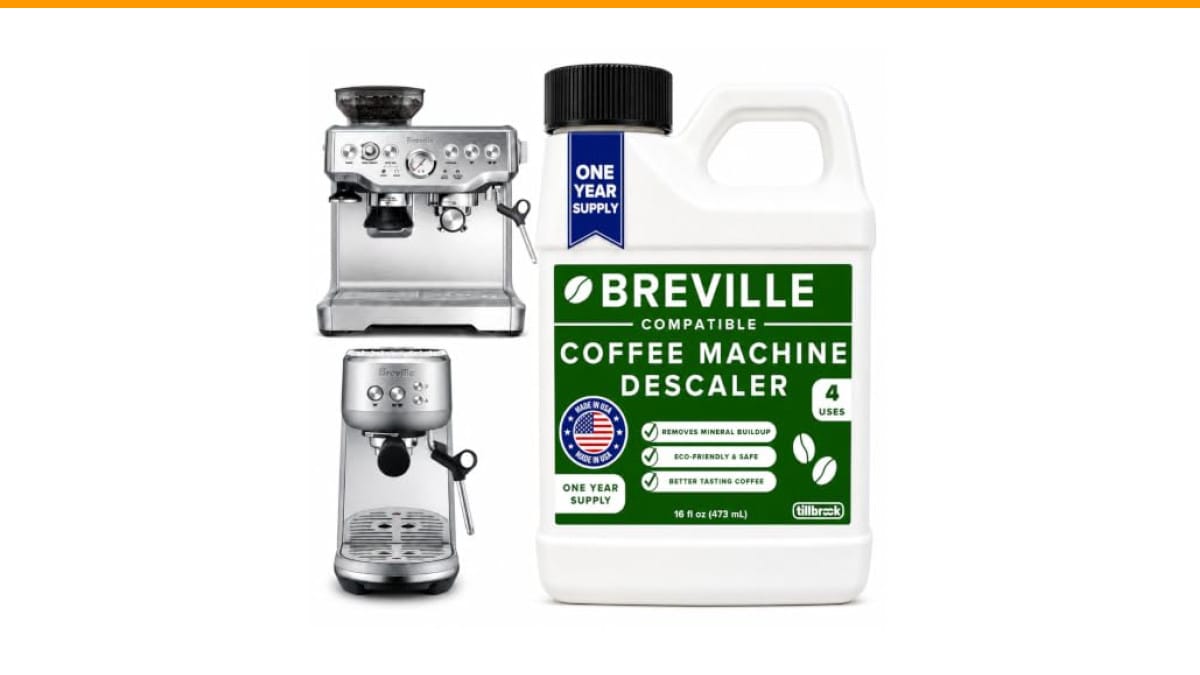
Tillbrook
Breville Espresso Machine Compatible Descaler, 4 Uses,…
- EXCEPTIONAL RESULTS: Introducing Tillbrook Coffee Machine Descaler specifically formulated for Breville—the best choice for removi…
- 1 YEAR SUPPLY: Our concentrated formula is easy to use and provides remarkable value with 4 cleanings per bottle. Simply add 1/2 c…
- SCIENTIFICALLY ENGINEERED: Our advanced descaling solution is carefully crafted with powerful, all-natural ingredients that remove…
As an Amazon Associate I earn from qualifying purchases.
For a deep clean, a dedicated descaling solution makes the job easier. The Tillbrook Descaler for Breville is a concentrated formula that handles limescale and mineral buildup without leaving an aftertaste. It comes with enough for four full descaling cycles, which covers a year of maintenance for most home users.
The Real Cost of Skipping Maintenance
Neglect doesn’t show up overnight. It creeps in over months. The first thing you notice is flavor. Coffee oils left on the group head oxidize and go rancid. That rancid oil mixes with your next shot, adding a bitter, burnt note that no bean can overcome.
Then the mechanics fail. Scale acts as an insulator. It coats the heating element, forcing it to work harder to heat water. That extra work shortens the boiler’s life and increases your electricity bill. A solenoid valve clogged with scale can cause pressure issues, leading to weak shots or water backing up into the drip tray.
Repair costs are the real punishment. A new boiler can cost half the price of the machine. A simple descale, done quarterly, costs a few dollars and takes an hour. The math is not complicated.
The Golden Rule: Frequency Depends on Usage, Not Just Time
Ignore the generic advice to clean every three months. That schedule works for a casual drinker pulling two shots a day. It fails for a household pulling ten shots daily. Your cleaning frequency should scale with workload, not the calendar.
How to Calculate Your Machine’s Workload
Count every shot you pull, including the ones you discard for preheating. Count every steam wand session. Write it down for a week. That number is your baseline.
- Light use: 1-2 shots per day. Clean the group head weekly. Backflush with detergent monthly. Descale every 4-6 months.
- Medium use: 3-6 shots per day. Clean the group head every few days. Backflush with detergent every 2 weeks. Descale every 3-4 months.
- Heavy use: 7+ shots per day. Clean the group head daily. Backflush with detergent weekly. Descale every 2-3 months.
These numbers assume filtered water. If you use tap water, shift everything one step more frequent.
Why Water Hardness Changes Your Descaling Schedule
Hard water is the enemy of every espresso machine. It contains dissolved calcium and magnesium. When heated, those minerals precipitate out and form scale. The harder your water, the faster scale builds up.
Test your water with a simple strip kit. They cost a few dollars and give you a hardness reading in grains per gallon (gpg).
- Soft water (0-3 gpg): Descale every 6 months.
- Moderate (3-7 gpg): Descale every 3-4 months.
- Hard (7+ gpg): Descale every 1-2 months.
If you live in an area with hard water, a water filter in the tank helps, but it doesn’t eliminate scale entirely. You still need to descale.
After Every Use (2 Minutes): The Non-Negotiables
This is the bare minimum. It takes less time than waiting for the machine to heat up.
- Purge the steam wand: After steaming milk, wipe the wand with a damp cloth. Then open the steam valve for two seconds. This blows out any milk residue that got sucked back up the wand.
- Knock out the puck: Remove the portafilter and knock the spent coffee into the knock box. Rinse the basket under hot water.
- Wipe the group head: A quick wipe with a cloth removes loose coffee oils before they bake on.
Skipping the steam wand purge is how you get a clogged wand. Milk protein hardens inside the tube and blocks steam flow. Once that happens, you need a needle or a soak in hot water to clear it.
Daily (5 Minutes): The End-of-Day Ritual
When you’re done pulling shots for the day, run a short cleaning cycle. Fill the water tank, place a container under the group head, and run a single shot without coffee. This flushes oils from the group head and the solenoid valve.
Empty the drip tray and knock box. Wipe down the exterior. If you steamed milk, remove the tip from the steam wand and soak it in hot water for a few minutes. This prevents milk crust from forming.
For machines with a removable water filter, check the replacement indicator. Most filters last two months. A worn filter stops softening water effectively, which puts more scale into your boiler.
Weekly (15 Minutes): Backflushing and Deep Wipes
Backflushing is the only way to clean the internal plumbing of a semi-automatic machine. It forces water backward through the group head, dislodging oils and residue that normal flushing can’t reach.
Backflushing: With Water vs. With Detergent
Backflushing with water is a maintenance rinse. You insert a blind basket (a basket with no holes) into the portafilter, lock it in, and run the pump for 10 seconds. Repeat 3-4 times. This clears loose debris.
Backflushing with detergent is a deeper clean. You add a small amount of espresso machine cleaning powder, like Cafiza, to the blind basket. Run the pump for 10 seconds, let it sit for 30 seconds, then repeat 5-6 times. The detergent dissolves coffee oils that water alone cannot. Rinse thoroughly with several water-only backflushes afterward.
Do this weekly if you pull more than 4 shots a day. Do it every two weeks for lighter use. Do not use dish soap. It creates foam that can damage the pump.
Super-automatic machines without a removable brew group cannot be backflushed. Follow the manufacturer’s cleaning cycle instead, usually triggered by a button on the machine.
Monthly (30 Minutes): The Deep Clean
Once a month, go beyond the routine. Remove the shower screen and gasket from the group head. Soak them in a solution of hot water and cleaning powder. Scrub the group head itself with a nylon brush to remove baked-on oils.
Clean the steam wand thoroughly. Remove the tip and soak it in hot water. Use a pipe cleaner to clear the internal tube if steam flow seems weak.
Wipe down the grinder burrs. Use a brush to remove coffee dust. Oily beans leave residue that can clog the chute. If your grinder has a cleaning cycle, run it with a cleaning tablet.
Cleaning the Brew Group (Super-Automatics)
Super-automatic machines like Jura and Philips have a removable brew group. This is the part that compresses coffee and pushes water through it. It gets caked with oils quickly.
Remove the brew group according to the manual. Rinse it under warm running water. Do not use soap. Let it dry completely before reinstalling. Lubricate the moving parts with food-grade grease every few months, as the manual specifies.
If the brew group is not removable, run the machine’s cleaning cycle with a cleaning tablet. This flushes the internal brew unit. Your machine will prompt you when it’s due, usually every 200-500 shots.
Quarterly/Annually (1 Hour): The Full Service
Descaling is the big one. It removes scale from the boiler, heating element, and pipes. Without it, your machine will eventually fail.
Use a commercial descaler designed for espresso machines. The Tillbrook descaler is formulated for Breville machines and works on most other brands. It uses all-natural ingredients that dissolve limescale without damaging internal seals.
Follow the manufacturer’s descaling procedure. Typically, you dilute the solution, run it through the machine, then run fresh water through several times to rinse. The entire process takes about 45 minutes.
Replace the water filter at the same time. Most filters last 2 months, but replacing it during a descale keeps your water quality consistent.
If you pull heavy daily shots, descale quarterly. If you use soft water and light use, you can stretch it to every 6 months. Do not go beyond 12 months, even with perfect water. Scale builds up slowly but surely.
For more on the differences between machine types, check our espresso machine comparison.
The “My Machine is Acting Weird” Troubleshooting Chart
Use this chart to diagnose symptoms. Match your problem to the likely cause and fix.
| Symptom | Likely Cause | Fix | Frequency |
|---|---|---|---|
| Bitter, burnt taste | Rancid coffee oils on group head | Backflush with detergent | Weekly |
| Slow flow from group head | Scale buildup in boiler or solenoid | Descale the machine | Quarterly |
| Weak steam pressure | Clogged steam wand tip | Soak tip, clear tube | Monthly |
| Hissing sound during brew | Air in the system or scale on heating element | Prime pump, descale | As needed |
| Water leaking from bottom | Clogged drain or worn gasket | Clean drip tray, replace gasket | Monthly |
| Shot pulls too fast | Grind too coarse, or dirty basket | Clean basket, adjust grind | Daily |
| Machine won’t turn on | Scale tripped thermal fuse | Descale, replace fuse if needed | Quarterly |
If your machine is making a loud noise, it might be more than just scale. See our guide on loud espresso machine noises for specific causes.
Choosing the Right Cleaner: Cafiza, Descaler, and What Not to Use
People often confuse cleaning and descaling. They are different tasks with different chemicals. Using the wrong one can damage your machine.
Cafiza and similar cleaning powders are detergents. They dissolve coffee oils and residue. Use them for backflushing and soaking parts. They do not remove scale.
Descalers are acids. They dissolve mineral scale. Use them for the boiler and internal pipes. They do not remove coffee oils.
Do not use vinegar. It’s a weak acid that takes longer to work, and the smell lingers in the machine’s internal tubing. The acetic acid can also degrade rubber seals over time. Commercial descalers are formulated to be effective and safe for espresso machine materials.
Do not use dish soap. It creates excessive foam that can damage the pump and leave a soapy residue in the brew path.
Do not use citric acid alone. While it is a common descaler ingredient, the concentration matters. Too strong and it corrodes metal. Commercial products have the right balance and include anti-corrosion agents.
Printable Quick-Reference Checklist
Tape this to the side of your machine or keep it in a drawer. It covers the essential schedule for a medium-use household with moderate water hardness.
- After each use: Purge steam wand, rinse portafilter, wipe group head.
- Daily: Run water-only shot, empty drip tray.
- Weekly: Backflush with detergent, wipe down exterior.
- Monthly: Soak shower screen, clean steam wand tip, clean grinder burrs.
- Quarterly: Descale with commercial solution, replace water filter.
- Annually: Inspect hoses and gaskets, replace any worn parts.
For a more thorough walkthrough, read our deep cleaning guide.
FAQs: Descaling vs. Cleaning, and Other Confusions
Is descaling the same as cleaning?
No. Cleaning removes coffee oils and residue. Descaling removes mineral scale. You need both. Cleaning is more frequent. Descaling is less frequent but takes longer.
Can I use vinegar instead of descaler?
You can, but you shouldn’t. Vinegar is a weak acid that leaves a lingering smell and can damage rubber seals over time. Commercial descalers are safer and more effective.
How do I know if my machine needs descaling?
Look for slow flow, a hissing sound, or a message on the display (if your machine has one). Some machines track shot count and prompt you automatically. If you see scale buildup on the drip tray or around the water tank, it’s time.
What happens if I never backflush?
Coffee oils accumulate on the group head and in the solenoid valve. They go rancid, making every shot taste bitter. Over time, the oils can clog the valve, causing water to leak or pressure to drop.
Can I clean a super-automatic machine the same way as a semi-automatic?
No. Super-automatics have a removable brew group that you rinse under water. They do not use a portafilter, so you cannot backflush. Follow the manufacturer’s cleaning cycle instead. If your machine leaks water, check our leak troubleshooting guide.
What Actually Matters for Machine Longevity
You do not need a lab-grade water filtration system or a $200 cleaning kit. You need consistency.
- Clean the steam wand after every milk drink.
- Backflush with detergent weekly if you pull more than 3 shots a day.
- Descale quarterly, or more often with hard water.
- Replace the water filter every 2 months.
- Use the right chemical for the job: detergent for oils, descaler for scale.
- Listen to your machine. Slow flow and hissing are early warning signs.
- Keep a log. Write down the date of your last backflush and descale.
Follow this schedule and your machine will outlast your countertop. Skip it and you’ll be shopping for a replacement in a couple of years. The choice is yours.
Products related to this article
Sponsored / affiliate links. As an Amazon Associate I earn from qualifying purchases. I may earn additional commission from eligible campaigns.
 Coffee Espresso Machine Handle Replacement Parts, Cafe Bracket Handle for Lidl Silvercrest CM4621 CM4218 KF5002 KF500S Barista (for 51mm Portafilter Basket - Not included)
 Cascade Platinum Plus Dishwasher Detergent Pods Dish Soap Lemon 57 Count
 MRS. MEYER'S CLEAN DAY Automatic Dishwasher Pods, Lavender, 20 Count - Pack of 3 (60 Total Pods)