You just ran a cleaning tablet through your espresso machine. The group head looks cleaner, and the portafilter feels less oily. But now you are staring at the empty drip tray and wondering: did I rinse enough? That question matters more than you think.
Most home baristas focus on the cleaning cycle itself, then skip the rinse or rush it. The result is bitter espresso, weird foamy water, or a lingering chemical taste that ruins your morning shot. I have tested dozens of cleaning routines over the years, and the rinse phase is where most people get it wrong.
This guide covers exactly how to rinse after using espresso machine cleaning tablets. You will learn the correct water volumes, the timing for each step, and how to check that every trace of the tablet is gone. No guesswork.
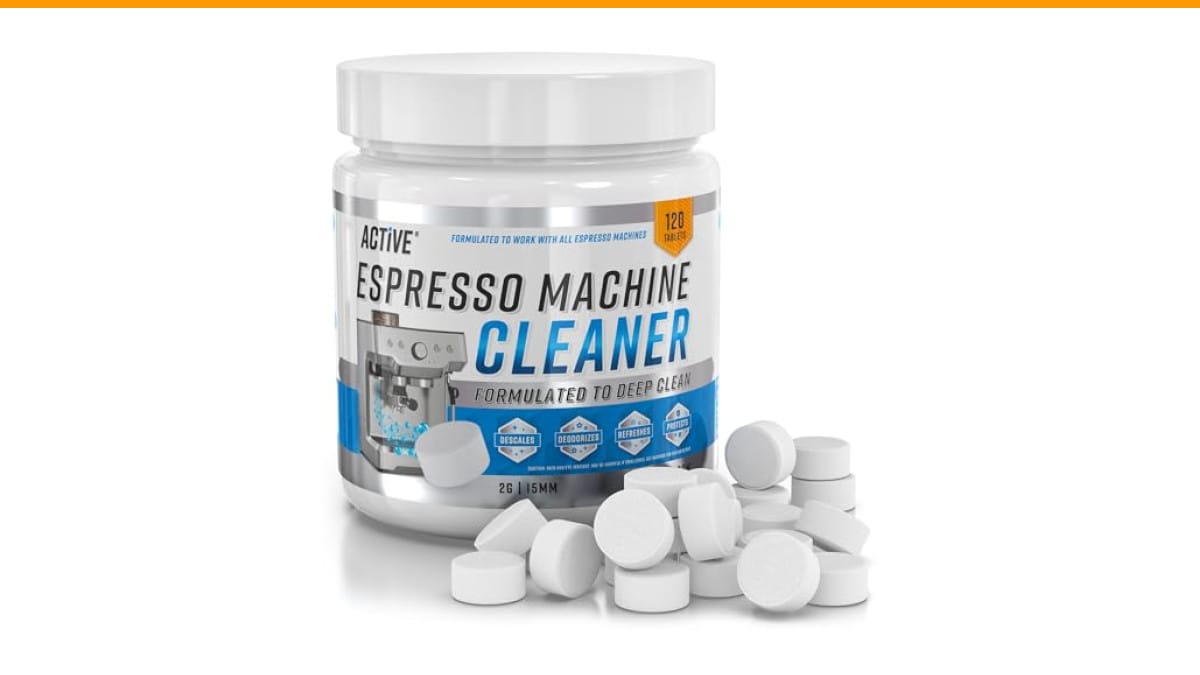
If you clean often, a good tablet makes the job easier. The ACTIVE Espresso Machine Cleaning Tablets come in a 120-count jar, so you will not run out mid-week. They work with most semi and super automatic machines, including Breville, Gaggia, and DeLonghi units.
Why the Rinse Step Gets Skipped
Cleaning tablets are concentrated. They are designed to break down coffee oils and grime quickly. That same strength means they leave residue if you do not flush them out completely.
Manufacturer manuals often say simply “run a rinse cycle.” That vague instruction leaves room for error. A quick 5-second flush is not enough. The tablet solution sits inside the boiler, the group head, and the internal lines. Each of those areas needs fresh water to push the cleaning agent out.
I have seen machines with foam still coming out of the group head after a single rinse. That foam is the tablet residue mixing with water. You do not want that in your next shot. The fix is simple: rinse longer than you think you need to.
Your machine type also changes the equation. A single boiler unit holds less water than a dual boiler or a heat exchanger. Super automatic machines have longer internal paths. Both need the same outcome — clear water at the group head — but the volume of water required will differ.
Step-by-Step Rinse Process
Here is the rinse routine I use after every tablet cleaning. It works for both semi-automatic and super automatic machines.
Step 1: Remove the Portafilter and Blank Basket
Take the portafilter out of the group head. Remove the blind basket if you used one for backflushing. Rinse both under running tap water to wash off any loose tablet residue. Set them aside to dry.
Step 2: Run Fresh Water Through the Group Head
Place an empty container under the group head. Run water for 10 seconds. Stop. Wait 30 seconds. Run water again for another 10 seconds. This pause lets the fresh water sit in the boiler and dissolve any remaining tablet film.
Repeat this cycle three times. That is roughly 60 seconds of total water flow through the group head. The water should run clear and free of foam by the third cycle.
Step 3: Flush the Steam Wand
The steam wand is easy to forget. The cleaning tablet does not reach that area during a normal backflush, but residual pressure can push solution into the steam boiler on some machines.
Open the steam valve for 5 seconds. Let the steam escape, then close the valve. Wait 15 seconds and repeat. Do this twice. You should see clean steam with no lingering smell.
Step 4: Run a Water Cycle Through the Hot Water Spout
Super automatic machines have a hot water spout. Run about 200 ml of water through it. This flushes the internal line that delivers hot water for Americanos or tea. Tablet residue can settle here if your machine uses the same boiler for brewing and hot water.
Step 5: Wipe Down the Group Head
Use a damp microfiber cloth to wipe the group head gasket and the area around the shower screen. This removes any film that the water flow missed. Do not use soap here — just water.
How Much Water Is Actually Needed
The exact water volume depends on your machine. But I can give you a practical range.
- Semi-automatic machines: 500 ml to 750 ml of fresh water through the group head. That is about three full cups.
- Super automatic machines: 1 liter or more. These machines have longer internal tubing and more surface area for residue to cling to.
- Dual boiler machines: Flush both boilers. Run 500 ml through the brew boiler and 300 ml through the steam boiler.
You can test if you have rinsed enough. Brew a blank shot with no coffee in the portafilter. Taste the water. It should taste neutral — no bitterness, no chemical aftertaste. If it tastes off, run another rinse cycle.
I have also found that the temperature of the rinse water matters. Hot water (around 90°C) dissolves the tablet residue faster than warm or cold water. Most machines will heat the water automatically during the rinse cycle, so this is rarely an issue unless you are flushing a cold machine.
Comparing Rinse Methods
| Rinse Method | Water Volume | Time Needed | Best For | Drawbacks |
|---|---|---|---|---|
| Quick single flush | 100-200 ml | 10 seconds | Daily maintenance after light cleaning | Leaves residue; not enough for tablet cleaning |
| Pulsed flush with pauses | 500-750 ml | 2-3 minutes | Semi-automatic machines after tablet use | Requires attention; easy to rush |
| Extended full tank rinse | 1-2 liters | 5-7 minutes | Super automatic machines and heavy residue | Uses more water; longer wait time |
| Backflush rinse cycle | 300-500 ml | 1-2 minutes | Machines with a dedicated rinse program | Only flushes group head, not steam wand |
The pulsed flush is my preferred method for most home machines. The pauses give the water time to dissolve the residue instead of just pushing it along. The extended full tank rinse is worth doing once a month if you use tablets weekly.
Signs You Did Not Rinse Enough
Your machine will tell you when you skipped the rinse. Here are the signs I have seen in testing.
- Foamy or bubbly water coming from the group head — this is tablet residue reacting with fresh water.
- Bitter espresso that tastes metallic or soapy. This is the most common complaint after cleaning.
- White film on the drip tray or around the group head after the machine dries.
- Reduced flow rate through the shower screen, which means residue has started to re-clog the holes.
If you notice any of these, do not panic. Run another rinse cycle with fresh water. The residue dissolves quickly once you give it enough water.
I have also seen machines where users skipped the rinse entirely and then complained about bitter coffee after cleaning. In every case, a proper rinse fixed the issue.
One more thing: do not reuse the rinse water for anything. Dump it down the sink. The water contains dissolved coffee oils and cleaning agents that you do not want in a kettle or a plant.
Frequently Asked Questions
How long should I rinse after using cleaning tablets?
Run water through the group head for at least 60 seconds total, broken into 10-second pulses with 30-second pauses. Add another 10 seconds of steam wand flush. The whole rinse process takes about 3 minutes.
Can I use cold water to rinse after cleaning tablets?
Cold water works, but it is less effective. Hot water dissolves the tablet residue faster and flushes it out more completely. Your machine heats water during normal operation, so use the hot water function for the rinse.
Do I need to rinse after every cleaning tablet use?
Yes. Every single time. There is no such thing as a self-rinsing cleaning tablet. The tablet leaves residue that must be flushed with fresh water.
Why does my espresso taste weird after cleaning?
You did not rinse enough. The cleaning tablet residue is still in the boiler or group head. Run another full rinse cycle with fresh hot water, then brew a blank shot to test the taste.
Can I rinse with the portafilter locked in?
You can, but it is not ideal. The portafilter and basket can trap residue. Remove them and rinse them separately under running water, then lock the empty portafilter in place for the final rinse cycle.
What to Remember for Next Time
Rinsing is not the exciting part of espresso maintenance, but it is the part that determines whether your next shot tastes clean or like a chemistry experiment.
- Rinse with hot water, not cold.
- Use at least 500 ml of water for a semi-automatic machine.
- Pause between flushes so the water can dissolve residue.
- Flush the steam wand separately.
- Taste a blank shot to confirm the rinse worked.
- Wipe the group head with a damp cloth after rinsing.
- If in doubt, run one more rinse cycle — it costs you two minutes and saves your coffee.
For a full breakdown of keeping your machine in shape, check out our coffee machine maintenance guide. And if you are dealing with hard water buildup, the descaling guide covers that separate process.
Products related to this article
Sponsored / affiliate links. As an Amazon Associate I earn from qualifying purchases. I may earn additional commission from eligible campaigns.
 Coffee Espresso Machine Handle Replacement Parts, Cafe Bracket Handle for Lidl Silvercrest CM4621 CM4218 KF5002 KF500S Barista (for 51mm Portafilter Basket - Not included)
 CARON & DOUCET - Cutting Board & Butcher Block Cleaning Soap | 100% Plant-Based Soap | All-Natural Lightly Scented Rosemary & Lemongrass Essential Oils (8 oz)
 KARHDIR 15" Walk Behind Floor Scrubber Machine, 23" Squeegee