You just finished brewing a clean cup, and now the counter looks like a small explosion of coffee gear. The AeroPress itself is easy enough to rinse, but the scoop, the stirrer, the filter cap, the paper filters, and that metal filter you bought for cold brew all end up in a drawer somewhere. Then you spend two minutes digging for the scoop every morning.
That’s the real problem with AeroPress ownership. The brewer is compact, but the accessories multiply. And unlike a drip machine where everything lives in one basket, AeroPress gear scatters. This article walks through the practical ways to store it all, whether you have a dedicated coffee bar or just one shelf in a cramped cabinet. You’ll learn the trade-offs of each method, what works for travel, and why the official AeroPress organizer stand might be the simplest fix for most people.

AeroPress
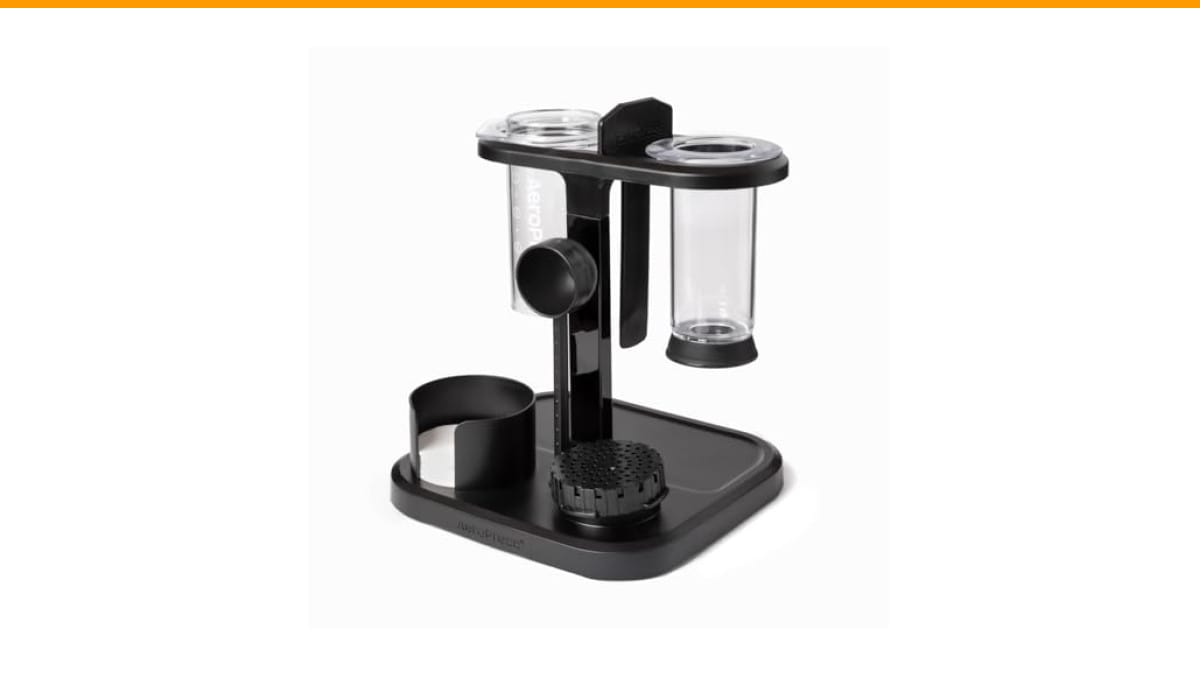
AeroPress Organizer Stand | Durable Coffee Bar…
- Compact Storage Solution – Declutter your home or office coffee station, dorm room or kitchen cabinet with this small footprint co…
- Keep All Your Coffee Gear in One Place – Keep All Your Coffee Gear in One Place – Saves kitchen countertop space and keeps your Ae…
- Custom Fit for AeroPress Coffee Makers – Fits all AeroPress Coffee Makers (except Premium and Go) with dedicated spots for coffee…
As an Amazon Associate I earn from qualifying purchases.
We’ll also cover the mistakes that ruin filters and make your coffee taste like last week’s leftovers, because storage isn’t just about tidiness. It’s about keeping your gear functional.
The AeroPress Organizer Stand (check it on Amazon) solves the scatter problem in one move. It holds the coffee maker, scoop, stirrer, filter cap, and both paper and metal filters in a dedicated footprint about the size of a small toaster. It fits all AeroPress models except the Premium and Go, so if you own the classic or the Clear version, it’s a direct match.
Why AeroPress Accessories Are Hard to Store
The AeroPress ships with a scoop and stirrer that don’t attach to the brewer. You can wedge the scoop into the barrel, but it falls out when you pick the thing up. The stirrer is long and thin, so it rolls off counters and hides behind jars. The filter cap is a separate piece that you have to keep track of, and the paper filters come in a box that tears easily at the opening.
Most people store the brewer with the plunger pushed all the way through the barrel, which is correct for drying. But that configuration leaves the scoop, stirrer, and filters homeless. So they end up in a drawer, where the metal filter scratches against the scoop and the paper filters get bent. Bent paper filters sit unevenly in the cap, which causes channeling and a weak brew. That’s not a gear problem; that’s a storage problem.
Another issue is moisture. If you store the AeroPress assembled while it’s still wet, you’ll get mold in the rubber seal. The same goes for the filter cap. You need airflow, which means you can’t just shove everything into a sealed container right after washing.
Three Solid Storage Methods, Compared
There are three main ways people handle AeroPress accessory storage. Each has its place depending on your counter space, your travel habits, and how many other coffee tools you own.
Method 1: The Dedicated Organizer Stand
This is the cleanest option for a home coffee station. The AeroPress Organizer Stand keeps everything in one vertical footprint, so it takes up about 25 square inches of counter space. You set the brewer on top, and the scoop, stirrer, and filters slot into their own spots below. It doesn’t hide anything, which is actually a benefit because you can see at a glance whether you need to restock filters.
It’s not perfect. If you own the AeroPress Go, this stand won’t fit, since the Go is shorter and has a different cap design. And if you’re someone who hates visual clutter, a stand with visible gear might bother you. But for most home users, having a designated home for each piece means you stop losing the stirrer.
Method 2: The Drawer Divider System
If you don’t have counter space, a drawer with adjustable dividers works fine. You’ll need a compartment for the brewer (stored with the plunger removed), a small box for paper filters, and a slot for the scoop and stirrer. The metal filter should get its own soft pouch or a small zippered bag so it doesn’t scratch other items.
The downside is that drawer space is usually shared with other kitchen tools, and the AeroPress parts will shift around every time you open and close the drawer. You have to be disciplined about putting each piece back in its spot, or you’re back to digging. It works, but it’s the least convenient method because it adds a step to every brew session.
Method 3: The Travel Pouch or Case
For people who take their AeroPress to the office or on trips, a dedicated pouch is the way to go. The AeroPress Go comes with its own cup and lid, which doubles as storage. If you have a standard AeroPress, you can buy a third-party travel case that fits the brewer, scoop, stirrer, and a stack of filters. These cases are usually cylindrical and padded, so they protect the brewer from knocks.
The trade-off is that a travel case is meant for transit, not daily use. If you leave your AeroPress in the case on your counter, you’ll be unzipping it twice a day just to brew. That gets old fast. Use the case for travel, and use a stand or drawer for home.
| Method | Best For | Space Needed | Protection Level | Drawback |
|---|---|---|---|---|
| Organizer Stand | Home counter, daily use | 5″ x 5″ footprint | Good, keeps parts separate | Doesn’t fit AeroPress Go or Premium |
| Drawer Dividers | Small kitchens, no counter space | One drawer section | Fair, parts can shift | Requires discipline to keep organized |
| Travel Pouch | Office, trips, camping | Fits in a bag | Excellent, padded | Inconvenient for daily home use |
How to Store Filters So They Stay Fresh
Paper filters are the most sensitive part of the AeroPress system. They absorb moisture and odors from the air, which directly affects the taste of your coffee. A filter that sat in a damp cabinet next to the spices will make your brew taste like cumin. Keep them in the original box, but reinforce the flap with a piece of tape, or transfer them to a small airtight container. A 4-inch round Tupperware works well for a stack of 100 filters.
Metal filters are more forgiving, but they still need to dry completely before you store them. If you put a wet metal filter into a drawer, it can develop a faint metallic smell that transfers to your coffee. Rinse it, shake it dry, and let it sit on a dish towel for an hour before putting it away. The same rule applies to the rubber seal on the plunger. Never store the AeroPress fully assembled while damp, because the seal will start to smell musty.
One thing people overlook is the stirrer. It’s made of plastic, so it doesn’t absorb odors, but it does collect coffee oils. Those oils go rancid over time. A quick wipe with a damp cloth after each use keeps it clean. If you store it in a drawer without cleaning it, you’ll eventually notice a stale smell when you stir your brew.
Setting Up a Coffee Station That Actually Works
If you’re going to dedicate counter space to your AeroPress, think about the workflow. The organizer stand should sit next to your kettle, not across the kitchen. You want to reach for the brewer, scoop coffee, and pour water without taking a step. Place the stand within arm’s reach of your sink too, because rinsing the plunger after each brew is part of the routine.
Consider the humidity of your kitchen. If you live in a coastal area or your kitchen gets steamy from cooking, don’t store the AeroPress in a closed cabinet. The lack of airflow will cause the rubber seal to degrade faster. A countertop stand keeps the brewer exposed to air, which helps it dry completely between uses. That’s a small thing, but it extends the life of the seal.
If you use your AeroPress for cold brew, you probably have a separate metal filter dedicated to that. Give it a distinct spot in the stand or drawer so you don’t mix it up with the regular metal filter. Mark it with a tiny dot of nail polish if you need to. It sounds silly, but it saves you from brewing a gritty cup when you grab the wrong filter.
Common Storage Mistakes and How to Avoid Them
The biggest mistake is storing the AeroPress with the plunger fully inserted and the rubber seal compressed against the barrel. That’s fine for short periods, but over weeks, the seal can take a set and lose its flexibility. Store the plunger partially inserted or fully removed. The organizer stand holds the brewer with the plunger in, but you can pull it out halfway before setting it in place.
Another mistake is stacking heavy items on top of the brewer. The AeroPress is made of polycarbonate or Tritan, which is tough, but the cap can warp if something heavy presses on it for a long time. Don’t put a bag of beans or a cast iron pan on top of it. Give it its own shelf or stand.
Finally, don’t store paper filters loose in a drawer. They’ll get crushed, bent, or contaminated. Bent filters are the worst because they cause uneven extraction. You’ll taste the difference as sourness or weakness in the cup. Keep them in a rigid container, and you’ll never have to throw away a mangled filter again.
Frequently Asked Questions
Can I store the AeroPress with the plunger inside?
Yes, but only if it’s completely dry. Push the plunger most of the way in, but leave a small gap so air can circulate around the rubber seal. If you store it fully compressed while damp, the seal can develop mold or a musty smell. If you use a stand, just pull the plunger out about an inch before setting it down.
How long do paper filters last in storage?
Unopened paper filters last indefinitely if kept dry. Once you open the box, they’re fine for a year or more as long as they stay in a dry place. The risk is humidity, not age. If the filters feel stiff or smell like the cabinet, replace them. They’re cheap enough that it’s not worth tasting stale paper in your coffee.
Is the AeroPress Organizer Stand worth it if I already have a drawer?
If you brew every day, yes. The stand cuts about 20 seconds off your setup time because you don’t have to retrieve parts from a drawer. It also keeps the gear visible, so you notice when you’re low on filters. If you only brew once a week, a drawer system is fine and saves counter space.
Can I put the AeroPress in the dishwasher for storage prep?
No. The AeroPress is not dishwasher safe. The heat and detergent will degrade the plastic and ruin the rubber seal. Hand wash with warm water and mild soap, then air dry completely before storing. If you want to know more about cleaning specifics, check our guide on whether the AeroPress is dishwasher safe.
What’s the best way to store the AeroPress for travel?
Use the AeroPress Go if you travel often, since it comes with a built-in mug that doubles as a storage case. For a standard AeroPress, buy a padded cylindrical case. Pack the scoop and stirrer inside the barrel, and put the filters in a zippered bag. Make sure everything is dry before you pack it, or you’ll open a musty bag at your destination.
What to Do Next
- Pick one storage method and stick with it for a week. Consistency beats perfection.
- If you have counter space, get the AeroPress Organizer Stand. It’s the least effort for daily brewers.
- Store paper filters in a rigid, airtight container. Your coffee will taste cleaner.
- Never store the brewer damp. Air dry all parts before putting them away.
- Keep the metal filter separate from other gear to avoid scratches and flavor transfer.
- Check your rubber seal every few weeks. If it feels stiff or smells, replace it.
- If you’re cleaning up after a big brew session, follow our guide on cleaning your coffee maker properly to keep everything fresh.
Storage doesn’t have to be complicated. The goal is simple: every part has a home, and you can find it without thinking. Once you set that up, the morning routine gets noticeably smoother.
Products related to this article
Sponsored / affiliate links. As an Amazon Associate I earn from qualifying purchases. I may earn additional commission from eligible campaigns.