You just dialed in a perfect shot. The timing was spot on, the weight hit 18.0 grams exactly. Then you toss the scale into a drawer next to a bag of stale beans and a box of baking soda. Three weeks later, the reading drifts by 0.3 grams. The timer still works, but the whole ritual feels off.
That drift is not bad luck. It is the result of how the scale was stored. Coffee scales with timers contain precision load cells and microprocessors. They respond to temperature swings, humidity, and physical shock. Most people store them like a phone charger, and that is why they fail early.

Maestri House
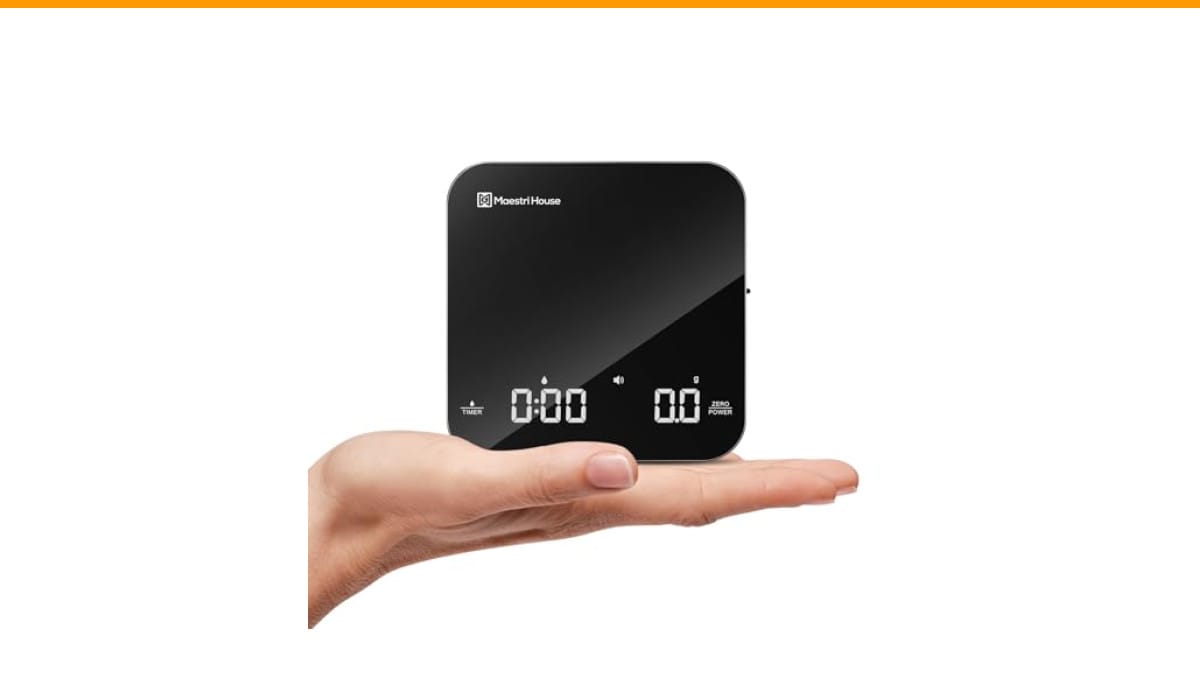
Maestri House S2 Espresso Coffee Scale with…
- 【Ultra Small, Yet Professional】The Espresso Scale is small enough to fit in your palm. It measures 4.13*4.13*0.78 inches and weigh…
- 【0.1g High Precision】This digital kitchen coffee scale is equipped with high-precision sensors and a reliable microprocessor, guar…
- 【Three Units & Dual Timekeeping Modes】The Espresso Digital Timer Scale has three units of measurement (g/oz/ml) that can be conver…
As an Amazon Associate I earn from qualifying purchases.
This article walks through the specific conditions that keep a scale accurate, the exact storage spots that work, and what to do before you put it away. You will also see a practical comparison of storage methods so you can pick one that fits your counter space and routine.
A scale like the Maestri House S2 Espresso Coffee Scale with Timer is built to be moved. It is small enough to fit in a palm, weighs under a pound, and uses a borosilicate glass surface. That compact size means you can store it properly without dedicating a full cabinet shelf to it.
Why Storage Location Matters More Than You Think
Load cells are mechanical. They measure force by bending slightly under weight. That bend is microscopic, but it must be consistent. If the scale sits in a place where the temperature changes by 15 degrees between day and night, the metal inside the load cell expands and contracts. Over weeks, that cycling shifts the zero point.
Humidity is the second enemy. Moisture in the air can get into the electronics, especially around the USB-C port and the touch sensors. A scale stored in a damp basement or near a kettle that steams constantly will develop erratic readings. The silicone pad on the Maestri House S2 helps protect the surface, but it does not seal the internal components.
Physical shock is the third issue. Dropping a scale once is usually fine. Dropping it repeatedly, or storing it under heavy objects, bends the load cell slightly. That bend changes the calibration curve. You can recalibrate some scales, but most consumer models do not have a calibration mode. Once the sensor is bent, the scale is permanently off.
So the goal of good storage is simple: keep the scale in a stable environment, keep it flat, and keep it free from pressure.
The Three Storage Methods That Actually Work
There is no single right way to store a coffee scale. The best method depends on your kitchen layout and how often you brew. Here are the three approaches that protect the sensor and keep the scale ready to use.
Method 1: Dedicated Drawer With a Liner
This works best for people who have a coffee station or a drawer near the machine. Use a shallow drawer and line the bottom with a thin foam sheet or a silicone mat. Place the scale flat, with the display facing up. Do not stack anything on top of it.
The key is the liner. A hard drawer bottom transfers vibration and shock. Foam or silicone absorbs it. If you have multiple scales, give each one its own spot. Stacking scales directly on top of each other puts pressure on the lower unit’s load cell.
One caveat: a drawer near the sink is a bad idea. The humidity from washing dishes and running the tap will reach the scale. Choose a drawer on the opposite side of the kitchen, or one that stays dry.
Method 2: On-Counter Display With a Cover
If you brew every day, taking a scale out of a drawer and putting it back is friction. Many home baristas leave the scale on the counter next to the espresso machine. That is fine, but it needs a cover.
A simple glass cloche or a plastic dust cover keeps coffee grounds and cooking grease off the surface. The borosilicate glass top of the Maestri House S2 wipes clean easily, but dust still settles in the crevices around the touch buttons. A cover solves that.
Keep the scale away from the stove. Heat from cooking, especially from boiling water or frying, raises the ambient temperature around the scale. That heat can cause the timer to run slightly fast in extreme cases, though most modern microprocessors handle it. The bigger risk is the thermal cycling mentioned earlier.
Method 3: Portable Case for Rotation
Some people have multiple scales. One stays at home, one goes to the office, and one travels for pour-over sessions. For that use case, a hard shell case with custom foam is the best option.
Look for a case designed for small electronics or camera gear. The scale fits in the main compartment, and the silicone pad goes in a separate slot. The USB-C cable can be coiled in a side pocket. This method protects against drops during transport and keeps the scale clean inside a bag.
The downside is that a case takes up space. It is not ideal for a small apartment kitchen. But if you already own a travel setup, this is the safest way to store the scale between uses.
Before You Store: Cleaning and Battery Prep
Never put a dirty scale away. Coffee grounds are abrasive. If they sit under the silicone pad, they can scratch the glass surface. Worse, oils from coffee beans can seep into the gap around the display and attract dust.
Wipe the scale down with a dry microfiber cloth after each use. If you spill liquid on it, use a barely damp cloth and dry it immediately. Do not submerge the scale. The Maestri House S2 has a waterproof surface, but that does not mean the whole unit is waterproof.
Battery care matters too. The S2 has a 500 mAh lithium battery that lasts up to 90 days on a charge. If you plan to store the scale for more than a month, charge it to about 80% and turn it off. Lithium batteries degrade fastest when stored at full charge or completely empty. A partial charge is the sweet spot.
Also, check the auto shut-off. Most scales, including this one, enter sleep mode after five minutes of inactivity. Before long-term storage, make sure the scale is off. A scale that wakes up in a bag and stays on will drain the battery to zero.
Storage Method Comparison
| Method | Protection Level | Best For | Space Needed | Key Risk |
|---|---|---|---|---|
| Drawer with liner | High | Daily brewers with dedicated coffee area | One shallow drawer | Humidity if near sink |
| On-counter with cover | Medium | Daily brewers who want scale visible | Counter footprint | Heat from stove or steam |
| Hard shell case | Highest | Travelers or multi-scale owners | Case takes up space | Forgetting to charge before long trip |
Each method works if you follow the core rules: flat surface, no pressure, stable temperature, low humidity. The comparison above helps you decide based on how often you brew and how much counter space you have.
Common Storage Mistakes to Avoid
Storing the scale upside down is a mistake. The load cell is calibrated with the scale resting on its feet. Flipping it does not damage anything immediately, but it puts stress on the sensor in a direction it was not designed for. Keep the display facing up.
Leaving the scale in a car is another problem. Car interiors can reach 140 degrees Fahrenheit in summer. That heat can warp the plastic housing and shorten battery life. If you travel with a scale, bring it inside at night.
Do not store the scale near a window. Direct sunlight heats the glass surface and can cause the display to fade over time. The hidden LED display on the S2 is bright, but prolonged UV exposure will yellow the plastic bezel.
Finally, do not wrap the scale in a plastic bag. Trapped moisture condenses inside the bag when the temperature changes. That condensation can reach the internal circuit board. Use a breathable cloth bag or a case with ventilation instead.
Frequently Asked Questions About Scale Storage
Can I leave my coffee scale on the espresso machine?
Yes, but only if the machine is off and cool. The top of an espresso machine gets warm during use. That heat transfers to the scale and can cause zero drift. If you leave the scale on the machine, wait until the machine cools down completely before placing it there.
How long does a coffee scale battery last in storage?
Most scales with lithium batteries lose about 5% charge per month in storage. A scale charged to 80% should hold enough charge for three to four months. The Maestri House S2 lasts up to 90 days on a full charge in active use, so storage time is shorter than active time.
Does storing a scale with a weight on it damage the sensor?
No, but it is not recommended. Load cells are designed to handle weight up to their maximum capacity. The S2 handles up to 2026 grams. Leaving a small weight on it will not damage the sensor, but it does keep the load cell under constant tension. Over years, that tension can cause slight drift.
Can I store my scale in a cabinet above the stove?
Avoid it. Cabinets above the stove get hot when you cook. The heat rises and can reach 120 degrees in that cabinet. That is enough to shorten battery life and affect calibration. Use a lower cabinet away from the oven.
Should I remove the silicone pad before storing?
No. The pad protects the glass surface from scratches. Keep it on. Just make sure the pad is dry before you put the scale away. A damp pad can trap moisture against the glass and eventually seep into the seams.
What to Remember When Putting Your Scale Away
- Store the scale flat with the display facing up, never upside down or on its side.
- Use a foam liner or silicone mat in a drawer to absorb vibration and shock.
- Keep the scale away from heat sources, direct sunlight, and high-humidity areas like sinks and kettles.
- Charge the battery to about 80% before storing longer than a month, and turn the scale off.
- Wipe the surface clean before storage; coffee oils attract dust and can scratch glass.
- Do not stack objects on top of the scale, and do not leave heavy weights on the sensor.
- If you travel with a scale, use a hard shell case with foam inserts for the highest protection.
Proper storage is a habit, not a one-time fix. It takes ten seconds to wipe down a scale and place it in its spot. That small routine keeps your readings accurate and your espresso consistent. If you are also working on keeping your equipment clean, check out our guide on cleaning coffee maker and coffee machine maintenance for related tips.
Products related to this article
Sponsored / affiliate links. As an Amazon Associate I earn from qualifying purchases. I may earn additional commission from eligible campaigns.
 MIBOTE Silicone Cooking Kitchen Utensils Set, Wooden Handle, Coffee
 HomeBeyond Espresso Coffee Maker 12 Cups, Classic Stovetop Espresso Maker, 600ml / 20oz Coffeemaker for Gas & Ceramic Stovetops (Silver)
 Coffee Espresso Machine Handle Replacement Parts, Cafe Bracket Handle for Lidl Silvercrest CM4621 CM4218 KF5002 KF500S Barista (for 51mm Portafilter Basket - Not included)