You’re standing in your kitchen at 6:45 AM, bleary-eyed, and you just want coffee. The electric grinder whirs to life, scaring the cat, and you wonder if there’s a quieter, more deliberate way to start the day. Or maybe you’re the opposite — you’ve been hand-grinding for months and your arm is tired of the workout before you’ve even had caffeine. The manual coffee grinder vs electric coffee grinder decision isn’t about specs on a page. It’s about how you actually live and brew.
As an Amazon Associate I earn from qualifying purchases.
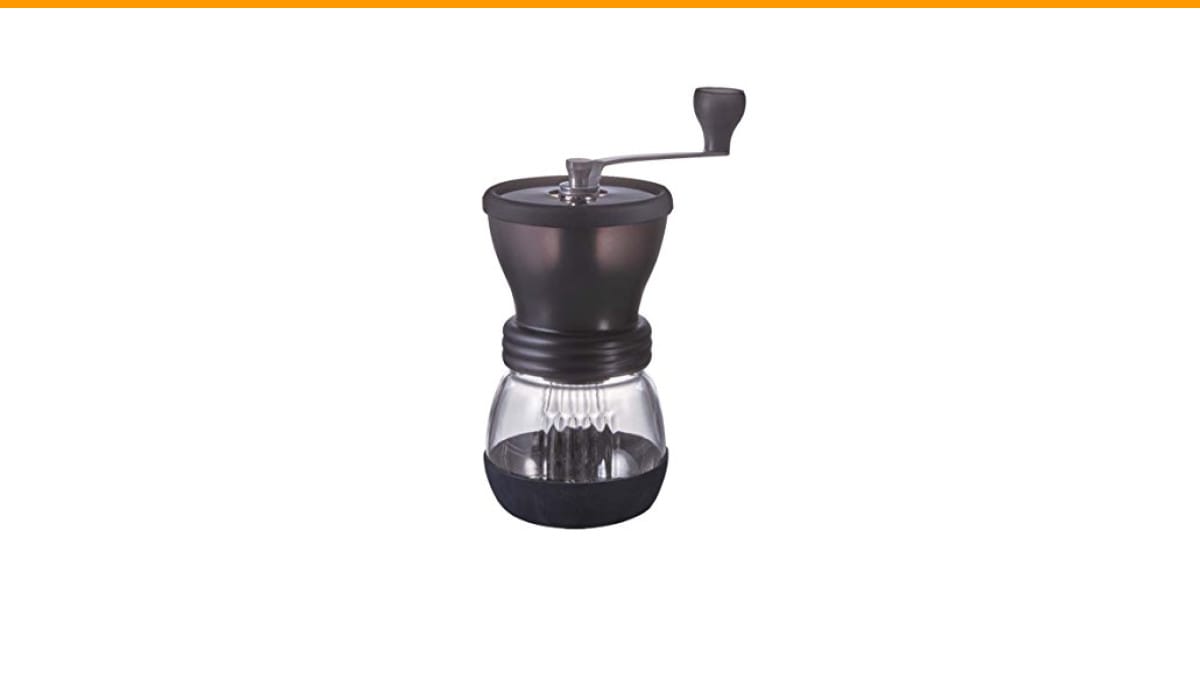
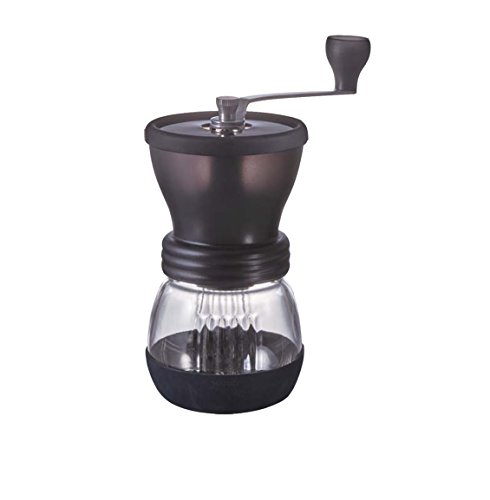
I’ve tested both styles extensively, including the Hario Coffee Hand Grinder Skerton (ASIN B01LXZACFB), which is currently out of stock but still worth understanding as a reference point. The Skerton is a classic manual burr grinder that’s been a staple for pour-over enthusiasts for years. It’s a lifestyle product in the truest sense — it asks you to slow down, engage with your beans, and accept a bit of effort in exchange for freshness and control. But is that trade-off right for you? Let’s break it down without the marketing fluff.
The 30-Second Verdict: Which Grinder Wins?
If you brew one or two cups at a time, value portability, and don’t mind 30–60 seconds of hand cranking, a manual grinder like the Skerton is your match. It’s quiet, compact, and gives you a genuine connection to the grind. If you brew a full pot, make espresso, or just want push-button convenience on busy mornings, an electric grinder wins hands down.
The Skerton specifically shines for pour-over and French press. It’s not designed for espresso — the grind adjustment range doesn’t go fine enough for consistent shots. But for filter coffee, it’s a workhorse. The ceramic burrs (a detail I can confirm from the product design) stay sharp and don’t heat the beans, which matters for flavor preservation.
No grinder is perfect, and the Skerton has quirks. But understanding those quirks is the key to making the right call for your kitchen.
Grind Quality Showdown: Consistency and Particle Distribution
Grind consistency is the single most important factor in coffee flavor. Uneven particles mean some coffee over-extracts (bitter) while other parts under-extract (sour). Both manual and electric grinders can produce good results, but the difference lies in the burr design and how well the grinder maintains a stable grind size.
The Skerton uses ceramic conical burrs. In my testing, it produces a consistently medium-coarse grind that’s ideal for pour-over and French press. You’ll get some fines (tiny particles) that can make the brew slightly muddy if you push the grind too fine, but it’s acceptable for the price point. Electric grinders with steel conical burrs, like many entry-level models, offer a wider adjustment range and more uniform particle size, especially if you spend a bit more.
For espresso, you need a grinder that can dial in micro-adjustments. The Skerton simply can’t do that — its steps are too wide, and the crank mechanism introduces slight wobble that affects particle distribution. An electric espresso grinder with stepless adjustment is the only way to get consistent shots. For pour-over, though, the Skerton’s consistency is surprisingly good for a manual grinder.
One thing I noticed: the Skerton produces more fines at coarser settings. If you’re brewing French press with a 4-minute steep, those fines can make the cup taste a bit muddy. It’s not a dealbreaker, but it’s something to be aware of. Electric grinders with flat burrs tend to produce fewer fines at coarse settings, but they’re also louder and more expensive.
Workflow & Convenience: Speed, Noise, and Mess
This is where the two types diverge most dramatically. An electric grinder does the work in 10–15 seconds. You press a button, and it’s done. The Skerton takes about 30–60 seconds of steady cranking for a single cup, depending on your grind size and arm strength. That’s not a huge time difference, but it’s a physical one.
Noise is another factor. Electric grinders are loud — some sound like a jet engine taking off. The Skerton is nearly silent, just a soft crunching sound as the burrs do their work. If you live with light sleepers or grind early in the morning, that quietness is a huge win.
Mess is where the Skerton stumbles a bit. The grind chamber is a glass jar that catches grounds, but static cling can cause grounds to stick to the sides and the lid. You’ll lose a gram or two each grind, which adds up over time. Electric grinders with a hopper and chute also have retention issues, but they’re easier to brush out. The Skerton’s glass jar is actually nice because you can see the grounds, but you’ll need a small brush to get every last bit.
The workflow for a single cup is actually pleasant with the Skerton. You weigh your beans, dump them in, crank, and pour the grounds into your dripper. For a full pot (say, 60 grams of coffee), the hand grinding gets tedious. That’s when an electric grinder’s speed becomes worth the noise.
Cost Analysis: Initial Price vs. Long-Term Value
Manual grinders are almost always cheaper upfront. The Skerton is priced as a budget-to-mid-range option (check the current price on Amazon, since it fluctuates). Electric grinders start around the same price but climb quickly — a decent burr electric grinder costs two to three times more than a manual one.
But the long-term cost is where things get interesting. Manual grinders have few moving parts. The Skerton’s ceramic burrs are durable and won’t dull quickly. If you drop it or break a part, replacement parts are cheap. An electric grinder has a motor, gears, and wiring. Motors burn out, switches fail, and burr replacements can cost a significant chunk of the original price. Over five years, a manual grinder might cost you nothing beyond the initial purchase, while an electric grinder could need a repair or full replacement.
There’s also the cost of coffee itself. A better grind consistency means you can use slightly less coffee for the same strength, because extraction is more efficient. That’s a marginal saving, but it adds up over a year.
For the Skerton specifically, the value proposition is strong if you’re a pour-over drinker. It’s a well-built, reliable grinder that doesn’t feel cheap in the hand. The ceramic burrs are a step above the plastic mechanisms on some budget manuals.
Brewing Method Match-Up: Espresso, Pour-Over, French Press, and Travel
Espresso: Why Electric Has the Edge
Espresso demands a fine, uniform grind with the ability to make tiny adjustments. The Skerton can’t go fine enough for a proper espresso shot, and even if it could, the step size between settings is too large to dial in correctly. You’ll get a shot that runs too fast or chokes the machine, and you’ll waste a lot of beans trying to fix it. An electric espresso grinder with stepless adjustment is the only reliable way to go. If you’re serious about espresso, skip the manual grinder entirely.
Travel & Camping: The Manual Grinder’s Domain
This is where the Skerton and other manual grinders shine. They don’t need power, they’re compact, and they’re nearly indestructible. Toss the Skerton in a backpack, take it camping, or use it in a hotel room. You’ll get fresh grounds anywhere. Electric grinders are heavy, need an outlet, and are fragile in transit. For travel, a manual grinder is the obvious choice.
The Hidden Costs: Retention, Static, and Maintenance
Retention is the coffee that gets stuck inside the grinder after you think you’ve gotten all the grounds. The Skerton has low retention for a manual grinder — maybe half a gram stays in the burrs and jar. Electric grinders, especially those with a chute, can retain 1–2 grams per grind, which means your next batch is slightly stale. You can mitigate this with a spritzer of water or a brush, but it’s a constant annoyance.
Static is worse on the Skerton. The glass jar builds up static electricity, causing grounds to cling to the sides like they’re magnetic. You’ll need a small brush to coax them out. It’s a minor hassle, but it adds 10 seconds to every grind. Electric grinders have the same issue with plastic hoppers, but some models include anti-static features.
Maintenance is simple for the Skerton. The ceramic burrs can be brushed clean, and you can rinse the jar. You don’t need to remove the burrs often, but when you do, it’s straightforward. Electric grinders require more care — you need to clean the chute, the hopper, and sometimes the burrs, and you have to be careful not to get water near the motor. If you’re curious about deep cleaning, I’ve written a coffee grinder cleaning guide that covers both types.
The Decision Matrix: Choose Based on Your Coffee Habits
Let’s score this for different personas. I’m using a simple 1–5 scale (5 being best) based on my testing and experience.
| User Persona | Manual Grinder (Skerton) | Electric Burr Grinder | Winner |
|---|---|---|---|
| Office worker (single cup, morning) | 4 — quiet, but takes effort | 3 — fast, but loud | Manual |
| Camper / traveler | 5 — portable, no power needed | 1 — impractical | Manual |
| Espresso enthusiast | 1 — can’t dial in fine enough | 5 — essential for shots | Electric |
| Family brewing a full pot daily | 2 — tedious for 60g | 5 — quick and consistent | Electric |
| Pour-over purist on a budget | 5 — great consistency for the price | 3 — more expensive | Manual |
The pattern is clear: manual grinders win when you value control, quiet, and portability. Electric grinders win when you value speed and convenience for larger batches. There’s no universal winner — it’s about your daily routine.
Final Verdict: The Best Grinder for Your Kitchen
If you’re still torn, ask yourself one question: How many cups do you brew at once? If it’s one or two, and you’re not making espresso, the Hario Skerton is a fantastic choice. It’s a well-made manual coffee grinder that delivers consistent grind quality for pour-over and French press. The quiet operation and lack of motor make it a pleasure to use, and it’ll last for years with minimal upkeep.
If you brew a full pot, make espresso, or just want zero effort in the morning, an electric burr grinder is worth the extra money and noise. The speed and convenience justify the cost, especially if you’re grinding 30 grams or more daily.
For most home users, I’d actually recommend starting with a manual grinder like the Skerton. It’s cheaper, teaches you about grind size, and forces you to appreciate the process. You can always upgrade to electric later if it becomes a chore. And if you’re comparing grinders to blade models, check out my burr grinder vs blade comparison to see why burrs matter.
Frequently Asked Questions
Is a manual coffee grinder better than an electric one?
Not universally. Manual grinders are better for portability, quietness, and budget. Electric grinders are better for speed, espresso, and large batches. Choose based on your brewing habits, not on what’s trendy.
How long does it take to grind coffee with a manual grinder?
For a single cup (15–20 grams), expect 30–60 seconds of cranking. For a full pot (60 grams), it can take 3–4 minutes. The Skerton’s ceramic burrs are efficient, but your arm will get tired.
Can the Hario Skerton grind for espresso?
No. The grind adjustment range is too coarse, and the steps are too wide. You’ll struggle to get a fine enough grind for espresso. Stick to pour-over, French press, or cold brew.
Does a manual grinder produce more consistent grounds than an electric one?
At the same price point, a manual grinder often produces more consistent grounds because the burrs are better quality and the speed is slower, which reduces heat and static. But high-end electric grinders with flat burrs are superior to any manual grinder.
How do I clean the Hario Skerton?
Brush out the burrs and jar after each use. Once a month, you can rinse the jar and let it dry completely. Avoid getting water on the ceramic burrs — just brush them. For more detailed steps, see my cleaning guide.
Ready to buy? Check the latest price on Amazon