You’ve pulled a shot that tastes like last week’s dark roast, even though you just dialed in fresh beans. The culprit isn’t the beans or your technique. It’s the stale coffee oils and ground particles hiding inside your grinder. Every home barista hits this wall eventually, and the standard fix comes down to two tools: coffee grinder cleaning tablets or a simple grinder brush.

As an Amazon Associate I earn from qualifying purchases.
Most people pick one and stick with it, but that’s a mistake. Tablets and brushes solve different problems. One handles deep oil buildup, the other handles daily loose grounds. I’ve tested both approaches side by side over several months, and the honest answer is that you’ll probably want both in your cabinet. But if you only buy one right now, the right choice depends on how you use your grinder and how much effort you’re willing to put in.
Let’s break down what each method actually does, what it costs in time and money, and how to build a simple routine that keeps your coffee tasting fresh without turning cleaning into a second job.
The Real Question: Deep Clean vs. Daily Maintenance
Think of your grinder like a frying pan. You wipe the pan out after every use, but you still give it a proper scrub with soap and hot water once in a while. The brush is that daily wipe. The tablets are the deep scrub.
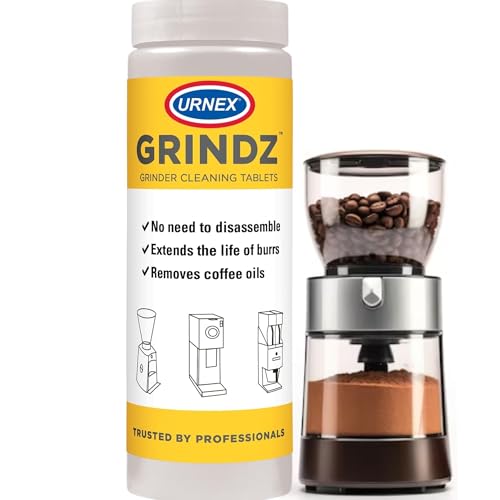
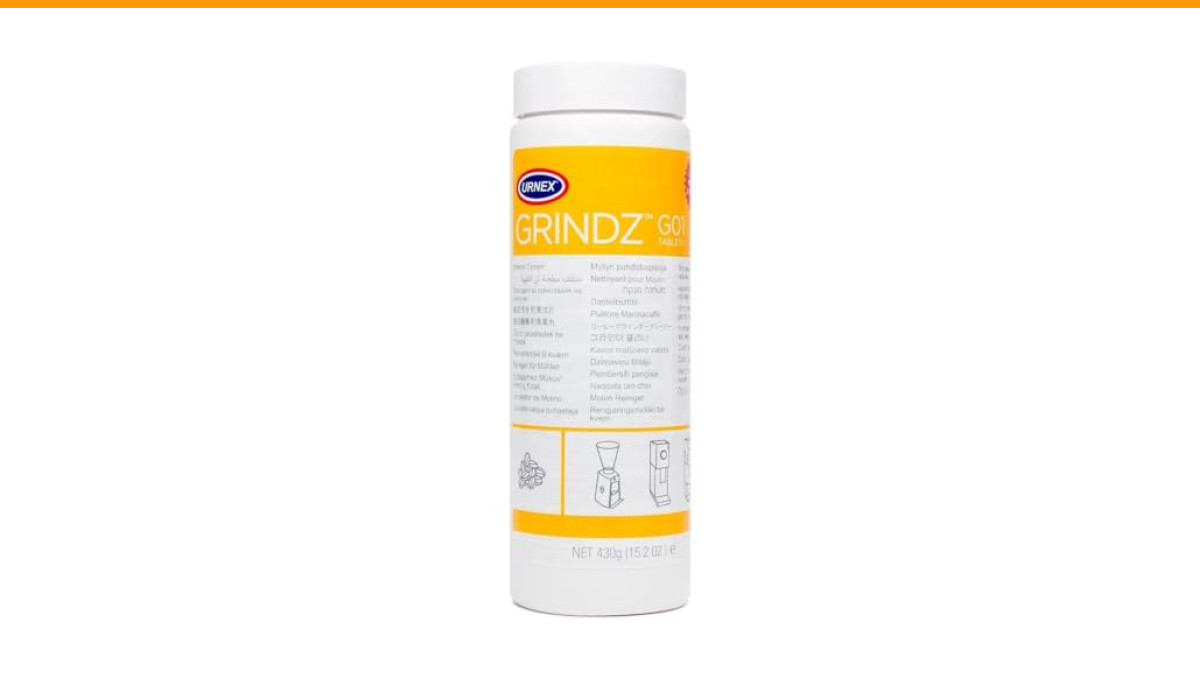
A grinder brush catches the loose coffee grounds that cling to the burrs, the chute, and the grind chamber. It takes about thirty seconds to use, and you should do it every time you grind. The Urnex Grindz tablets, on the other hand, are a monthly or bi-weekly treatment. You run them through the grinder like coffee beans, and they absorb and pull out the residual oils that a brush can’t reach. The set of 12 tablets per case gives you a full year of monthly deep cleans, assuming you use one tablet each time.
The problem most people run into is treating these two methods as interchangeable. They’re not. A brush won’t dissolve old oil buildup, and tablets won’t remove the loose grounds sitting in the chute after a grind. You need to understand what each one targets before you can decide which to buy.
What Each Method Actually Removes (And What It Misses)
Tablets: Oils, Stale Particles, and Static Cling
Urnex Grindz tablets are designed to tackle the invisible stuff. Coffee beans contain oils that gradually coat your burrs and the inside of the grinding chamber. Over time, those oils go rancid and start flavoring every batch of coffee you grind after them. You can’t see this buildup, but you can taste it. That dull, bitter note in your morning cup is often stale oil, not the beans themselves.
Running a tablet through your grinder works because the tablet is abrasive enough to scrub the burrs as it passes through, but it’s also formulated to bind with coffee oils and pull them away. The process takes a few minutes, and you’ll want to grind a small amount of fresh coffee afterward to clear out any leftover tablet residue. In my testing, the difference was most noticeable on a grinder I’d neglected for about six weeks. The first shot after the tablet treatment tasted noticeably cleaner, with more of the bean’s natural sweetness coming through.
What tablets don’t do is remove the loose grounds that accumulate around the chute and the auger. Those need physical removal, which is where the brush comes in. Tablets also won’t fix a grinder that’s already clogged with compacted coffee dust. You’ll need to disassemble and brush out the big stuff first.
Brushes: Loose Grounds, Chaff, and Surface Debris
A grinder brush is a simple tool, but it’s essential for daily maintenance. After every grind, a small amount of coffee stays behind. Some of it clings to the burrs, some gets trapped in the chute, and some settles as a fine dust on the grinding chamber walls. Left alone, that debris mixes with fresh beans the next time you grind, which throws off your dose consistency and adds stale flavor to your cup.
The bristle stiffness matters more than you’d think. A brush that’s too soft won’t dislodge the compacted grounds. One that’s too stiff can scratch the burrs over time. The best grinder brushes have medium-stiff bristles that can reach into the crevices without damaging the metal. You’ll also want a brush with a narrow head or a pointed tip to get into the chute and around the burr carrier.
What a brush can’t do is remove the oils that bake onto the burrs over weeks of use. No amount of brushing will dissolve that sticky film. That’s why a brush alone isn’t enough for long-term grinder health, and why the tablets exist in the first place.
Head-to-Head: Time, Cost, and Effort Comparison
Let’s get practical. Here’s how the two methods stack up for a home user with a typical burr grinder.
| Factor | Grinder Brush | Urnex Grindz Tablets |
|---|---|---|
| Time per cleaning | 30-60 seconds | 3-5 minutes (including flush) |
| Cost per use | One-time purchase, lasts years | Per tablet, check current price on Amazon |
| Frequency | Daily or after every grind | Monthly or every 4-6 weeks |
| Removes loose grounds | Yes | No |
| Removes residual oils | No | Yes |
| Requires disassembly | No | No (but helps to brush first) |
| Mess level | Low, grounds stay in grinder | Moderate, need to catch tablet debris |
The cost picture is interesting. A decent grinder brush costs about the same as a single box of tablets, but the brush lasts for years. The tablets are a recurring expense. However, you’re not using a tablet every day. Twelve tablets per case means a year of monthly cleanings. For most home users, that’s a small annual cost compared to the price of the grinder itself.
Time-wise, the brush wins for daily use. Thirty seconds after each grind keeps your grinder in decent shape. The tablets take longer, but you only do it once a month. The real answer isn’t either/or. It’s a combination.
The Hybrid Approach: A Practical Weekly + Monthly Routine
Here’s the routine I’ve settled on after testing both methods, and it’s what I recommend to anyone with a burr grinder.
Daily (30 seconds): After your last grind of the day, unplug the grinder and give the burrs, chute, and chamber a quick brush. This removes the loose grounds that would otherwise go stale and contaminate tomorrow’s coffee. Don’t bother with the tablets here.
Weekly (5 minutes): Take a closer look. Brush out any grounds that have compacted around the edges. If your grinder has a removable burr carrier, take it out and brush the underside. This is also a good time to wipe down the exterior and the hopper.
Monthly (10 minutes): Run a single Urnex Grindz tablet through the grinder on a medium setting. Catch the output in a bowl. After the tablet has passed through, grind about a tablespoon of fresh coffee beans to clear out any leftover tablet residue. Then brush out the chamber and chute. This deep clean removes the oil buildup that the brush can’t touch.
This hybrid approach keeps your grinder clean without turning maintenance into a chore. The daily brush prevents buildup, and the monthly tablet resets the grinder to a like-new state. I’ve found that my grind retention stays more consistent with this routine, meaning the weight of coffee that comes out matches what I put in. That consistency matters for dose accuracy, especially if you’re weighing your shots.
If you’re dealing with a grinder that’s already clogged or has heavy buildup, start with a thorough manual cleaning first. Check out this step-by-step guide for disassembly and deep cleaning before you introduce tablets.
Safety and Longevity: Protecting Your Burrs and Machine
Both methods have potential downsides if you use them carelessly.
Brush bristles can break off and get into your coffee. Cheap brushes with weak bristles are the main culprit. If you see bristles shedding, stop using that brush immediately. The plastic bristles can end up in your grinder and eventually in your cup. A quality brush with stiff, well-anchored bristles won’t have this problem, but it’s worth inspecting your brush regularly.
Tablets have a different risk. If you use too many tablets or run them through too frequently, the abrasive action can wear down the burrs faster than normal coffee grinding. The Urnex Grindz tablets are designed to be safe for regular use, but that means following the recommended frequency. Once a month is plenty for a home grinder. Also, make sure you grind enough fresh coffee afterward to clear out all the tablet residue. Leftover tablet particles can clog the chute or auger if they sit there.
Another safety point: never run tablets through a grinder that’s still wet from a previous cleaning. The tablet dust can clump and cause jams. Always let the grinder dry completely after any wet cleaning.
If you’re using a blade grinder, the situation is different. Tablets are designed for burr grinders, and running them through a blade grinder can be messy and less effective. For blade grinders, a brush is the safer choice. You can read more about the differences in our burr vs. blade comparison.
Environmental Impact: Which Choice Is Greener?
This is a consideration that doesn’t get enough attention. The brush is clearly the greener option in terms of waste. A single brush lasts for years and produces no ongoing waste. The tablets come in a plastic tub with a label, and each tablet is individually wrapped. That’s twelve pieces of plastic and foil per case, every year.
However, the tablets are more effective at removing oils, which means your coffee tastes better for longer. That might reduce the chance you’ll throw out stale beans or upgrade your grinder prematurely. It’s a trade-off. The tablets are biodegradable, which helps, but the packaging isn’t.
If you’re trying to minimize your environmental footprint, use the brush daily and only use tablets every other month. That cuts your tablet consumption in half while still giving you the deep cleaning benefits.
Expert Verdict: When to Use Which (And Why You Need Both)
Here’s the short version. If you can only buy one tool right now, buy a grinder brush. It handles the daily maintenance that keeps your grinder functioning properly. Without a brush, loose grounds will accumulate and affect your grind consistency within a week.
But the brush alone isn’t enough. After a month or two, the oils will build up and start affecting the flavor of your coffee. You’ll notice it as a dullness or bitterness that doesn’t go away no matter how fresh your beans are. That’s when you need the Urnex Grindz tablets.
The ideal setup is both. A brush for daily use and a box of tablets for monthly deep cleaning. The cost is minimal compared to the price of a good grinder, and the payoff is consistently better-tasting coffee.
If you’re on a tight budget, start with the brush and add the tablets when you can. The brush will keep things running, but you’ll eventually hit that oil buildup wall. If you’re already dealing with stale flavors and you’ve never used tablets, the Urnex Grindz set of 12 is a solid starting point.
For more on why regular cleaning matters for your whole coffee setup, check out our piece on why regular cleaning is important.
Frequently Asked Questions
Can I use tablets on a blade grinder?
Technically yes, but it’s not recommended. Blade grinders don’t have the same burr structure that tablets are designed to clean. The tablet will get chopped up, and you’ll need to run a lot of coffee through afterward to clear the residue. A brush is a much better option for blade grinders. If you’re thinking about upgrading, our burr vs. blade guide explains the differences in detail.
How often should I brush vs. tablet?
Brush after every grind, or at least once a day if you grind multiple times. The tablet treatment should happen once a month for a home grinder. If you use your grinder heavily, like several times a day, you can increase the tablet frequency to every three weeks. Just don’t go overboard, since the abrasive action can wear burrs if used too often.
Do tablets leave a residue?
Yes, if you don’t flush them out properly. The tablet breaks down into a fine powder that needs to be ground out with fresh coffee. If you skip that step, the residue can mix with your next batch of coffee and affect the taste. Always grind about a tablespoon of fresh beans after a tablet treatment. That’s the standard practice and it works well.
Can I use the same brush for my espresso machine and grinder?
You can, but it’s not ideal. The brush will pick up coffee oils from the grinder, and those can transfer to your espresso machine’s group head. It’s better to use separate brushes for each. A dedicated grinder brush is cheap enough that there’s no reason to share.
Will tablets fix a grinder that’s already clogged?
No. If your grinder is clogged with compacted coffee dust, tablets won’t help. You need to disassemble the grinder and physically remove the blockage first. Once it’s clear, you can run a tablet to clean the oils. Trying to force a tablet through a clogged grinder can cause damage.
If you’ve recently cleaned your grinder and the coffee still tastes off, it might not be a cleaning issue. Take a look at our article on why coffee tastes bitter after cleaning for other possible causes.
Ready to buy? Check the latest price on Amazon