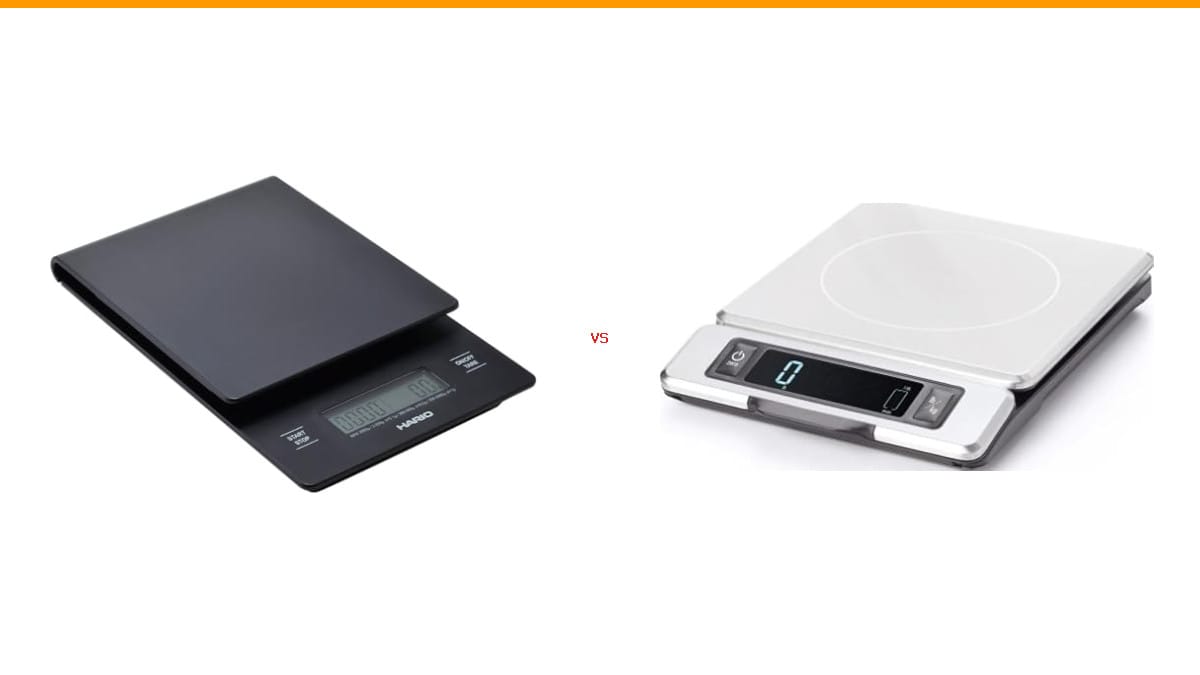
People usually land on this comparison for one reason: they want to stop eyeballing their coffee. You have a Hario V60 or an espresso machine, and you know that grams matter. But do you need a dedicated coffee scale with a timer, or will a solid kitchen scale do the same job for less money?
| Our Pick | Runner Up |

|
|
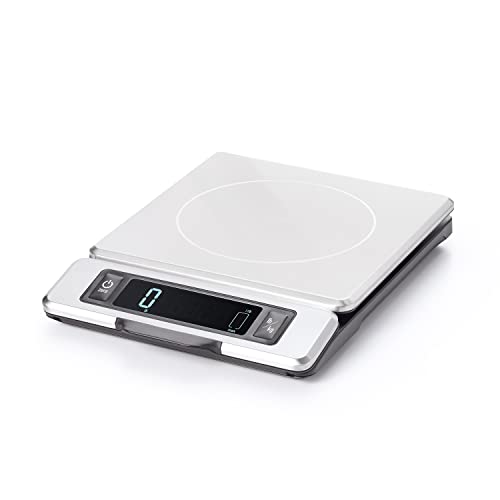
| HARIO Hario V60 Drip Scale, Black (New Model) | OXO OXO Good Grips 11-Pound Digital Kitchen Food… |
| See on Amazon | See on Amazon |
As an Amazon Associate I earn from qualifying purchases.
I have used both. My friend owns the OXO Good Grips 11-Pound Digital Kitchen Food Scale, and I have the Hario V60 Drip Scale sitting on my counter right now. We swapped gear for a week to settle this. The short answer is that the Hario wins for pour-over and espresso, but the OXO is the better buy for someone who only weighs beans and bakes bread. The long answer involves lag, auto-shutoff, and how much space you have under your espresso machine.
This decision is about workflow friction more than raw accuracy. Both scales weigh things. The difference is how they behave while you are trying to brew.
The Quick Verdict: Which Scale Should You Buy?
Buy the Hario V60 Drip Scale if you brew pour-over or espresso regularly. The 0.1 gram resolution and built-in timer are worth the extra cost. The OXO is fine for French press, drip coffee, and cooking, but its 1 gram increments and slow response will frustrate you during a timed pour.
If you only make coffee occasionally and want one scale for the whole kitchen, get the OXO. It is easier to clean and more versatile. Just know that you will be using your phone for timing.
The 4 Technical Differences That Actually Change Your Brew
Ignore the marketing. These four specs decide whether a scale works for coffee or not.
Precision (0.1g vs 1g) and Why It Matters for Espresso
The Hario measures in 0.1 gram increments. The OXO measures in 1 gram increments. That sounds like a small gap, but it changes your espresso yield.
Dialing in espresso means tracking dose-to-yield. You pull a shot, weigh the liquid, and adjust. A 1 gram jump on the OXO means you cannot see if you pulled 36 grams or 37 grams. That single gram changes the taste of the shot. The Hario shows you the half-gram movements as the shot flows.
For pour-over, 0.1 grams matters less. Your brew ratio can tolerate a gram of variance. But for espresso, the Hario is the only correct choice here.
Response Time and Drift (The “Lag” Problem)
This is the difference nobody mentions in the spec sheet. The Hario has a faster reaction rate than the OXO. When you place a cup on the OXO, the number takes a second to settle. When you pour water, the reading lags behind the actual weight.
During a pour-over, you pour, stop, and wait for the scale to catch up. That pause breaks your rhythm. The Hario still has some lag, but it is noticeably quicker. You can pour in a steady stream and keep the weight moving in real time.
The OXO also drifts. Leave a cup on it for a minute and the reading might shift by a gram or two. For baking, that is nothing. For espresso, it is a headache.
The Built-In Timer vs. Your Phone Stopwatch
The Hario has a built-in timer that starts when you press the button. It is not a smart timer, but it is right there. You press start, pour, and watch the time and weight on the same screen.
The OXO has no timer. You will use your phone. That means two screens, two glances, and a wet hand reaching for your phone. It works, but it adds friction to every brew.
The Hario timer also solves the auto-shutoff problem. The scale will not turn off while the timer is running. The OXO has an auto-off feature that kicks in after a few minutes of inactivity. That is fine for weighing flour, but it can kill your scale mid-pour if you pause too long.
There is a workaround for the OXO: press the tare button before you start pouring. That resets the inactivity timer. It is clunky, but it works.
Physical Fit: Footprint and Group Head Clearance
The Hario is slim. It measures about 120mm by 190mm. The OXO is wider and bulkier. That width becomes a problem under an espresso machine.
Most home espresso machines have a limited gap between the group head and the drip tray. A wide kitchen scale like the OXO often does not fit. You have to balance the cup on the edge or hold it. The Hario slides under the group head with room to spare.
If you have a lever machine or a cramped counter, measure that gap before buying anything. The Hario is the safer bet for espresso.
When a Kitchen Scale is 100% Fine (And Saves You Money)
The OXO is a great kitchen scale. The stainless steel surface resists smudges, and the removable platform makes cleaning easy. You can wipe it down after a flour spill without worrying about water damage.
It has a tare function, so you can zero out a bowl or a plate. The display pulls out, which helps when you have a large mixing bowl blocking the screen. That is a thoughtful design for cooking.
For French press, the OXO is perfect. You weigh your beans, heat your water, and pour. No timer needed. For drip coffee, same story. The 1 gram resolution is fine when you are using 30 grams of coffee and 500 grams of water.
The OXO also handles bigger loads. It goes up to 11 pounds, so you can weigh a whole chicken or a bag of flour. The Hario maxes out at 2,000 grams, which is about 4.4 pounds. That is plenty for coffee, but useless for a big roast.
If you want one scale for the whole kitchen and coffee is a side hobby, the OXO is the sensible pick.
When a Kitchen Scale Ruins Your Workflow (Espresso vs. Pour-Over)
Espresso is where the OXO falls apart. The 1 gram resolution hides the yield changes you need to see. The lag makes it hard to stop the shot at the right weight. And the size often blocks the group head.
Pour-over is a closer call. You can use the OXO if you are patient. Weigh your beans, start your phone timer, and pour. The lag is annoying but manageable. The auto-shutoff is the real danger. If you stop pouring to stir or adjust your kettle, the scale might turn off. You lose your reading and have to start over.
The Hario was designed for this. The timer keeps the scale awake. The slim body fits under a V60 server. The 0.1 gram resolution catches the last few drops of your pour.
If you brew both espresso and pour-over, the Hario handles both. The OXO only handles one, and not well.
The “Dual-Use” Compromise: How to Pick One Scale for Everything
Some people want one scale for coffee and cooking. That is a fair ask. Here is the honest trade-off.
The Hario works for cooking, but it is limited. The 2,000 gram capacity is fine for most recipes, but you cannot weigh a large pot of soup. The surface is not removable, so cleaning is trickier. You have to wipe it carefully to avoid getting water in the electronics.
The OXO works for coffee, but only if you accept the limitations. Use your phone for timing. Accept the lag. Find a spot for it that is not under your espresso machine.
My recommendation: buy the Hario for coffee and keep a cheap mechanical scale for cooking. A basic kitchen scale costs very little and handles the heavy lifting. That gives you the precision you need for coffee without sacrificing the rest of your kitchen.
If you only have budget for one scale, the OXO is the better all-rounder. Just know that your espresso game will take a hit.
The Hidden Cost: Why Cheap Kitchen Scales Fail Within 6 Months
Cheap scales drift. The load cells inside them are not sealed well, so heat and moisture from your kitchen affect the readings. You might start a brew at 20 grams and end up with 22 grams on the screen. That is a recipe for bitter coffee.
The OXO is better built than a no-name scale, but it is still a kitchen scale. It is not designed for the steam and heat of a coffee station. The Hario has improved water resistance, which matters when you are pouring hot water over it.
Battery life is another factor. Both use AAA batteries. That is fine, but keep spares handy. USB-C charging would be nice, but neither of these scales has it. You are not avoiding cable clutter here.
Calibration is not something you will do often, but it is worth knowing. If your scale starts giving weird readings, check the manual. Both models are stable out of the box, but they can drift over time.
FAQ: Quick Answers for the Undecided
Can I use the OXO kitchen scale for pour-over coffee?
Yes, but you will need to use your phone for timing. The 1 gram resolution is acceptable for pour-over, and the tare function works fine. Just be careful about the auto-shutoff. Press the tare button before you start pouring to reset the inactivity timer.
Does the Hario V60 scale work with espresso machines?
Yes. The slim footprint fits under most home espresso machine group heads. The 0.1 gram resolution is what you need for tracking espresso yield. The built-in timer helps you time your shot from the first drop.
Is a 0.1 gram scale really necessary for coffee?
For espresso, yes. The difference between a 36 gram and a 37 gram yield is noticeable in the cup. For pour-over, no. A 0.5 gram or 1 gram scale is fine if you are using a consistent grind and dose. The Hario is overkill for French press.
Which scale is easier to clean?
The OXO wins. The removable platform lets you rinse it under the tap. The Hario requires careful wiping because the surface is not removable. If you spill coffee grounds on the Hario, you have to brush them off gently.
The Bottom Line: Match the Tool to the Ritual
You are not just buying a scale. You are buying a workflow. The Hario V60 Drip Scale is built for the rhythm of manual brewing. It responds fast, stays awake, and fits where you need it. The OXO is a solid kitchen tool that happens to weigh coffee.
If you take your coffee seriously, get the Hario. It is the difference between fighting your equipment and letting it disappear into the background. The OXO is a good backup, but it is not a coffee scale.
For those who want to keep their kitchen setup simple, the OXO is a fine choice. You will save money and have a versatile tool. Just do not expect it to keep up with a V60 or an espresso machine.
Before you decide, check the current prices on Amazon. The Hario is often worth the extra cost, but the OXO goes on sale frequently. Also, if you are dealing with a dirty machine, take a look at our guide on descaling your coffee machine to keep your brew tasting clean. And if you are comparing grinders, our burr grinder vs blade breakdown will help you pair the right grinder with your new scale.
Products related to this article
Sponsored / affiliate links. As an Amazon Associate I earn from qualifying purchases. I may earn additional commission from eligible campaigns.
 Stainless Steel Kitchen Utensils Set - 12pcs Cooking Utensils Set with Holder, Heat Resistant Kitchen Tool Set for Cooking with Turners, Potato Masher, Spatula, Spoons, Tongs, Whisk
 SOLUSTRE Electric USB Coffee Cup Warmer with Temperature Settings Portable Milk and Beverage Heating Coaster for Office Desk Small Lightweight Design Easy to Clean Surface Multi Functional
 MIBOTE Silicone Cooking Kitchen Utensils Set, Wooden Handle, Coffee