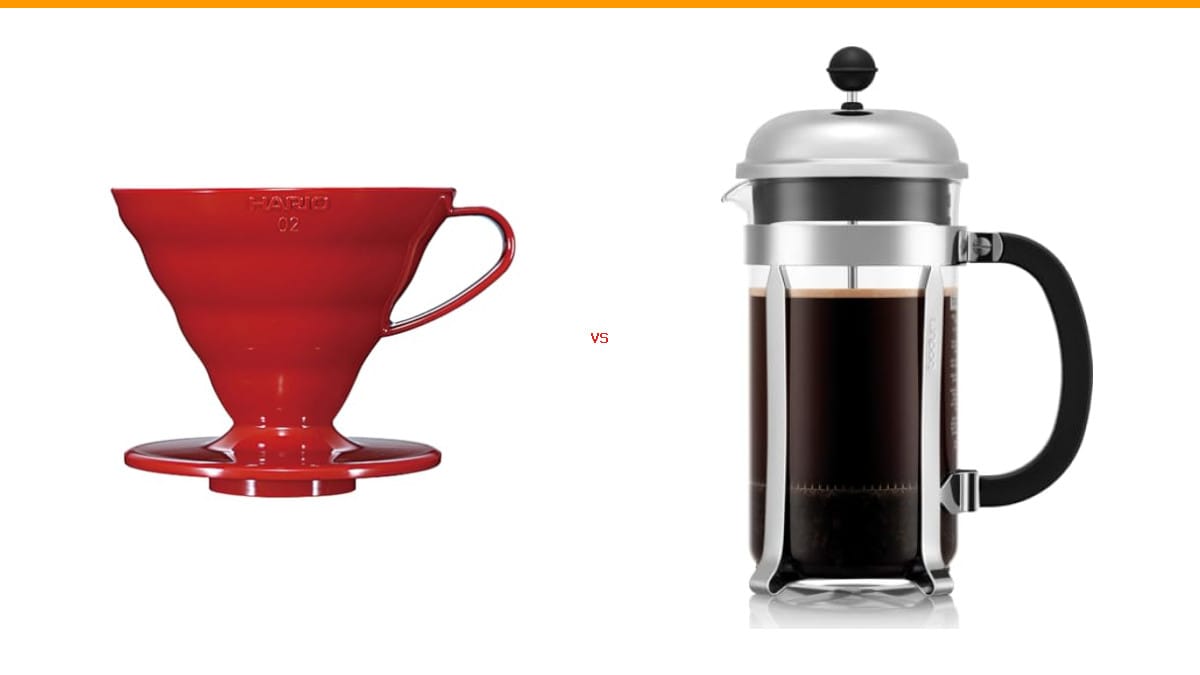
You’re standing in the coffee aisle, or more likely scrolling Amazon, torn between two icons. The Hario V60 plastic dripper and the Bodum Chambord French press. Both under $40. Both make excellent coffee. But they’re completely different animals, and the right choice depends on how you actually live.
I’ve owned both for years. My roommate has the Bodum, I have the V60. We’ve brewed side by side, swapped cups, argued about which is better. This comparison is the result of those arguments, plus a lot of morning caffeine.
Short version: the French press is easier, more forgiving, and better for groups. The pour-over rewards patience with a cleaner, brighter cup. Neither is objectively superior, but one probably fits your routine better. Here’s how to know.
The Core Difference: Immersion vs. Percolation
The Bodum Chambord uses immersion brewing. Coffee grounds sit fully submerged in hot water for four minutes. Everything stays in the carafe, and you press the plunger to separate grounds from liquid.
The Hario V60 uses percolation brewing. Water flows through a paper filter and a bed of grounds, extracting as it passes. The V60’s signature is its single large hole and spiral ridges, which let you control flow rate and extraction by how you pour.
That one difference changes everything about the flavor, the ritual, and the cleanup.
| Feature | Hario V60 (Size 02) | Bodum Chambord (34oz) |
|---|---|---|
| Brewing method | Percolation (pour-over) | Immersion (steep and press) |
| Filter | Paper filter (sold separately) | Built-in metal mesh, reusable |
| Capacity | 1–4 cups | 34 oz (about 4–5 mugs) |
| Material | Plastic (BPA-free, food-grade) | Borosilicate glass carafe, stainless steel frame |
| Brew time | 2.5–4 minutes depending on pour | 4 minutes steep, plus press |
| Cleanup | Dump filter, rinse dripper | Remove plunger, dump grounds, rinse carafe |
| Grind size needed | Medium-fine, consistent | Coarse, forgiving |
| Cost per cup (ongoing) | Paper filters (~$0.05–0.10 each) | No ongoing cost |
| Best for | Single cup, flavor clarity | Multiple cups, rich body |
Flavor and Mouthfeel: Clarity vs. Body
Here’s where the two diverge completely. The V60’s paper filter strips out coffee oils and fine sediment. You get a clean cup with bright acidity and pronounced floral or fruity notes. If you buy light-roast Ethiopian beans, the V60 will show you every nuance.
The Bodum’s metal mesh filter leaves those oils in. The result is a heavier mouthfeel, more body, and a deeper, almost syrupy richness. Dark roasts taste bolder and more chocolatey. But you’ll also get a little silt at the bottom of your mug. Some people love that. Others find it gritty.
In my side-by-side test with the same medium roast, the V60 cup was tea-like and crisp. The Bodum cup was thick and earthy. Neither was better, but they were unmistakably different. If you’re chasing flavor clarity, the V60 wins. If you want a comforting, full-bodied cup, the Bodum wins.
Ease of Use and Daily Ritual
The Bodum Chambord is the easier brewer. You add coarse grounds, pour hot water, wait four minutes, press, and pour. There’s no technique to learn. The grind size is forgiving, and even a cheap blade grinder works.
The Hario V60 demands more from you. You need a gooseneck kettle for controlled pouring, a decent burr grinder for consistent particle size, and a scale to hit the right coffee-to-water ratio. The first few brews will be mediocre. You’ll get astringent, bitter cups if you pour too fast or grind too fine. It took me about a week to get consistent results.
But that difficulty is part of the appeal. The V60 becomes a ritual. You weigh, bloom, pour in stages, watch the bed of coffee. It’s meditative. The Bodum is more of a set-and-forget tool. You can brew while you make toast and check your phone.
If you’re always rushing in the morning, the Bodum is the smarter pick. If you enjoy the process and have a few extra minutes, the V60 rewards you.
Cost, Cleanup, and Environmental Impact
The Price of Your Daily Cup
Both brewers are budget-friendly upfront. The Hario V60 plastic dripper is often under $15. The Bodum Chambord 34oz usually runs $30–40. Check current prices on Amazon, but you’re not breaking the bank either way.
The ongoing cost differs. The V60 requires paper filters. At about five to ten cents each, that adds up to $18–36 a year if you brew daily. The Bodum has zero ongoing costs. Its metal mesh filter lasts for years.
But consider the cost of failure. With the V60, you might waste coffee on bad brews while learning. With the Bodum, you get a decent cup almost every time. For a beginner, the Bodum is cheaper in the long run.
The Cleanup Factor
Cleanup is a real differentiator. The V60 takes ten seconds. You lift the dripper, dump the paper filter with the grounds, rinse the cone, and you’re done. No scrubbing.
The Bodum is messier. You have to unscrew the plunger, dump wet grounds into the trash or compost, rinse the glass carafe, and wash the mesh filter. Wet grounds stick to everything. If you’re lazy about cleaning, the carafe gets stained and the filter gets clogged. It’s not hard, but it’s more work than the V60.
Environmentally, the Bodum wins because it creates zero waste. The V60’s paper filters are compostable, but they’re still a single-use item. If you’re eco-conscious, the Bodum is the greener choice.
Matching the Brewer to the Bean
Your choice of coffee roast should influence your brewer decision. Light roasts thrive in the V60. The paper filter lets delicate floral and fruity notes shine through. A light Ethiopian or Kenyan bean in a French press can taste muted and flat because the oils and sediment mask those high notes.
Dark roasts are the opposite. The Bodum’s immersion method brings out chocolate, caramel, and smoky flavors. The heavy body balances the bitterness. A dark roast in the V60 can taste thin and overly acidic.
Medium roasts work in both, but the experience differs. If you drink a single bag of coffee all week, think about what you want from it. The V60 gives you more clarity and nuance. The Bodum gives you more richness and comfort.
My advice: if you buy beans based on origin and roast date, get the V60. If you just grab whatever bag is on sale, the Bodum will make it taste better.
The Verdict: Which One is Right for You?
After months of using both, I can say this: the Bodum Chambord is the better brewer for most people. It’s easier, more forgiving, and makes a satisfying cup without any practice. The Hario V60 is for enthusiasts who want to control every variable and are willing to learn.
Choose the French Press if…
- You want a rich, full-bodied cup with minimal effort.
- You brew for more than one person at a time.
- You don’t own a gooseneck kettle or a good grinder.
- You hate buying consumables like paper filters.
- You want a brewer that’s hard to mess up.
Choose the Pour-Over if…
- You drink light roasts and want to taste every flavor note.
- You enjoy the ritual of weighing, pouring, and timing.
- You brew a single cup at a time.
- You already have a burr grinder and a gooseneck kettle.
- You want the easiest cleanup possible.
There’s no wrong answer. But if you’re honest about your habits, the choice becomes clear. I use the V60 on weekends when I have time. On busy weekdays, I reach for the Bodum. You might end up owning both eventually.
Frequently Asked Questions
Can I use a French press to make pour-over style coffee?
Not really. The French press uses immersion, so you can’t replicate the pour-over’s clean, bright cup. You can make a decent cup by using more coffee and a shorter steep time, but it won’t have the same clarity. If you want the pour-over experience, you need a dripper like the V60.
Is the Hario V60 plastic safe for hot water?
Yes. The V60 is made from food-grade, BPA-free plastic. It’s designed for hot water and is used in cafés worldwide. It won’t leach chemicals or warp with normal use. Some people prefer glass or ceramic versions, but the plastic is perfectly safe.
How many cups does the Bodum Chambord actually make?
The 34oz carafe makes about four standard 8oz mugs, or five smaller cups. If you brew for a group, this is a great size. The Hario V60 size 02 makes up to four cups, but realistically it’s best for one or two people.
Which brewer is better for a beginner?
The Bodum Chambord is the better starting point. It’s forgiving, requires no technique, and makes a great cup immediately. The V60 has a learning curve and needs extra gear. Start with the Bodum, and if you get hooked on coffee, add the V60 later.
For more on maintaining your brewer, check out our guide on how to clean coffee maker. If you run into issues, our troubleshooting articles on coffee maker problems can help. And for regular upkeep, don’t miss cleaning frequency tips.
Whichever you choose, you’re getting a solid brewer. The Hario V60 and Bodum Chambord are both classics for a reason. They’ve been around for decades, and they’ll last you years. The decision comes down to what kind of coffee you love and how much effort you want to put in.
Products related to this article
Sponsored / affiliate links. As an Amazon Associate I earn from qualifying purchases. I may earn additional commission from eligible campaigns.