You just pulled a perfect shot of espresso, but the frother wheezes out a few sad, watery bubbles before dying. That’s the moment you start wondering if the device is broken or just tired. Most people lump battery life and device lifespan into one question, but they’re two completely different timelines.
This guide separates those two clocks. You’ll learn exactly how many years a frother motor typically survives, how many froths you get per charge, and why declining battery voltage ruins your foam texture long before the motor gives up. We’ll also run the real numbers on cost per use so you know whether to replace batteries, repair the unit, or just buy a new one.

SIMPLETASTE
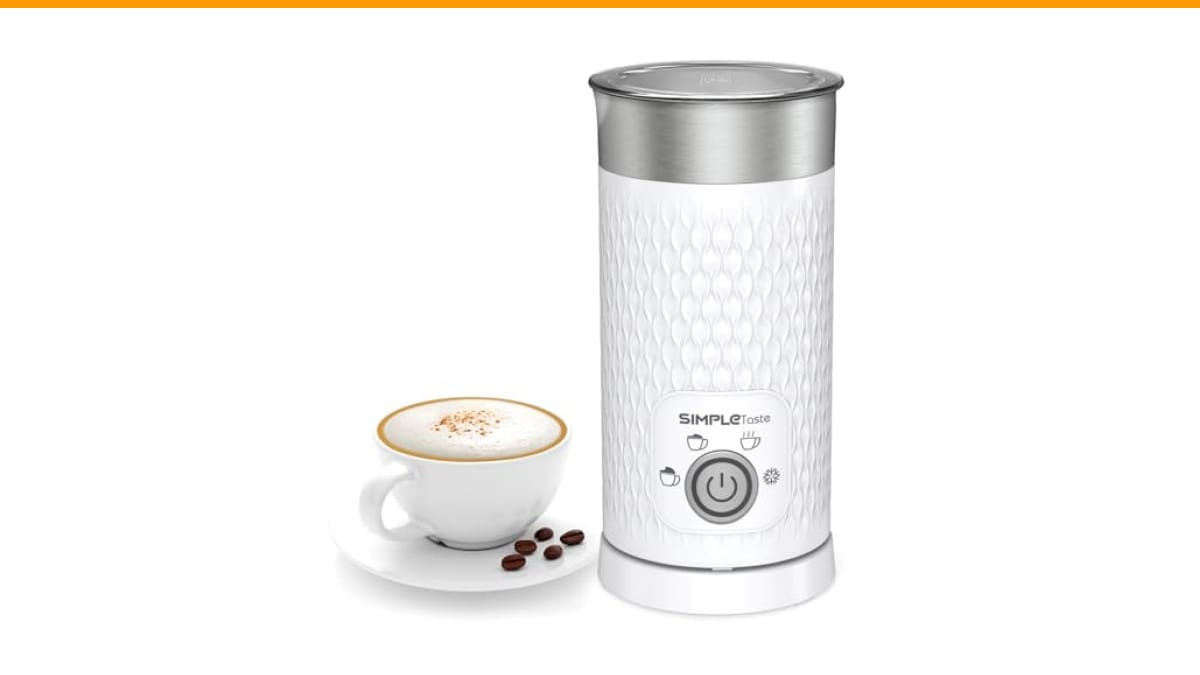
SIMPLETASTE Milk Frother, 4-in-1 Electric Automatic Milk…
- Rich and Creamy Milk Froth: This frother quickly makes a smooth and velvety milk foam for your cappuccinos, lattes, macchiato, ice…
- 4-in-1 Multifunctional: It also warms milk for hot chocolate and matcha in addition to creating warm dense foam, warm airy foam, a…
- Large Capacity: For hot chocolate and matcha, warm up to 300 ml (10.1 oz) of milk, or foam up to 130 ml (4.4 oz) of milk at a time…
As an Amazon Associate I earn from qualifying purchases.
If you’re shopping rather than troubleshooting, the Check Price on Amazon covers the bases with warm dense foam, warm airy foam, and cold foam in one unit. It’s a solid plug-in option that skips the battery question entirely, which is worth considering if you froth daily.
The Short Answer: How Many Years vs. How Many Froths
A quality electric milk frother lasts between 3 and 5 years with regular use. That’s the device lifespan — the motor, the internal seals, and the non-stick coating. A cheap handheld model might die at 18 months. A well-built countertop unit can push past 6 years if you treat it right.
The battery timeline is different. A frother with rechargeable batteries lasts 10 to 20 frothing sessions per charge. A unit running on disposable AAA batteries gets roughly 15 to 25 sessions before the voltage drops enough to affect foam quality.
So the answer to how long does a milk frother last depends on which question you’re asking. The motor lasts years. The charge lasts days or weeks. Confusing those two leads people to throw away a perfectly good motor just because the batteries died.
Battery Life: The Real Math (Sessions per Charge)
Let’s get specific. A typical frother cycle runs 60 to 90 seconds. A fresh set of AAA alkaline batteries holds about 1,000 to 1,200 mAh of usable energy under load. A small frother motor draws roughly 500 mA during operation. That gives you around 20 to 25 full cycles before the batteries are functionally empty.
Rechargeable lithium-ion frothers, like the USB models, behave differently. They hold a consistent voltage until they hit about 20% remaining charge, then drop off quickly. You’ll get a predictable 12 to 18 froths per charge, and the last two or three will produce noticeably weaker foam.
The Voltage Drop Effect on Foam Quality
Here’s the part nobody talks about. Alkaline batteries don’t die suddenly — they fade. A fresh AAA battery sits at 1.5 volts. At 1.2 volts, the motor spins slower. At 1.0 volt, it barely turns. The foam quality degrades gradually across that range, not all at once.
You’ll notice the froth getting thinner and airier about halfway through the battery’s life. The milk still warms, but the vortex isn’t strong enough to pull air in properly. Most people blame the frother or the milk. It’s almost always the batteries.
Test it yourself. Swap in fresh batteries and run the same milk. If the foam comes back thick and creamy, the motor is fine. You just need a new set of cells.
Device Lifespan: Why Your Frother Dies (Motor vs. Battery)
The motor itself is the most durable part. A small DC motor rated for continuous operation can run for 1,500 to 3,000 hours. At 90 seconds per froth, that’s 60,000 to 120,000 cycles. You’ll never reach that number because something else fails first.
The real killers are the seals and the coating. The rubber gasket around the shaft keeps milk out of the motor. Once that wears or cracks, moisture creeps in and corrodes the bearings. The non-stick interior coating also degrades over time, especially if you scrub it with abrasive pads or run it with too little milk.
Heat is the silent assassin. Storing the frother near your stove or in a cabinet above the espresso machine exposes it to repeated temperature swings. That thermal cycling weakens plastic housings and accelerates seal degradation. Keep it in a cool, dry spot and you add months to its life.
The Cost Breakdown: Batteries vs. Electricity vs. Plug-In
Let’s talk money because that’s what actually drives the replace-versus-repair decision. Over five years, the cost difference between battery-powered and plug-in frothers is significant.
A handheld frother using AAA batteries will chew through roughly 120 batteries per year if you froth daily. At about $0.50 per battery, that’s $60 annually. Over five years, you’ve spent $300 on batteries for a $20 device.
Rechargeable NiMH AAA batteries change that math. A pack of four costs about $10 and lasts 2 to 3 years before capacity fades. You’ll need maybe two packs over five years — $20 total. Plus a charger if you don’t already own one.
A plug-in countertop frother uses about 500 watts for 90 seconds. That’s roughly 0.0125 kWh per use. At the US average electricity rate of $0.16 per kWh, each froth costs about $0.002. Over five years of daily use, that’s under $4 in electricity.
The 5-Year Cost Comparison Table
| Frother Type | Upfront Cost | Energy Cost Per Use | 5-Year Operating Cost | Total 5-Year Cost |
|---|---|---|---|---|
| Handheld (disposable AAA) | $15–$25 | $0.50 (batteries) | $300 | $315–$325 |
| Handheld (rechargeable NiMH) | $15–$25 + $10 charger | $0.01 (electricity) | $20–$30 | $45–$65 |
| Plug-in countertop | $40–$80 | $0.002 | $4 | $44–$84 |
The plug-in unit costs more upfront but pays for itself within the first year compared to disposable batteries. Rechargeable batteries make handheld frothers nearly as economical, though you still deal with the voltage drop issue.
Maintenance That Extends Lifespan (Not Just Cleaning)
Rinsing the frother after each use is table stakes. The deeper maintenance involves the parts you can’t see.
Wipe the battery contacts with a dry cloth every month. Battery acid residue and oxidation build up silently and increase resistance, which makes the motor work harder and drain batteries faster. A quick wipe prevents most battery-related failures.
Check the shaft seal every few weeks. If you see milk residue building up around the base of the whisk shaft, that’s the seal starting to fail. Clean it gently with a cotton swab. Replacing the whole frother is cheaper than repairing a corroded motor.
The Storage Mistake That Kills Motors
Never store the frother with batteries installed if you won’t use it for more than two weeks. Alkaline batteries leak when they deplete completely. That corrosive fluid destroys battery contacts and can seep into the motor housing. One leaky battery is the most common reason a frother dies prematurely.
Remove the batteries, store the frother upside down with the whisk removed, and keep it away from direct sunlight. Sunlight degrades the plastic and drys out the rubber seals faster than anything else.
For more on keeping your equipment in top shape, check out our coffee machine maintenance guide — the principles apply to frothers too.
Troubleshooting: Is It the Battery or the Motor?
Before you order a replacement frother, run this quick diagnostic. It takes five minutes and saves you money.
- Insert fresh batteries (or fully charge the unit).
- Run the frother empty for 10 seconds. Listen to the motor pitch. A healthy motor sounds steady and high-pitched. A struggling motor sounds labored or grindy.
- If the motor sounds fine, add milk and froth. If the foam is still weak, the issue is the whisk attachment or the milk temperature, not the motor.
- If the motor sounds weak even with fresh batteries, the motor brushes or bearings are worn. That’s the end of the road for most frothers.
One common false alarm: the frother stops mid-cycle and won’t restart. Most units have a thermal cutoff that trips when the motor overheats. Wait 15 minutes and try again. If it restarts, you just ran it too long.
If you’re dealing with a steam wand instead of a standalone frother, the troubleshooting is different. Our guide on steam wand care walks through the common clogs and pressure issues.
Frequently Asked Questions
Can I leave batteries in the frother when not in use?
You can, but you shouldn’t. Alkaline batteries leak when they drain completely, and that corrosive fluid ruins the contacts and motor. If you froth daily, leaving them in is fine. If the frother sits for weeks between uses, take the batteries out. It’s a 10-second habit that prevents the most common failure mode.
Are rechargeable batteries worth it for frothers?
Yes, but only if you use the frother regularly. NiMH rechargeables cost about $10 for a pack of four and last 2 to 3 years. They pay for themselves within a few months compared to disposables. The trade-off is a slightly lower voltage (1.2V vs 1.5V), which means marginally weaker foam. If you need maximum froth density, stick with fresh alkalines.
How do I know when to replace the frother entirely?
Replace it when the motor sounds rough even with fresh batteries, when the non-stick coating starts flaking, or when the whisk shaft wobbles noticeably. Those are signs of mechanical wear that cleaning won’t fix. If the frother still works but just produces weak foam, it’s almost certainly the batteries — replace those first.
If you’re weighing a new purchase, compare the cleaning frequency against your willingness to maintain it. A frother you actually clean will outlast one you ignore, regardless of brand.
The Verdict: When to Repair, Replace, or Upgrade
Here’s the practical decision tree based on real usage patterns.
- Batteries die often: Switch to rechargeables or a plug-in unit. The cost difference is real — $300 over five years for disposables versus $30 for rechargeables.
- Foam got weak but motor sounds fine: Replace the batteries first. Nine times out of ten, that’s the fix.
- Motor sounds labored or grindy: Replace the frother. Repairing a small DC motor costs more than a new device.
- Non-stick coating is flaking: Replace immediately. Flaking coating ends up in your milk, and that’s not something to compromise on.
- Frother is 3+ years old and you use it daily: Consider upgrading to a countertop model. The motor and seals are larger and last longer than handheld units.
Treat the frother like a small appliance with a finite service life, not a gadget that should last forever. Budget for replacement every 3 to 5 years. If you buy a plug-in unit with a decent warranty, you’ll likely get closer to the 5-year mark without issues.
One last thought: the frother is only part of the equation. If your espresso tastes burnt or bitter, no amount of foam will fix it. That’s a separate problem — our guide on bitter espresso causes covers the usual culprits.
Products related to this article
Sponsored / affiliate links. As an Amazon Associate I earn from qualifying purchases. I may earn additional commission from eligible campaigns.