You stand in the aisle staring at a 200-count box, then a 100-count pack, then a 4-pack of 40s. You do the mental division, fail, and grab whichever one is closest. We have all been there. The real question isn’t just about the count on the box. It’s about matching that count to your actual brewing habits, your specific coffee maker, and the type of filter you prefer.
This guide walks through the exact math you need. You will learn how to calculate your annual filter consumption in under two minutes, see the true cost difference between paper and reusable filters over a year, and understand why filter thickness changes your purchase quantity. You will also learn how to store bulk filters without ruining them and why double-filtering usually backfires. By the end, you will know precisely how much coffee paper filter you should buy—and you will stop wasting money on boxes that sit in your pantry for two years.

Amazon Basics
Amazon Basics Basket Coffee Filters for 8-12…
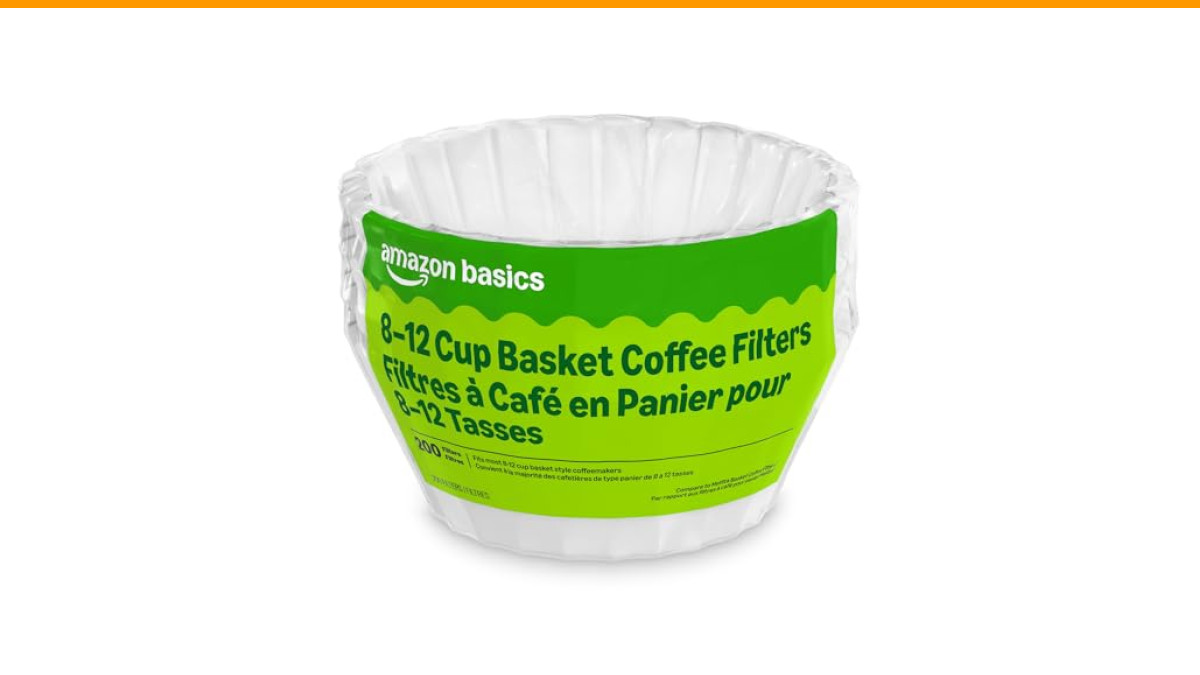
- SHIPMENT CONTAINS: 200 white basket coffee filters that fit most 8-12 cup basket coffeemakers
- SUPERIOR FILTRATION: Provides excellent coffee filtration that eliminates gritty sediment while allowing the great coffee taste to…
- INDUSTRIALLY COMPOSTABLE DESIGN: Filter meets ASTM D6868-11 standard and can be composted where municipal or industrial composting…
As an Amazon Associate I earn from qualifying purchases.
For many home brewers, a solid starting point is a bulk pack of standard white basket filters. The Amazon Basics basket coffee filters come in a 200-count box that fits most 8-12 cup makers. It is a practical way to test your consumption rate without committing to an enormous warehouse pack.
Why ‘How Many Filters’ is the Wrong Question
The number on the box is a trap. A 200-count pack sounds like a lot, but if you brew three pots a day, that box lasts just over two months. If you brew one pot every other weekend, that same box lasts over a year.
You don’t need a specific number. You need a system for figuring out the number that fits your life. The system starts with three variables: how often you brew, what kind of filter you use, and whether that filter actually fits your machine.
Most people overbuy because they assume a bigger box means a better deal. That’s true only if you actually use the filters before they degrade. Paper filters are not immortal. They absorb moisture and lose structural integrity over time. A stale filter can tear during brewing, which ruins a pot of coffee and makes a mess.
The 3 Variables That Determine Your Filter Count
Brew Frequency and Volume
This is the anchor of your calculation. Count how many times you brew per week, not per day. Be honest about it. A person who brews once on Saturday morning uses 52 filters a year. A household that brews every morning uses 365.
Volume matters too. A 4-cup brewer uses the same number of filters as a 12-cup brewer—one per batch. The filter count doesn’t change with pot size. What changes is the flavor strength, which depends on your coffee grinder and the amount of grounds you use.
Filter Type and Thickness
Paper filters come in different thicknesses, and this changes your buying math. A standard drip filter is thin and fast. A Chemex filter is much thicker, almost like cardstock. A Hario V60 filter sits somewhere in between.
Thicker filters slow down water flow, which increases extraction time. That’s not a bad thing—it often produces a cleaner, brighter cup. But thicker filters are also more expensive per piece, so your annual cost goes up even if your count stays the same.
If you brew with a Chemex, you are paying a premium per filter. You might consider a reusable metal filter for daily brewing and save the paper ones for special occasions. That strategy cuts your paper consumption dramatically.
Dripper and Maker Compatibility
This is where people waste the most money. They buy filters that don’t fit, then either force them into the basket or throw them away. The two main shapes are cone and basket. A #4 cone filter will not work in a flat-bottom basket brewer. A basket filter will not sit properly in a V60 cone.
Check your machine’s manual or the existing filter you have. Measure the diameter and depth of the basket if you are unsure. Generic brands often fit fine, but the fit is never guaranteed. The Amazon Basics basket filters are designed for standard 8-12 cup makers, which covers most home drip machines.
The Annual Filter Consumption Calculator
Here is the simple math. Write down your weekly brew count. Multiply it by 52. That is your annual filter count.
- Count your brews per week. Include every pot, even the half-pot you make on a lazy Sunday.
- Multiply by 52. This gives your yearly total.
- Round up to the nearest box size. If your total is 150, a 200-count box covers you for the year.
- Add a 10% buffer. You will tear a filter, spill a batch, or have a guest who wants to brew. The buffer covers that.
Example: You brew 5 times per week. 5 x 52 = 260 filters per year. Add 10% and you get 286. Buy two 200-count boxes and you are set for the year with a little left over.
Pro tip: Write the date on the box when you open it. You will know exactly how long a box lasts, and next year’s estimate will be precise.
Cost Analysis: Paper vs. Reusable Over 12 Months
Paper filters are cheap per piece, but the cost adds up. A typical basket filter costs between 2 and 5 cents each. At 260 filters per year, you are spending between $5.20 and $13.00 annually. That’s not much.
A reusable metal filter costs between $10 and $25 upfront. It lasts for years if you clean it properly. Over 12 months, the metal filter saves you maybe $10. Over five years, it saves you $50 or more.
But there is a trade-off. Metal filters let fine coffee grounds through. Your cup will have a bit of sediment at the bottom. Some people like the fuller body. Others find it gritty. Paper filters give you a cleaner cup with no sludge.
Another factor is your coffee maker maintenance. Paper filters trap oils that would otherwise coat the machine’s internal parts. If you use a metal filter, you need to clean your brewer more often to prevent oil buildup. That takes time and descaling solution.
| Filter Type | Upfront Cost | Cost per Use | Annual Cost (260 brews) | Flavor Profile |
|---|---|---|---|---|
| Paper basket filter | $5–$10 per 200 | $0.02–$0.05 | $5.20–$13.00 | Clean, bright, no sediment |
| Paper cone filter (V60) | $6–$12 per 100 | $0.06–$0.12 | $15.60–$31.20 | Clean, slightly more body than basket |
| Thick paper (Chemex) | $10–$15 per 100 | $0.10–$0.15 | $26.00–$39.00 | Very clean, tea-like clarity |
| Reusable metal | $10–$25 | ~$0.00 | $0 (plus cleaning effort) | Fuller body, fine sediment |
| Reusable cloth | $8–$15 | ~$0.00 | $0 (plus washing effort) | Balanced, slight oil retention |
The table assumes you replace your metal filter every 2-3 years. Cloth filters need replacement every 6-12 months depending on use. Neither is truly zero-cost, but both beat paper on price.
My take: keep a box of paper filters on hand even if you go reusable. They are useful for troubleshooting a weird brew or when you are in a hurry and don’t want to rinse a metal filter.
Bulk Buying: Shelf Life, Storage, and Quality Degradation
Buying in bulk saves money per filter, but only if the filters stay good. Paper filters are hygroscopic—they absorb moisture from the air. In a humid kitchen, a box of filters left open will start to feel limp and soft within a few weeks.
Soft filters tear easily. A tear during brewing dumps grounds into your carafe, which ruins the pot and creates a cleanup job. Nobody wants that at 6 a.m.
Store your filters in a dry, sealed container. A large zipper bag works. A plastic bin with a lid is better. If you live in a humid climate, add a silica gel packet to the container. That keeps the paper crisp.
Check the packaging for a production date if you can find one. Filters don’t have an expiration date, but a box that sat in a warehouse for two years is not ideal. Buy from a source with high turnover, like Amazon, to get fresher stock.
One more thing: unbleached paper filters have a shorter shelf life in practice because they are more porous. They absorb moisture faster than bleached white filters. If you buy unbleached in bulk, use them within a year.
The Double-Filter Myth: When It Helps and When It Hurts
Double-filtering means using two paper filters stacked in the basket. Some people do this because they think it makes the coffee cleaner or stronger. It does neither.
Two filters slow down the water flow significantly. That increases extraction time, which can make the coffee taste bitter and over-extracted. The second filter doesn’t remove more flavor compounds—it just holds back water.
The one case where double-filtering helps is with a very coarse grind and a thin filter. If your coffee maker’s basket has large holes and your filter is paper-thin, a second filter can prevent grounds from slipping through. This is rare with standard basket filters.
Another case: a damaged filter. If you have a torn filter, adding a second one underneath can save the brew. But that’s a patch, not a strategy.
Double-filtering also wastes filters. You are doubling your consumption rate, which means you need twice as many boxes. That directly defeats the purpose of calculating how much coffee paper filter you should buy.
Size Compatibility Matrix: Brand vs. Generic
Filter sizes are not universal across brands. A #4 cone from Melitta fits most V60-style drippers, but not all. A #2 cone is smaller and fits the Hario V60 02 size, but not the 03. Basket filters are even trickier—some makers use a #4 basket, others use a #6.
Here is a quick reference for common sizes:
| Filter Size | Shape | Fits | Common Brands | Generic Compatibility |
|---|---|---|---|---|
| #2 | Cone | Small pour-over cones (1-2 cups) | Melitta, Hario V60 02 | Usually fits, slight variance in height |
| #4 | Cone | Large pour-over cones (4-6 cups) | Melitta, Hario V60 03, Chemex (folded) | Usually fits, check crimp height |
| #4 Basket | Flat bottom | Standard 8-12 cup drip makers | Mr. Coffee, Hamilton Beach, Cuisinart | Mostly fits, check width |
| #6 Basket | Flat bottom | Oversized baskets (rare) | Some commercial-style brewers | Hard to find generic |
| Chemex Square | Square, thick | Chemex 6-8 cup | Chemex brand only | No generic equivalent |
Generic filters are usually a few millimeters shorter or narrower than brand-name ones. That doesn’t matter if the filter sits flat in the basket. If it curls up on the edges, water will flow around it and bypass the coffee grounds. That gives you weak, watery coffee.
If you are unsure, buy a small pack of the brand-name filter first. Test it in your machine. Then buy the generic equivalent in bulk. This saves you from committing to 200 filters that don’t fit.
Also note: the Amazon Basics basket filter is a generic option for standard machines. It works fine in most 8-12 cup brewers, but test one before you open the whole box.
Final Verdict: The Smart Way to Stock Up
Here is the practical plan. Calculate your weekly brew count, multiply by 52, add 10%, and buy that many filters. Store them in a dry, sealed container. Write the opening date on the box.
- Count your actual brews per week, not your ideal number.
- Add a 10% buffer for tears, spills, and guests.
- Buy the smallest bulk size that covers your annual number—don’t overshoot.
- Match the filter shape and size to your specific machine before buying.
- Store paper filters in a dry, airtight container with a silica packet.
- Understand that thick filters like Chemex cost more per cup than standard drip filters.
- Keep a reusable metal filter as a backup to stretch your paper supply.
You don’t need to be a math wizard. You need to know your own habits and buy accordingly. A little planning saves you money, storage space, and the frustration of a torn filter at 6 a.m.
FAQ: Quick Answers on Filter Quantities
How long does a 200-count box of coffee filters last?
It depends entirely on your brew frequency. If you brew once a day, a 200-count box lasts about 6.5 months. If you brew twice a day, it lasts about 3 months. If you brew only on weekends, it lasts nearly 4 years—but the filters may degrade before you finish them.
Can I use a cone filter in a basket coffee maker?
No. The shapes are completely different. A cone filter needs a cone-shaped dripper to hold it in place. A basket filter needs a flat-bottomed basket. Forcing a cone filter into a basket maker will cause the filter to collapse, and coffee grounds will spill into the carafe.
Do unbleached filters require more coffee grounds?
No. The filter color does not affect how much coffee you need. Unbleached filters are slightly more porous, which can change the flow rate a little, but the brew ratio stays the same. If you notice a papery taste, rinse the filter with hot water before brewing.
Is it cheaper to buy filters in bulk?
Usually yes, but only if you use them before they degrade. A 400-count box has a lower cost per filter than a 100-count box. But if you brew once a week, the 400-count box will last over 7 years, and the filters will likely be stale and brittle by year two. Buy bulk only if your consumption justifies it.
What happens if I use a filter that is too small for my basket?
The filter will not sit flat. Water will flow around the edges, bypassing the coffee grounds entirely. You will get weak, under-extracted coffee. In a worst-case scenario, the filter can collapse and let grounds into the carafe. Always match the filter size to your basket dimensions.
Products related to this article
Sponsored / affiliate links. As an Amazon Associate I earn from qualifying purchases. I may earn additional commission from eligible campaigns.
 HomeBeyond Espresso Coffee Maker 12 Cups, Classic Stovetop Espresso Maker, 600ml / 20oz Coffeemaker for Gas & Ceramic Stovetops (Silver)
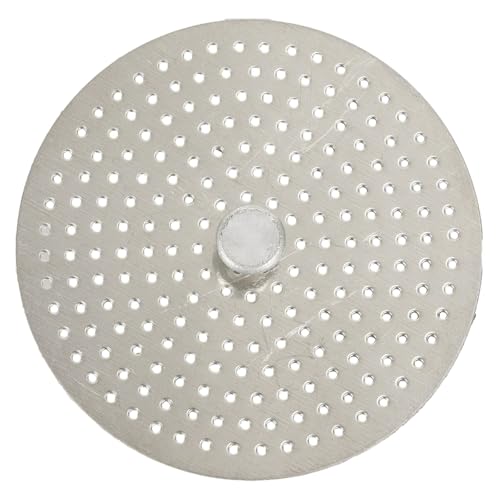 Stainless Steel Moka Pot Coffee Filter Disc for Espresso Brewing, Coffee Maker Replacement Filter Plate for Home Office Coffee Bar Cafe (FOR 4 Cups)
 XCHMYi 3‑Inch Toilet Flapper Replacement Kit Fits Most 3" Valves 2 Pack