You’re making your morning pour-over, and your three-year-old toddles into the kitchen. Before you can blink, they’ve grabbed the coffee canister off the counter. The lid pops off, and beans scatter across the floor. Some go straight into their mouth. You panic, fish out the beans, and wonder: how do I keep this from happening again?
This guide walks you through the exact steps to childproof your coffee bean storage container. You’ll learn how to test whether your current setup is safe, what DIY fixes actually work without ruining bean freshness, and what to look for when buying a new container. I’ll also cover what to do if your child eats a coffee bean, because that’s the question every parent asks but few articles answer.
I’ve tested dozens of storage containers and safety modifications over the years. Some work brilliantly. Others are a waste of time. Here’s what actually matters.
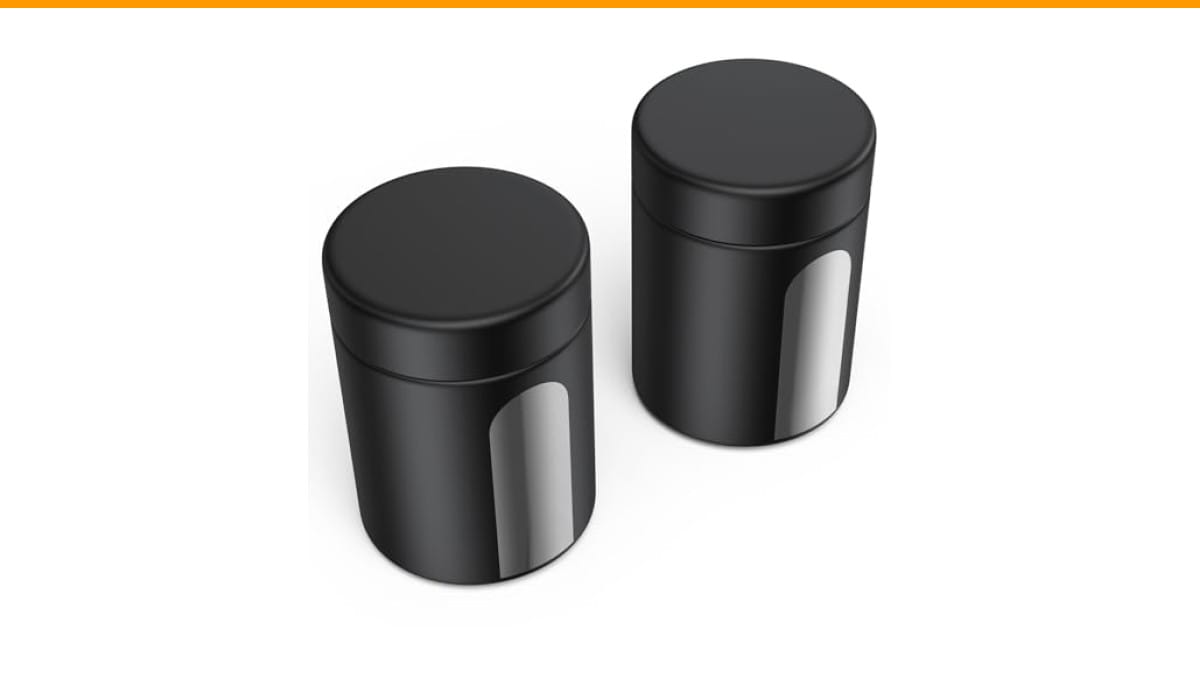
If you’re starting from scratch, consider a container designed with a child-resistant cap from day one. The Urekt Glass Storage Jar (4 oz, 2-pack) uses a push-down-and-turn lid that most kids under five can’t figure out. It’s small enough to tuck into a locked cabinet, and the matte black glass blocks light, which helps preserve coffee bean freshness. It’s not perfect for bulk storage, but it’s a solid option for daily-use portions.
Why Your Coffee Container is a Magnet for Little Hands
Kids are drawn to coffee containers for three reasons. First, they see you use it every morning. It’s part of your routine, and kids love mimicking routines. Second, the lid makes a satisfying pop or click when it opens. That sound is pure gold to a toddler. Third, coffee beans look like large chocolate chips. They smell sweet and roasty, and a curious kid will assume they’re edible.
Your container’s design can make things worse. A lightweight plastic jar tips over easily, and a glass jar shatters on impact. A lid that twists off with minimal effort is an open invitation. Even a heavy ceramic canister with a loose-fitting lid is a hazard if it sits on the edge of the counter.
The fix isn’t to hide your coffee. It’s to make the container physically difficult for small hands to open, and to store it where small hands can’t reach.
The Real Enemies of Coffee Freshness (and How Childproofing Affects Them)
Coffee beans go stale through four main culprits: oxygen exposure, moisture, heat, and light. UV light breaks down the oils that give coffee its aroma. Oxygen oxidizes those same oils, turning them rancid. Moisture accelerates staling and can cause mold. Heat speeds up every chemical reaction, including the loss of volatile aroma compounds.
An air-tight seal is your first line of defense. Most childproof containers use a gasket or a locking mechanism that also keeps air out. That’s a win-win. But some childproofing hacks, like wrapping the lid in rubber bands, can compromise the seal if you’re not careful. A rubber band that’s too thick can prevent the lid from seating properly, letting air sneak in.
Dark glass or ceramic containers protect against light. Stainless steel is another good option, though it’s opaque, so you can’t see your beans. If you use a clear container, store it in a dark pantry or cupboard. The same goes for any container you’ve modified with childproofing tape or velcro—make sure it still closes fully.
Degassing is another factor. Freshly roasted beans release carbon dioxide for days after roasting. If you seal them in an airtight container too soon, pressure builds up. Some containers have a one-way valve to let gas escape without letting oxygen in. Childproofing modifications shouldn’t block that valve. If you’re adding tape or a strap, keep it away from the valve area.
The 4-Step Childproofing Audit for Your Current Container
Before you buy anything new, test what you already own. This audit takes five minutes and tells you exactly where your weak points are.
Step 1: The Push-and-Tip Test
Place your container on a flat surface. Push it gently from the side with one finger, as a toddler might. Does it slide? Does it tip over? A stable container should stay put with a light push. If it tips, that’s a problem. A glass jar that falls and shatters is a bigger hazard than the beans themselves.
Next, try pressing down on the lid with your palm. If the lid pops off from simple downward pressure, a child will figure that out fast. A child-resistant cap should require a push-and-turn motion, not just a push.
Step 2: The Lid-Twist Test
Hold the container body with one hand and twist the lid with the other. Use the same force you’d use to open a jar of pickles. If the lid comes off with less than a quarter turn, it’s not child-resistant. Most standard screw-top lids fail this test. A child-resistant cap needs a firm push down while turning, which is a fine-motor skill that most kids under five haven’t mastered.
If your lid has a tab or a button that releases the seal, test whether a child could accidentally trigger it. Some containers have a pressure-release button that’s easy to press with a thumb. That’s a design flaw for child safety.
Step 3: The Reach-and-Grab Test
Stand at your counter and measure how high your child can reach. A typical two-year-old can reach about 20 inches from the floor. A four-year-old can reach 28 inches or more. If your container sits on the counter, it’s within reach of any toddler who can pull to stand.
Place the container on the highest shelf in your pantry, or inside a locked cabinet. The back of a counter is not enough—kids climb. Use a cabinet lock that requires two hands to open, or a magnetic lock that stays hidden.
Step 4: The Relocation Strategy
Even with a childproof lid, storage location matters. The best spot is a high shelf in a cool, dark place, away from the stove and sink. Heat and moisture from cooking will ruin your beans faster than a toddler will. If you have a pantry, use the top shelf. If you don’t, a high cabinet above the counter works.
For daily use, keep a small amount of beans in a childproof jar on the counter, and store the bulk of your beans in a larger, airtight container in the pantry. That way, your morning routine doesn’t require you to climb a step stool, and your beans stay fresh.
Quick DIY Childproofing Hacks (That Don’t Ruin Your Beans)
If you can’t replace your current container, these hacks can make it safer. They’re not all elegant, but they work.
- Rubber band trick: Wrap two thick rubber bands around the lid and the body of the jar, perpendicular to each other. This creates friction that makes the lid harder to twist. It works best on glass jars with smooth lids. Test it yourself—if you can still open it with one hand, a determined kid might too.
- Velcro strap: Use a 1-inch wide velcro strap to secure the lid to the body. Wrap it around the jar, overlapping the lid and the jar’s neck. Most kids can’t figure out how to peel velcro, and it doesn’t affect the seal if you wrap it snugly but not too tight.
- Cabinet lock: Install a simple magnetic cabinet lock on the cabinet where you store your coffee. This is the most reliable option, and it keeps all your coffee gear safe. It takes ten minutes to install and costs under $10.
- Transfer to a childproof jar: Pour a week’s worth of beans into a small jar with a child-resistant cap, like the Urekt jar mentioned earlier. Store the bulk bag in a locked cabinet. This gives you easy access without the risk.
One warning: don’t use tape that leaves sticky residue on the lid. Residue can attract dust and get into your beans. Also, avoid any hack that prevents the lid from sealing completely. An airtight seal is non-negotiable for coffee freshness.
Buying a New Container? Look for These Child-Safe Features
When you’re shopping for a new coffee storage container, prioritize these features:
- Child-resistant cap: Look for a push-and-turn mechanism. Test it yourself in the store or read the description carefully. Some caps are “child-resistant” but still openable by a determined four-year-old.
- Weight and stability: A heavy glass or ceramic container is harder to tip over. The Urekt jar is made of thick glass, and the matte finish adds grip, so it doesn’t slide easily.
- Opaque or dark glass: Dark glass blocks UV light, which protects the oils in your beans. Clear glass or plastic lets light in, so you’d need to store it in a dark cabinet.
- BPA-free lid: The lid is plastic, so make sure it’s BPA-free, especially if it comes into contact with the beans.
- Size: A 4 oz jar holds about 1/2 cup of beans, enough for about 4-5 cups of coffee. If you need more, buy a larger childproof container, or use multiple small jars.
| Feature | Why It Matters | What to Look For |
|---|---|---|
| Child-resistant cap | Prevents kids from opening the lid | Push-and-turn mechanism, not a simple twist |
| Weight | Heavy containers are harder to tip over | Thick glass or ceramic, at least 1 lb empty |
| Light protection | UV light degrades coffee oils | Dark glass, ceramic, or stainless steel |
| Airtight seal | Keeps out oxygen and moisture | Gasket or silicone ring, tested seal |
| BPA-free lid | Avoids chemical leaching | Look for BPA-free label on the lid |
| Size | Matches your daily use | 4 oz for daily portions, larger for bulk |
What to Do If Your Child Eats a Coffee Bean (Emergency Protocol)
It happens. You turn around for two seconds, and your toddler has a mouthful of beans. Don’t panic. Here’s what you need to know.
First, remove any beans still in their mouth. Then, offer a drink of water. A single coffee bean contains about 5-10 mg of caffeine, depending on the roast. A 30-lb child can safely process up to 45 mg of caffeine per day, so a few beans won’t cause serious harm. Symptoms of mild caffeine ingestion include restlessness, rapid heartbeat, and stomach upset. These usually pass within a few hours.
However, if your child eats more than 10 beans, or shows symptoms like vomiting, confusion, or a racing heart, call poison control immediately. The number is 1-800-222-1222 in the US. Have the bean type and number eaten ready. If your child is under 2, or has a heart condition, call regardless of amount.
To prevent this, store your coffee container in a locked cabinet, and never leave beans on the counter unattended. Also, teach your child that coffee beans are “not food” and “only for grown-ups.” Repetition works, but it’s not a substitute for physical barriers.
The Bottom Line: Safety and Freshness Can Coexist
You don’t have to choose between a childproof container and fresh coffee. The right container, or a few simple modifications, can do both. Here are the takeaways:
- Test your current container with the 4-step audit before buying anything new.
- A push-and-turn cap is the gold standard for child resistance.
- Store coffee in a high, locked cabinet, not on the counter.
- Use rubber bands or velcro straps to modify existing lids, but always check the seal.
- Dark glass or ceramic containers block UV light and keep beans fresher longer.
- Keep a small, childproof jar for daily use and a larger airtight container for bulk storage.
- If your child eats a bean, stay calm, offer water, and call poison control if symptoms appear.
For more on keeping your coffee gear in top shape, check out our guide on cleaning your grinder and choosing the right grinder. Both are essential for great coffee, and both benefit from a childproof setup.
FAQs
Can I use a regular mason jar for coffee storage if I add a childproof lid?
Yes, but only if the lid is specifically designed to be child-resistant. Mason jar lids are not child-resistant by default. You can buy aftermarket childproof lids that fit standard mason jars, but test them first. They should require a push-and-turn motion. Also, make sure the jar is dark glass or stored in a dark place to protect the beans from light.
How do I know if a child-resistant cap is truly child-resistant?
Look for a cap that meets the Consumer Product Safety Commission (CPSC) standards for child-resistant packaging. This usually means it takes at least 5 minutes for 80% of children aged 42-51 months to open it. In practice, push-and-turn caps are the most common. Test it yourself—if you can open it with one hand, a kid probably can too.
Does freezing coffee beans affect their freshness, and is it childproof?
Freezing beans can extend their shelf life, but it’s risky. Condensation can form when you take the jar out, introducing moisture. If you freeze, use an airtight container and only take out what you need. For childproofing, freezing doesn’t help—the container still needs a child-resistant lid. Plus, frozen beans are harder to grind, so it’s not the best option for daily use.
What’s the best way to store coffee beans in a childproof container without losing flavor?
Use a dark glass or ceramic container with an airtight seal and a child-resistant cap. Store it in a cool, dark place, away from the stove and sink. Grind only what you need right before brewing, because ground coffee goes stale faster than whole beans. If you’re using a valve bag, keep it closed and store it in a locked cabinet.
Are there any coffee storage containers with built-in child locks?
Yes, some brands offer containers with child-resistant caps built in, like the Urekt jar mentioned earlier. Others include a locking mechanism that requires pressing a button while twisting. Check the product description for “child-resistant” or “child-proof” and read reviews from other parents to see if they hold up.
Products related to this article
Sponsored / affiliate links. As an Amazon Associate I earn from qualifying purchases. I may earn additional commission from eligible campaigns.
 SOLUSTRE Electric USB Coffee Cup Warmer with Temperature Settings Portable Milk and Beverage Heating Coaster for Office Desk Small Lightweight Design Easy to Clean Surface Multi Functional
 MIBOTE Silicone Cooking Kitchen Utensils Set, Wooden Handle, Coffee
 Quick Heating Cup Warmer, Three Temperature Settings, Splashproof and Portable, for Coffee, Milk, Lightweight ABS Material