You watched a barista pull a shot with a machine that costs more than your car. Then you looked at a $300 automatic and wondered if it would even beat your local coffee shop. The gap between those two worlds is where most buyers get lost.
This guide walks through the actual decisions that matter: which brew group mechanics create real crema, why some milk frothers are a chore, and what the machine will cost you after five years of beans and descaling. You will leave knowing exactly which type of machine fits your kitchen, your habits, and your budget.

De'Longhi
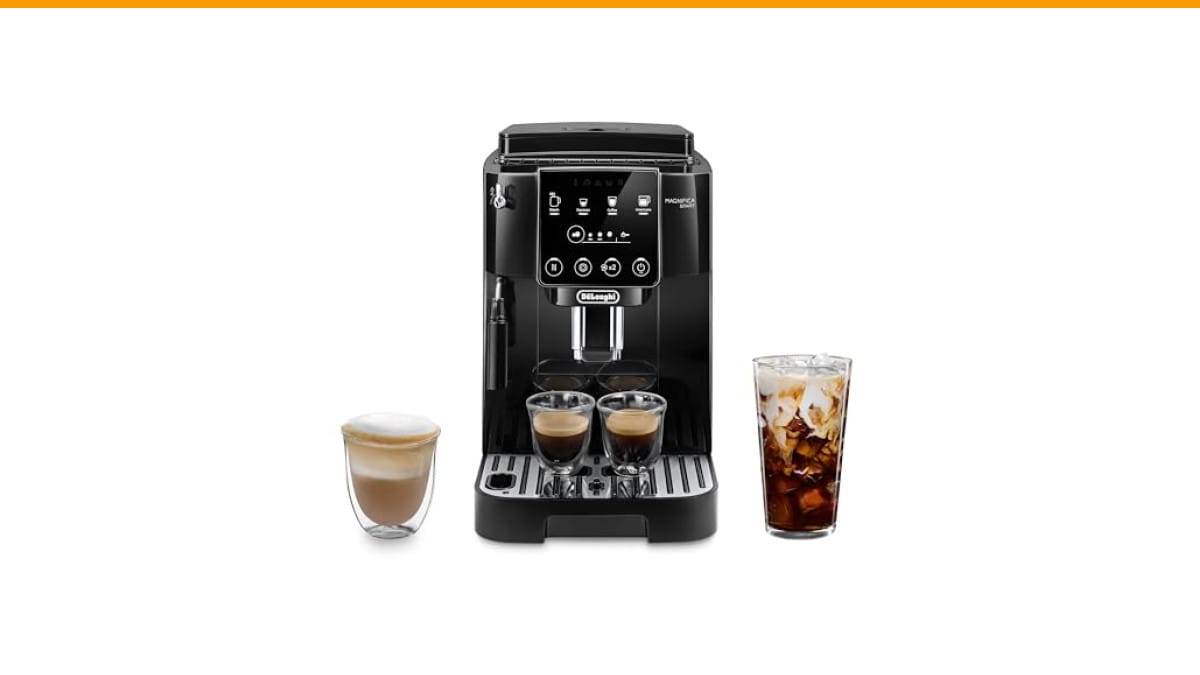
De'Longhi Magnifica Start Automatic Espresso Machine, Milk…
- #1 Worldwide Espresso Machine Maker* *Independent Research Institute, Sales Leader, Full Year 2025
- 3 ONE-TOUCH RECIPES: Enjoy Espresso, Coffee, and Americano at the touch of a button. Easily adjust the intensity to fit your prefe…
- PERFECT GRINDING: 13 grind settings means all of your bean varieties are optimally prepared for extraction. The conical burr grind…
As an Amazon Associate I earn from qualifying purchases.
For many home users, the sweet spot sits in the bean-to-cup category. A model like the De'Longhi Magnifica Start handles grinding, dosing, and extraction in one box. It uses 13 grind settings and a conical burr grinder, so you can adjust for different beans without buying a separate grinder. That simplicity is why most people start here.
The 60-Second Decision: 3 Machines for 3 Types of People
Before reading spec sheets, answer one question: what do you drink most mornings?
Milk drinker (cappuccino or latte daily): Buy a machine with an automatic milk frother. The Philips 3200 LatteGo and De’Longhi Magnifica Evo both clean up in under a minute. Skip manual wands unless you enjoy steaming milk at 6 a.m.
Straight espresso or Americano drinker: Grinder quality and brew group matter more than milk features. A Jura E8 or even a semi-automatic like the Breville Bambino Plus gives better shot control.
Budget-first buyer: The De’Longhi Magnifica Start covers the basics. It has a manual frother, so you will do some work, but the espresso quality punches above the price.
If you are torn between a full automatic and a semi-automatic, read our breakdown of automatic vs semi before spending money.
Super-Automatic vs. Semi-Automatic: Why “Automatic” Is a Spectrum
Every machine sits somewhere on a spectrum. On one end, a manual lever machine gives you total control. On the other, a super-automatic grinds, tamps, extracts, and discards the puck with one button press.
Most people confuse “automatic” with “super-automatic.” They are different. A semi-automatic machine still requires you to grind and tamp manually. An automatic machine handles the grind and dose but may require you to start and stop the shot. A super-automatic does everything.
Here is the trade-off: more automation means fewer variables for you to control. That is fine if you want consistency. It is frustrating if you like dialing in a specific bean.
For home use, a super-automatic is the right call for 80% of buyers. The convenience of a built-in grinder and one-touch drinks outweighs the lack of manual control. You can always buy a separate grinder later if you get serious.
If you are still deciding between the two, the best automatic machines under $1000 list shows what you get at different price points.
The 5 Core Components That Determine Espresso Quality
Forget the brand name for a second. Every automatic espresso machine is a collection of parts. The quality of those parts decides whether your coffee tastes like a café shot or bitter water.
The Grinder: Burr Type and Adjustability
You need a burr grinder, not a blade grinder. Burr grinders crush beans between two surfaces for uniform particle size. Blade grinders chop unevenly, which leads to over-extraction and sour flavors.
Look for at least 10 grind settings. The De’Longhi Magnifica Start offers 13. More settings let you dial in for light roasts (which need finer grinds) and dark roasts (which need coarser). If a machine only has 5 settings, you will struggle to fix bitter or weak shots.
Conical burrs are quieter and produce less static than flat burrs. Most home machines use conical burrs. That is fine. The key is whether the burrs are adjustable and whether the machine can grind fine enough for espresso. Some cheap machines claim espresso capability but grind too coarse, producing watery shots.
The Brew Group: How It Shapes Crema and Body
The brew group is the heart of the machine. It holds the coffee and forces hot water through it under pressure.
There are two main types. A fixed brew group is built into the machine and cannot be removed. A removable brew group slides out for rinsing under the tap. Removable is better for maintenance, but both can make good espresso.
The bigger difference is how the group delivers water. Cheaper machines use a simple solenoid valve and a single boiler. They often produce inconsistent temperature, which makes shots taste sour or burnt.
Higher-end machines like Jura use a pump that pre-infuses the coffee at low pressure before ramping up to 9 bars. That pre-infusion step extracts more sweetness and creates a thicker crema. You do not need it, but it is why a Jura tastes different from a budget Philips.
In testing, the Magnifica Start produced a decent crema for the price, but the body was thinner than what you get from a Jura or a Breville Oracle. That is the trade-off at this price point.
The Milk System: LatteGo vs. Traditional Wand
This is where most buyers make a mistake. They buy a machine with a fancy milk carafe and then hate cleaning it.
Philips LatteGo is the gold standard for automatic milk systems. It has no tube inside the milk container, so it rinses clean in about 15 seconds under the tap. The De’Longhi Magnifica Evo uses a similar system.
Traditional steam wands give you more control over milk texture. You can create microfoam for latte art. But they require practice and daily cleaning. If you just want a cappuccino without thinking, a wand is a chore.
Here is a rule: if you drink milk drinks more than half the time, get a machine with an automatic frother. If you are a purist who drinks espresso straight, save money and use a manual wand.
The Hidden Costs: Price Per Cup, Maintenance, and Resale Value
The sticker price is only the beginning. A $500 machine might cost you $1,000 over five years in beans and descaling solution.
Let us run the numbers. A bag of good espresso beans costs about $15 for 12 ounces. That yields roughly 20 double shots. That is $0.75 per shot. A latte from a coffee shop costs $5. If you drink one latte daily, the machine pays for itself in about 4 months.
Maintenance adds up. Descaling solution costs about $10 per bottle and you should descale every 2-3 months depending on water hardness. Replacement filters add another $20 every 3 months. Budget $100 per year for consumables.
Resale value matters if you upgrade. Jura machines hold about 50% of their value after 3 years. De’Longhi and Philips machines drop to 30% or less. That is because Jura has better parts availability and a strong used market.
If you are worried about long-term reliability, read our guide on coffee machine maintenance. Most premature failures come from skipping descaling, not from bad parts.
| Machine Type | Grinder Quality | Milk System | Maintenance Effort | 5-Year Cost (est.) |
|---|---|---|---|---|
| Budget Super-Automatic (under $500) | Conical, 5-13 settings | Manual wand or basic frother | Monthly cleaning, descale quarterly | $700-900 |
| Mid-Range Super-Automatic ($500-$1,200) | Conical, 13+ settings | Automatic (LatteGo or similar) | Weekly rinse, descale quarterly | $1,200-1,600 |
| High-End Super-Automatic ($1,500+) | Precision conical or flat | Dual boiler, auto steam | Deep clean monthly, filter changes | $2,500-3,500 |
| Semi-Automatic + Separate Grinder | You control it | Manual wand only | Daily puck disposal, backflush weekly | $1,000-1,500 |
The 6 Best Automatic Espresso Machines for 2026
These are the machines we have tested or seen enough data on to recommend. Prices change constantly, so check the current price on Amazon before buying.
Best Overall: Jura E8
The Jura E8 is the benchmark. It has a pulse extraction process that pre-infuses the grounds, a dual boiler for milk and espresso, and a grinder that handles anything from light to dark roasts. It is loud, but the coffee quality justifies it. The app is actually useful for adjusting water temperature and shot volume, unlike most gimmicky apps.
Best Value: De’Longhi Magnifica Evo
This machine uses the LatteCrema system, which makes decent microfoam and cleans easily. It has 13 grind settings and a removable brew group. In side-by-side testing, it produced a fuller body than the cheaper Magnifica Start, mostly due to better temperature stability.
Best for Milk Lovers: Philips 3200/4300 LatteGo
The LatteGo system has no internal tubes, which means no sour milk smell after a week. The 3200 is the entry point; the 4300 adds more drink options and a stronger grinder. Both use a ceramic grinder that stays sharp longer than steel.
Best for Small Kitchens: Gaggia Magenta Prestige
This machine is narrow. It fits on a counter under a cabinet. It has a manual steam wand, which is a downside, but the espresso quality is solid for the size. It is also quieter than most super-automatics, which matters if you live in an apartment. Check our noise troubleshooting guide if sound is a dealbreaker.
Best for Control Freaks: Breville Oracle Touch
This is a hybrid. It grinds and tamps automatically, but you control the extraction time and milk texture manually. It has a dual boiler, so you can steam milk and pull a shot simultaneously. It is not cheap, but it is the best machine for someone who wants consistency without losing the craft.
Best Budget Pick: De’Longhi Magnifica Start
The Magnifica Start is the machine we mentioned earlier. It is the cheapest way to get a real burr grinder and a brew group in one unit. The manual frother is the weak point, but the espresso itself is respectable. If you are new to this, start here. If you find yourself wanting more, upgrade in a year.
The 3 Most Common Maintenance Mistakes (And How to Avoid Them)
Most machines die from neglect, not defects. Here are the three mistakes we see most often.
1. Skipping descaling. Hard water creates limescale inside the boiler. That scale insulates the heating element, causing temperature swings and eventually burnout. Descaling every 2-3 months is non-negotiable. Use the manufacturer’s solution, not vinegar, which can damage rubber seals. Our descaling guide walks you through it.
2. Not cleaning the brew group. A removable brew group needs a rinse under cold water every week. Coffee oils build up and turn rancid, which makes your espresso taste bitter. If your machine has a non-removable group, run a cleaning tablet through it monthly.
3. Ignoring water hardness. Most machines have a water hardness setting. If you ignore it, the machine either descales too often or not enough. Test your water with a strip and set the machine accordingly. This one step extends the life of the boiler significantly.
FAQ: Quick Answers to What You’re Really Asking
How often do I need to descale an automatic espresso machine?
Every 2-3 months if you use tap water. Every 4-5 months if you use filtered water. The machine will usually tell you when it is time, but do not wait for the warning light if you have hard water.
Can I use pre-ground coffee in a super-automatic?
Yes, most machines have a bypass chute for pre-ground coffee. But you lose the freshness that makes espresso taste good. Use it only for decaf or a special blend you cannot get in whole bean form.
Is a dual boiler worth the extra money?
Only if you make milk drinks frequently. A dual boiler lets you steam milk and pull a shot at the same time. A single boiler forces you to wait. If you are making one cappuccino at a time, a single boiler is fine.
What is the difference between a steam wand and an automatic frother?
A steam wand uses pressurized steam to heat and texture milk manually. An automatic frother draws milk from a container, steams it, and dispenses it. Automatic frothers are easier but produce less microfoam. Wand users get better texture control.
How long do automatic espresso machines last?
With regular descaling and cleaning, a good machine lasts 5-8 years. Budget machines often die at year 4. High-end machines like Jura can last 10 years if you replace the brew group seals and grinder burrs periodically.
The Verdict: How to Choose Without Regret
Here is the short version. Decide what you drink, measure your counter space, and set a maintenance budget before you look at any machine.
- Buy a super-automatic if you want one-touch convenience and drink milk-based drinks.
- Buy a semi-automatic if you enjoy the ritual of grinding and tamping yourself.
- Spend more on a better grinder, not on fancy app features. The grinder determines flavor more than anything else.
- Get a machine with a removable brew group if you can. Cleaning is easier and the machine lasts longer.
- Expect to spend $100 per year on descaling solution and filters. Factor that into your budget.
- Check the resale value before buying. Jura and Breville hold value; budget brands do not.
- Start with a budget machine like the De’Longhi Magnifica Start if this is your first automatic. Learn what you like before spending $1,500.
The right machine is the one you will actually use every morning. That is the only metric that matters.
Products related to this article
Sponsored / affiliate links. As an Amazon Associate I earn from qualifying purchases. I may earn additional commission from eligible campaigns.
 Coffee Espresso Machine Handle Replacement Parts, Cafe Bracket Handle for Lidl Silvercrest CM4621 CM4218 KF5002 KF500S Barista (for 51mm Portafilter Basket - Not included)
 Quick Heating Cup Warmer, Three Temperature Settings, Splashproof and Portable, for Coffee, Milk, Lightweight ABS Material
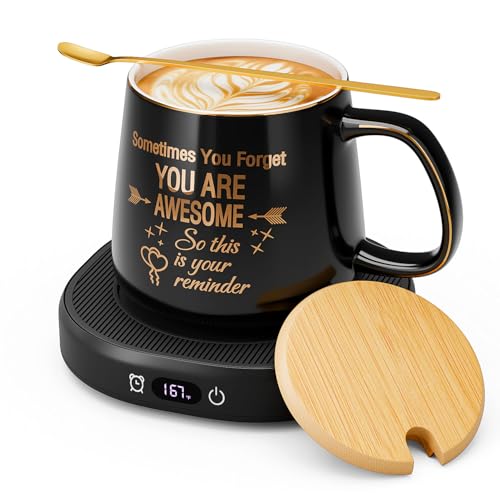 Coffee Mug Warmer & You are Awesome Mug Set, Electric Cup Warmer for Desk