You bought a bag of expensive single-origin beans, brought them home, and tucked them into the cabinet next to the pasta. Two weeks later, you brew a cup and it tastes flat. Muddy. Nothing like the bright, fruity notes the roaster described on the bag. Sound familiar?
Most people blame the beans or the brewer, but the real culprit is how the beans were stored. Coffee beans are porous. They absorb moisture, grab odors, and release the volatile oils that carry flavor. Once those oils oxidize, the coffee goes stale. The good news is you can slow that process down with the right container. This guide walks you through exactly how to choose a coffee bean storage container based on your roast preference, how much coffee you drink, and the layout of your kitchen.

Veken
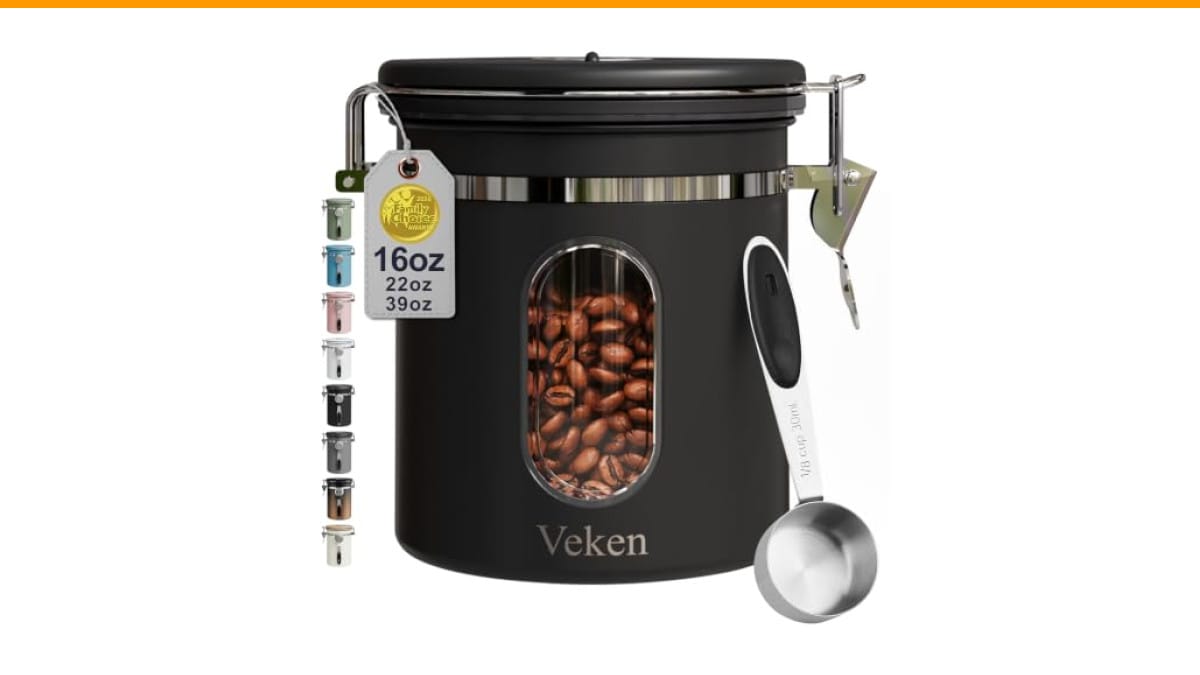
Veken Coffee Canister with Window,Airtight Stainless Steel…
- Freshness is Everything:Our coffee canister helps maintain the freshness of your coffee beans by keeping air out and free of harmf…
- Date Tracker, Window, & Free Scoop:Keep your coffee fresh by setting storage or expiry dates with our date tracker on the lid. A h…
- Premium Quality Assurance:We understand the importance of quality when it comes to your coffee experience; That's why our Veken co…
As an Amazon Associate I earn from qualifying purchases.
You will learn the difference between airtight, valve, and vacuum systems, why container size matters more than you think, and whether the freezer is ever a good idea. You will also get a simple decision tree you can run through in three minutes.
One option worth considering right away is the Check Price on Amazon. It uses a one-way CO2 valve and a silicone rubber seal to block oxygen, plus a date tracker on the lid so you know exactly when you opened the bag. The stainless steel body keeps light out, and the built-in window lets you check your bean level without opening the lid.
Why Coffee Beans Go Stale (And What Actually Matters)
Freshly roasted coffee releases carbon dioxide gas for days after roasting. This is called degassing. If you seal beans in an airtight container too soon, the pressure builds up. If you leave them in the original bag, oxygen gets in and oxidation starts.
Oxidation is the enemy. It turns the delicate oils in coffee rancid and dulls the flavor. Moisture is the second enemy. Beans are hygroscopic, meaning they pull water from the air. That water extracts flavors you do not want and speeds up staling. Heat accelerates both processes.
So the ideal storage environment is cool, dark, dry, and sealed from oxygen. You want a container that lets the beans degas without letting air back in. That is the core function of a good coffee canister.
Light matters too. UV rays break down the aromatic compounds in coffee. Clear glass jars look nice on a counter, but they let light hit the beans. If you use a clear jar, keep it inside a dark cabinet.
The roast date matters more than the container. Beans start staling the moment they are roasted, not when you open the bag. A great container will not fix beans that sat on a shelf for eight months. Always check the roast date before you worry about storage.
The 3 Types of Storage Technology Explained (Airtight, Valve, Vacuum)
Walk down any kitchen aisle and you will see three main categories of coffee storage. Each one solves a different problem, and none of them is universally the best.
Airtight Containers
These are simple jars or canisters with a rubber gasket and a clamp or screw lid. They keep oxygen out completely. The downside is they also trap the CO2 your beans release. Over the first few days after roasting, that pressure can push against the seal. Some containers handle it fine, others start leaking air.
Airtight works best for beans that are more than a week past their roast date. Most of the degassing has already happened, so pressure is not an issue. You just need to keep oxygen out.
One-Way Valve Containers
These have a small plastic valve on the lid or side. It lets CO2 escape but does not let oxygen in. This is the same technology used in professional coffee bags. It is ideal for freshly roasted beans, especially light roasts, which degas more aggressively than dark roasts.
The Veken canister mentioned earlier uses this system. It solves the pressure problem while keeping the seal tight. You get the best of both worlds: the beans can breathe out, but nothing gets in.
Vacuum Containers
Vacuum canisters remove air from the sealed chamber. Some have a hand pump, others use a one-touch button. The lack of oxygen dramatically slows oxidation. These are great for long-term storage or for people who drink coffee slowly.
The trade-off is convenience. You have to pump the air out every time you open the container. If you brew coffee twice a day, that gets old fast. Vacuum storage is also overkill for beans you will finish within two weeks.
So the choice comes down to your roast level and your consumption speed. Fresh light roasts need a valve. Older beans or slow drinkers benefit from vacuum. Most daily drinkers are fine with a quality airtight container.
How to Match Container Size to Your Coffee Drinking Habits
Container size is not about how much shelf space you have. It is about how quickly you go through a bag of beans.
Think about your consumption rate. A typical bag of coffee is 12 ounces. If you brew a 20-gram dose every morning, that bag lasts roughly 17 days. If you brew twice a day, it lasts about a week. If you only brew on weekends, that same bag stretches for two months.
Here is the rule: buy a container that holds no more than two weeks of coffee. The reason is headspace. When you open the container, the air inside rushes in. A large container means more air volume, which means more oxygen and moisture hitting the beans every time you open it. A smaller container keeps that air exchange minimal.
If you buy coffee in bulk, split it. Keep a small canister on the counter for your daily beans and store the rest in a vacuum-sealed bag in a cool, dark place. Do not keep opening the big bag every day.
Capacity is usually listed in ounces or grams. A 16-ounce canister like the Veken holds a standard bag of beans with room to spare. That is the sweet spot for most households. If you are a solo drinker, look for an 8-ounce option. If you have a family of coffee drinkers, a 32-ounce container works, but only if you actually go through that much in two weeks.
You also want to think about shape. Tall, narrow canisters are easier to scoop from because you can reach the bottom. Wide, shallow ones look nice but make the last few scoops awkward. The Veken includes a scoop that hooks onto the side, which keeps it from getting lost in the beans.
Key Features to Evaluate (Seal, Material, Light Blocking, Cleanability)
Not all containers are created equal. Here is what to check before you buy.
The Seal
The gasket is the most important part. Silicone rubber gaskets last longer and seal better than foam or plastic. Test the lid before you commit. It should close with a slight resistance and feel solid. If you can hear air hissing out when you close it, the seal is weak.
One hidden cost to watch for: some containers require gasket replacements. Over time, the rubber dries out and cracks. Check if replacement gaskets are available before you buy. A cheap container that needs a new gasket every six months is not a bargain.
Material
Stainless steel is the best all-around choice. It blocks light completely, does not absorb odors, and is nearly indestructible. The Veken uses 304 stainless steel, which is food-grade and resists corrosion.
Ceramic is also excellent. It is heavy, which keeps it stable on the counter, and it blocks light well. Ceramic is fragile though. Drop the lid and you are shopping for a new container.
Glass looks great but lets light through. If you choose glass, keep it in a cabinet. Plastic is the worst option. It absorbs coffee oils over time, which goes rancid and ruins your next batch. Avoid plastic unless you are using a disposable bag.
Light Blocking
If the container is clear, the beans are exposed to light every time the container sits on the counter. A window on the side is fine, as long as the majority of the body is opaque. The Veken has a window for visibility, but the stainless steel body does the heavy lifting.
Cleanability
Coffee oils are stubborn. You need to wash the container regularly, or those oils go rancid and contaminate fresh beans. Look for a container that comes apart easily. The lid, gasket, and body should all be washable. Avoid containers with nooks and crannies where grounds can hide.
Most stainless steel canisters are hand-wash only. That is fine, since you only need to clean them once a month or so. Just make sure the gasket is removable so you can actually scrub it.
One more thing: check how the container opens. A wide mouth makes scooping easier. A narrow mouth forces you to tilt the container, which spills beans. The Veken has a wide opening and a scale line inside for measuring, which is a small touch that makes a big difference in the morning rush.
The Freezer Question: When It Helps and When It Hurts
Freezing coffee beans is one of the most debated topics in coffee. Here is the short answer: it helps for long-term storage, but it hurts daily use.
Freezing slows down oxidation dramatically. If you bought a 5-pound bag and want to keep some for next month, the freezer is your friend. The key is to freeze beans in small, airtight portions. Take out only what you need for the next few days. Do not refreeze.
The problem comes when you freeze and thaw repeatedly. Each time the beans come out, condensation forms on the surface. That moisture seeps into the porous beans and ruins them. If you pull the whole bag out every morning to scoop a portion, you are doing more harm than good.
So freeze only if you are storing beans for more than three weeks. Portion them into small vacuum-sealed bags or jars. Pull one out, let it come to room temperature before opening, and use it within a few days.
Never freeze beans in the original bag. The bag is not airtight, and it will absorb odors from the freezer. Your coffee will taste like last week’s frozen fish.
For daily storage, keep beans at room temperature in a sealed container away from the stove and the window. The counter is fine. The cabinet is better.
Common Storage Mistakes That Ruin Freshness
Even with a great container, people make mistakes. Here are the ones I see most often.
Leaving beans in the hopper. Many grinders have a hopper on top that holds beans. Those beans sit exposed to air and light all day. Only put a few doses in the hopper at a time. Keep the rest in the canister.
Storing beans near the stove. Heat accelerates staling. If your canister sits next to the oven or above the dishwasher, the beans are cooking slowly. Move them to a cool spot.
Using a clear container on the counter. Light destroys flavor. If you love your glass jar, put it in a dark cabinet.
Scooping with wet hands. Moisture is the enemy. Dry your scoop before it goes into the beans.
Not cleaning the container between bags. Old coffee oils go rancid. Wash the canister every time you finish a bag. A quick rinse with hot water and mild soap is enough. Dry it completely before adding new beans.
Buying pre-ground coffee and blaming the container. Ground coffee stales about 10 times faster than whole beans. If you are serious about freshness, buy whole beans and grind them fresh. A good burr grinder makes a bigger difference than any container. Check out our burr grinder vs blade comparison for more on that.
Top 5 Containers That Solve Real Problems (Not Just Specs)
These containers are recommended for kitchen use, organized by the specific problem they solve.
Best for Daily Drinkers
The Veken Coffee Canister with Window is my top pick for everyday use. The one-way CO2 valve handles freshly roasted beans, the silicone seal keeps oxygen out, and the date tracker on the lid tells you when you opened the bag. The window is genuinely useful for seeing how much is left without opening it. The stainless steel body blocks light, and the included scoop hooks onto the side so it never disappears into the beans. It holds 16 ounces, which is perfect for a standard bag.
Best for Bulk Buyers
If you buy 2-pound or 5-pound bags, get a vacuum canister with a manual pump. The Friis Coffee Vault is a solid choice. It creates a true vacuum seal and comes in different sizes. The pump is easy to use, though you do have to pump it every time you open it. That is the trade-off for long-term freshness. The stainless steel body is durable and looks good on the counter.
Best for Design-Conscious Kitchens
The Fellow Atmos is the one that looks like it belongs in a modern kitchen. It uses a vacuum pump built into the lid. You twist the lid to activate the vacuum, and a small indicator tells you when the seal is tight. It is pricier than most options, and the vacuum mechanism requires a bit of care, but it works well. The glass body looks great, but keep it out of direct sunlight.
Best Budget Option
The OXO Good Grips POP Container is a reliable airtight option. It is clear plastic, so it is not ideal for light protection, but it works fine in a cabinet. The push-button lid creates a decent seal, and it is dishwasher safe. It is a good starter container, but I would upgrade to stainless steel if you are serious about freshness.
Best for Countertop Display
The Airscape Coffee Canister has a unique inner lid that you press down to push air out. It is not a true vacuum, but it removes most of the oxygen. The ceramic body is heavy and stable, and it comes in several colors. It is a bit awkward to use one-handed, but it looks great and works well.
Step-by-Step: Choosing Your Container in 3 Minutes
Here is a simple decision tree to run through. Answer these questions in order.
- How much coffee do you drink per week? If you go through a bag in less than two weeks, a 16-ounce airtight or valve canister is all you need. If a bag lasts a month or more, you need a vacuum container or you should buy smaller bags.
- What roast level do you buy? Light roasts degas more aggressively, so a one-way valve is important. Dark roasts are less active, so a simple airtight seal works fine.
- Where will you store it? On the counter, choose stainless steel or ceramic to block light. In a cabinet, glass or clear plastic is acceptable.
- Do you mind pumping a vacuum? If yes, get a vacuum canister. If you want grab-and-go convenience, get a valve canister like the Veken.
- How much do you want to spend? A basic airtight container costs under $20. A quality stainless steel valve canister runs $25 to $40. A vacuum canister runs $40 to $80. You get what you pay for in seal quality and durability.
That is it. Run through those five questions and you will land on the right type. Then pick the specific model that fits your kitchen aesthetic and budget.
Frequently Asked Questions
Is a Mason jar good enough for coffee beans?
A Mason jar is better than the original bag, but not by much. The metal lid has a rubber seal that is decent, but it is not designed for repeated opening and closing. The glass lets light through. If you use a Mason jar, keep it in a dark cabinet and use it within two weeks of opening the bag. It works, but a dedicated canister with a proper gasket is a real upgrade.
Does a one-way valve actually matter?
Yes, especially for freshly roasted coffee. Beans release CO2 for up to two weeks after roasting. If that gas has nowhere to go, pressure builds up. A one-way valve lets the gas escape without letting oxygen in. If you buy beans within a few days of their roast date, a valve container is worth the extra money.
Can I store coffee in the original bag?
You can, but you should not. Most coffee bags have a one-way valve, which is good, but the bag itself is not rigid. It gets crushed in the cabinet, which damages the beans. The seal on the zipper is not airtight. Transfer the beans to a proper canister as soon as you open the bag.
How often should I clean my coffee container?
Wash it every time you finish a bag, or at least once a month. Coffee oils build up and go rancid. That rancid oil will contaminate fresh beans. Use hot water and mild soap, then dry it completely before adding new beans. A clean container is just as important as a good seal.
Does the color of the container matter?
Not really. What matters is opacity. A dark or opaque container blocks light. A clear container does not. If you buy a clear container, keep it in a cabinet. If you want it on the counter, choose stainless steel or ceramic.
Final Verdict: The Best Container Is the One You Use
The perfect coffee storage container does not exist. The best one is the one that fits your routine well enough that you actually use it every day. A fancy vacuum canister that annoys you will end up in the back of the cabinet, and your beans will go stale regardless.
Here is what I would do if I were starting over:
- Buy whole beans and grind fresh. This matters more than any container.
- Get a 16-ounce stainless steel canister with a one-way valve if you drink coffee daily. The Veken canister checks all the boxes.
- Keep the container out of direct sunlight and away from the stove.
- Clean the container every time you finish a bag.
- Only use the freezer for long-term storage, and portion the beans before freezing.
- Write the roast date on a piece of tape and stick it to the bottom of the canister. The date tracker on the Veken lid is a nice touch, but any reminder works.
- If you buy in bulk, split the beans into smaller portions and store the extra in a vacuum-sealed bag.
Storing coffee is not complicated. Keep it cool, dark, dry, and sealed. Match the container size to your consumption rate. Pick a valve if you buy fresh roasts. Pick a vacuum if you buy in bulk. And remember, the container is only half the battle. A clean grinder and a clean brewer matter just as much. If you are dealing with off flavors, check out our guide on cleaning your coffee grinder or our tips on cleaning your coffee maker. Sometimes the problem is not the beans at all.
Products related to this article
Sponsored / affiliate links. As an Amazon Associate I earn from qualifying purchases. I may earn additional commission from eligible campaigns.