You just brought home a bag of freshly roasted beans. The aroma is incredible. You grind, brew, and the cup tastes alive. A week later, the same beans taste flat. That’s not your brewing technique — it’s your storage. Oxygen, light, and moisture steal flavor faster than most people realize.
This guide walks through the actual science of coffee storage, material trade-offs, and the ergonomic details that matter daily. You’ll learn how to match a canister to your specific routine, whether you buy beans weekly or monthly, and how to verify a seal actually works. By the end, you’ll know exactly what to look for (and what to skip) before spending a dime.

Veken
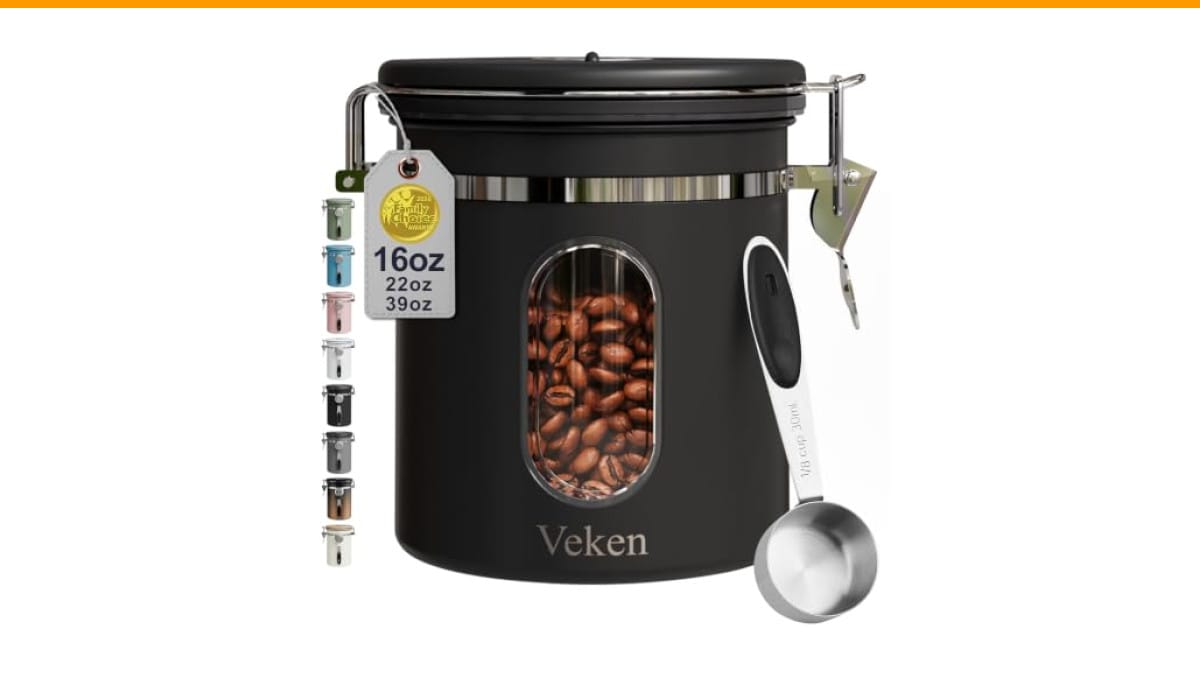
Veken Coffee Canister with Window,Airtight Stainless Steel…
- Freshness is Everything:Our coffee canister helps maintain the freshness of your coffee beans by keeping air out and free of harmf…
- Date Tracker, Window, & Free Scoop:Keep your coffee fresh by setting storage or expiry dates with our date tracker on the lid. A h…
- Premium Quality Assurance:We understand the importance of quality when it comes to your coffee experience; That's why our Veken co…
As an Amazon Associate I earn from qualifying purchases.
If you’re in a hurry, one solid option is the Check Price on Amazon. It combines a one-way CO2 valve, a date tracker, and a free stainless scoop in an affordable package. But let’s dig into why those features matter before you buy anything.
The Real Goal: Slowing Down Time (and Oxygen)
Roasted coffee is a perishable product. The oils on the bean’s surface oxidize when exposed to air, turning rancid and dulling flavor. Moisture accelerates that process, and UV light breaks down aromatic compounds. Your canister’s job is to slow all three — not to keep beans fresh forever, but to stretch the good window from days to weeks.
Whole beans last longer than ground coffee because grinding increases surface area dramatically. A bean’s interior is protected; grounds expose thousands of new surfaces to oxygen. That’s why a canister matters most for whole beans, but it’s still useful for grounds if you brew within a week or two.
Temperature swings also hurt. Every time you open the lid, warm humid air rushes in, and when it cools, moisture condenses inside. A good canister minimizes air exchange and keeps the internal environment stable.
Think of it like a cooler for your coffee. It doesn’t refrigerate, but it insulates against the things that ruin the contents.
The Non-Negotiable: Why “Airtight” Isn’t Enough
Most canisters claim to be airtight, but the term gets thrown around loosely. A lid that clicks shut doesn’t necessarily create a seal. You need a gasket — usually silicone or rubber — that compresses against the rim. Without it, air sneaks in through microscopic gaps.
Here’s the catch: freshly roasted beans release carbon dioxide (CO2) for days after roasting. If you seal them in a completely airtight container with no vent, pressure builds up. That pressure can push the lid open, or worse, force CO2 back into the beans, which alters flavor. That’s why many quality canisters include a one-way degassing valve.
The One-Way Valve: A Non-Negotiable for Fresh Roasts
A degassing valve lets CO2 escape without letting oxygen in. It’s a one-way door. You’ll see them on high-end coffee bags, and they’re equally valuable in a canister. If you buy beans with a roast date within the last week, a valve is essential. Without it, you’re either trapping gas or leaving the lid slightly open, which defeats the purpose.
The Veken canister mentioned above has this valve built in. It’s a small detail that makes a big difference if you buy from local roasters who print roast dates. Most grocery store beans have already degassed during transit, so the valve matters less there — but it doesn’t hurt.
The Seal Test: How to Verify a True Lock
You can test a canister’s seal at home. Close the lid and press down gently. If you feel resistance and hear a soft hiss when you release, you’re good. Another method: place a piece of paper between the lid and rim, close it, and try to pull the paper out. If it slides easily, the seal is weak.
Some canisters use a clamp or latch mechanism instead of a simple press-on lid. Clamps usually provide more consistent pressure, but they’re also more parts to break. Silicone gaskets degrade over time, so check them periodically and replace if they crack.
Material Science: How Your Canister Changes the Flavor
The material isn’t just about looks. It affects temperature stability, light exposure, and even the taste of your coffee over time. Here’s how the three main options stack up.
Stainless Steel: The Opaque Guardian
Stainless steel blocks all light, which is a huge advantage. It’s also durable, doesn’t absorb odors, and won’t shatter if you drop it. The downside is that steel can retain heat if you store it near a stove or in direct sunlight, but that’s rarely an issue on a countertop.
One thing to watch: cheap stainless can have a metallic taste, especially if the interior isn’t coated. High-quality 304 stainless, like what Veken uses, is food-grade and doesn’t impart flavor. It’s also easy to clean — just hand wash with warm soapy water. Avoid the dishwasher, as heat can warp the gasket.
Ceramic: The Flavor-Neutral Heavyweight
Ceramic is heavy, which makes it stable on the counter. It’s also completely inert — the glaze doesn’t react with coffee oils, so there’s zero flavor transfer. Ceramic canisters often have beautiful designs, but they’re fragile. Drop one and you’ll be sweeping up shards.
Another trade-off: ceramic is porous if unglazed, but most are glazed inside. If you buy a ceramic canister, make sure the interior is glazed, or it will absorb oils and become rancid-smelling over time.
Glass: The Aesthetic Trade-Off (and Why Amber Matters)
Glass looks great and lets you see your beans, which is handy for checking levels. But clear glass lets in light, which degrades coffee. That’s why some glass canisters use amber or smoked glass — they filter out UV rays while still showing the beans.
The Veken canister has a small window on the side, so you get the visual benefit without exposing the whole batch to light. That’s a smart compromise. If you go with a fully glass canister, keep it in a dark cabinet or choose amber glass.
Size, Shape, and the Scoop: Ergonomics of Daily Use
Capacity matters more than you think. A 16-ounce canister holds about a pound of whole beans, which is perfect for a weekly purchase. If you buy in bulk, get a larger container, but remember: every time you open the lid, you introduce oxygen. Smaller batches stored in multiple canisters beat one giant jar.
Shape also affects how beans settle. A wide, short canister exposes more surface area, which means more CO2 escapes quickly. A tall, narrow one keeps the coffee bed deeper, slowing gas exchange. For most home users, a wide mouth is easier for scooping, but a tall one takes up less counter space.
The scoop is often an afterthought, but it shouldn’t be. A poorly designed scoop — too short, too narrow, or with a sharp edge — makes a mess and leads to inconsistent dosing. Look for a scoop that reaches the bottom of the canister and holds roughly 2 tablespoons (the standard for a single serving). The Veken includes a stainless steel scoop that hooks onto the lid, so it doesn’t get lost in the beans.
Matching the Canister to Your Coffee Ritual (and Kitchen Layout)
Where you store your canister matters as much as the canister itself. If it sits on the counter, you want something that looks good and blocks light. If it goes in a cabinet, you can prioritize function over form.
Here’s a quick breakdown:
- Countertop: Stainless steel or opaque ceramic. They block light and look professional. Avoid clear glass unless you keep it in a dark corner.
- Cabinet: Any material works, but glass is fine here since there’s no light. You might prefer a lighter canister for easy lifting.
- Pantry: Go for maximum capacity. A 32-ounce steel canister can hold two pounds, but remember the freshness clock starts at roast date, not when you open the bag.
If you grind daily, keep the canister next to your grinder. If you brew once a week, a cabinet is fine. The key is convenience — if it’s a hassle to reach, you’ll leave it open or skip it.
Also, think about your workflow. If you use a scale, a canister with a wide mouth makes it easy to pour beans into a dosing cup. If you scoop directly into the grinder, a deeper canister reduces spillage.
Maintenance: The Hidden Factor in Long-Term Freshness
A coffee canister needs cleaning, but not as often as you’d think. Coffee oils build up on the interior and can go rancid, so wipe it out every few weeks with a dry paper towel. For a deeper clean, hand wash with mild soap and water, then dry completely before refilling. Never put a canister in the dishwasher — the heat can warp the gasket and ruin the seal.
Check the gasket every month. If it feels hard or cracked, replace it. Some brands sell replacement gaskets, but not all. That’s worth considering before you buy — a canister you can’t repair is a disposable one.
If you use your canister for ground coffee, clean it more often. Grounds have more surface area and leave more residue. A quick wipe after each use keeps things fresh.
The Verdict: A Decision Matrix for Your Budget and Beans
Here’s a comparison table to help you decide based on what you value most:
| Feature | Stainless Steel | Ceramic | Glass |
|---|---|---|---|
| Light protection | Excellent | Excellent | Poor (unless amber) |
| Durability | High | Low (breaks easily) | Medium (breaks) |
| Flavor neutrality | Good (if 304 grade) | Excellent | Excellent |
| Weight | Light | Heavy | Medium |
| Odor absorption | None | None (if glazed) | None |
| Typical capacity | 16–32 oz | 12–24 oz | 16–32 oz |
| Price range | Moderate | Moderate to high | Low to moderate |
| Best for | Most home users | Countertop display | Budget or cabinet |
For most people, stainless steel wins. It’s durable, light-blocking, and easy to clean. Ceramic is a close second if you want aesthetics and don’t mind the weight. Glass is fine for cabinet storage, but skip it for countertop unless it’s amber.
If you’re still torn, consider the Veken Coffee Canister. It’s stainless steel with a window, a degassing valve, and a date tracker — all at a price that’s hard to beat. Check the current price on Amazon to see if it fits your budget.
FAQs: The Edge Cases (Vacuum vs. Airtight, Freezer Storage)
Is a vacuum-sealed canister better than an airtight one?
Vacuum sealers remove air from the container, which slows oxidation significantly. They’re great for long-term storage, but they’re more expensive and require a pump or base. For daily use, an airtight canister with a one-way valve is more practical. You open it multiple times a day, and each time you break the vacuum, you have to re-pump. That gets old fast.
Can I store coffee in the freezer with a canister?
Freezing coffee is controversial. If you freeze beans, they must be in an airtight container to prevent moisture absorption. Thawing causes condensation, which is worse than leaving them at room temperature. If you buy in bulk, divide into small portions and freeze each in a separate airtight bag. But for most home users, a good canister at room temperature is enough.
How long does coffee stay fresh in a canister?
Whole beans last about 2–3 weeks in an airtight canister with a degassing valve. Ground coffee lasts about 1 week. After that, flavor degrades noticeably. If you want to extend freshness, buy smaller bags and use them faster.
Should I use a canister with a window or without?
A window is convenient for checking levels without opening the lid, but it lets in light. If you choose a canister with a window, store it in a dark place or choose one with a small window that doesn’t expose the whole batch. The Veken’s window is small enough that it doesn’t compromise freshness significantly.
How do I clean a coffee canister with a valve?
Don’t submerge the lid if it has a valve. Wipe the lid with a damp cloth, and wash the body with soap and water. Dry everything thoroughly before reassembling. If coffee oils build up in the valve, use a toothpick to gently clear it.
What to Do Next: A Practical Checklist
You’ve got the knowledge. Here’s the short list to act on:
- Pick a canister with a one-way degassing valve if you buy freshly roasted beans.
- Test the seal before you trust it — the paper trick works.
- Choose stainless steel for the best all-around performance.
- Match capacity to your consumption: 16 oz for weekly, 32 oz for bi-weekly.
- Store in a cool, dark place, away from the stove and sunlight.
- Clean the canister every few weeks and inspect the gasket monthly.
- If you’re on a budget, the Veken model hits all the essentials without breaking the bank.
Your coffee deserves better than a half-open bag. A good canister is a small investment that pays off in every cup. And if you’re also dialing in your grind, check out our burr grinder comparison to pair your storage with the right grinder. For keeping your gear clean, our grinder cleaning guide will help you maintain that fresh taste from bean to brew.
Products related to this article
Sponsored / affiliate links. As an Amazon Associate I earn from qualifying purchases. I may earn additional commission from eligible campaigns.
 SOLUSTRE Electric USB Coffee Cup Warmer with Temperature Settings Portable Milk and Beverage Heating Coaster for Office Desk Small Lightweight Design Easy to Clean Surface Multi Functional
 MIBOTE Silicone Cooking Kitchen Utensils Set, Wooden Handle, Coffee
 Quick Heating Cup Warmer, Three Temperature Settings, Splashproof and Portable, for Coffee, Milk, Lightweight ABS Material