You’re grinding beans at 6:30 AM, and the kitchen sounds like a rock crusher. The neighbors might hear it. Your partner rolls over in bed. You hold the grinder awkwardly, trying to dampen the racket with a towel, but it doesn’t help. A manual coffee grinder should be one of the quietest tools in your kitchen—it’s just gears and steel. When it gets loud, something is off.
Most people assume noise means the grinder is cheap or broken. Often, it’s neither. The sound is your grinder telling you about a specific mechanical problem. This article walks through the four most common culprits, how to fix each one, and when it makes sense to stop fighting it and switch to an electric model. You’ll leave knowing exactly what to check first, what tools you need, and how to prevent the noise from coming back.

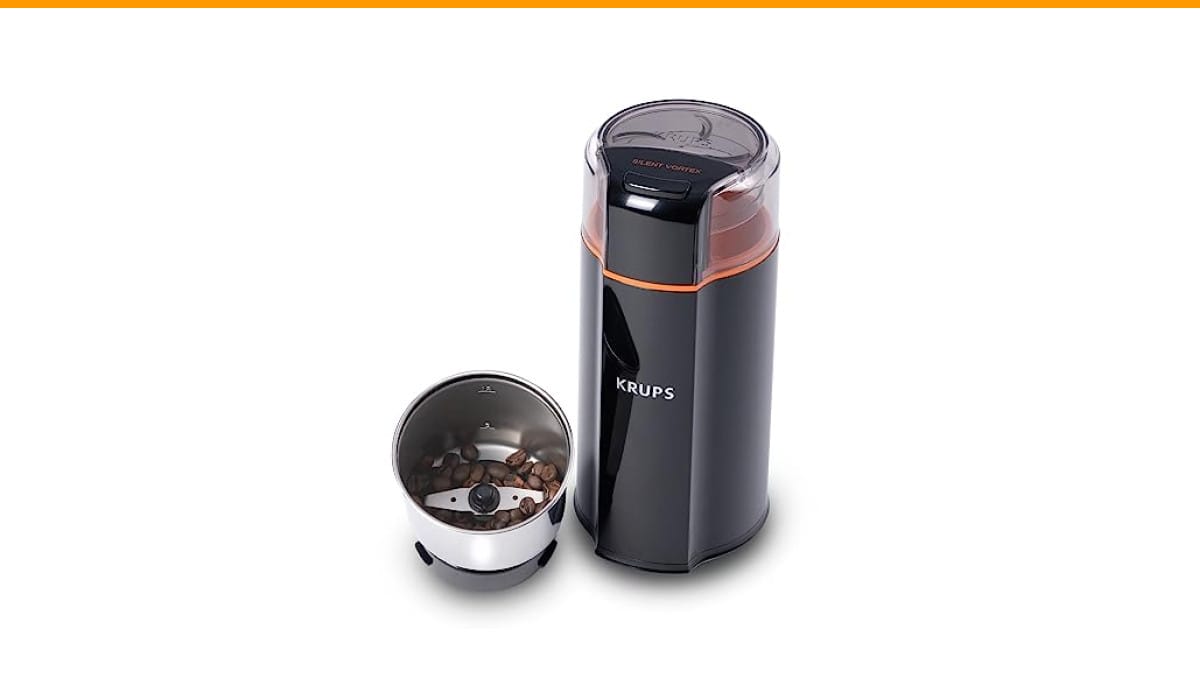
KRUPS
KRUPS Silent Vortex Electric Coffee Grinder: 3…
- Whisper-Quiet Operation: Experience 5x quieter grinding with KRUPS patented Silent Vortex technology, allowing you to savor the co…
- Versatile Grinding: This 3-in-1 electric grinder effortlessly handles coffee beans, spices, and dry herbs - ideal for crafting cus…
- Precision Grinding: Vortex Spin technology and oval design ensure consistent, uniform grounds - adjust grind time for French press…
As an Amazon Associate I earn from qualifying purchases.
If you’re tired of the racket and want a quieter morning routine, an electric option like the KRUPS Silent Vortex Electric Coffee Grinder uses patented Silent Vortex technology to run roughly five times quieter than standard grinders. It also handles spices and herbs, and the bowl pops off for dishwasher cleaning. It’s a solid backup for days when your manual grinder is acting up.
Why Your Manual Grinder Got Loud in the First Place
Manual grinders have few moving parts: a shaft, two burrs (or a blade), and a bearing or bushing. Noise comes from one of these parts losing its proper fit. The most common cause is a loose adjustment ring or burr carrier. When the burrs wobble even half a millimeter, they scrape against each other unevenly. That creates a grinding, metallic screech that gets worse as you speed up.
Another frequent cause is coffee debris packed into the threads. Oil from beans mixes with fine coffee dust and hardens inside the adjustment mechanism. This gunk makes the burr sit at a slight angle. You turn the handle, and the misaligned burr catches on the other one. The sound is more of a clicking or chattering noise rather than a smooth grind.
Worn parts matter too. The shaft on cheaper grinders has a plastic bushing that wears down after a year of daily use. Once that bushing gets thin, the shaft rocks side to side. The burrs follow that motion and start hitting each other. This is a mechanical failure, not a cleaning issue.
Finally, check the handle itself. A loose handle screw or a worn handle slot creates a clicking sound on every rotation. It’s easy to mistake for a burr problem. The fix takes ten seconds, but you have to look for it first.
Step-by-Step Troubleshooting: Fix the Noise in This Order
Don’t take the whole grinder apart yet. Work through these steps in order. Most noise issues resolve at step one or two.
- Clean the burrs and threads thoroughly. Remove the top burr and use a stiff brush to clear coffee dust from the burr teeth and the adjustment threads. Reassemble and test. If the noise is gone, the issue was debris.
- Tighten every screw and nut. Check the handle screw, the center shaft nut, and any visible fasteners. A loose handle is the simplest fix and the easiest to miss.
- Re-seat the burr carrier. Remove the lower burr, wipe it clean, and put it back, pressing down firmly to ensure it sits flat. A burr that’s not fully seated will always make noise.
- Check for burr damage. Look at the cutting edges on both burrs. Chipped or dull burrs will make a scraping sound. If you see damage, replacement burrs are cheap if your model supports them.
- Lubricate the shaft bushing. Use a tiny drop of food-grade mineral oil on the shaft where it enters the housing. Wipe off any excess. This fixes a dry bushing squeak.
If you’ve done all five steps and the grinder is still loud, the bushing is likely worn beyond repair. At that point, you’re looking at a replacement part or a new grinder.
When Loud Means Broken: Parts That Wear Out
Some noise is just a sign of normal wear. The bushing on budget grinders is the first thing to go. It’s usually made of nylon or a soft plastic. After about 500 to 1,000 grinds, it can wear enough to cause shaft wobble. You’ll notice the handle feels loose even when tightened.
The burr alignment pin is another weak point. This pin keeps the two burrs perfectly concentric. If it bends or shears off, the burrs will collide. That produces a harsh, grating noise and uneven grounds. You can’t fix a bent pin—you replace the burr assembly.
One more thing: the internal spring that presses the burrs together can lose tension. A weak spring means the burrs don’t meet with enough pressure, so they chatter against each other instead of cutting cleanly. The grind becomes inconsistent, and the noise sounds like rapid ticking.
If you’re handy, you can order replacement parts from the manufacturer. But if the grinder cost less than $30, replacement parts often cost more than a new unit. That’s the point where most people decide to upgrade.
Manual vs. Electric: The Real-World Noise Comparison
Let’s be honest about the trade-off. A properly functioning manual grinder produces a soft, rhythmic crunching sound—about 60 to 70 decibels. That’s quieter than a normal conversation. But a broken one can hit 85 decibels, which is as loud as a blender. An electric grinder runs at a steady volume regardless of its condition. The table below shows what you’re actually dealing with.
| Grinder Type | Noise Level (dB) | Noise Pattern | Best Use Case |
|---|---|---|---|
| Manual (working) | 60-70 | Intermittent crunching | Quiet mornings, travel |
| Manual (broken/loose) | 75-90 | Scraping, chattering, clicking | Needs repair, not ideal |
| Electric blade | 85-95 | High-pitched whirring | Fast grinding, spices |
| Electric burr (standard) | 70-80 | Constant grinding hum | Consistent results, daily use |
| Electric burr (quiet model) | 55-65 | Muffled hum | Shared walls, early mornings |
That last row is where the KRUPS Silent Vortex fits. It’s designed to stay in that 55-65 decibel range, which is roughly the volume of a quiet office. If your manual grinder is making more noise than a typical electric model, you’ve lost the main advantage of going manual.
Prevention: Keeping Your Manual Grinder Quiet for Years
The best fix is avoiding the problem. Clean your grinder every two weeks if you use it daily. Run a few grams of dry rice through it once a month to absorb oils and push out stuck grounds. Then brush out the burrs and threads with a dedicated grinder brush. Avoid washing the burrs with water—moisture causes rust, and rust is a noise maker in itself.
Don’t overtighten the adjustment ring. Many people crank it down hard to get a fine espresso grind. That puts stress on the threads and can misalign the burr carrier. Turn the ring until it stops, then back it off a quarter turn. That’s the correct starting point.
Store the grinder with the hopper empty. Leaving beans in the hopper puts constant pressure on the burrs and the shaft. Over time, that pressure accelerates bushing wear. Empty it after each use.
If you’re already dealing with a noisy grinder, check our guide on burr grinder vs blade to see if your grinder type is worth repairing at all. For cleaning specifics, the grinder cleaning guide covers the full process with photos.
Frequently Asked Questions
Why does my manual grinder make a high-pitched squealing sound?
A high-pitched squeal usually means the shaft bushing is dry or the burrs are rubbing against the housing. Apply one drop of food-grade mineral oil to the shaft. If that doesn’t help, inspect the burrs for shiny spots where metal has been rubbing.
Can I fix a misaligned burr myself?
Sometimes. Remove the burr carrier, clean the seating surface, and reinstall it carefully. Make sure it clicks into place. If the grinder still makes noise, the alignment pin is likely bent. That requires a replacement part.
Is it safe to use a manual grinder that’s making grinding noises?
It’s safe in the sense that you won’t get hurt, but you’re damaging the burrs further. The metal-on-metal contact wears down the cutting edges. If you keep using it, you’ll eventually get metal shavings in your coffee. Stop using it until you fix the issue.
How often should I replace the burrs on a manual grinder?
For home use, quality steel burrs last 5 to 10 years. Ceramic burrs last about half that. If you notice the grind size becoming inconsistent or the grinder getting louder over time, check the burrs for dull spots or chips.
Does a louder grinder mean it’s grinding faster or better?
No. A louder grinder is less efficient. The noise is wasted energy from friction or misalignment. A properly aligned grinder is quieter and produces more consistent grounds. If you’re also dealing with bitter coffee, the grind inconsistency from a noisy grinder might be the cause—see why coffee tastes bitter for related issues.
What to Do Next: A Practical Action Plan
You’ve diagnosed the problem. Here’s what to do about it.
- Start with a full clean of the burrs and threads—this fixes 70% of noise issues.
- Tighten the handle screw and check for any loose fasteners before taking anything apart.
- Test the grinder after each fix, not after doing everything at once.
- If the bushing is worn, order a replacement part or consider a new grinder.
- For a permanently quiet morning routine, check the current price on the KRUPS Silent Vortex electric grinder on Amazon.
- Prevent future noise with bi-weekly cleaning and empty storage.
- If your grinder is beyond repair, read our espresso machine noise guide for similar troubleshooting on your other gear.
Products related to this article
Sponsored / affiliate links. As an Amazon Associate I earn from qualifying purchases. I may earn additional commission from eligible campaigns.
 Coffee Espresso Machine Handle Replacement Parts, Cafe Bracket Handle for Lidl Silvercrest CM4621 CM4218 KF5002 KF500S Barista (for 51mm Portafilter Basket - Not included)
 Linnkyfloa Coffee Espresso Maker Handle Replacement for Stovetop Moka Pot or Percolator, Black Plastic for Spare Part Compatible with Italian(9-12 Cup)
 Cutting Board Oil 12 oz, Food Grade Mineral Oil Added Orange Lemon Scent