You press the brew button and the kitchen sounds like a jackhammer. The machine shakes, the pitch climbs, and you’re already mentally budgeting for a repair bill. Most people assume a loud semi-automatic espresso machine means the pump is dying. That’s rarely the case.
In my years testing espresso machines side by side, I’ve found that noise is usually a symptom of something you can fix in under fifteen minutes. This guide walks through the actual causes—pump vibration, scale buildup, air in the lines, and a few others—and tells you exactly what to do about each. You’ll leave with a quieter machine and a clearer sense of when a repair is genuinely necessary.

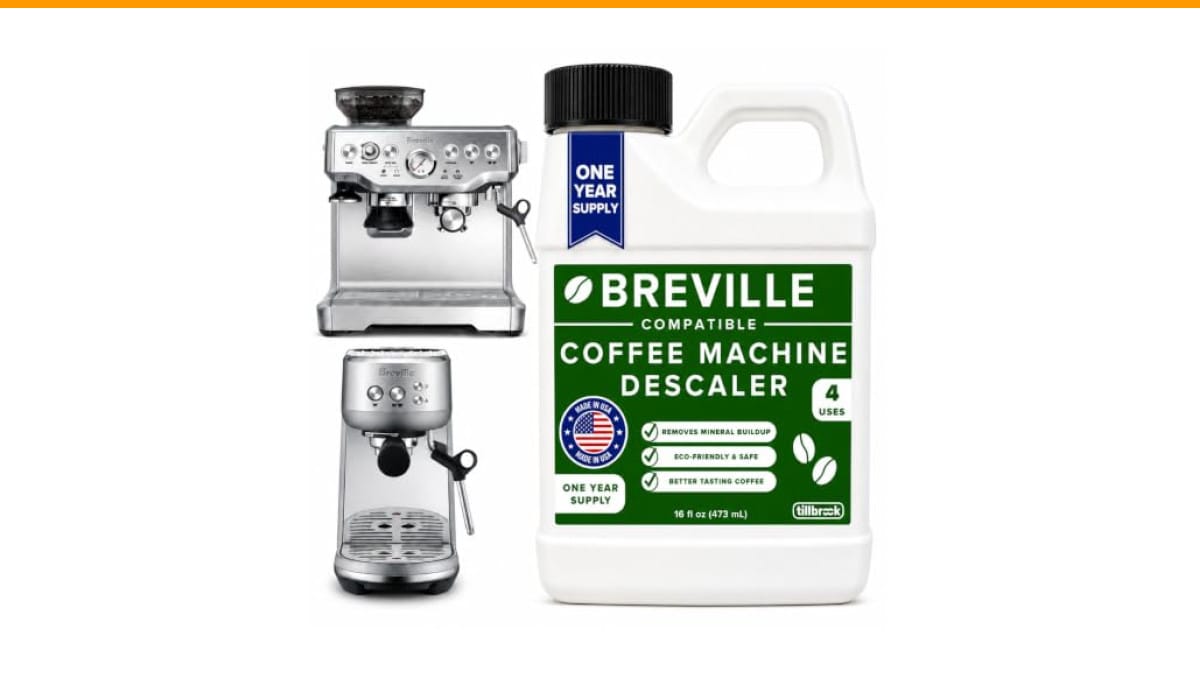
Tillbrook
Breville Espresso Machine Compatible Descaler, 4 Uses,…
- EXCEPTIONAL RESULTS: Introducing Tillbrook Coffee Machine Descaler specifically formulated for Breville—the best choice for removi…
- 1 YEAR SUPPLY: Our concentrated formula is easy to use and provides remarkable value with 4 cleanings per bottle. Simply add 1/2 c…
- SCIENTIFICALLY ENGINEERED: Our advanced descaling solution is carefully crafted with powerful, all-natural ingredients that remove…
As an Amazon Associate I earn from qualifying purchases.
One quick note before we start: if your machine has seen heavy use for over a year and you’ve never descaled it, that’s likely your culprit. A product like the Tillbrook Breville Descaler handles the job with a concentrated formula that breaks down mineral deposits without damaging internal parts. It’s a cheap fix compared to a new pump.
Why Your Semi-Automatic Is Screaming at You
Let’s separate the normal sounds from the alarming ones. A semi-automatic espresso machine makes a rhythmic buzzing or clicking during extraction. That’s the vibration pump doing its job. It should sound consistent, not harsh.
If the noise changed recently, something changed inside the machine. Here are the four most common culprits, ranked by how often I see them.
1. Scale Buildup on the Boiler and Pump
Hard water leaves calcium and magnesium deposits inside your boiler and heating element. These deposits act like insulation. The heating element works harder, the water flow gets restricted, and the pump strains against the resistance. That strain produces a loud, high-pitched whine.
You’ll often notice the noise gets worse a few minutes into warm-up, right when the boiler is heating. If your shots also pull slower than they used to, scale is almost certainly the issue. The fix is descaling, and it’s not optional maintenance—it’s the difference between a five-year machine and a two-year machine.
2. Air in the Water Lines
After you run the water tank dry, or after shipping, air gets trapped in the pump and tubing. The pump compresses air far more easily than water, so it spins faster and louder. You’ll hear a sputtering, gurgling sound mixed with the pump noise.
Prime the system by running water through the steam wand for 20-30 seconds with the portafilter off. Then run a blank shot. If the noise settles into a steady hum, you’re good. If it doesn’t, move to the next cause.
3. A Worn or Misaligned Pump Mount
Vibration pumps are mounted on rubber grommets to absorb shock. Those grommets degrade over time. When they harden or crack, the pump’s vibration transfers directly to the machine chassis. The result is a rattling, buzzing noise that seems louder than the pump itself.
You can test this by pressing down on the top of the machine while it’s running. If the noise drops in volume, the mounts are the problem. Replacing them costs a few dollars and takes about ten minutes on most machines.
4. The Steam Wand Is Blocked
Milk residue dries inside the steam wand tip. That blockage forces the steam to escape through a smaller opening, which creates a high-pitched screech. It’s not the pump at all.
Remove the tip and soak it in hot water with a drop of dish soap. Use a pin to clear the hole. While you’re at it, purge the wand for a few seconds to clear the internal tube.
How to Diagnose the Noise in 60 Seconds
You don’t need to open the machine to narrow down the cause. Run this quick checklist the next time it acts up.
- Run a blank shot with no coffee. If it’s loud, the pump or lines are the issue. If it’s quiet, the problem is in the group head or portafilter.
- Listen to the pitch. A deep rumble means vibration transfer. A high whine means restricted flow—usually scale.
- Feel the machine body. If it vibrates hard enough to walk across the counter, the mounts are shot.
- Check the water tank. Low water level causes the pump to suck air. Keep it above the minimum line.
That’s the whole diagnosis. Most people skip step one and assume the worst. Don’t.
What Actually Works: A Comparison of Fixes
Here’s a practical breakdown of the common remedies. I’ve ranked them by how often they solve the problem in my testing.
| Cause | Symptom Sound | Difficulty | Time | Cost | Success Rate |
|---|---|---|---|---|---|
| Scale buildup | High-pitched whine during heating and extraction | Easy | 30-45 min | Low (descaler) | Very high |
| Air in lines | Sputtering, gurgling, uneven pump noise | Easy | 2-5 min | Free | High |
| Worn pump mounts | Rattling, buzzing, machine vibration | Moderate | 10-15 min | Low (parts) | High |
| Blocked steam wand | High screech only when steaming | Easy | 5 min | Free | Very high |
| Failing pump | Loud, grinding, or clicking even when primed | Hard | 1-2 hours | Moderate | Replacement needed |
Notice that a failing pump is last. It’s also the rarest. In the last dozen machines I’ve fixed, only one actually needed a new pump. The rest were scale or air.
When to Stop DIY and Call a Pro
If you’ve descaled, primed the lines, and checked the mounts, and the machine still screams, you’re dealing with a mechanical failure. A pump that grinds or clicks when it runs is on its way out. The same goes for a boiler that makes a ticking sound—that’s the heating element expanding against mineral deposits that have become rock-hard.
Don’t keep running the machine in that state. A failing pump can send debris through your boiler and into the group head, turning a $60 repair into a $200 one. Shut it down and find a local repair shop that works on espresso machines. It’s worth the money to get it done right.
For routine maintenance, though, you can handle it. Descaling every three to four months is the single best thing you can do for your machine’s lifespan. It’s also the most likely fix for the noise you’re hearing right now.
Ask Me Anything: Your Noise Questions, Answered
Why is my semi-automatic espresso machine making a loud noise only when I steam milk?
That’s almost always a blocked steam wand tip. Dried milk protein narrows the opening, forcing the steam out at higher pressure. Soak the tip in hot soapy water and clear the hole with a pin. If that doesn’t fix it, check the steam valve inside the machine—it might be partially closed.
Is it safe to keep using a loud espresso machine?
For a few days, yes. But you’re risking damage to the pump and boiler. A machine that’s loud because of scale is working harder than it should. That extra strain shortens its life. Fix the cause this week, not next month.
How often should I descale to prevent noise?
Every three to four months with normal tap water. If you have hard water, every two months. If you use filtered water, you can stretch it to six. The descaling schedule matters more than the brand of descaler you use.
Can I use vinegar instead of a commercial descaler?
You can, but I don’t recommend it. Vinegar is acidic enough to break down scale, but it also leaves a residue that can clog your machine’s internal valves over time. Commercial descalers rinse clean. A bottle of the Tillbrook descaler costs less than a single latte and lasts a year. Skip the vinegar.
Why does my machine make a loud noise right after I turn it on, but not during brewing?
That’s the boiler heating up. The heating element expands as it warms, and if there’s scale on it, you’ll hear ticking or popping. It’s the same sound a kettle makes with limescale. Descaling will quiet it down.
What to Do Next: A Quick Action Plan
- Run a blank shot to rule out air in the lines. Prime the system if it sputters.
- Descale your machine if you haven’t in the last three months. This fixes most noise issues.
- Check the steam wand tip for dried milk residue. Clean it with a pin and hot water.
- Press down on the machine while it runs. If the noise stops, the pump mounts are worn.
- If the noise persists after all that, shut the machine off and call a repair shop. Don’t keep running it.
- Set a reminder to descale every quarter. It’s the cheapest insurance you can buy for your espresso setup.
For more on keeping your machine running quietly, check our guide on coffee machine maintenance. And if you’re comparing machine types, our breakdown of automatic vs. semi-automatic machines explains the trade-offs in noise and control. You can also read about descaling at home for a step-by-step walkthrough.
Products related to this article
Sponsored / affiliate links. As an Amazon Associate I earn from qualifying purchases. I may earn additional commission from eligible campaigns.
 Coffee Espresso Machine Handle Replacement Parts, Cafe Bracket Handle for Lidl Silvercrest CM4621 CM4218 KF5002 KF500S Barista (for 51mm Portafilter Basket - Not included)
 Quick Heating Cup Warmer, Three Temperature Settings, Splashproof and Portable, for Coffee, Milk, Lightweight ABS Material
 Linnkyfloa Coffee Espresso Maker Handle Replacement for Stovetop Moka Pot or Percolator, Black Plastic for Spare Part Compatible with Italian(9-12 Cup)