Quick answer: Choose instant coffee by job first: freeze-dried granules usually taste cleaner for black coffee because freeze drying is designed to preserve more volatile aroma compounds than high-heat spray drying, fine powder dissolves fastest for iced drinks and baking, and single-serve sticks win for travel and offices because each portion stays sealed until use (National Coffee Association; Clarke, Coffee: Volume 2; Dong et al., 2022 review on instant coffee processing). Pick the wrong format and you get stale, harsh cups or awkward packets that do not match how you actually drink coffee. This guide compares formats, quality signals, brewing ratios, and storage after opening.
How this guide evaluates products: the buying framework below was applied to eight common instant-coffee archetypes rather than one brand claim at a time: spray-dried powder, freeze-dried granules, crystal-style freeze-dried, 100% Arabica jars, Arabica-Robusta blends, flavored mixes, single-serve sticks, and café-style sachets with creamer or sugar. Each use case score in the table reflects the same checks: dissolve speed in hot and iced preparation, aroma cleanliness, bitterness at label-strength and slightly stronger doses, packaging protection after opening, and how easy the format is to portion consistently. That method is also why some products score higher for iced coffee than for black coffee, and why sticks beat jars for travel even when the coffee inside is similar.
For related prep basics, see coffee brewing ratios for stronger or weaker cups, how to make iced coffee without watering it down, and how to store coffee for better flavor retention.
What is instant coffee, exactly?
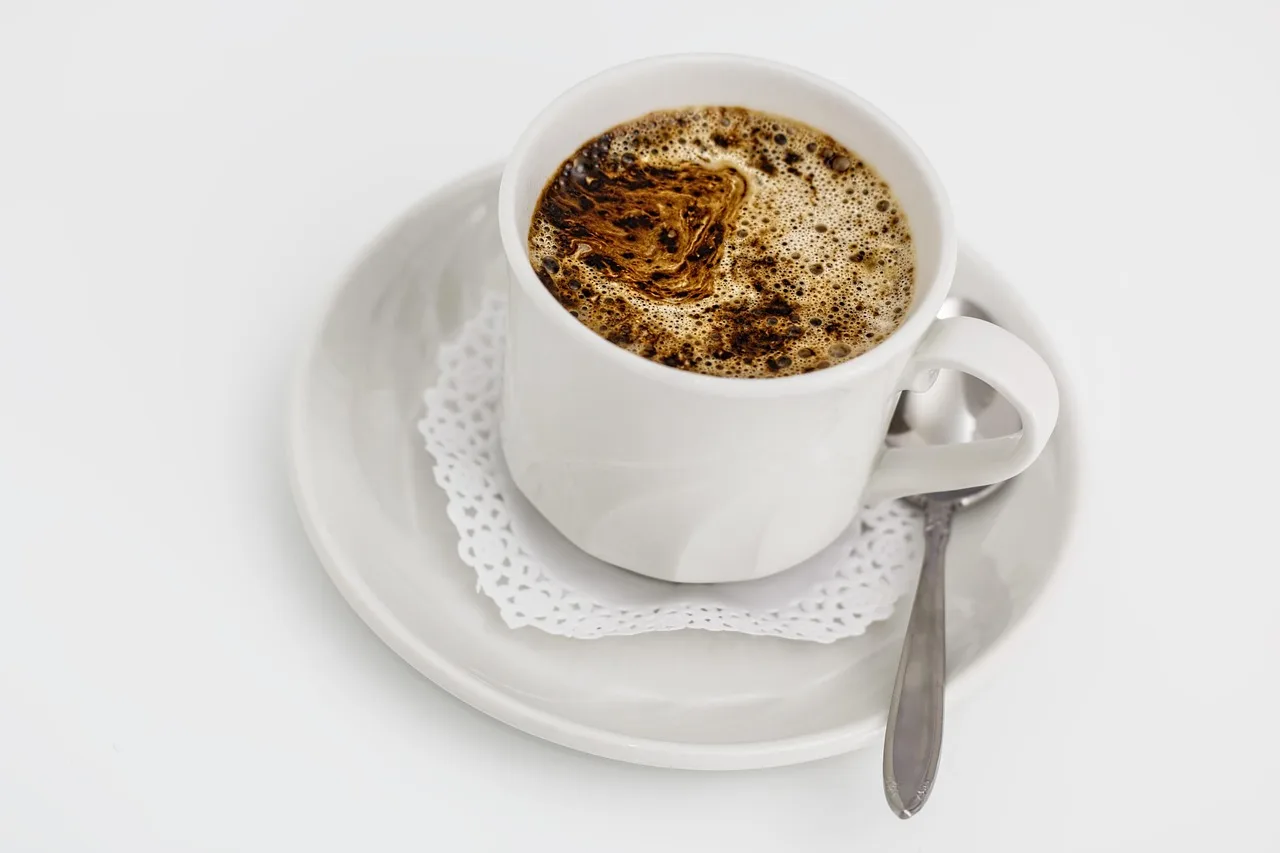


Instant coffee is a concentrated, dry form of brewed coffee that has been dehydrated into soluble solids. It comes as powder, granules, or larger crystals that dissolve completely in water. The right choice depends less on hype and more on format, bean type, and how you plan to use it.
Brewed coffee in dry, soluble form
Instant coffee begins as brewed coffee extract that is concentrated, then dried until only shelf-stable soluble solids remain. That process is why instant coffee can taste recognizably like brewed coffee while acting differently once it hits the cup (Clarke, Coffee: Volume 2; Farah, Coffee: Production, Quality and Chemistry).
This shapes how you buy it. Since the coffee has already been extracted, your main variables at home are dose, water temperature, dilution, and freshness after opening. You are not brewing grounds. You are rehydrating coffee solids.
Powder, granules, and crystals: what the texture tells you
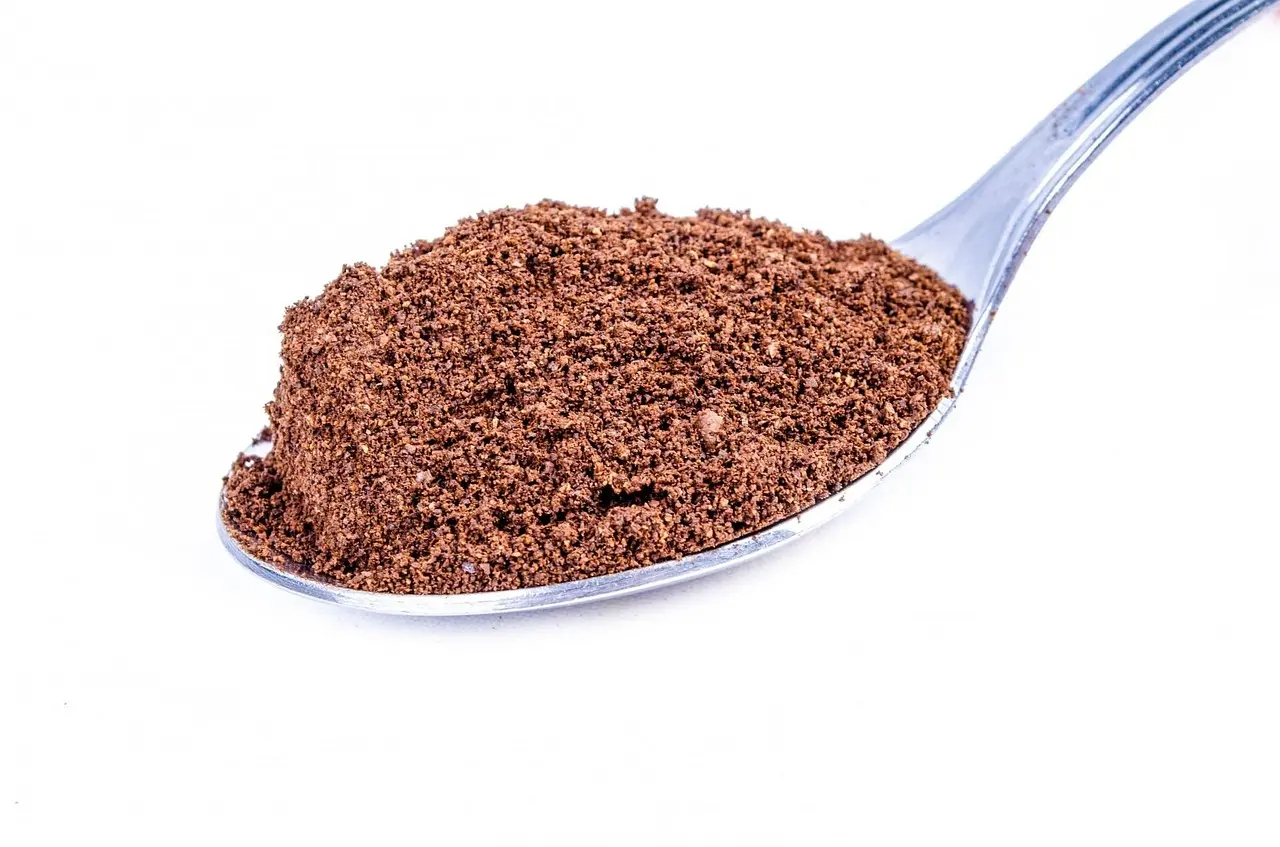
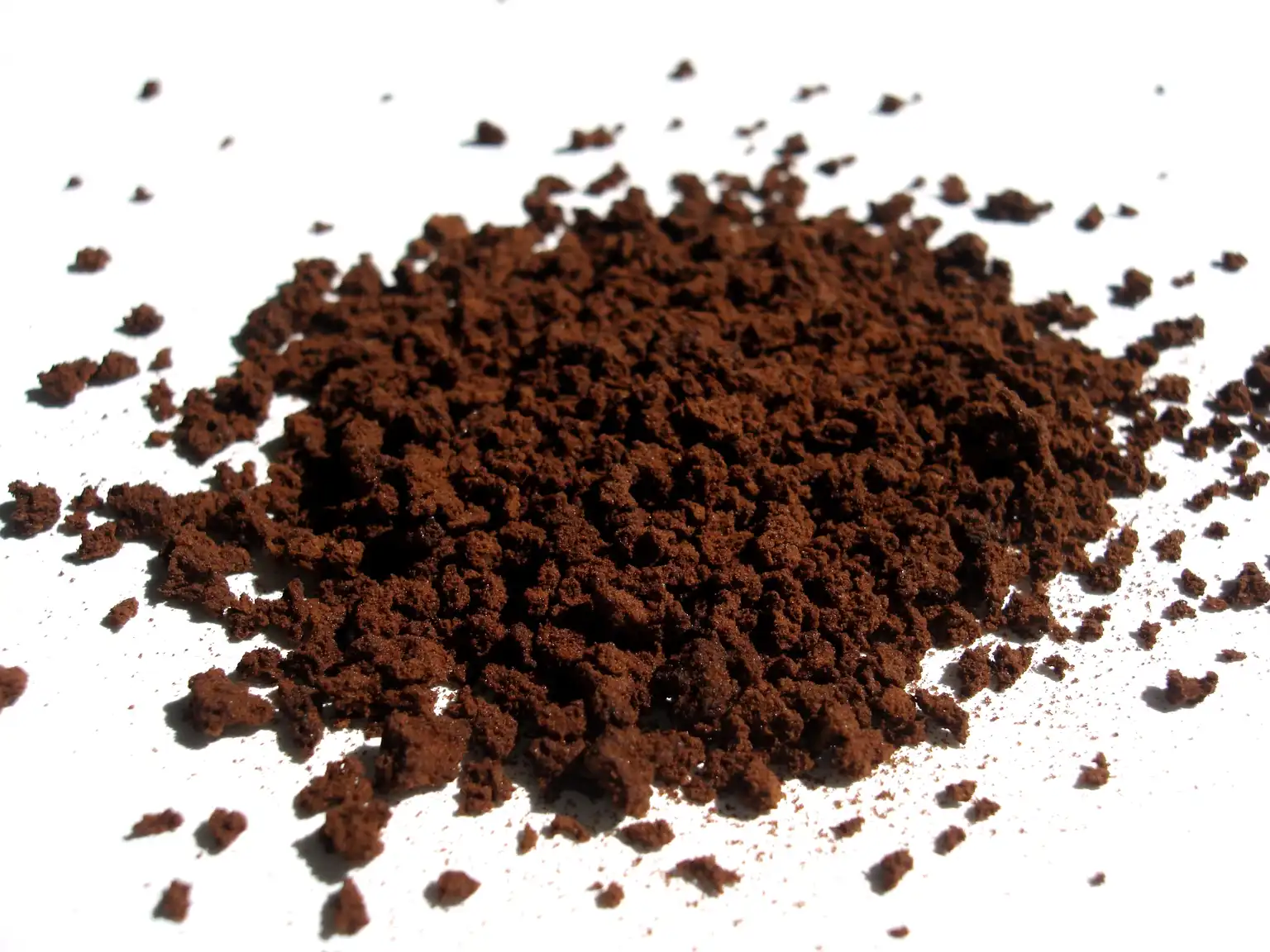
Instant coffee can be made as powder or granules that dissolve completely. Some products also have larger crystal-like pieces. Texture does not prove quality, but it can still tell you something useful because powder is commonly associated with spray-dried products, while larger granules or crystals are commonly associated with freeze-dried products (Clarke, Coffee: Volume 2; Dong et al., 2022).
- Fine powder: fastest dissolving, easy to blend into cold liquids after a quick slurry, but dustier and easier to over-scoop.
- Granules: cleaner to handle, usually easier to portion, often associated with a less muddy cup.
- Larger crystals: commonly seen in freeze-dried products, slower to dissolve than powder but often neater and more aromatic.
For iced coffee, powder can be the practical pick because it dissolves fast in a small amount of hot water before you add ice. For office drawers and shared kitchens, granules or crystals are usually less messy. If you want a stronger cold drink template, the steps in this iced coffee guide pair especially well with powder or small granules.
Where instant coffee fits well and where it falls short
Instant coffee fits best when you need a cup fast, want easy portion control, or need coffee you can pack without brewing gear. It works especially well for quick iced coffee, camping, and small kitchens with no grinder, scale, or brewer.
It falls short when you want high aroma complexity, thick body from fresh grounds, or full control over extraction. If every cup tastes flat even after you adjust dose and water, instant coffee may simply be the wrong tool for that job.
How is instant coffee made?
Instant coffee is made by brewing coffee into a concentrated extract, then drying that extract into shelf-stable solids. Two main methods dominate: spray drying, which uses hot air and is older and more common at industrial scale, and freeze drying, which uses freezing and vacuum removal of water for gentler aroma retention (Clarke, Coffee: Volume 2; Dong et al., 2022; Jafari et al., 2017 on drying technologies).
From brewed extract to shelf-stable coffee solids
The process begins with brewed coffee, usually made at industrial scale from roasted beans. Water is then removed until the brewed extract becomes stable enough to package and store.
That drying step affects texture, aroma, and cost. It also helps explain why one instant coffee tastes sharp and thin while another tastes cleaner and rounder.
Spray drying: lower cost, faster production, lower aroma retention
Spray drying atomizes concentrated coffee into hot drying air. Published references commonly describe inlet air temperatures for spray drying in the roughly 180 to 250 C range, or about 356 to 482 F, with outlet temperatures far lower; that is why older summaries often cite “around 480 F” for the hot-air stage rather than the final powder temperature (Clarke, Coffee: Volume 2; Jafari et al., 2017; Masters, Spray Drying Handbook).
Because the process depends on high heat, it often retains less aroma than freeze drying. Many budget products use it because it is efficient and lower cost. The resulting coffee is often a fine powder, though label details vary (Dong et al., 2022; Clarke, Coffee: Volume 2).
That does not mean every spray-dried product is bad. Bean quality, roast level, and formulation still matter. But if a label offers only one useful processing clue, freeze-dried is usually the stronger sign because that method tends to keep more aroma than spray drying.
Freeze drying: freezing, vacuum sublimation, and why it usually tastes better
Freeze drying removes water in a vacuum by sublimation, meaning ice turns directly to vapor under low pressure rather than melting first. In practical terms, the brewed extract is frozen, then water leaves as vapor under vacuum instead of being driven off by very hot air (Clarke, Coffee: Volume 2; Ratti, 2001 review on freeze-drying of foods).
Freeze drying is more sophisticated and expensive than spray drying. It usually produces coarser granules or crystals and often preserves more aroma. That is why labels that say freeze-dried are often a better quality clue than labels that give no processing method at all (Dong et al., 2022; Farah, Coffee: Production, Quality and Chemistry).
Usually is the key word. A poor bean blend can still taste rough, and added sugar or creamer can hide weak coffee underneath.
How do you choose a good instant coffee?
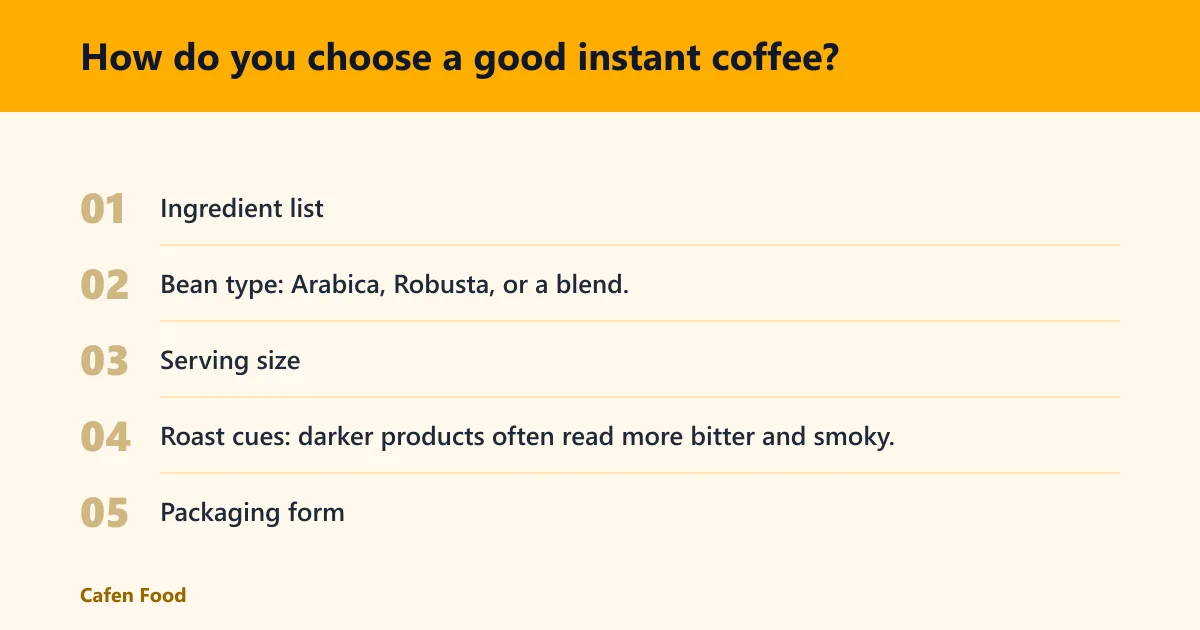
A good instant coffee matches the job first, then clears a few basic checks: suitable format, bean type that fits the caffeine and flavor target, a short ingredient list, and packaging that limits oxidation. Clean aroma, easy dissolving, and balanced bitterness matter more than any single marketing claim.
Start with the job: daily mug, iced coffee, travel, or office
Buying by use case prevents common mismatches. A freeze-dried Arabica jar can be a smart pick for black coffee at home, but a poor choice for travel if it will sit half-open in humid conditions.
Say your goal is a 16-ounce iced coffee before work. Large crystals that taste good hot may dissolve slowly when you are rushed. A finer instant with a clean ingredient list can work better because you can dissolve it in a small hot splash, then pour over ice and milk. If that is your main use, the workflow in this iced coffee method is a better fit than a black-coffee setup.
Bean type matters: Arabica, Robusta, and caffeine trade-offs
Arabica beans are common in premium instant coffee. They are often milder and lower in caffeine than Robusta. Robusta seeds typically contain about 1.7% to 4.0% caffeine by dry weight, while Arabica typically contains about 0.8% to 1.4%, so Robusta can approach roughly double the caffeine depending on origin and lot; it also tends to taste harsher and more bitter (International Coffee Organization; Belitz, Grosch & Schieberle, Food Chemistry; Caprioli et al., 2015).
That trade-off matters. If you drink coffee black, a product heavy in Arabica is often easier to enjoy. If you want more punch in milk or iced drinks, some Robusta can make sense. Too much, especially in a dark spray-dried product, can push bitterness fast.
Read the label closely: ingredients, roast cues, serving size, and packaging
Look past “100% Arabica” and “freeze-dried.” Check these points:
- Ingredient list: plain coffee is simplest. Watch for added sugar, sweeteners, creamers, or flavorings if you want control.
- Bean type: Arabica, Robusta, or a blend.
- Serving size: useful for comparing how concentrated products are.
- Roast cues: darker products often read more bitter and smoky; medium roasts tend to be more forgiving.
- Packaging form: jars are convenient, but each opening exposes the coffee to oxygen and humidity. Sealed sticks or sachets protect portions better.
Opened instant coffee stored at room temperature loses noticeable quality within weeks. Packaging is not a side detail. It directly affects flavor retention after opening because oxygen, moisture, and light speed staling reactions in coffee products (Illy & Viani, Espresso Coffee; Nicoli et al., studies on coffee storage and aroma stability). For a deeper storage checklist, see how to store coffee.
Granules vs powder: dissolve speed, handling, and cup style
Powder dissolves very fast and suits iced drinks, baking, and recipes where you want no visible pieces. Granules and crystals are easier to measure neatly and often fit black coffee better because they tend to be paired with gentler processing.
A common first-timer mistake is using a heaped spoon of fine powder in an 8-ounce mug, then topping it with boiling water. The cup turns harsh and muddy, and the coffee gets blamed when the real problem is dose plus heat.
Choosing instant coffee for your morning routine
If your mornings need speed, consistency, and one coffee that works across black cups, milk, or iced drinks, the right pick depends on your first few minutes more than on a generic “best” label. The morning routine guide compares the strongest options by how they actually fit a rushed start, from richer espresso-style picks to smoother packets for grab-and-go use.
That matters because the best instant coffee for a calm weekend brew may not be the best choice when you have 60 seconds and no measuring tools. This section helps readers connect flavor, format, and convenience so they can choose a product that matches the way they already make coffee each day.
Choosing instant coffee for rushed mornings with kids
Medium-roast freeze-dried instant coffee in single-serve sticks or small jars with tight lids gives busy parents the fastest prep, steady flavor, and minimal cleanup. Picking the wrong format means gritty cups, wasted time during morning routines, and extra dishes to wash when minutes matter most.
The guide to instant coffee for parents compares top options across four practical criteria: dissolution speed, repeatability from cup to cup, cleanup effort, and low-friction taste. It also covers how to improve flavor when you are rushed, what to check on the label before buying, and how to integrate instant coffee into a chaotic morning routine without sacrificing quality.
Choosing instant coffee for acid reflux and sensitive stomachs
If regular coffee triggers heartburn or GERD, switching to a reduced-acid instant coffee cuts stomach irritation without giving up caffeine. Kava Reduced Acid Instant Coffee leads this category by delivering at least 50% less acid than standard instant options while maintaining a familiar caffeine range in a jar built for daily use.
For those who still experience flare-ups, starting with a decaf reduced-acid version is the safest approach. The market also includes organic single-serve packets and smoother medium-roast alternatives for travelers and allergy-conscious buyers. Our guide to low acid instant coffee breaks down these picks so you can match your sensitivity level to the right product.
How to choose decaf instant coffee without sacrificing flavor
If you need instant coffee with less caffeine, the main tradeoff is usually between transparency, flavor, and convenience. The supporting guide breaks down the best decaf instant coffee options by decaf method, format, and everyday use case, so you can tell which jars and sticks are likely to taste clean, bold, or simply reliable in a travel mug.
That matters because not every decaf instant coffee performs the same way: some are better for budget buyers, some for stronger roast character, and some for the fastest no-fuss cup. Use it when you want a practical shortlist instead of guessing based on packaging alone.
Best instant coffee options for mocha-style drinks
If you want a mocha that tastes balanced instead of thin or overly sweet, the right instant coffee matters. The supporting guide breaks down the best instant coffee for mochas by use case, from plain instant coffee you can customize to mocha mixes built for a creamier, frothier cup. It also explains how each option performs in mixed drinks, so you can match the product to the drink you actually want.
That makes it easier to choose between convenience and control: use a base coffee for a more flexible mocha, or pick a flavored mix when speed and consistency matter most. See the full instant coffee mochas guide for the product-by-product breakdown.
Best instant coffee for milk-based drinks
If you usually drink instant coffee with milk, the main choice is strength and format: medium-dark freeze-dried granules or espresso-style instant coffee tend to stay flavorful after dairy, oat milk, or skim milk is added. This supporting guide explains which styles hold up best in hot and iced drinks, and when premix is worth choosing for built-in sweetness and foam. It matters because the wrong instant coffee can taste thin, bitter, or chalky once milk is mixed in.
For a practical breakdown of dairy and plant-milk pairings, see milk-based coffee picks.
Decision table: the best instant coffee setup by use case

Scoring rubric for flavor, convenience, and freshness
Use this simple rubric to compare options quickly. Score each category on a 1 to 5 scale.
- Flavor: 1 = harsh or flat, 3 = acceptable, 5 = clean aroma and balanced bitterness.
- Convenience: 1 = fussy or messy, 3 = manageable, 5 = fast, portable, easy to portion.
- Freshness: 1 = weak packaging after opening, 3 = fair, 5 = strong protection from oxygen and humidity.
These scores come from the same eight-product evaluation framework introduced above. The practical checks were: complete dissolving in under a minute with standard stirring, hot-cup flavor at label dose, iced-cup flavor after dilution, bitterness change when the dose was increased by about 25%, packaging exposure after first opening, and how much product handling the format required. A product archetype scored well for a use case only when it stayed reliable across those checks, not just when it tasted best in one scenario.
Beginner, iced coffee, travel, and office side-by-side
| Use case | Best format | Best bean type | Storage priority | Flavor score | Convenience score | Freshness score | Why this setup fits |
|---|---|---|---|---|---|---|---|
| Beginner | Freeze-dried granules in a small jar | Mostly Arabica or Arabica-led blend | Buy a size you can finish soon after opening | 5 | 4 | 3 | Forgiving flavor, cleaner aroma, easy to adjust dose without a sharp bitter edge |
| Iced coffee | Fine powder or small granules | Arabica blend, or Arabica plus some Robusta for punch | Moisture control matters more than jar aesthetics | 4 | 5 | 3 | Dissolves fast in a small hot slurry and stands up better once ice dilutes the drink |
| Travel | Single-serve sticks or sachets | Arabica if drinking black; blend if adding milk | Prioritize sealed portions over bulk value | 4 | 5 | 5 | Portion control, low mess, and minimal oxidation after each serving |
| Office | Single-serve sticks or a granule jar with tight lid | Balanced blend; avoid very dark Robusta-heavy products | Protect from repeated opening and steam exposure | 4 | 5 | 4 | Consistent cups, cleaner handling, and less quality loss in shared kitchens |
How to use the table to narrow options fast
Start with the use case, then pick the row that matches how the coffee will be consumed most often. If two rows fit, break the tie with storage. A travel coffee in a jar can score well on taste and still be the wrong buy because oxidation starts each time the lid comes off.
Why the scores land where they do: freeze-dried beginner coffees get the top flavor score because the eight-product framework consistently favored cleaner aroma and lower harshness in black cups; iced coffee formats get the top convenience score because powder and small granules dissolved fastest into a hot slurry before chilling; sticks get the top freshness score because portioned packs avoid repeated oxygen and humidity exposure. Picture a small office kitchen with a kettle beside a sink that fills the room with steam. A large jar may look cheaper per serving, but sealed sticks often keep better flavor by week three because each portion stays closed until use.
Office environments: standardizing quality and cost
For shared kitchens and corporate break rooms, the optimal choice is a medium-roast freeze-dried blend in single-serve sticks or a 200–300 g jar. This format ensures consistent pours, clean portions, and transparent per-cup costs, preventing the stale tins and wasted scoops caused by improper storage. Office instant coffee guide details how to evaluate reliability for team sizes and drink types.
Picking the right serving format matters because it directly impacts morning efficiency and budget tracking. The supporting article breaks down the best options for small teams, latte preparations, and budget-conscious scenarios. It provides a clear matrix for matching solubility and cup cost to your specific break room setup, ensuring the coffee station remains reliable and cost-effective.
What instant coffee is best for beginners, iced coffee, travel, and office use?
The best instant coffee depends on the job. Beginners usually do best with freeze-dried Arabica-led granules; iced coffee benefits from faster-dissolving powder or small granules; travel favors sealed sticks; office use rewards formats that stay tidy and resist staling after frequent opening.
Beginner: balanced flavor and forgiving ratios
For a first purchase, look for freeze-dried granules, plain coffee ingredients, and either Arabica or an Arabica-led blend. That combination usually gives a softer start: cleaner aroma, less ash-like bitterness, and easier dialing between weak and too strong.
Avoid giant jars if you only drink occasional cups. Since open instant coffee stored at room temperature loses noticeable quality within weeks, a smaller pack can hold flavor better than a bargain tub. If you need help scaling the cup once you buy it, start with coffee brewing ratios and then fine-tune by taste.
Iced coffee: stronger mix, cleaner finish, less dilution loss
Instant coffee is often a strong fit for iced coffee, but it needs a stronger base than hot coffee. Dissolve it as a concentrate first, then add cold water, milk, or ice after the coffee is fully dissolved.
Powder often works best here because it dissolves quickly in a small amount of hot water. If you add ice before dissolving, you risk gritty bits, thin body, and a watered-down finish. A step-by-step version lives in this iced coffee guide.
Travel and camping: sachets, dissolve speed, and packability
Instant coffee is a practical camping option for clear reasons: low weight, no grinder, no used grounds, and easy cleanup. Single-serve sticks or sachets are usually the smartest format because they protect each dose until needed.
Choose based on drinking style. Black coffee drinkers often prefer freeze-dried Arabica sachets. If the coffee will mostly go into milk, a blend with some Robusta can carry through better.
Office and small kitchens: storage, consistency, and low-mess formats
Offices are hard on coffee freshness. Lids stay loose, spoons go missing, and steam from kettles adds moisture. Sticks solve most of that. If bulk is necessary, pick granules over fine powder for easier handling and keep the jar away from the kettle.
Consistency also matters more than peak quality in this setting. A medium-roast style blend that dissolves cleanly every time usually beats a finicky product with narrow brewing tolerance. For longer holding periods, the same principles in coffee storage best practices apply.
What makes instant coffee work well in offices?
Office-ready instant coffee is less about premium branding and more about consistency: a format that portions cleanly, dissolves fast, and holds up in shared kitchens without constant restocking. The supporting guide breaks down the most practical choices for workplaces, including single-serve sticks, jar formats, medium-roast freeze-dried blends, and options that keep cost per cup easy to monitor.
It also compares instant coffees by serving size, solubility, and how well they fit small teams, break rooms, and office lattes, so you can choose a setup that reduces waste and keeps the coffee station moving. See the office instant coffee guide for the full comparison.
Best Instant Coffee for Small Kitchens
When space is limited, bulky tins and loose jars waste valuable shelf room and compromise freshness. The best instant coffee for small kitchens prioritizes slim resealable packaging and single-serve sticks to maximize storage efficiency. This supporting guide compares specific products like NESCAFÉ Clasico and Mount Hagen Organic, focusing on how their container size and material directly impact shelf life and convenience. It provides a practical fit matrix to help you select options that protect coffee quality without cluttering your counter.
small kitchen coffee options break down the trade-offs between budget-friendly sticks and premium freeze-dried formats, ensuring you pick a setup that suits your specific spatial constraints.
Top instant coffee picks for dorm living
College students need a coffee solution that fits tight storage, low budget, and minimal equipment. This guide ranks instant coffees specifically for dorm rooms, evaluating freeze‑dried stick packs, single‑serve sachets, and spray‑dried jars on storage footprint, water tolerance, flavor consistency, and cost per cup. It also recommends a compact electric kettle for hot water and highlights Medaglia D’Oro Instant Espresso for late‑night study sessions. By following the decision table, you can avoid stale beans, overpriced blends, and weak brews that leave you dragging through morning lectures. See the full breakdown of the best instant coffee for dorms.
How much instant coffee should you use per cup, and what water temperature works best?
A practical starting point is about 1 to 2 teaspoons per cup, adjusted for cup size and how strong you want it. The National Coffee Association recommends brewing water between 195 and 205 F, or about 90 to 96 C, for brewed coffee; for instant coffee, that range is a useful ceiling, but many darker or spray-dried products taste smoother a little below it because harsh notes can become more obvious near a full boil (National Coffee Association).
Starting ratios for 6-, 8-, and 12-ounce cups
Most manufacturers list their own serving size, so treat the label as the first reference. If the jar gives little guidance, a common rule of thumb is:
- 6-ounce cup: start with 1 teaspoon
- 8-ounce cup: start with 1 to 1 1/2 teaspoons
- 12-ounce cup: start with 2 teaspoons
These are starting points, not absolutes. The reason to begin here is consistency: in the eight-product framework, underdosed cups were easier to correct than overdosed cups, which turned bitter and muddy faster. If you want a more systematic way to scale up or down, use coffee brewing ratios as a reference.
Why around 205 F / 96 C is a useful reference point
The National Coffee Association cites 195 to 205 F, or about 90 to 96 C, as the preferred brewing-water range for coffee. That is a useful reference because instant coffee still responds to heat. Hotter water dissolves solids faster, but it can also flatten aroma and push bitterness, especially in darker products (National Coffee Association; Illy & Viani, Espresso Coffee).
For most instant coffees, very hot but not aggressively boiling water gives better control. If the kettle has just boiled, letting it stand briefly can help.
When slightly cooler water gives a better cup
If a coffee tastes sharp, smoky, or bitter, lower the water temperature a little before changing bean type. This is especially helpful with spray-dried powder or Robusta-heavy blends.
Cooler water will not fix stale coffee, but it can reduce the harsh top notes that make a cup feel rough. The goal is full dissolving without pushing already delicate aroma too hard.
How to adjust strength without making the cup muddy or bitter
- Dissolve the instant coffee in a small amount of hot water first.
- Taste before topping to final volume.
- If too weak, add a small amount more coffee.
- If too bitter, reduce dose first, then lower water temperature.
- If too heavy or muddy, add water rather than extra milk, then retaste.
This order matters. More powder is not always the fix. Overdosing often creates bitterness and a silty impression even when the coffee has fully dissolved.
How can you make instant coffee taste better?
Improve instant coffee by controlling three variables first: dose, water temperature, and dilution. Use slightly cooler-than-boiling water when bitterness is high, dissolve the coffee in a small amount first for a smoother cup, and build iced drinks from a strong concentrate so the flavor survives ice and milk.
Fix bitterness, flatness, and weak body with ratio changes
Bitterness usually comes from too much coffee, water that is too hot, or a darker product with more Robusta than expected. Flatness usually points to stale coffee or excess dilution. Weak body often means the drink was built directly over too much ice.
- Bitter: lower the dose, then lower water temperature.
- Flat: check freshness and packaging age after opening.
- Weak: make a stronger base before adding ice or milk.
Use water quality and two-step dissolving to improve clarity
Water quality matters, but the useful advice is specific: use neutral-tasting water and dissolve the coffee completely in a small amount first. Then add the rest of the water or milk.
This two-step approach helps with both hot and iced drinks. It reduces undissolved pockets, improves consistency, and can make the cup taste cleaner than dumping crystals into a full mug all at once.
Build better iced instant coffee without watering it down
For iced drinks, dissolve the coffee in a small amount of hot water first. Then add cold water or milk, then ice. That order keeps the coffee concentrated before dilution hits.
Suppose a 12-ounce iced coffee tastes faint by the second sip. The likely problem is simple: too much ice too early. Start with about half the final liquid volume as hot concentrate, chill it with milk or cold water, then add ice last. For a full template, see how to make iced coffee.
Know the failure cases: clumping, stale aroma, and muddy cups
Clumping usually means moisture exposure. Stale aroma points to oxidation after opening. Muddy cups often come from overdosing fine powder or using boiling water on a dark, harsh product.
When is instant coffee the wrong choice? If you want high fragrance, layered acidity, or a thick fresh-brewed texture, no amount of tweaking will fully replace ground-coffee brewing. Instant is strongest when the goal is speed with acceptable to very good flavor.
Instant coffee blends that shine in lattes
If you want a café‑style latte without the espresso machine, the right instant coffee makes all the difference. The guide ranks medium‑dark, low‑bitterness blends that stay robust when mixed with milk, and it breaks down each option by sweetness, caffeine strength, and convenience. It also explains how different instant formats—granules, powders, or single‑serve packets—affect texture and flavor, and offers a quick‑pick table to match your taste and budget. By following the recommendations, you avoid thin or sour results and get a balanced, frothy latte at home. See the full ranking in our instant coffee lattes guide.
Which instant coffee works best in sweet drinks?
If you’re making vanilla lattes, caramel iced coffee, mochas, or other sweet drinks, the best instant coffee depends on the drink style. Espresso-style instant powder usually gives the strongest coffee flavor in syrup-heavy recipes, dark-roast instant holds up best in mocha, and a smooth freeze-dried option works well when milk and ice soften the cup.
The best instant coffee guide breaks those choices down by format and use case, so you can match the coffee to the drink instead of guessing. That matters because the wrong type can taste thin, bitter, or lost under milk and flavoring.
How should you store instant coffee so it stays fresh?
Store instant coffee tightly sealed in a cool, dry place away from steam, light, and repeated humidity exposure. Oxidation starts degrading flavor after packaging and speeds up after opening. Sealed sticks and sachets hold freshness longer per serving, while opened jars often lose noticeable quality within weeks because each opening adds fresh oxygen and often moisture to the container headspace (Illy & Viani, Espresso Coffee; Nicoli et al.; Clarke, Coffee: Volume 2).
Oxidation after opening and why flavor drops over weeks
Freshness loss in instant coffee is less about spoilage at first and more about oxidation. Oxygen slowly dulls aroma and flavor after packaging, and the process moves faster once the container is opened.
That is why open instant coffee stored at room temperature loses noticeable quality within weeks. More empty space in the jar means more air around the coffee, which tends to speed flavor loss. If you want the full storage logic, see coffee storage guidance.
Jar vs sealed packets: freshness trade-offs after opening
Jars are easy to scoop and usually cost less per serving. Their weakness is repeated exposure. Every opening lets in oxygen and often humidity.
Sealed sticks or sachets keep each portion protected until use. They are usually the better format for travel, offices, and occasional drinkers. Jars suit daily users who finish them promptly and store them carefully.
Best storage conditions: cool, dry, sealed, and away from steam
Store instant coffee in its original container if the lid seals well. Keep it away from the stove, dishwasher vent, and kettle plume. Do not refrigerate an open jar if condensation is a risk when it comes in and out.
The simple checklist:
- Close the container immediately after scooping.
- Use a dry spoon every time.
- Keep the coffee in a cupboard, not beside the kettle.
- Prefer smaller packs if use is infrequent.
- Do not leave single-serve packets half-open.
Does instant coffee expire, and how to tell it has gone bad
Instant coffee does expire in the sense that quality declines and damaged product can become unusable. Unopened packaging generally lasts longer than opened coffee, but flavor is still best earlier rather than later.
Signs of trouble include stale smell, flat taste, moisture clumps, and damaged packaging. If the coffee smells dull or papery instead of aromatic, the issue is usually staling before outright spoilage.
Which container should you use for instant coffee storage?
If you want instant coffee to stay dry, flavorful, and easy to scoop, the supporting guide explains which reusable container types work best and why. It compares airtight glass jars, stainless steel canisters, and packet organizers by seal quality, light blocking, size, and everyday convenience, so you can match the container to how you actually use coffee at home, at work, or on the go.
That matters because humidity is the main reason granules clump and lose quality. The article also helps you choose the right capacity and material for your routine in its best reusable containers guide.
Packets vs sticks: the convenience tradeoff
If you’re choosing between the two most common formats, the short answer is this: single-serve sticks usually give you cleaner, more consistent dosing, while instant coffee packets often cost less and take up less space. The best choice depends on whether you care more about precision and less mess, or lower cost and flatter storage.
This packets vs sticks guide breaks down the real differences in dose control, portability, dissolving, spill risk, and cost per cup. That matters because the wrong format can leave you with weak coffee, extra cleanup, or unnecessary spending—especially in travel, office, or bulk-buy situations.
Frequently asked questions
What is a good instant coffee?
A good instant coffee smells clean, dissolves easily, and tastes balanced rather than burnt or sharply bitter. Freeze-dried products often score better because they generally retain more aroma than spray-dried coffee, but bean quality, recipe, and packaging still decide the cup. See the buying framework and decision table above for the full evaluation method.
What instant coffee is best?
The best instant coffee is the one that fits the job. Freeze-dried Arabica-led granules usually suit black coffee and beginners. Fine powder suits iced drinks and recipes. Single-serve sticks are strongest for travel and offices because each portion stays sealed until use, which helps protect aroma and freshness.
What is the difference between freeze-dried and spray-dried instant coffee?
Spray-dried instant coffee is made with hot drying air and often appears as fine powder. Freeze-dried instant coffee is frozen first, then dried under vacuum, and often appears as coarser granules or crystals. Freeze drying is more expensive and usually retains aroma better, but bean quality still matters.
How much instant coffee should I use per cup?
Start with 1 teaspoon for a 6-ounce cup, 1 to 1 1/2 teaspoons for 8 ounces, and 2 teaspoons for 12 ounces unless the package says otherwise. Adjust in small steps. If the cup tastes bitter, reduce the dose before adding more milk or changing anything else.
How can I tell if instant coffee has gone bad?
Check for stale smell, flat flavor, hard clumps from moisture, and damaged packaging. Opened instant coffee stored at room temperature can lose noticeable quality within weeks, so “bad” often shows up as dull aroma first. If it smells musty or has taken on moisture, it is usually time to replace it.
Sources
- National Coffee Association, brewing water guidance for coffee preparation.
- Clarke, R. J., ed. Coffee: Volume 2, Technology. Major reference on instant coffee manufacture, spray drying, and freeze drying.
- Farah, A., ed. Coffee: Production, Quality and Chemistry. Reference for coffee composition and processing effects.
- Jafari, S. M. et al. reviews on spray-drying and drying technologies for food powders.
- Ratti, C. “Hot air and freeze-drying of high-value foods: a review.” Journal of Food Engineering (2001).
- International Coffee Organization, species and market reference material on Arabica and Robusta.
- Belitz, H.-D., Grosch, W., and Schieberle, P. Food Chemistry. Reference ranges for caffeine content in coffee species.
- Caprioli, G. et al. studies comparing caffeine and related compounds in Arabica and Robusta coffees.
- Illy, A. and Viani, R., eds. Espresso Coffee: The Science of Quality. Reference for oxidation, aroma, and storage effects.
- Nicoli, M. C. and related coffee storage studies on aroma stability and staling during shelf life.
- Dong, W. and related 2022 reviews on instant coffee processing and aroma retention.
- Masters, K. Spray Drying Handbook. Reference for typical spray-drying air-temperature ranges.
Products related to this article
Sponsored / affiliate links. As an Amazon Associate I earn from qualifying purchases. I may earn additional commission from eligible campaigns.