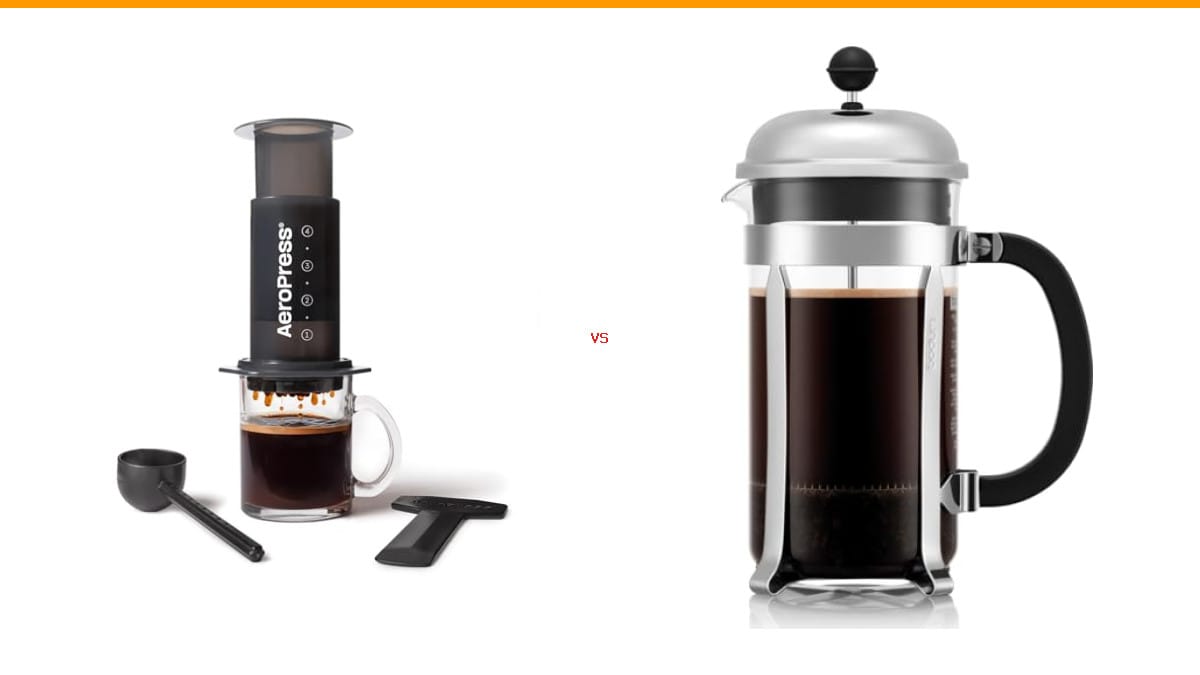
Two friends walk into a kitchen. One owns an AeroPress Original, the other a Bodum Chambord French press. They both love coffee, but they’ve built completely different accessory kits around their brewers. After months of swapping gear and testing side by side, we sat down to compare notes. The result is this head-to-head breakdown of the accessory ecosystems, not just the brewers themselves.
| Our Pick | Runner Up |

|

|
| AeroPress AeroPress Original Coffee Press, French Press, Pour-Over… | Bodum Bodum 34oz Chambord French Press Coffee Maker,… |
| See on Amazon | See on Amazon |
As an Amazon Associate I earn from qualifying purchases.
This decision matters if you’re starting from scratch or thinking about switching. The brewer is only half the story. The accessories you buy around it determine your daily cost, your cleanup time, and how much control you have over flavor. We’ve used both systems extensively, and the differences run deeper than most spec sheets suggest.
Here’s the short version: the AeroPress accessory ecosystem is more flexible, cheaper to maintain, and offers more ways to change your brew. The French press ecosystem is simpler and more traditional, but it costs more over time and gives you fewer flavor levers. Both have their place, but most home brewers will get more from the AeroPress setup.
The TL;DR: Which Accessory Ecosystem Wins?
If you want the most control over your coffee with the least long-term spending, the AeroPress wins. The paper filters are cheap, the aftermarket parts are plentiful, and you can adapt the brewer to everything from espresso-style shots to cold brew. The French press is a workhorse, but its accessories are mostly replacements for things that wear out, not upgrades that change your brew.
The Bodum Chambord is a beautiful, classic device. But its accessory ecosystem is shallow. You can buy a replacement carafe, a new plunger, or a different filter screen, and that’s about it. The AeroPress has the Prismo, metal filters, travel caps, and dozens of third-party add-ons. That flexibility is the deciding factor for most people.
What Accessories Do You Actually Need for Each?
French Press Essentials (and Nice-to-Haves)
The Bodum Chambord comes with everything you need to brew: the glass carafe, the plunger with a stainless steel mesh filter, and the lid. You’ll need a grinder (coarse is best) and a kettle, but those are shared with any brewing method.
Nice-to-haves include a replacement carafe (glass breaks), a spare mesh filter (they bend over time), and a stirring spoon. Some people buy a separate milk frother for lattes, but that’s not specific to the French press.
One thing we noticed: the mesh filter lets fine coffee grounds through. That’s a known trade-off. If you hate grit in your cup, you’ll buy a finer aftermarket screen or learn to pour carefully. That’s an extra cost and an extra step.
AeroPress Essentials (and Nice-to-Haves)
The AeroPress Original includes 50 paper micro-filters. You’ll need a grinder (medium-fine works well) and a kettle, same as the French press. But the AeroPress accessory list goes much deeper.
Essential add-ons for many users: a reusable metal filter (instead of paper), a travel cap, and a funnel. The funnel helps you load grounds without spilling, and the travel cap lets you brew on the go. The Prismo attachment is a game-changer—it adds a pressure valve and lets you brew espresso-style shots with less mess.
You can also buy a gooseneck kettle for pour-over style brews, but that’s optional. The AeroPress works fine with a regular kettle.
The Accessory Cost Showdown: Total Investment
Let’s talk money. We tracked our actual spending on both systems over a year.
| Accessory | AeroPress | French Press |
|---|---|---|
| Starter filters | 50 paper filters included | 1 metal mesh filter included |
| Replacement filters (annual) | ~$10 for 350 paper filters | ~$15 for a new mesh screen |
| Reusable filter | $12–$20 (stainless steel) | Not needed (mesh is reusable) |
| Travel cap | $10–$15 | N/A (glass carafe is fragile) |
| Carafe replacement | N/A (plastic body, rarely breaks) | $20–$30 for glass carafe |
| Upgrade accessory (Prismo) | $30–$40 | N/A |
| Total first-year investment (with upgrades) | ~$60–$75 | ~$35–$45 (plus potential breakage) |
The French press looks cheaper upfront, but that’s because it has fewer accessories to buy. Over time, the AeroPress paper filters are dirt cheap, and the plastic body is nearly indestructible. The French press glass carafe is a breakage risk. If you drop it, you’re buying a new one.
We also factored in the cost of a grinder. Both methods benefit from a burr grinder, but the AeroPress is more forgiving of grind size variations. A cheaper grinder works fine for AeroPress, while the French press demands a consistent coarse grind to avoid bitterness and sludge. That’s a hidden cost if you’re on a budget.
How Accessories Change the Brew: Flavor and Workflow
The biggest difference between these two ecosystems is how much you can alter the final cup.
With the French press, you’re locked into one brewing style: immersion. You steep coffee in hot water, then press the plunger. The metal mesh filter lets oils and fine particles through, which gives a fuller body and a heavier mouthfeel. That’s great for dark roasts, but it can make light roasts taste muddy.
The AeroPress is also immersion brewing, but the paper filter changes everything. It traps oils and fines, producing a cleaner cup with less bitterness. You can also adjust the grind, water temperature, and steep time more precisely. The inverted method (flipping the AeroPress upside down during steeping) is a popular workflow that requires no extra accessories, just practice.
Filters: Paper vs. Metal – The Flavor and Waste Trade-off
Paper filters give a brighter, cleaner cup. They catch everything, so you get no grit and less body. The downside is the waste—each brew uses a paper filter, and they’re not compostable in a meaningful way for most people.
Metal filters (for the AeroPress) let more oils through, mimicking a French press body. You can buy a stainless steel mesh filter for the AeroPress for about $15, and it lasts for years. That eliminates paper waste but changes the flavor profile. It’s a trade-off you get to choose on the AeroPress. The French press has no such choice—you’re stuck with the metal mesh.
On the environmental side, the French press has a smaller daily footprint because there’s no paper waste. But the glass carafe is more likely to break and end up in a landfill. The AeroPress plastic body is durable, but the paper filters add up. If you care about waste, a reusable filter on the AeroPress is the best of both worlds.
The Prismo vs. the Plunger: Pressure and Cleanup
The AeroPress Prismo is the single best accessory for the AeroPress. It replaces the standard cap and adds a pressure valve, which lets you brew espresso-style shots with a richer crema. It also eliminates the need for the inverted method, so you can brew upright without dripping. Cleanup is faster: you just pop out the puck and rinse.
The French press plunger is simple, but it’s also the weakest point. The mesh screen can bend, the plunger rod can loosen, and the glass carafe can crack if you twist too hard. Replacing the plunger assembly costs about $10–$15, and it’s a common repair. The Prismo, by contrast, is a one-time upgrade that changes your brewing possibilities.
Durability and Replacement Parts: Which System Lasts Longer?
We’ve dropped both. The AeroPress survived a tumble onto tile with a scratch. The Bodum Chambord shattered on its first fall—the glass carafe is beautiful but fragile.
Replacement parts for the AeroPress are cheap and widely available. The plunger seal, the filter cap, and the chamber are all sold separately. You can even buy third-party parts on Amazon. The French press has fewer parts, but they’re also replaceable: carafe, plunger, and screen. The issue is that the glass carafe is the most fragile part, and it’s also the most expensive to replace.
In our experience, the AeroPress will last for years with no maintenance beyond replacing the seal every 6–12 months (a $5 part). The French press will also last, but you’ll likely replace the carafe at some point. If you’re clumsy or have kids in the kitchen, the AeroPress is the safer bet.
The One Upgrade That Transforms Each Brewer
If you own a French press, buy a finer replacement screen. The standard Bodum mesh lets too many fines through. A finer screen (available from third-party sellers) reduces sludge and gives a cleaner cup. It’s a small change, but it makes a noticeable difference.
If you own an AeroPress, buy the Prismo. It’s the accessory that changes the most about your workflow and flavor. You can brew espresso-style shots, make cold brew, or use the standard method with less mess. It’s the difference between a good AeroPress and a great one.
We also recommend a reusable metal filter for the AeroPress if you want to cut down on paper waste. It’s a cheap addition that pays for itself in a few months.
The Verdict: Choose Based on Your Lifestyle, Not Just the Brewer
Here’s how we’d break it down by buyer situation.
Budget: The AeroPress wins on long-term cost. Paper filters are cheap, and the brewer is more durable. The French press has a lower upfront cost, but breakage and replacement parts add up.
Space: The AeroPress is smaller and more portable. It fits in a backpack. The French press is bulky and fragile, so it stays on the counter. If you travel or have a tiny kitchen, the AeroPress is the clear choice.
Experience level: Both are beginner-friendly, but the AeroPress has a steeper learning curve. You can control brew time, temperature, and grind size more precisely. The French press is set-and-forget: add coffee, water, wait, press. If you want to learn coffee brewing, the AeroPress is a better teacher. If you just want a decent cup with no fuss, the French press is fine.
Flavor preference: If you love a heavy, oily cup with a lot of body, the French press is your friend. If you prefer a clean, bright cup with less bitterness, the AeroPress with paper filters is better. You can get closer to a French press body with a metal filter on the AeroPress, but you can’t get a clean cup from a French press.
Our honest recommendation: most home brewers should choose the AeroPress. It’s more versatile, more durable, and cheaper to maintain. The French press is a lovely ritual, but it’s a one-trick pony. The AeroPress accessory ecosystem gives you room to grow.
That said, if you’re a dark roast lover who never wants to think about grind size or brew time, the French press is a solid, simple choice. Just budget for a new carafe eventually.
Frequently Asked Questions
Can I use a French press metal filter in an AeroPress?
Yes, but you need a specific AeroPress metal filter, not a French press screen. The AeroPress metal filter is a thin disc that fits in the cap. It’s sold by AeroPress and third-party brands. It gives a fuller body than paper filters, similar to a French press.
Which is easier to clean: AeroPress or French press?
The AeroPress is easier. You press the puck of grounds into the trash, then rinse the chamber and plunger. Total time: about 30 seconds. The French press requires you to scoop out the grounds, then wash the carafe and plunger, being careful not to break the glass. The AeroPress wins on cleanup by a mile.
Do I need a special grinder for either?
Both benefit from a burr grinder, but the AeroPress is more forgiving. You can use a blade grinder if you’re in a pinch, though the grind will be inconsistent. The French press needs a consistent coarse grind to avoid over-extraction and sludge. If you’re on a budget, a hand grinder like the Hario Mini Mill works for both, but you’ll get better results with the AeroPress.
Can I make cold brew with either system?
Yes, both can make cold brew. For the French press, you steep coarse grounds in cold water for 12–24 hours, then press. For the AeroPress, you can use the inverted method with cold water and a longer steep, or buy a cold brew attachment. The AeroPress is more portable, so it’s easier to make single-serve cold brew on the go.
Products related to this article
Sponsored / affiliate links. As an Amazon Associate I earn from qualifying purchases. I may earn additional commission from eligible campaigns.
 Stainless Steel Moka Pot Pressed Powder Tool for 2 4 6 9 Cup Espresso Coffee Brewer(6 Cups)
 Stainless Steel Moka Pot Coffee Filter Disc for Espresso Brewing, Coffee Maker Replacement Filter Plate for Home Office Coffee Bar Cafe (FOR 4 Cups)
 Coffee Espresso Machine Handle Replacement Parts, Cafe Bracket Handle for Lidl Silvercrest CM4621 CM4218 KF5002 KF500S Barista (for 51mm Portafilter Basket - Not included)