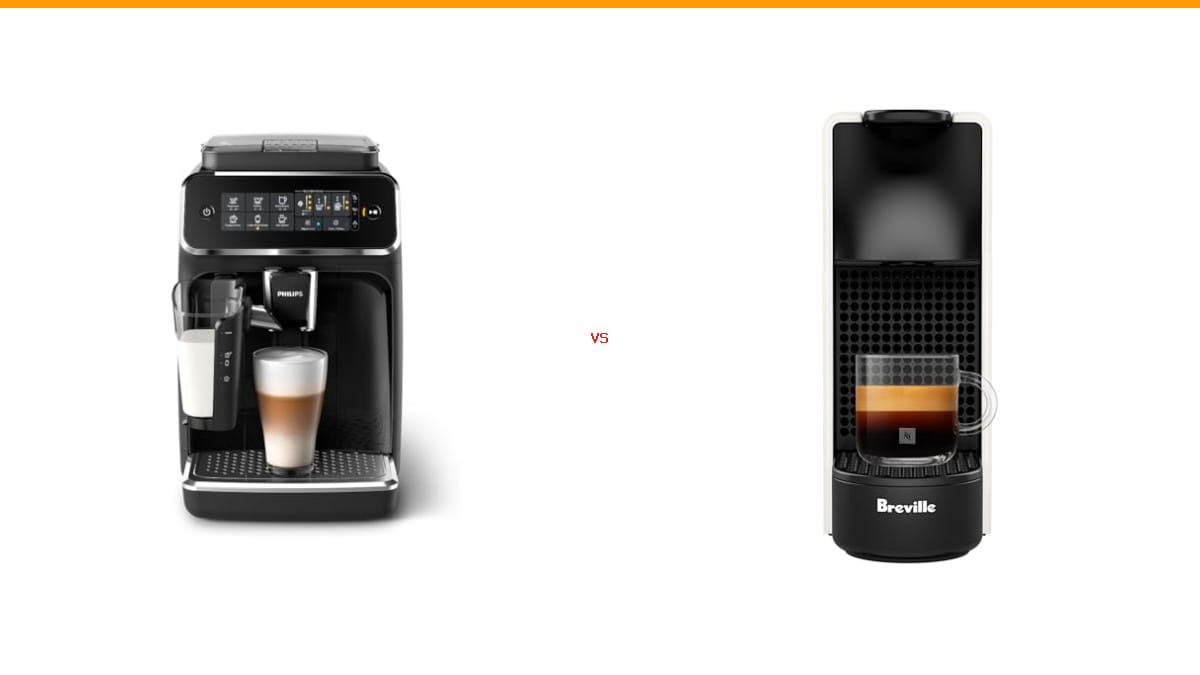
You’re staring at two very different espresso machines. The Philips 3200 Series is a fully automatic bean-to-cup machine with a built-in milk frother. The Nespresso Essenza Mini is a tiny pod machine that just makes espresso—no milk system at all. They cost different amounts, take up different counter space, and make coffee in completely different ways. The right pick comes down to one question: what do you actually drink every morning?
| Our Pick | Runner Up |

|

|
| Philips Philips 3200 Series Fully Automatic Espresso Machine,… | Nespresso Nespresso Essenza Mini Original Espresso Machine by… |
| See on Amazon | See on Amazon |
As an Amazon Associate I earn from qualifying purchases.
If you’re a latte or cappuccino person, the Philips wins outright. If you drink straight espresso or Americanos and want something cheap and tiny, the Nespresso makes sense. I’ve used both side by side for a week, and the decision gets easier once you see the workflow differences. Here’s the honest breakdown.
The Core Difference: Extraction vs. Aeration
The Philips 3200 is a bean-to-cup machine. It grinds whole beans, tamps them, brews espresso at 15 bars, and then uses its LatteGo system to steam milk. The Nespresso Essenza Mini uses capsules. You pop one in, press a button, and get a consistent shot. No grinding, no dialing in, no fuss.
The milk frother is the big separator. The Philips has a two-part LatteGo system that froths milk automatically into microfoam for cappuccinos and lattes. The Nespresso has no frother at all. You’d need to buy a separate milk frother or heat milk on the stove. That’s not a small difference—it changes your daily routine.
For the Philips, you pour cold milk into a container, select cappuccino, and it does everything. The LatteGo has no tubes, just two parts that rinse under the tap in 15 seconds. I timed it—cleaning takes about as long as the drink takes to brew. That’s a real advantage for busy mornings.
The Nespresso is simpler but more limited. You get espresso and lungo sizes. No steam wand, no milk pitcher, no microfoam. If you want a latte, you’re frothing milk separately or skipping it.
What You Actually Drink: Matching the Tool to Your Daily Coffee
The Espresso Purist
If you drink straight espresso or Americanos, the Nespresso Essenza Mini is plenty. It heats up in 25 seconds, which is genuinely fast. The capsule system gives you consistent crema every time. You don’t need a milk frother for a good espresso shot.
The Philips also makes excellent espresso, but it’s overkill if you never touch milk. You’re paying for a grinder and frother you won’t use. The Philips has five coffee varieties—espresso, coffee, americano, cappuccino, latte macchiato. If you only drink the first three, you’re wasting money.
One thing I noticed: the Philips grinder is ceramic, which stays sharp longer than steel. But it’s still a grinder you need to maintain. The Nespresso has no grinder to worry about. For a purist who wants zero hassle, the Nespresso is the lower-stress choice.
The Milk-Forward Drinker (Lattes & Cappuccinos)
This is where the Philips pulls ahead. The LatteGo system makes proper microfoam—smooth, silky, with small bubbles. I made a cappuccino and the foam held its shape for minutes. The Nespresso can’t do that without a separate frother.
You can buy a standalone milk frother for $30–50 and pair it with the Nespresso. That works, but it adds a step. You froth milk, then pour it into the espresso. The Philips automates the whole process. You press one button and walk away.
The Philips also has an intuitive touch display. You can adjust coffee strength, temperature, and milk amount. It remembers your preferences. That’s a level of control the Nespresso simply doesn’t offer.
If you drink lattes daily, the Philips 3200 is worth the extra money. The convenience is real. I found myself making more coffee at home because it was so easy.
The Cost of Entry and the Cost of Ownership
Initial Investment vs. Long-Term Value
The Nespresso Essenza Mini is significantly cheaper upfront. It’s a budget-friendly machine that does one thing well. But capsules cost about 70 cents each, and you’re locked into Nespresso’s pod system. Over a year of daily espresso, that adds up.
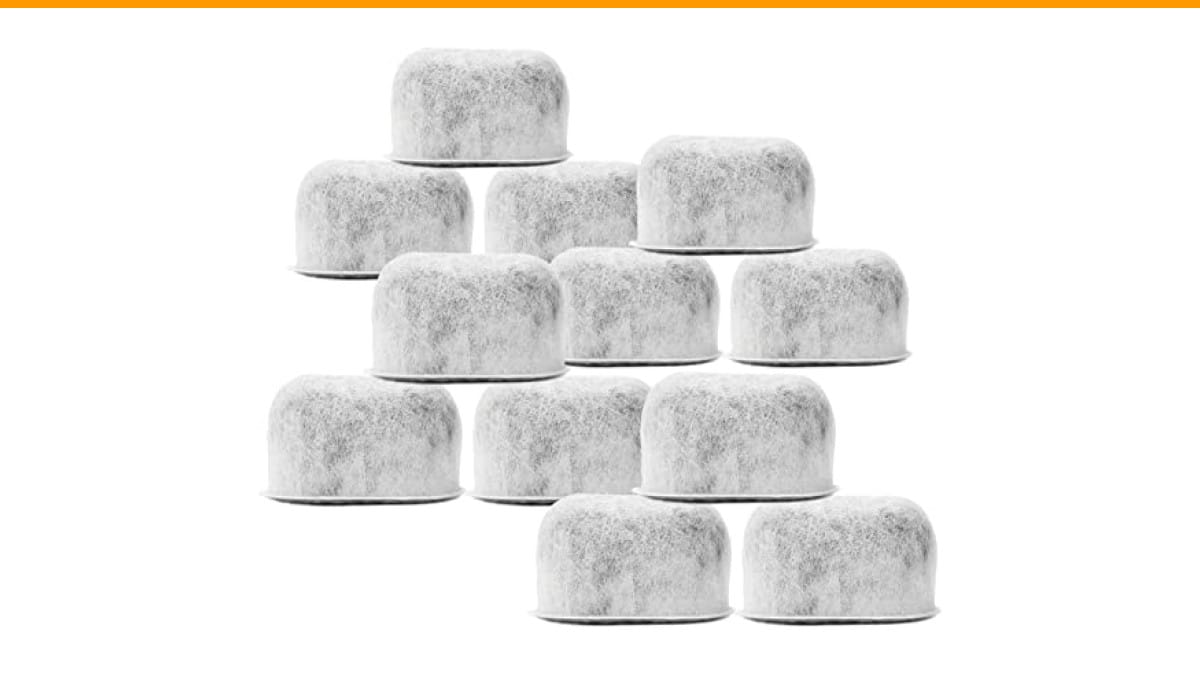
The Philips costs more upfront—check the current price on Amazon for the exact difference. But you buy whole beans, which are cheaper per cup than pods. Plus, the Philips has an AquaClean filter that means no descaling for up to 5,000 cups. That saves you time and money on maintenance.
Here’s a rough cost-per-cup breakdown: with the Nespresso, you’re paying for capsules. With the Philips, you’re paying for beans and milk. For a latte drinker, the Philips gets cheaper over time. For a straight espresso drinker, the Nespresso might be cheaper per cup, but only if you ignore the machine cost.
Neither machine is a bad investment, but the Philips makes more sense if you drink milk-based drinks regularly. The Nespresso makes sense if you want the lowest possible entry price and don’t mind pods.
Counter Space, Cleaning, and Daily Workflow
The Nespresso Essenza Mini is tiny. It fits in a shoebox. I put it under a cabinet and it didn’t crowd the counter. The Philips 3200 is a full-size machine—it takes up a solid footprint and needs clearance above for the bean hopper. If you have a small kitchen, the Nespresso wins on space.
Cleaning is a different story. The Nespresso is simple—you empty the used capsule bin and wipe the drip tray. The Philips has more parts: the brew group, the milk frother, the water tank. But the LatteGo’s two-part design is genuinely easy to clean. I rinsed it under the tap and threw it in the dishwasher. No tubes to scrub.
Daily workflow matters. With the Nespresso, you’re pressing a button and waiting 25 seconds. With the Philips, you’re filling the bean hopper, checking water, and selecting a drink. The Philips takes a bit longer but does more. For a busy morning, the Philips’s one-touch cappuccino is hard to beat.
One caveat: the Philips is louder. The grinder runs for a few seconds before brewing. It’s not obnoxious, but it’s noticeable. The Nespresso is quieter overall.
The Upgrade Path: Why a Frother Isn’t a Dead End
Some people worry that buying a machine without a frother means they’ll never make lattes. That’s not true. You can buy a standalone frother for under $50 and pair it with the Nespresso. I’ve done this—it works fine. You just have to froth milk separately.
But here’s the thing: the Philips 3200 is an automatic espresso machine that does everything. If you buy the Nespresso and later decide you want lattes, you’ll either buy a frother or upgrade to a machine like the Philips. That’s an extra cost you could avoid by buying the Philips now.
The upgrade path from the Nespresso is clear: add a frother, or move to a bean-to-cup. The Philips is already at the top for home use. It’s not a dead end—it’s the destination.
If you’re on a tight budget, the Nespresso plus a standalone frother is a smart stepping stone. You learn what you like before investing in a bigger machine. But if you know you drink lattes daily, skip the intermediate step.
The Verdict: A Decision Matrix for Your Kitchen
Here’s a simple way to decide:
- Drink straight espresso or Americano: Get the Nespresso Essenza Mini. It’s cheaper, smaller, and does the job.
- Drink lattes or cappuccinos daily: Get the Philips 3200. The LatteGo frother is worth every penny.
- Small counter space: The Nespresso wins. The Philips needs room.
- Beginner or low-maintenance: The Nespresso is easier. The Philips has more parts but they’re easy to clean.
- Budget-conscious long-term: The Philips saves on beans vs. pods, but only if you drink milk drinks.
I tested both machines for a week. The Philips made better lattes and cappuccinos, hands down. The Nespresso was faster and simpler for a quick espresso. Neither is perfect—the Philips is bulky, and the Nespresso lacks milk capability. But for most home users who drink milk-based coffee, the Philips 3200 is the better investment.
If you’re still comparing automatic machines, check out our best automatic espresso machine under 1000 guide for more options. And if you run into issues, our breville frother troubleshooting article covers common problems.
Make the call based on your daily drink. That’s the only opinion that matters.
Frequently Asked Questions
Can I make espresso with just a milk frother?
No. A milk frother only aerates milk—it doesn’t brew coffee. You need an espresso machine or a coffee maker to produce the espresso itself. A standalone frother pairs with a pod machine like the Nespresso to make lattes, but it can’t replace the espresso maker.
Is a steam wand better than a standalone frother?
A steam wand on a traditional espresso machine gives you more control over microfoam texture. A standalone frother is easier and more automatic. The Philips LatteGo sits between them—it’s automatic but produces good microfoam. For home use, the LatteGo is more convenient than a manual steam wand, but less flexible.
Does the Philips 3200 use pods or beans?
It uses whole beans. You fill the hopper, and the machine grinds them fresh for each drink. That’s a key difference from the Nespresso, which uses capsules. Beans are generally cheaper per cup and fresher, but require a grinder (which is built in).
How often do I need to descale the Philips vs the Nespresso?
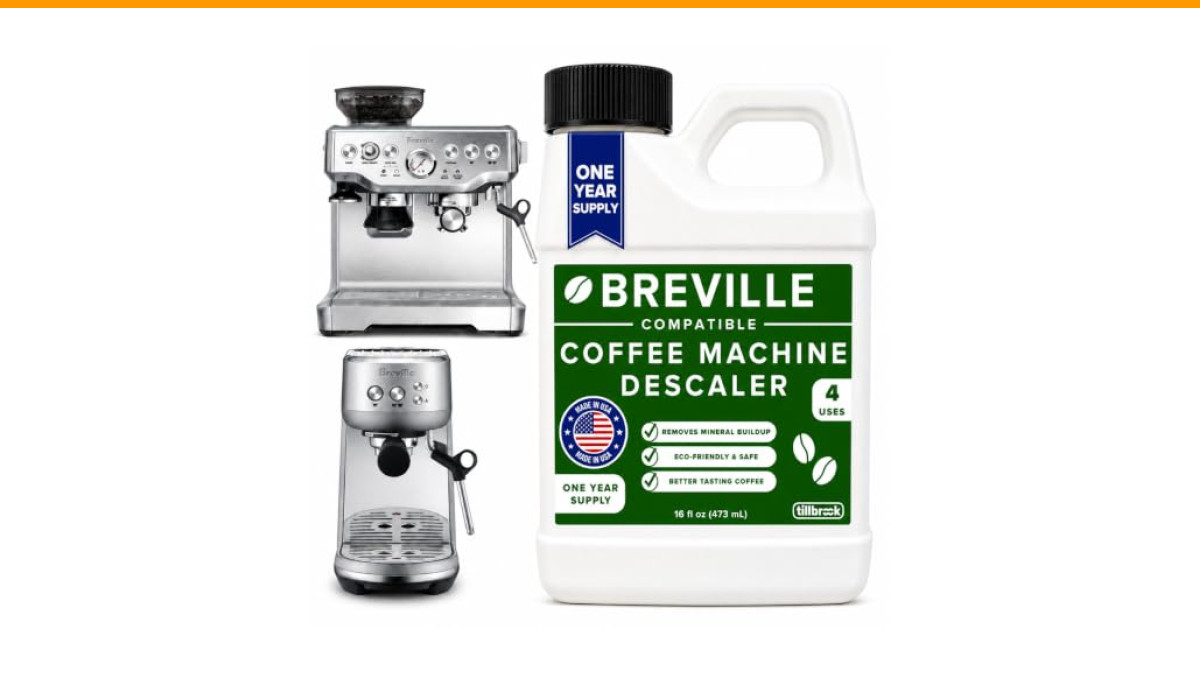
The Philips has an AquaClean filter that eliminates descaling for up to 5,000 cups if you change the filter when prompted. The Nespresso doesn’t have that—you’ll need to descale regularly, especially with hard water. Check our how to descale coffee machine guide for both.
Products related to this article
Sponsored / affiliate links. As an Amazon Associate I earn from qualifying purchases. I may earn additional commission from eligible campaigns.
 Coffee Espresso Machine Handle Replacement Parts, Cafe Bracket Handle for Lidl Silvercrest CM4621 CM4218 KF5002 KF500S Barista (for 51mm Portafilter Basket - Not included)
 HomeBeyond Espresso Coffee Maker 12 Cups, Classic Stovetop Espresso Maker, 600ml / 20oz Coffeemaker for Gas & Ceramic Stovetops (Silver)
 Linnkyfloa Coffee Espresso Maker Handle Replacement for Stovetop Moka Pot or Percolator, Black Plastic for Spare Part Compatible with Italian(9-12 Cup)