You’re staring at your French press, wondering why the coffee tastes gritty, or maybe you’re tired of buying paper filters for your pour-over and thinking about switching to a metal mesh. These two products seem like they’re from different worlds—one is a reusable stainless steel screen for a French press, the other is a disposable paper cone for drip coffee. But people compare them because they’re both trying to answer the same question: what’s the best way to filter my coffee?
| Our Pick | Runner Up |

|

|
| Slimm Filter Universal Replacement French Press Filter: 4 Inch… | Melitta Melitta #4 Unbleached Coffee Filters, Natural Brown… |
| See on Amazon | See on Amazon |
As an Amazon Associate I earn from qualifying purchases.
If you’ve landed here, you probably care about the flavor of your morning cup, the money you spend on coffee gear, and the waste you leave behind. This decision matters more than you might think. A metal filter changes the body and mouthfeel of your coffee, while a paper filter strips out oils and some compounds that affect your health. I’ve used both extensively, and I’ll walk you through the real differences so you can pick the right one for your kitchen.
Spoiler: for most people, the metal mesh filter is the better long-term investment, but paper filters have a few tricks that might make you keep a box in the cupboard. The choice comes down to what you value most—cleanliness, cost, or cholesterol.
The Core Difference: Sediment vs. Oils
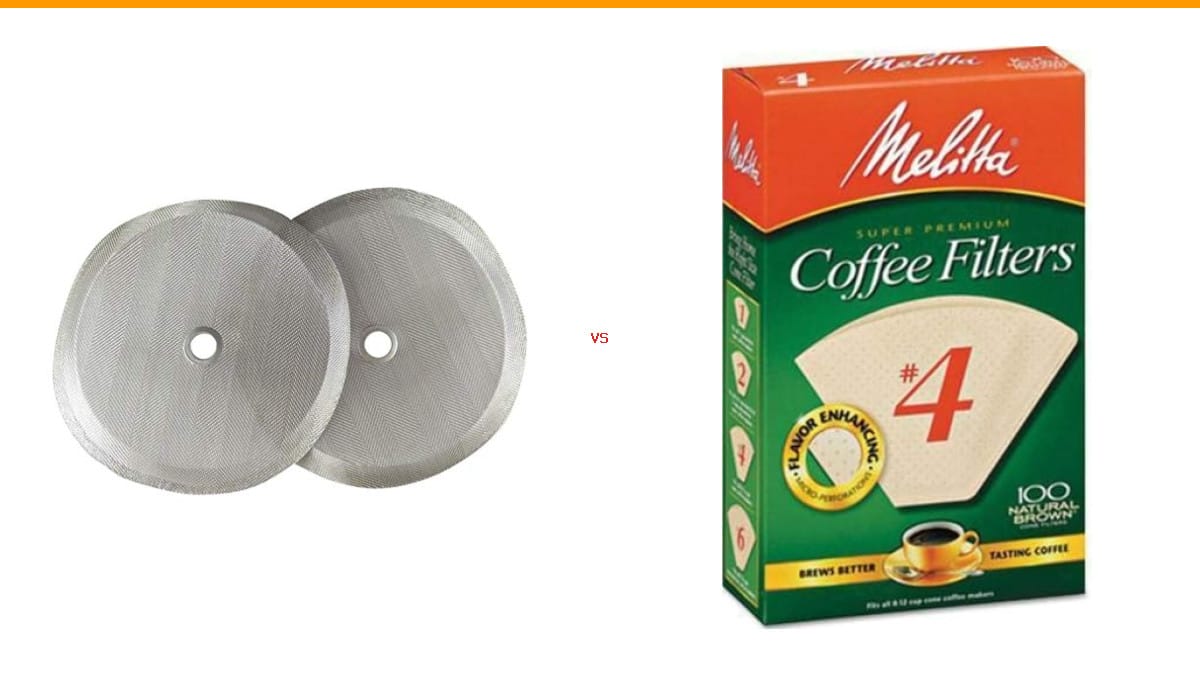
Here’s the thing that separates these two filters: what they let through. A stainless steel mesh like the Slimm Filter replacement screen has holes big enough to let fine coffee grounds and natural oils pass into your cup. That’s why French press coffee tastes fuller and has that thick, almost syrupy body. You’ll see a bit of sediment at the bottom of your mug—that’s normal, and some people love it.
Paper filters, on the other hand, trap almost everything. The Melitta #4 unbleached cone filters are designed with microfine perforations that catch not just grounds but also the oils that give coffee its rich flavor. What you get is a cleaner cup, but it can taste thinner and more “tea-like” compared to a French press brew.
So the first question you need to ask yourself: do you want your coffee to taste like a thick, bold brew with a bit of grit, or a crisp, clean cup with no residue?
The Case for Paper Filters (Clarity and Cholesterol)
I’ll start with the Melitta #4 unbleached cone filters because they’re the familiar option for most home brewers. These are made in the USA, unbleached (so they’re brown, not white), and they fit standard 8-12 cup pour-over cones and drip machines. I’ve used them in my Chemex and my Mr. Coffee, and they never tear or burst—even when I pour aggressively.
The big advantage of paper is clarity. You get a transparent, bright cup with no sediment. If you’re someone who hates sludge at the bottom of your mug, paper is your friend. There’s also a health angle: paper filters trap cafestol, a compound in coffee oils that can raise LDL cholesterol. If you have high cholesterol or a family history of heart issues, switching to paper might be a smart move. I’m not a doctor, but the research is solid on this one.
Downsides? You have to buy them again and again. The Melitta pack comes with 100 filters, which lasts a while if you brew one cup a day, but it’s a recurring cost. And some people notice a slight paper taste in the first few sips, especially with unbleached filters. I’ve found that rinsing the filter with hot water before brewing fixes that—it also warms up your cone, which is a nice bonus.
The Case for the Metal Filter (Body and Flavor)
Now let’s talk about the Slimm Filter replacement screen. This is a 4-inch stainless steel mesh designed to fit Bodum and other standard French presses. It comes as a 2-pack, which is handy because you can keep one in the press and one in the drawer as a backup. The mesh is fine enough to catch most grounds, but it’s not as fine as paper—so you’ll get some silt in your cup.
What you gain is flavor. The oils that paper filters strip away are exactly what give coffee its aroma and complexity. I brewed the same beans side by side—one through the metal mesh, one through a paper filter—and the difference was night and day. The metal filter brew had a heavier body, more chocolate notes, and a lingering finish. The paper filter cup was cleaner but flatter, almost like the personality had been filtered out.
The metal filter is also a one-time purchase. You rinse it under the tap, maybe scrub it once a week, and it’s good for years. No waste, no running to the store. The only real downside is that you’ll see coffee grounds in your cup unless you pour carefully or use a coarse grind. And if you’re not used to that, it can be off-putting at first.
Head-to-Head: The 5 Key Differences That Matter
| Feature | Slimm Filter (Metal Mesh) | Melitta #4 (Paper) |
|---|---|---|
| Filtration level | Lets oils and fine grounds through | Traps oils and all grounds |
| Flavor profile | Full-bodied, rich, complex | Clean, bright, lighter body |
| Health impact | Retains cafestol (may raise cholesterol) | Removes cafestol, better for cholesterol |
| Cost over 5 years | ~$15 one-time (check price) | ~$10–$20 per year, $50–$100 over 5 years |
| Environmental footprint | Reusable, but mining/manufacturing impact | Compostable/biodegradable, but single-use |
| Cleanup | Rinse and scrub | Throw away |
| Grind size tolerance | Needs coarse grind to minimize sediment | Works with any grind, even fine |
The Hybrid Method: Stacking Filters for the Best of Both Worlds
Here’s a trick I learned after years of testing: you can stack a paper filter on top of the metal mesh in your French press. It sounds odd, but it works. Place the metal screen in the press, then lay a paper filter (cut to size) on top of it. The paper catches the fines and oils, while the metal provides structure and holds the paper in place.
What you get is a crystal-clear cup with no sediment, but you still get the full-bodied flavor of immersion brewing. The downside is that the paper filter can clog if your grind is too fine, so you’ll need to use a coarser grind than usual. I’ve done this with my Bodum and it’s a game-changer for people who want the best of both worlds. It’s not a daily method for me, but it’s perfect for when I want a clean cup without losing the French press character.
How Grind Size and Grinder Type Change Your Filter Choice
Your grinder matters more than you think. If you use a blade grinder, you get uneven particles—some fine dust, some chunks. That fine dust will slip through a metal mesh and make your coffee muddy. Paper filters, though, catch all of it, so you can get away with a blade grinder if you use paper.
If you’re using a metal filter, you’ll want a burr grinder that produces consistent coarse grounds. I’ve written about burr vs blade grinders before, and the bottom line is: if you’re a French press lover, a burr grinder is worth the upgrade. You’ll get fewer fines, less sediment, and a sweeter cup.
But don’t take my word for it—try your current grinder with the metal filter first. If the coffee tastes too gritty, you have two options: buy a better grinder or switch to paper filters.
The 5-Year Cost Breakdown: Paper vs. Metal
Let’s do the math, because this is where the metal filter shines. The Slimm Filter costs about $15 for a 2-pack (check the current price on Amazon). That’s a one-time purchase that lasts years, maybe even a decade if you take care of it.
Paper filters, like the Melitta #4, cost around $10–$15 for a pack of 100. If you brew one cup a day, that’s about 365 filters a year—roughly 4 packs, or $40–$60 annually. Over five years, you’re looking at $200–$300. That’s a significant difference.
But there’s a catch: you have to factor in the cost of a good grinder if you go the metal route. A decent burr grinder runs $50–$150, but that’s a one-time purchase too, and it’ll improve all your coffee, not just French press. So even with the grinder, metal filters come out ahead in the long run.
Environmental Impact: Beyond the “Reusable” Label
Everyone says metal filters are eco-friendly because they’re reusable. That’s true, but it’s not the whole story. The manufacturing of stainless steel requires mining, energy, and water. The Slimm Filter is made in China, likely, and shipping it across the ocean adds carbon emissions. But once it’s in your kitchen, it’s there for years—no daily waste.
Paper filters are compostable and biodegradable, which is a plus. Melitta’s unbleached filters are made from natural fibers, and you can toss them in your compost bin. But they’re still single-use, and the production process uses trees and chemicals (even unbleached paper has some processing).
My honest take: if you compost your paper filters, the environmental impact is close to a wash. If you don’t compost, the metal filter is clearly better for the planet. The real environmental win is avoiding single-use plastic pods, which neither of these are.
How to Clean and Maintain Your Metal Filter
The Slimm Filter is low-maintenance, but it needs a little love. After each brew, dump the grounds, rinse the mesh under running water, and give it a gentle scrub with a soft brush. Coffee oils can build up over time and turn rancid, which will ruin your brew.
Once a week, soak the filter in a solution of water and white vinegar (or a dedicated coffee cleaner) for 15 minutes. Then rinse thoroughly. This removes the oily residue that scrubbing alone can’t get. I’ve been doing this for months, and my filter still looks new.
One tip: don’t put the filter in the dishwasher unless the manufacturer says it’s safe. The high heat can warp the mesh or cause rusting. Hand-washing is quick and easy, so you won’t be tempted to skip it.
Final Verdict: Which One Should You Choose?
Here’s where I land after testing both. If you want the most flavorful, full-bodied coffee and you’re willing to deal with a little sediment, the Slimm Filter metal mesh is the better buy. It’s cheaper over time, better for the environment, and it gives you that classic French press experience that paper filters can’t replicate.
But if you have high cholesterol, or you just can’t stand grounds in your cup, the Melitta paper filters are a solid choice. They’re affordable, reliable, and they make a clean cup that’s easy to drink. You’ll just have to keep buying them.
For most people, I’d say start with the metal filter. It’s a buy-once, buy-right investment. If you hate the sediment, you can always switch to paper—or try the hybrid method. The beauty is that you’re not locked in. Both products are cheap enough to have on hand, and you can choose based on your mood.
If you’re still on the fence, ask yourself: what do I want my coffee to taste like? That’s the only question that matters.
FAQs
Can you use paper filters in a French press?
Yes, you can. Simply place a paper filter (like a #4 cone) on top of the metal mesh before adding coffee grounds. It will catch fines and oils, giving you a cleaner cup. You might need to cut the paper to fit your press, but it’s a simple hack.
Does a metal filter raise cholesterol?
Metal filters don’t remove cafestol, a diterpene in coffee oils that can raise LDL cholesterol. If you drink several cups a day and have high cholesterol, paper filters are a safer bet. But moderate coffee consumption (1-2 cups) is unlikely to cause problems for most people.
Is paper filter waste recyclable?
Paper coffee filters are compostable and biodegradable, but they’re not typically recyclable in curbside bins because they’re contaminated with coffee grounds. You can compost them in your backyard bin, or just toss them in the trash. Melitta’s unbleached filters are a better choice for composting than bleached white ones.
Which filter is better for the environment?
It depends on your habits. If you compost paper filters, the environmental impact is similar to a metal filter over a few years. But if you’re throwing paper filters in the trash, the metal filter wins because it generates zero waste over its lifetime. The manufacturing footprint of metal is higher upfront, but it pays off long-term.
Products related to this article
Sponsored / affiliate links. As an Amazon Associate I earn from qualifying purchases. I may earn additional commission from eligible campaigns.
 Stainless Steel Moka Pot Coffee Filter Disc for Espresso Brewing, Coffee Maker Replacement Filter Plate for Home Office Coffee Bar Cafe (FOR 4 Cups)
 Moka Pot Replacement Gasket and Filter Screen Set, Silicone Sealing Ring for 1 2 3 6 9 12 Cup Stovetop Espresso Coffee Makers (6 cup+sieve)
 Moka Pot Replacement Gasket and Filter Screen Set, Silicone Sealing Ring for 1 2 3 6 9 12 Cup Stovetop Espresso Coffee Makers (3 cup+sieve)