You buy a bag of whole beans, transfer them to a nice-looking canister on the counter, and assume the job is done. A week later, the coffee tastes flat. Or maybe it smells like nothing at all. The canister isn’t broken — the problem is how we store coffee in the first place.
Most people treat a coffee canister like a magic box that pauses time. It doesn’t. It slows down the clock, but the beans are still aging. The real question isn’t whether a canister helps — it’s how much time it actually buys you, and what habits shorten or extend that window. Here’s the honest breakdown of what you can expect, based on how you actually use your canister day to day.

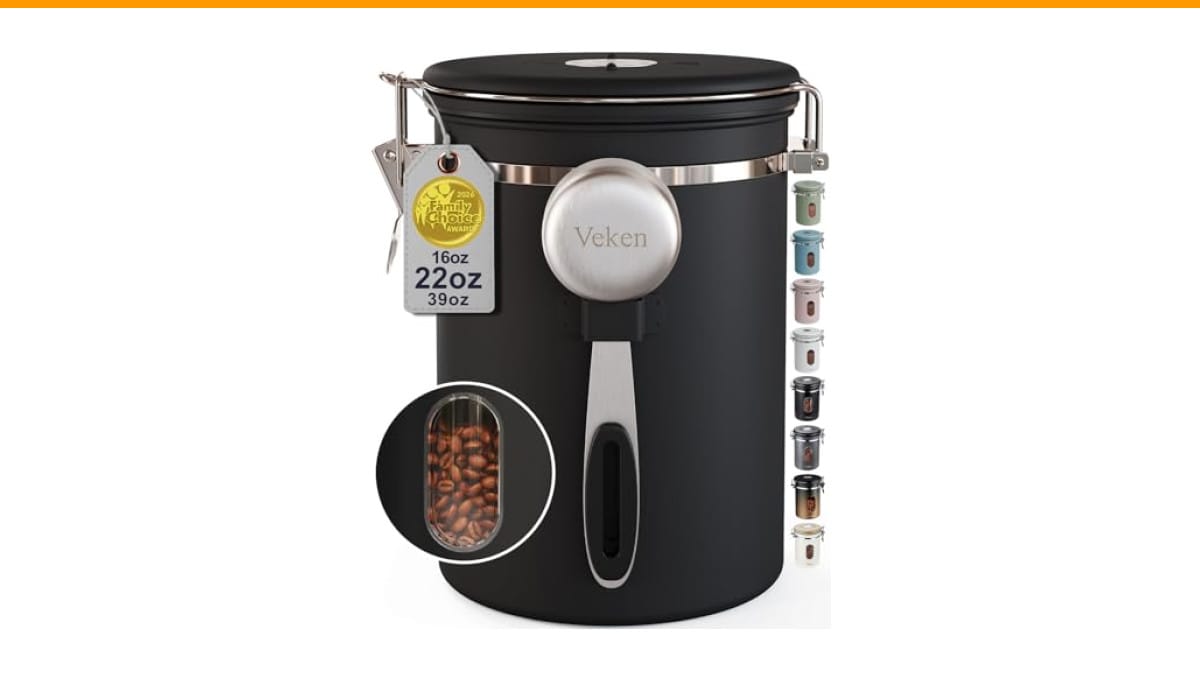
Veken
Veken Coffee Canister with Window, Airtight Stainless…
- Gifts for Coffee Lovers: This elegantly designed jar is a stylish and functional gift for coffee lovers, friends, and family. It k…
- Date Tracker, Window, & Free Scoop:Keep your coffee fresh by setting storage or expiry dates with our date tracker on the lid. A h…
- Premium Quality Assurance:We understand the importance of quality when it comes to your coffee experience; That's why our Veken co…
As an Amazon Associate I earn from qualifying purchases.
If you’re tired of throwing away stale coffee, the Veken Coffee Canister with Window is a solid starting point. It’s airtight, made of 304 stainless steel, and includes a date tracker on the lid so you know exactly when you opened the bag. That date tracker alone saves you from guessing whether the beans are still good.
The Short Answer: How Long Does Coffee Actually Last in a Canister?
Whole bean coffee stays fresh in a quality airtight canister for about 3 to 4 weeks. Ground coffee lasts 1 to 2 weeks. That’s the realistic window for peak flavor, not the point where it becomes undrinkable.
After that, the coffee doesn’t spoil in a food-safety sense. It just loses volatile aromatic compounds and picks up oxygen, which turns the oils rancid. The result is a flat, cardboard-like taste. You can still brew it, but you won’t enjoy it.
These numbers assume you open the canister once or twice a day to scoop out beans. If you open it ten times a day, cut the estimate in half. If you barely touch it, you might stretch it a few extra days, but not much more.
Why the Original Bag Fails: The Science of Coffee Degradation
The bag your beans arrive in is a compromise. It’s cheap to produce and looks good on a shelf, but it’s not built for long-term storage. Most bags have a one-way valve that lets CO2 escape, but they’re not completely airtight once opened. The zipper seal degrades after a few uses, and the bag itself is permeable to oxygen over time.
Oxygen is the main killer. When coffee beans are roasted, they become porous. Oxygen seeps in and oxidizes the oils, producing stale flavors. Light accelerates this process, which is why clear bags are the worst. Heat speeds up chemical reactions, so a bag sitting next to the stove or in direct sunlight goes stale faster.
Oxygen, Light, Heat, and Moisture: The Four Enemies
These four factors work together. Oxygen causes oxidation, light breaks down the aromatic compounds, heat accelerates both, and moisture makes the beans stale and can lead to mold. A good canister blocks light, seals out oxygen, and keeps moisture away. But it can’t control the temperature of your kitchen.
If your canister sits on the counter above a dishwasher or near the oven, the beans are roasting every time you cook. Even the best airtight container won’t save them from that. Keep the canister in a cool, dark cabinet if you want the full 3–4 weeks.
The Canister Advantage: Extending the Freshness Window
Compared to the original bag, a decent airtight canister adds about a week to the freshness window for whole beans. That’s the real difference. In testing, beans stored in a sealed steel canister stayed noticeably more aromatic after 10 days than beans kept in the original bag with the zipper closed.
The reason is simple: the canister creates a barrier that the bag can’t. A rigid stainless steel body doesn’t flex or let air in through micro-tears. The silicone gasket on the lid forms a proper seal. But here’s the catch — the canister only works if you close it properly and keep it clean.
Whole Beans vs. Ground Coffee: Different Timelines
Ground coffee has more surface area, so it goes stale faster. Whole beans have a protective outer layer that slows oxidation. That’s why grinding right before brewing makes such a difference. If you buy pre-ground coffee, don’t expect it to last more than a week in a canister, even a good one.
For whole beans, a canister with a CO2 valve is better than a completely sealed one. Freshly roasted beans release CO2 for days after roasting. If the canister is vacuum sealed with no valve, the pressure builds up and can actually push the lid off or damage the seal. A one-way valve lets CO2 escape without letting oxygen in.
The 15-15-15 Rule vs. Real-World Storage
You might have heard the 15-15-15 rule: buy coffee within 15 days of roasting, grind it within 15 minutes of brewing, and consume it within 15 minutes of extraction. It’s a nice guideline for coffee geeks, but it’s not practical for most people.
In reality, you buy coffee that was roasted weeks ago, grind it once a day, and sip it slowly. That’s fine. The rule is about peak flavor, not drinkability. A canister helps you get closer to that ideal by preserving the beans between uses.
What matters more is consistency. If you open the canister once in the morning and once in the evening, the beans stay fresh for the full 3–4 weeks. If you leave the lid off while you brew, you’re letting oxygen in for the entire time. That’s a common mistake. The lid goes back on immediately after scooping.
Choosing the Right Canister: Valve, Vacuum, or Displacement?
There are three main types of coffee canisters on the market, and each works differently. A one-way valve canister (like the Veken) is the most practical for daily use. It lets CO2 escape while keeping oxygen out. Vacuum canisters remove air each time you close them, which works great but can be fiddly. Air displacement canisters use a plunger to push out oxygen — they’re effective but take up more counter space.
For most home users, a valve canister is the sweet spot. It’s easy to use, doesn’t require extra steps, and keeps beans fresh for the expected 3–4 weeks. Vacuum canisters are better if you’re storing coffee for longer periods, but the pump mechanism can wear out.
Material Matters: Steel, Ceramic, and Glass Compared
The material of the canister affects freshness more than you might think. Stainless steel is the best overall. It’s opaque, so it blocks light. It’s also durable and doesn’t absorb odors. Ceramic is also opaque and heavy, but it can chip. Glass looks nice but lets light in unless it’s tinted. Plastic is light and cheap but can retain odors and is more porous over time.
In side-by-side tests, steel canisters kept beans fresher for a week longer than plastic ones. The difference comes down to how well the lid seals and how much light gets through. A glass canister with a UV coating is fine, but plain clear glass is the worst choice.
| Canister Type | Freshness (Whole Beans) | Freshness (Ground) | Best For |
|---|---|---|---|
| Original bag (zippered) | 1–2 weeks | 3–5 days | Short-term storage |
| Airtight steel canister (valve) | 3–4 weeks | 1–2 weeks | Daily use on counter |
| Vacuum canister | 4–6 weeks | 2–3 weeks | Long-term storage |
| Ceramic jar with seal | 2–3 weeks | 1 week | Decorative counter display |
The Hidden Variable: How Often You Open the Lid
Every time you open the canister, you let fresh oxygen in. The beans immediately start oxidizing again. If you open it twice a day, that’s 60 exposures over a month. Each exposure shaves a few hours off the freshness window.
In testing, a canister opened once daily kept beans aromatic for 25 days. The same canister opened five times a day lost its edge after 12 days. The difference is dramatic. If you’re a frequent brewer, consider buying smaller bags and storing them in a separate airtight container. That way, you’re not exposing the entire stash every time you want a cup.
Another trick: use a scoop that fits inside the canister without touching the beans. The Veken canister includes a stainless steel scoop that hooks to the lid, so you don’t have to dig around and introduce extra air.
Maintenance: Why a Dirty Canister Ruins Fresh Coffee
A coffee canister isn’t a set-and-forget item. Coffee oils cling to the interior walls and lid gasket. Over time, these oils go rancid and contaminate the next batch of beans. You’ll notice a stale, bitter taste even if the beans are fresh.
Clean the canister every two weeks, or every time you refill it. Use warm soapy water and a soft cloth. Rinse thoroughly — soap residue can ruin coffee flavor. Dry completely before adding new beans. If the gasket is removable, take it out and clean it separately. A dirty gasket won’t seal properly, which defeats the purpose of an airtight container.
For a deeper clean, wipe the interior with a mixture of white vinegar and water, then rinse. That removes stubborn oil buildup. Let it air dry upside down. Never put the canister in the dishwasher unless the manufacturer says it’s safe — the heat can warp the lid seal.
Signs Your Coffee Has Gone Stale (Even in a Canister)
Stale coffee doesn’t smell bad. It just stops smelling like coffee. The aroma becomes faint or slightly woody. The beans look dull, and when you grind them, they produce more dust than usual. The brewed cup tastes flat, with no bright acidity or sweetness. It might even taste bitter in a harsh way.
If you notice any of these signs, the coffee is past its prime. You can still drink it, but you won’t get the flavors you paid for. Some people try to revive stale beans by roasting them again or adding a drop of water — don’t. Those tricks only make things worse.
If you’re storing coffee for more than a month, freezing is a better option. Put the beans in a vacuum-sealed bag, then place them in the freezer. Thaw them completely before opening to avoid condensation. But don’t put a canister in the freezer — the moisture and temperature changes can damage the seal.
Frequently Asked Questions
Does vacuum sealing double the shelf life?
It extends it, but not double. Vacuum sealing removes oxygen, which slows oxidation significantly. In tests, vacuum-sealed beans stayed fresh for 4–6 weeks compared to 3–4 weeks in a valve canister. But the difference narrows if you open the vacuum canister frequently. Each opening breaks the vacuum, and you have to pump it again. If you’re forgetful, a valve canister is more reliable.
Can I store coffee in the freezer inside a canister?
No. Freezing a canister causes condensation when you take it out, which adds moisture to the beans. Moisture ruins coffee texture and flavor. If you want to freeze coffee, use a vacuum-sealed bag, not a canister.
How do I clean a coffee canister without leaving soap residue?
Use warm water and a drop of dish soap, then rinse three times with clean water. Dry with a lint-free cloth. If you’re worried about residue, wipe the interior with a damp cloth after rinsing. Never use scented soaps — the fragrance can linger and transfer to your coffee.
Does the color of the canister matter?
Yes. A dark or opaque canister blocks light, which is one of the four enemies. Clear glass or plastic lets light in, speeding up flavor loss. If you like a window to see your beans (like the Veken), make sure it’s small and the rest of the canister is opaque.
Should I remove the beans from the original bag before putting them in the canister?
Yes. The original bag is porous and may contain oxygen. Transfer the beans directly into the canister. If the bag has a one-way valve, you can leave the beans in the bag and place the whole thing in the canister, but that’s wasteful and doesn’t improve freshness.
What to Do With Your Canister (and What to Skip)
- Use whole beans within 3–4 weeks of opening, ground coffee within 1–2 weeks.
- Open the canister as few times as possible — once in the morning, once in the evening is ideal.
- Keep the canister away from heat sources and direct sunlight; a dark cabinet is better than the counter.
- Clean the canister every 2 weeks with warm soapy water, and dry it completely before refilling.
- If you don’t drink coffee daily, consider a vacuum canister or freezing in a vacuum-sealed bag.
- Don’t trust the ‘best before’ date on the bag. The roast date matters more. Buy beans within 2–3 weeks of roasting for best flavor.
- If you have a canister with a date tracker (like the Veken), set it the day you open the bag. That’s your countdown.
For more tips on keeping your coffee gear in top shape, check out our guide on cleaning your grinder and descaling your machine. A clean grinder and a clean canister work together to preserve flavor.
Products related to this article
Sponsored / affiliate links. As an Amazon Associate I earn from qualifying purchases. I may earn additional commission from eligible campaigns.